

Unraveling the chain reaction, from survival to sacrifice.
The beliefs we hold shape our perception of reality, often despite the practicality of fact and reason. Because of this, myth is more powerful than fact. As you will see in this article, these mental frameworks act as filters, influencing our decisions, relationships, and overall life trajectory.
When we believe something strongly enough, it creates a foundation from which new beliefs can sprout and grow. This growth effect can lead to the development of complex belief systems that profoundly impact our behavior and worldview.
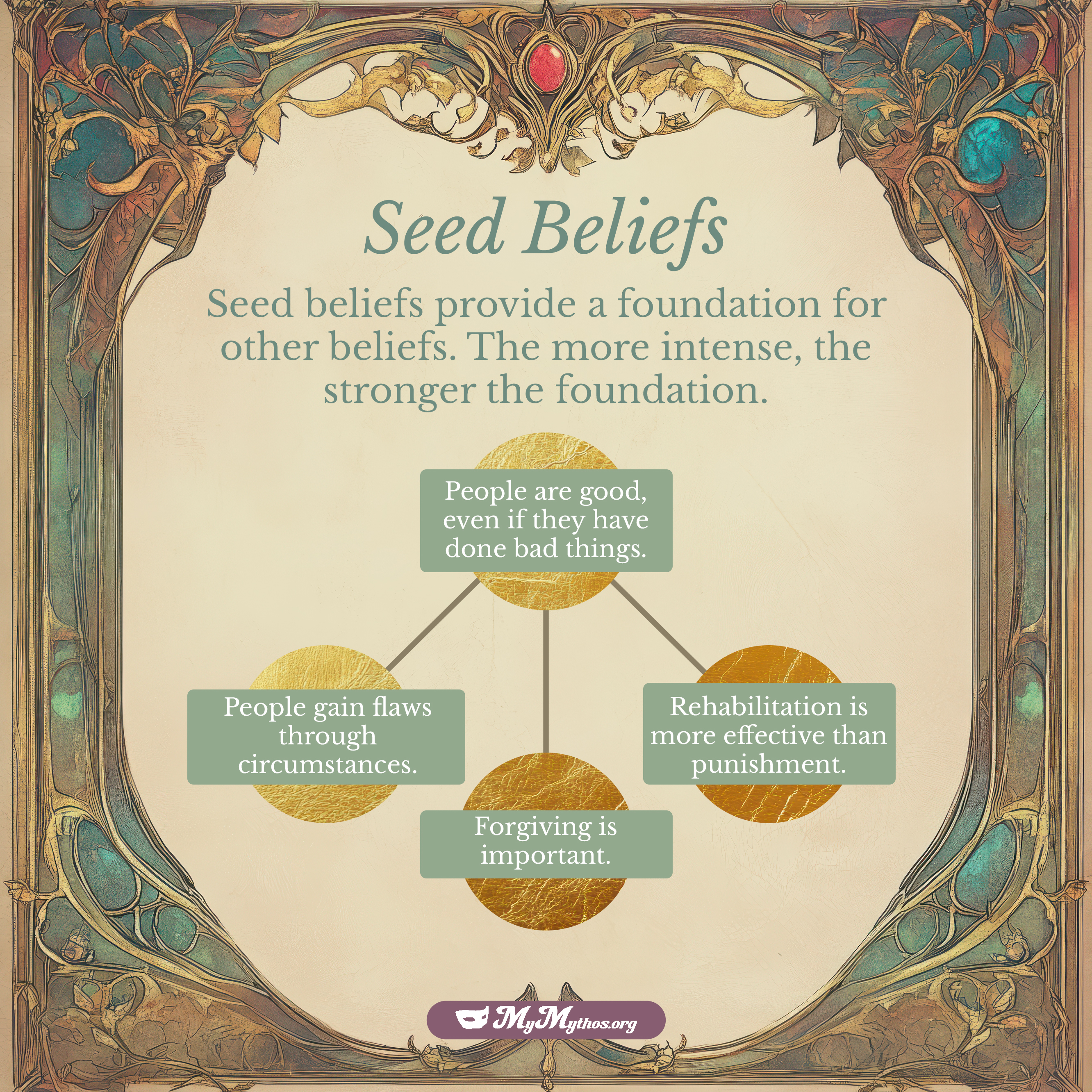
Consider how a single core belief about the nature of the world can spawn a series of increasingly specific and potentially extreme convictions. The following progression illustrates this phenomenon, showing how an initial perception of danger can ultimately lead to a mindset of ruthless self-preservation.
6 beliefs leading to "I will do anything to survive at all costs.":
The world is inherently dangerous and unpredictable. This belief sets the foundation for a worldview based on threat and uncertainty.
I am constantly at risk of harm or death. Spawned from the previous belief, this personalizes the danger, making it immediate and ever-present.
No one can be truly trusted to protect me. As a result of feeling constantly at risk, this belief erodes trust in others and institutions.
I am ultimately alone in my struggle for survival. Building on the lack of trust, this belief isolates the individual, creating a "me against the world" mentality.
My survival is the most important thing; nothing else matters as much. With isolation established, this belief elevates personal survival above all other concerns or values.
I will do anything to survive at all costs. The culmination of the previous beliefs, this final stance justifies any action in the name of self-preservation. This progression shows how a general worldview can spawn increasingly specific and extreme beliefs, ultimately leading to a potentially dangerous and amoral stance.
The above belief system assumes a great sense of self preservation on part of the believer, but belief systems becomes even more fascinating when seemingly contradictory convictions collide, which happens often! What happens when the ruthless drive for self-preservation meets a deeply held belief that "the lives of others are more important than my own"? This collision doesn't necessarily result in a cancellation of beliefs, but rather a complex fusion that can birth an entirely new worldview.
The marriage of these opposing forces creates a crucible of internal conflict. It forges a psyche that's simultaneously distrustful of the world yet willing to sacrifice everything for a chosen few. This paradoxical stance can lead to behaviors that appear inconsistent or even hypocritical to outside observers, but make perfect sense within the individual's intricate web of beliefs.
6 Beliefs leading to heroism or martyrdom:
The world is inherently dangerous and unpredictable. This foundational belief remains, setting the stage for a harsh worldview.
Both I and those I care about are constantly at risk of harm or death. The threat is now extended beyond the self, encompassing loved ones.
No one else can be truly trusted to protect us. "Us" replaces "me," expanding the circle of concern while maintaining distrust of outsiders.
We are ultimately alone in our struggle for survival. The isolation persists, but now it's a collective isolation - "us against the world."
Protecting others is more important than protecting myself. This belief is seemingly at odds with the previous progression because self preservation appears to be sacrificed for the preservation of others. This introduces a heroic or martyr-like element.
I will do anything to ensure the survival of those I protect, even at the cost of my own life. The final belief now focuses on sacrifice for others rather than pure self-preservation. This revised progression creates a more complex character - someone who views the world as hostile and isolating, yet is willing to sacrifice themselves for others. It's reminiscent of the "lone wolf protecting the pack" archetype, or the grizzled noir detective who's seen too much but still fights for the innocent.
The internal conflict between self-preservation and self-sacrifice could lead to interesting dilemmas. When push comes to shove, which instinct wins out? Does the belief in protecting others act as a moral anchor, preventing complete ethical decay in a harsh world? Or does it simply expand the range of brutal actions the person is willing to take, now justifying them in the name of protecting others? This belief system could spawn some fascinatingly flawed characters - think of antiheroes like Rorschach from Watchmen or Joel from The Last of Us. They're not always likable, but their contradictions make them compelling.
The labyrinth of human belief is a testament to our cognitive complexity. As we've seen, beliefs don't exist in isolation but form intricate networks, each conviction influencing and being influenced by others. This dynamic interplay can result in worldviews that are paradoxical yet deeply held, driving behaviors that may seem irrational to others but are perfectly logical within the individual's belief framework.
Understanding these belief cascades and collisions isn't just an academic exercise. It's a key to comprehending human behavior, from the everyday choices we make to the grand narratives that shape societies. By recognizing the power of belief systems and their ability to evolve and interact, we gain insight into the motivations behind actions that might otherwise baffle us, and the power to shape them consciously, potentially leading to more nuanced, compassionate, and effective ways of engaging with the complex reality around us.
As we navigate our own belief systems, it's worth examining the foundations upon which they're built. What core convictions drive our decision-making? How might they be influencing beliefs we're not even consciously aware of? And when our beliefs come into conflict, how do we reconcile them?