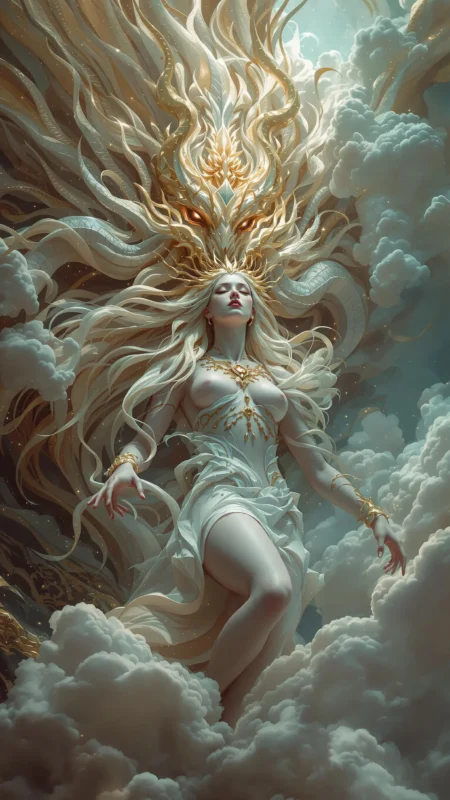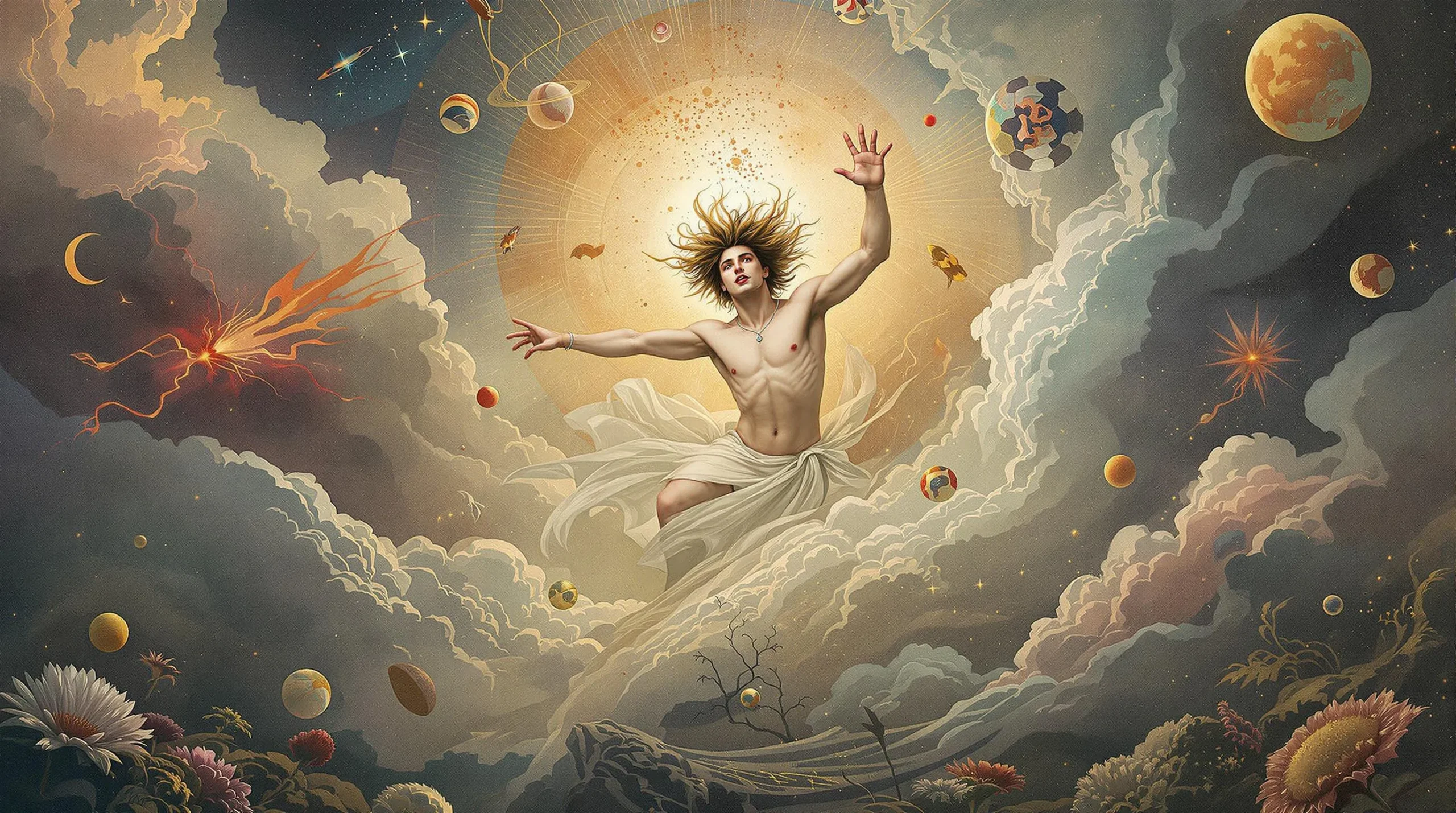


Zagreus

Archetype Meaning & Symbolism

Reborn, dismembered, ecstatic, chthonic, hunted, cyclical, paradoxical, defiant, innocent, twice-born

  • I am a child of Earth and starry Heaven, but my race is of Heaven alone.

If Zagreus is part of your personal mythology, you may...

Believe

  • That fragmentation precedes a deeper form of integration; you must fall apart to truly come together.
  • That destruction is not the opposite of creation, but an essential part of its cycle.
  • That your identity is not a fixed monument but a bonfire, constantly dying down and flaring up anew.

Fear

  • That the next time you are torn apart, the pieces will be too scattered to reassemble, and the rebirth will not come.
  • That your intrinsic intensity and comfort with chaos will inevitably drive away those who seek peace and stability.
  • That you will be perpetually misunderstood, seen only as a force of disruption and madness, with no one recognizing the sacred purpose behind it.

Strength

  • An almost supernatural resilience; the ability to endure shattering experiences and not only recover but transform.
  • A profound capacity for empathy, especially for those who are broken, lost, or in crisis.
  • The ability to find meaning, beauty, and even ecstatic joy in the midst of chaos and uncertainty.

Weakness

  • A tendency towards self-sabotage, unconsciously creating crises to reenact the familiar, powerful cycle of dismemberment and rebirth.
  • A difficulty residing in states of peace and stability, which may feel boring or deadening compared to the intensity of transformation.
  • An alienating depth or intensity that can make it difficult to form bonds with those who have not shared similar experiences of dissolution.

The Symbolism & Meaning of Zagreus

To find Zagreus in your personal pantheon is to find a patron saint for the beautifully broken. He is the archetype of surviving the unsurvivable, not by avoiding the blow, but by being shattered and learning the sacred art of reassembly. His myth suggests that wholeness is not a state of pristine, untouched perfection. Rather, true wholeness may be a form of spiritual kintsugi: the golden repair of the soul's fractures, where the scars themselves become the most beautiful and resilient part of the design. He symbolizes the profound truth that one must be torn apart to be truly put together, that the descent into chaos is a prerequisite for a more conscious, vibrant ascent. His presence in one's life story is the quiet hum beneath the floorboards of crisis, a promise that this, too, is part of the becoming.

Zagreus also represents the indivisible unity of seeming opposites. He is both divine and chthonic, innocent child and knowing god, a victim of horrific violence and a symbol of ecstatic, untamable life force. To align with this archetype could mean giving oneself permission to contain multitudes without demanding they resolve into a simple, coherent identity. It is an embrace of the paradoxical self. You can be the serene pond and the lightning that strikes it. This might manifest as a life path that zags where others zig, one that honors the body and the spirit, the darkness and the light, not as warring factions but as dance partners in the grand, cyclical ballet of existence. He teaches that your fragments do not make you less; they are simply the tesserae from which a greater mosaic of self can be constructed.

At its core, the Zagreus myth is about the cycle of life, death, and rebirth, played out within the theater of the individual soul. The Titans are not just external monsters; they may be the internal forces of envy, fear, and conformity that seek to tear apart our innate, divine innocence. The survival of the heart is the survival of our core essence, the indestructible spark that endures even the most brutal dismemberment. His rebirth as Dionysus is the triumphant return: the transformation of trauma into ecstatic wisdom, of pain into art, of fragmentation into a new, more complex and joyful form of being. Zagreus, then, is the whisper that says even when you are in pieces, your heart is still beating, and a resurrection is not only possible, it is your birthright.


Zagreus Relationships With Other Archetypes

The Labyrinth

The relationship between Zagreus and the Labyrinth is not one of adventurer and architecture, but perhaps of identity and form. Zagreus may not simply be a soul lost within the maze, but the very maze itself—a consciousness whose corridors are paved with fractured memories, whose dead ends are cycles of poignant self-sabotage, and whose center holds not a monster to be slain, but the quiet, shimmering truth of the original wound. To navigate this inner landscape could be the life's work of the archetype, a process less about escape and more about cartography, learning the strange geometry of one's own resilience. Each wall is a limit that was once broken, each new passage an unexpected avenue for rebirth, suggesting that the ultimate freedom is found not in leaving the Labyrinth, but in coming to know its every turn as a part of oneself.

The Kintsugi Bowl

In the Kintsugi Bowl, Zagreus may find a perfect, tangible metaphor for its own existence. Here is an object that does not disguise its history of being shattered; rather, it celebrates it, tracing its fault lines with veins of gold. The relationship is one of profound, aesthetic sympathy. This is not merely about repair, but about a transformation where the act of mending becomes an art form, rendering the object more beautiful and valuable than it was in its pristine, unbroken state. For Zagreus, the psyche could be seen as this very vessel, and the golden lacquer a kind of grace—the humor, wisdom, or compassion that fills the cracks. The scars are not evidence of weakness but a testament to the beauty of what has endured, a declaration that one can be broken and still hold everything.

The Echo

The Echo might be the constant, spectral companion to Zagreus. It is the reverberation of what was, the phantom limb of a past self still tingling in the present. This relationship is a delicate dialogue with the ghosts of one’s own history. The Echo could manifest as the faint, repeating whisper of a trauma, or perhaps as the fading cadence of a forgotten joy, a signal from a self that existed before the schism. Living as Zagreus may involve learning to attune one’s ear to this resonance, to distinguish the haunting from the guidance. It suggests that identity is never a singular, present note, but a chord composed of the original sound and all of its subsequent, decaying reflections, a chorus that one must learn to conduct or, at the very least, learn to live with.

Using Zagreus in Every Day Life

Navigating Personal Trauma

When facing the aftermath of a shattering event, a divorce, a job loss, a deep betrayal, the myth of Zagreus offers a map. You are not merely broken; you are in the dismemberment phase. This perspective may shift the goal from 'getting back to normal' to gathering the scattered pieces of yourself, knowing that the person who emerges will be different, perhaps stronger, forged in the crucible of loss. Each piece, a memory, a lesson learned, a newfound strength, becomes a sacred relic in your reconstruction.

Embracing Contradiction

If you feel like a walking paradox, a mystic and a hedonist, a creator and a destroyer, Zagreus provides a divine precedent. This archetype suggests you do not have to choose. Your internal contradictions are not flaws to be ironed out but the very source of your dynamic power. It permits a life where you can hold deep spiritual beliefs while also indulging in the wild, ecstatic, sensory experiences of the world, seeing them as two sides of the same sacred coin.

Finding Meaning in Chaos

In moments when life feels utterly chaotic and senseless, the Zagreus archetype could offer a profound reframe. The chaos is not an ending; it is the primordial state from which a new order is born. It encourages one to lean into the madness, to dance with it rather than fight it. You might learn to see the patterns in the storm, the creative potential in the rubble, and trust that even from the most violent dissolution, a new, vibrant life is waiting to be born from the still-beating heart of what was lost.

Zagreus is Known For

Dismemberment

As an infant, he was hunted and torn to pieces by the Titans, who were incited by a jealous Hera. This act of violent fragmentation is central to his mythology.

Rebirth

His heart was saved by Athena and brought to Zeus, who swallowed it. From this, Zagreus was reborn, most commonly identified with Dionysus, the god of wine, ecstasy, and ritual madness. He is the 'twice-born' god.

Orphic Mysteries

He is a central figure in Orphism, a mystery religion of ancient Greece. His story symbolizes the divine origin of humanity, our fall into a material body (the Titans' ashes), and the potential for the soul's liberation and return to the divine through purification and ritual.

How Zagreus Might Affect Your Personal Mythology

How Zagreus Might Affect Your Mythos

When Zagreus walks into your personal mythos, your life story may cease to be a linear novel and become, instead, an epic poem written in cycles of descent and return. The narrative is no longer about climbing a ladder of success but about navigating a spiral. Crises are not plot holes; they are planned acts in a divine drama of dissolution and renewal. A period of depression, a failed business, a broken heart: these are not endings. They are the sacred dismemberment, the necessary scattering of seeds before a new harvest. Your personal history might be read as a series of rebirths, each one making you a slightly different character, reborn with the wisdom of the underworld you just survived. You may come to see your past selves not as mistakes but as necessary sacrifices to the person you are becoming.

The very texture of your story could change. It becomes less about security and more about resilience. The central tension is not 'will I succeed?' but 'how will I re-integrate this time?' Your mythos becomes a testament to the creative power of destruction. You are the protagonist who walks willingly into the forest fire, knowing you carry the seed of a new tree in your heart. This narrative structure offers profound comfort, suggesting that no matter how scattered you become, a central, divine essence remains, around which a new life, a new self, a new story can always be built. Your biography is not a straight line but a constellation, each star a brilliant piece of a once-shattered whole.

How Zagreus Might Affect Your Sense of Self

To see yourself through the lens of Zagreus is to grant yourself a radical form of self-acceptance. It is the permission to be a work in progress, a beautiful mess, a collection of seemingly contradictory parts. You may stop striving for a monolithic, stable sense of self and instead embrace your inner multiplicity. The part of you that is wild and chaotic is just as sacred as the part that is serene and disciplined. This archetype could dismantle the tyranny of the 'integrated personality,' replacing it with the image of a vibrant mosaic. You are not one thing; you are a congress of selves, and your job is not to force a consensus but to chair the meeting with compassion.

This perspective may also cultivate a profound inner resilience. Your self-esteem is no longer tethered to being 'unbroken.' On the contrary, your worth could be located in your scars, in the evidence of your survival. You might look at your past traumas not as sources of shame but as initiations. They are the marks left by the Titans, proof that you wrestled with oblivion and retained your heart. This fosters a self-concept rooted in dynamic strength rather than static perfection. You may trust your capacity to heal and transform above all else, knowing that your core identity is not something that can be permanently destroyed, only changed into a new, perhaps more potent, form.

How Zagreus Might Affect Your Beliefs About The World

With Zagreus as a guide, your view of the world may become deeply cyclical and transformational. You could cease to see events in terms of good or bad, success or failure, and instead view them through the lens of dissolution and regeneration. A stock market crash, a political upheaval, a cultural shift: these are not just disasters. They are the Titans at work, tearing down an old order to make way for something new. This is not a naive optimism, but a kind of cosmic trust in the process itself. It’s the understanding that forests need fire to regenerate, that compost is rot in service of new life. The world is not a stable structure but a dynamic, sometimes violent, and always creative process of becoming.

This worldview could also attune you to the sacredness hidden within the profane, the life force thrumming within the chaos. You might find divinity not in pristine temples but in the wild energy of a crowded dance floor, the messy creativity of an artist's studio, or the heartbreaking beauty of urban decay being reclaimed by nature. It's a perspective that resists easy answers and sanitized spirituality. The world is not a problem to be solved but a mystery to be lived, a paradoxical dance of creation and destruction. You might feel a strange sense of being at home in the storm, recognizing the pattern of your own soul's journey in the world's constant, tumultuous unfolding.

How Zagreus Might Affect Your Relationships

In the realm of relationships, the Zagreus archetype might draw you towards intensity and transformation. You may find that superficial connections hold little appeal. Instead, you could seek out relationships that are crucibles: connections that challenge, break down, and ultimately reshape you and the other person. You might have a higher tolerance for the 'dismemberment' phase of a relationship, the arguments and conflicts that tear at the fabric of the connection, because you hold a deep faith in the possibility of a 'rebirth' into a stronger, more authentic bond. This can make your relationships incredibly deep and meaningful, forged in fires that others might flee.

However, this same impulse can be challenging. Your partners may need to be resilient souls themselves, comfortable with a degree of chaos and intensity. You may subconsciously test the bounds of a relationship to see if it can withstand a symbolic tearing-apart. The Zagreus pattern could lead to a belief that a connection isn't 'real' until it has survived a crisis. The challenge is to learn that rebirth can also come from gentle growth, not just from violent fragmentation. It's the subtle dance of allowing relationships to transform without needing to first push them to the brink of annihilation, recognizing the sacred in stability as well as in the storm.

How Zagreus Might Affect Your Role in Life

Adopting Zagreus into your mythos could radically redefine your perceived role in the world. You may not see yourself as a builder of empires or a keeper of the peace, but as a catalyst, a sacred disruptor, a midwife for transformation. Your role might be to enter situations of stagnation and introduce a necessary element of chaos, trusting that this will break up old, deadening patterns and allow new life to emerge. You could be the artist whose work challenges comfortable assumptions, the therapist who guides clients through their darkest underworlds, or the friend who isn't afraid to speak the uncomfortable truth that shatters a polite fiction.

This role is not about destruction for its own sake; it is always in service of rebirth. You may feel a calling to work with the broken, the marginalized, and the traumatized, not out of pity, but out of a deep recognition. You see their scattered pieces and know, from your own experience, how they can be reassembled into something powerful and new. Your purpose is not to offer easy comfort but to hold the space for the terrifying and sacred process of falling apart and coming back together. You are the guide who knows the map of the underworld because you have been there, and you carry the light that proves there is a way back out, transformed.

Dream Interpretation of Zagreus

In a positive context, dreaming of Zagreus, or dreaming of being scattered, dismembered, or lost in a labyrinth, can be a powerful omen of imminent psychic growth. If the dream, despite its chaotic imagery, carries an undercurrent of acceptance, curiosity, or eventual peace, it may signal that your psyche is successfully navigating a major transformation. Finding a single, intact object amidst the chaos, like a jewel or a beating heart, could represent the resilience of your core self. Waking from such a dream, you might feel strangely refreshed, as if a great pressure has been released. The dream is affirming that the current chaos in your life is not an end but a necessary and productive clearing of the decks for a profound renewal.

In a negative context, the same dream imagery can signify being overwhelmed and traumatized by life's circumstances without the psychic resources to integrate the experience. If the dream of dismemberment is filled with inescapable terror, pain, and a sense of finality, it may point to a shadow aspect of the Zagreus archetype. It could suggest that you are stuck in the fragmentation phase, perpetually reliving a trauma without moving toward rebirth. Such a dream might be a warning that you are courting chaos addictively or that you are identifying too strongly with the victimhood of the experience, unable to find the spark of the divine heart that survives. It is a call to seek support, to find an 'Athena' to help you rescue the essential part of yourself before it is lost in the turmoil.

How Zagreus Archetype Might Affect Your Needs

How Zagreus Might Affect Your Physiological Needs

When the Zagreus mythos informs your life, your relationship with your physiological needs, the very foundation of Maslow's pyramid, may become cyclical. You might move through periods of intense embodiment and Dionysian indulgence, savoring food, drink, and sensory pleasure as a celebration of being alive. This is the rebirth phase, where the body is a sacred vessel for ecstatic experience. Here, your needs for food, warmth, and rest are not just met; they are reveled in. It’s a deep appreciation for the simple, profound fact of having a body, of being physically present in the world after a period of psychic absence or struggle.

Conversely, you may also experience periods of asceticism or a strange detachment from the body. This is the descent or dismemberment phase, where the spirit's journey takes precedence over the body's comforts. You might fast, push your physical limits, or simply forget to eat, not out of self-hatred, but because you are consumed by an internal process of dissolution. This cycle is not necessarily unhealthy, but it requires awareness. The challenge is to honor the body's needs even in the depths of the underworld, recognizing that the heart must keep beating, that the physical form is the anchor that makes the eventual return to the world possible.

How Zagreus Might Affect Your Ideas of Belonging

Belongingness, for a soul touched by Zagreus, is rarely found in conforming to a mainstream group. You may feel like an outsider in conventional settings, your intensity and cyclical nature misunderstood by those who value stability above all. True belonging is often found in what could be called 'tribes of the twice-born.' You may gravitate towards other artists, mystics, survivors of trauma, and recovering addicts, people who have also been to the underworld and back. In these connections, there is an unspoken understanding. Scars are not hidden; they are read like maps of a shared journey. Love and friendship are not based on shared interests, but on a shared depth of experience and a mutual respect for each other's beautiful, complicated brokenness.

This can result in incredibly profound and loyal relationships, a chosen family that provides a deep sense of being truly seen and accepted. However, it can also lead to a kind of insularity, a belief that only those who have suffered profoundly can truly understand you. You might struggle to connect with simpler, happier souls, viewing them as naive or shallow. The challenge is to build bridges, to find the spark of Zagreus even in those who haven't experienced a dramatic dismemberment, recognizing that the cycle of life, death, and rebirth plays out in subtle ways for everyone. True belonging expands to embrace the whole, chaotic, and varied spectrum of human experience.

How Zagreus Might Affect Your Feelings of Safety

From a Zagreus perspective, the need for safety is radically redefined. Absolute safety, a life free from risk and harm, is seen as an illusion, and a deadening one at that. True safety is not found in building higher walls, but in cultivating the inner certainty that you can survive the walls coming down. Your sense of security may be rooted in your resilience. It's an internal locus of safety, a profound trust in your own capacity to be torn apart and put yourself back together. Your home may feel less like a fortress and more like a workshop or a nest, a place to retreat and mend, not to hide.

This can lead to a life of greater courage and experience, as you may be less afraid of the risks inherent in love, career changes, or bold creative acts. However, it can also lead to a casual disregard for reasonable precautions. You might unconsciously court danger or instability to test your own resilience, to prove you can survive the next blow. The shadow of this perspective is a life lived in constant crisis, mistaking the adrenaline of survival for the feeling of being truly alive. The mature Zagrean path involves learning to create a safe container for your transformative processes, respecting the need for rest and stability as the necessary ground from which all chaotic growth must spring.

How Zagreus Might Affect Your Views of Esteem

With Zagreus as a mythological touchstone, your esteem needs are met not by external accolades or a flawless track record, but by your own resilience. Self-worth is forged in the fires of crisis. Each time you navigate a personal cataclysm and emerge, not unscathed but transformed, your esteem deepens. It's a rugged, durable form of self-respect that is not easily shaken by failure or criticism because you have faced far worse and survived. You may come to value your wisdom over your achievements, your compassion over your competitiveness, your scars over your trophies. Your esteem is rooted in the knowledge of your own indestructible core.

This creates a powerful, internal source of validation. You may not need the approval of the crowd because you are your own primary witness. However, the shadow side can be an unconscious need for crisis in order to feel worthy. You might only feel good about yourself in the aftermath of a struggle, leading to a pattern of self-sabotage to create the conditions for a heroic comeback. The mature path lies in learning to value the self even in times of peace and quiet. It is the esteem that comes from not just surviving the storm, but from skillfully tending the garden that grows in the fertile ground left behind.

Shadow of Zagreus

The shadow of Zagreus emerges when the cycle becomes an addiction. This is the individual who is a connoisseur of chaos, a pyromaniac of the soul who sets fire to their own life and relationships just to feel the ecstatic thrill of the comeback. They might mistake drama for passion, destruction for growth. Here, the dismemberment is not a sacred process but a weapon, used to manipulate others or to avoid the quiet terror of stability. This shadow self is trapped in the first act of the play, perpetually tearing things apart because they have forgotten that the goal is not the fall, but the subsequent rising, renewed and wiser. They become a Titan to themselves, endlessly reenacting the trauma without ever truly saving the heart.

Another, more subtle shadow is the refusal of the cycle altogether. This is the person who has been dismembered once and now lives in a state of petrified fear. They cling to a fragile, brittle wholeness, avoiding any risk, any deep emotion, any relationship that might threaten to break them open again. They deny their own nature, policing their inner wildness and shutting down any spark of ecstatic life force. This is not true peace but a kind of living death, the ultimate betrayal of the twice-born god. In an attempt to avoid being torn apart by the Titans, they build their own prison, and the heart, though safe, never learns to beat with the wild rhythm of rebirth.

Pros & Cons of Zagreus in Your Mythology

Pros

  • You possess a profound, first-hand knowledge of transformation, making you a wise guide for others in crisis.
  • You are exceptionally resilient, able to withstand storms that would shatter more rigid personalities.
  • You have access to the full spectrum of life, from the darkest descents to the most ecstatic peaks, finding the sacred in all of it.

Cons

  • Your life path may be marked by recurring instability and periods of intense upheaval.
  • You may feel a deep-seated restlessness or dissatisfaction during times of peace and normalcy.
  • Your intensity, while a source of strength, can be overwhelming and exhausting for both yourself and those you love.