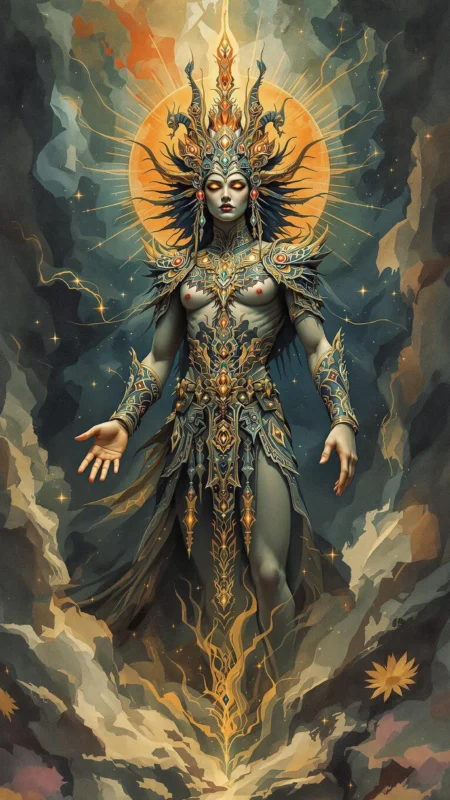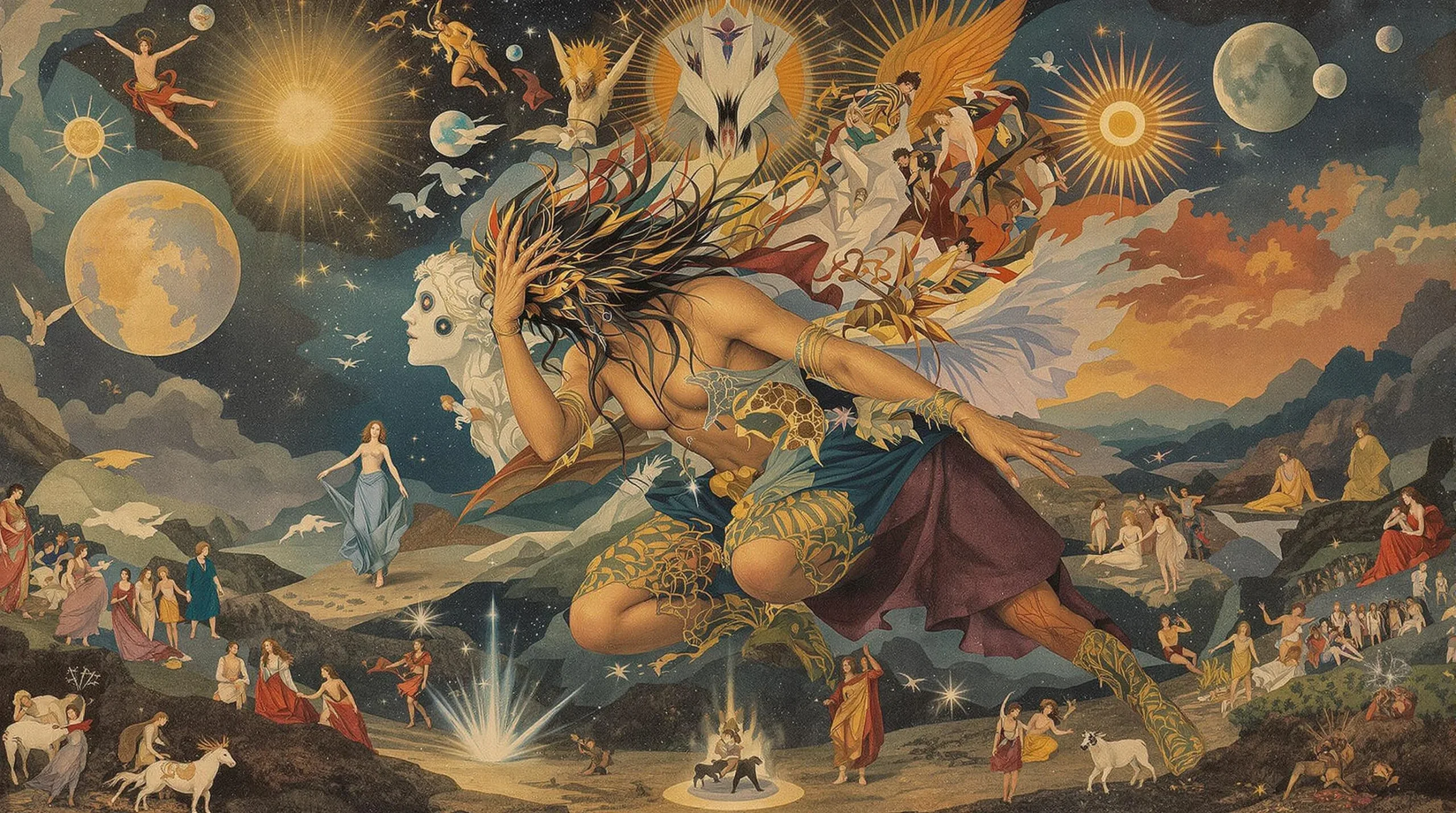


Xochiquetzal

Archetype Meaning & Symbolism

Creative, fertile, amorous, fleeting, weaver, beautiful, generative, tempestuous, enchanting, vulnerable, artistic, sensual

  • Do not chase beauty: become the place where it longs to reside. Cultivate the garden of your own heart, and the blossoms will come of their own accord.

If Xochiquetzal is part of your personal mythology, you may...

Believe

  • Beauty is not a surface-level luxury but a fundamental nutrient for the human soul, and its creation is a sacred act.
  • The most profound truths of existence are revealed not through logic, but through the senses, through passion, and through the intimate, messy process of making art and love.
  • Life's cycles of joy and sorrow, creation and destruction, are not to be resisted but to be embraced as the inseparable elements of a meaningful, whole existence.

Fear

  • A future of barrenness: a loss of creative inspiration, a life devoid of passion, or the inability to bring new things into the world.
  • The inevitable fading of beauty and love, a terror that as youth and passion recede, you will become invisible and worthless.
  • That your vulnerability, the very source of your creative power, will be exploited or destroyed by the cynicism and cruelty of the world.

Strength

  • An almost magical ability to cultivate beauty and create harmony, often transforming mundane or even ugly situations into something full of grace and meaning.
  • A profound resilience rooted in an intuitive understanding of life's cycles, allowing you to find hope and the seeds of rebirth even in the wake of loss and endings.
  • An immense capacity for deep, passionate connection, enabling you to build powerful bonds and foster communities based on love, art, and shared vulnerability.

Weakness

  • A tendency towards emotional and sensual excess, potentially chasing pleasure to the point of neglecting responsibilities or causing harm to self and others.
  • A vulnerability to intense jealousy and possessiveness in relationships, stemming from a fear of losing the beautiful things and people you love.
  • An unstable sense of self-worth that is perilously dependent on external validation of your creative work or your physical attractiveness.

The Symbolism & Meaning of Xochiquetzal

To find Xochiquetzal in the architecture of your soul is to embrace a potent and perilous paradox. She is the archetype of the precious, ephemeral moment: the single perfect rose, the zenith of a love affair, the flawless line of a poem. Her presence in your personal mythology suggests a life organized around the creation and appreciation of such moments. It is a profound commitment to the idea that beauty is not an ornament upon the world, but the very fabric of its meaning. You may find that your purpose is not to build monuments of stone, but to weave tapestries of experience, intricate and beautiful, even knowing they might one day unravel. This is the artist’s pact with reality, accepting the fleeting nature of the sublime as the very thing that gives it value.

The modern meaning of Xochiquetzal has evolved beyond simple patronage of the arts. She represents the integration of the creator and the lover, the sacredness of generative power in all its forms, from birthing a child to birthing an idea. Her symbolism might speak to a deep-seated need to live an embodied life, one where the senses are primary tools for understanding the world. She is the counter-narrative to a culture of sterile productivity, offering instead a vision of fruitful, joyful, and sensual creation. Having her as a guide could mean you feel a calling to re-enchant the mundane, to see the divine spark in the act of making a meal, tending a plant, or sharing a moment of genuine connection.

Yet, her mythos is not one of simple sweetness. It carries the scent of the Cempasúchil, the marigold that guides the dead, a reminder that all flowers wilt. She symbolizes the profound truth that creativity and destruction are lovers, that great passion can border on great pain, and that to be a creator is to be exquisitely vulnerable. To walk with her is to accept this duality. It is to understand that the artist’s hand can tremble, that the lover’s heart can break, and that this vulnerability is not a weakness but the very source of one's power: the fertile ground from which all true beauty grows.


Xochiquetzal Relationships With Other Archetypes

The Weaver

With The Weaver, the Xochiquetzal may find not a collaborator, but a reflection of its own soul in the mechanics of creation. The relationship is less about the finished tapestry and more about the rhythmic, meditative pass of the shuttle, the tension of the warp threads holding a story yet to be told. The Weaver understands that beauty is an act of meticulous assembly, that from a chaos of tangled skeins, a coherent vision can emerge. For the Xochiquetzal, this process could be a form of prayer, a way of imposing a fragile, incandescent order upon the world’s dissonant materials. The loom itself might be a metaphor for the psyche, where threads of memory, desire, and sorrow are woven together, not to hide the imperfections, but to render them into a pattern that is profound, intricate, and astonishingly whole.

The Butterfly

The Butterfly could be seen as the Xochiquetzal’s fleeting thought made manifest, a creature whose very existence is a performance of beauty and transformation. Theirs is a kinship of the ephemeral. The joy of the Xochiquetzal archetype is not a permanent state but a brief, dazzling season, much like the butterfly's life, which is all the more precious for its brevity. This relationship perhaps whispers a difficult truth: that the most intense beauty is tethered to its own demise, that the most vibrant dance happens on the edge of disappearance. The process of metamorphosis—that violent, solitary alchemy within the chrysalis—may mirror the artist's own painful interior work, the darkness that must be endured before the wings, impossibly delicate and bright, can finally unfold.

The Wounded Healer

There may exist a quiet, profound understanding between the Xochiquetzal and the Wounded Healer, a resonance born of shared fracture. While the Xochiquetzal presents an outward face of intoxicating beauty and pleasure, this archetype often carries a deep well of sorrow—a mythic memory of loss or abduction. The Wounded Healer perceives that the Xochiquetzal’s art is not a denial of this pain, but its transmutation. It is the pearl formed around the irritant, the flower that blooms most vibrantly from scarred earth. This relationship is a testament to the idea that the capacity to create profound beauty or offer ecstatic joy may be directly proportional to the depth of one's own suffering. Their shared space is where art becomes a form of sacred repair, a kintsugi of the spirit, making the broken places the source of a new and more resilient splendor.

Using Xochiquetzal in Every Day Life

Navigating Creative Stagnation

When the wellspring of ideas runs dry, invoking the Xochiquetzal mythos might mean abandoning the desk and the blank page for the garden, the kitchen, or the dance floor. It is a call to re-engage the senses, to find inspiration not in intellectual force but in the texture of raw silk, the scent of crushed mint, the rhythm of a lover's breath. Creativity here is not a task to be completed but a state of being to be inhabited, a receptivity to the world's inherent poetry.

Reframing Heartbreak

In the throes of a painful separation, your personal story could frame the experience through a Xochiquetzal lens. This is not just an ending, but a necessary decomposition. The love, like a fallen flower, returns its nutrients to the soil of your soul. This perspective allows for the acknowledgment of profound grief while simultaneously planting the seed of future growth, viewing the capacity to feel such loss as proof of a profound capacity to love and create again.

Reclaiming Sensuality

For one who feels disconnected from their body or their own allure, this archetype offers a path back. It is permission to define beauty on one's own terms. It could manifest as the act of weaving a tapestry, learning a new dance, or simply taking the time to anoint the skin with scented oil. These are not acts of vanity but rituals of self-creation, a way of reminding the self that the body is not just a vessel but a living, breathing work of art, deserving of pleasure and admiration.

Xochiquetzal is Known For

Patronage of Beauty and Creation

She is the divine artisan, the muse for weavers, painters, sculptors, and all who seek to manifest beauty. Her realm is the sacred space of the workshop, where raw material is transformed into something that stirs the soul.

Embodiment of Love and Desire:

Xochiquetzal governs the untamed territories of love, passion, and fertility. She represents not just romantic love but the potent, life-giving force of desire itself, in all its creative and sometimes dangerous forms.

The Dual Flower:

Her story is one of duality. Abducted from her celestial paradise to rule in the underworld, she embodies both the sun-drenched blossom and the pale flower that blooms in darkness, a symbol of beauty's resilience even in the face of trauma and loss.

How Xochiquetzal Might Affect Your Personal Mythology

How Xochiquetzal Might Affect Your Mythos

When Xochiquetzal is a central figure in your personal mythos, your life story may cease to be a linear progression toward a goal and become, instead, a cyclical dance of creation. Your narrative is perhaps not about conquering mountains but about cultivating gardens. The key events are not battles won but moments of profound beauty experienced, loves felt, and art made. Your story might be one of resilience, punctuated by periods of intense creation followed by necessary seasons of fallow quiet, mirroring her own journey from celestial light to underworldly shadow and back again. The central conflict in your life may be the tension between the desire for eternal, perfect beauty and the reality of its ephemeral nature.

This archetype shapes a mythos where your greatest triumphs are acts of love and creation. You might see your history as a tapestry you are constantly weaving, with threads of joy, sorrow, passion, and loss all contributing to the final, intricate pattern. Your personal legend becomes one of an alchemist of feeling, transforming the raw material of lived experience into something meaningful and beautiful. It's a story that values the process over the product, the feeling over the fact. The narrative arc bends toward the question: not 'what did I achieve?' but 'what beauty did I bring into being, and what love did I dare to feel?'

How Xochiquetzal Might Affect Your Sense of Self

With Xochiquetzal's influence, your sense of self may be intrinsically linked to your creative and generative capacities. You might see yourself as a vessel for beauty, a channel through which something new and vital comes into the world. This can be a source of immense self-worth, a feeling that your existence has inherent purpose because it adds to the world's store of loveliness and pleasure. You may perceive your own sensuality not as something to be managed or repressed, but as a sacred sense, a form of intelligence that guides you toward what is life-giving and true. Your body becomes a sacred instrument for both creating and experiencing pleasure.

However, this identification could also foster a fragile sense of self. Your self-esteem might rise and fall with the tides of creative inspiration or the validation of a lover. A creative block may feel like a crisis of identity, a failure of your very being. Similarly, the fading of youth or the end of a passionate affair could be perceived as a personal erasure. The challenge becomes to integrate the archetype fully: to see yourself not just as the beautiful flower, but as the entire garden, including the soil, the roots, and the inevitable cycles of decay and dormancy that enable new growth.

How Xochiquetzal Might Affect Your Beliefs About The World

Your worldview, colored by the Xochiquetzal mythos, may be one of inherent enchantment. You could see the world not as a resource to be exploited or a problem to be solved, but as a vast, living tapestry, rich with texture, color, and meaning. Beauty is a primary lens through which you interpret reality: you might judge the health of a society not by its GDP but by the vitality of its arts, the quality of its crafts, and the generosity of its love. This perspective elevates the artisan, the poet, and the lover to positions of cultural importance, seeing them as essential tenders of the collective soul.

This worldview also embraces complexity and paradox. You may be keenly aware that the most beautiful things are often the most fragile, and that places of great joy can also be sites of great risk. The world is not a safe, predictable system, but a dynamic, sometimes tumultuous, and always creative force. You might find more truth in a poem than in a spreadsheet, more wisdom in the cycles of nature than in the pronouncements of authority. It is a worldview that finds meaning in the sensory, the emotional, and the relational, trusting the intelligence of the heart and the wisdom of the hands.

How Xochiquetzal Might Affect Your Relationships

In relationships, the Xochiquetzal archetype may compel you to seek and create profound, passionate connections. Love is not a comfortable arrangement: it is a collaborative art form, a dance, a co-creation. You might approach relationships with the intensity of an artist before a canvas, seeking to make something beautiful and singular with your partner. These bonds can be characterized by a heightened sensuality, a shared appreciation for beauty, and a deep, almost sacred, intimacy. The ideal is a love that is both a muse and a masterpiece.

This intensity, however, has a shadow. It can lead to a form of idealism that struggles with the mundane realities of long-term partnership. You may fear the cooling of passion as a sign of failure, rather than a natural evolution. There could also be a tendency toward jealousy or possessiveness, a desire to 'own' the beauty of the beloved, mirroring the myths of her own abduction. The journey is to learn that true love is not a perfect, static object to be preserved under glass, but a living, breathing thing that changes, wilts, and re-blooms in its own seasons, requiring constant, patient tending.

How Xochiquetzal Might Affect Your Role in Life

You may feel your role in life is to be a cultivator of beauty and a weaver of connection. This is not about seeking power or status in a conventional sense, but about exercising a generative influence on your environment. Whether you are an artist by trade or not, you might feel a calling to be the person who brings flowers into the office, who turns a simple gathering into a memorable feast, or who listens with such attention that the speaker feels truly seen. Your role is one of emotional and aesthetic stewardship, tending to the spaces between people and things to make them more lovely, more human.

This archetype could also cast you in the role of the sacred fool or the holy provocateur. You might be the one who speaks the truth of the heart in sterile, intellectual environments, who champions pleasure in a culture of duty, and who insists on the importance of 'non-productive' activities like play, art, and love. Your function is to remind your community of what truly nourishes the human spirit. It can be a lonely role at times, as you may be seen as frivolous or unrealistic, but it is a vital one: keeping the soul of the world from hardening into pure utility.

Dream Interpretation of Xochiquetzal

To dream of Xochiquetzal in a luminous, positive context—perhaps seeing her weaving, dancing, or surrounded by butterflies and flowers—is a profound affirmation from the deep self. It could signal the imminent arrival of a creative breakthrough, the blossoming of a new love, or an invitation to embrace pleasure and sensuality without guilt. The dream may be telling you to trust your creative instincts, to begin the project you've been postponing, or to open your heart to connection. It is a symbol of fertility in its broadest sense: your inner world is lush, green, and ready to bring forth something new.

Conversely, a dream of a sorrowful, withered, or enraged Xochiquetzal may function as a potent warning. It could reflect a state of creative sterility, a relationship that has become toxic or devoid of passion, or a deep-seated fear of aging and loss. She might appear in a barren landscape, a sign that you have neglected the garden of your own soul. Such a dream could be a call to examine where in your life you are denying yourself beauty, pleasure, or authentic expression. It may point to the shadow aspects of the archetype: vanity, jealousy, or a superficial attachment to beauty that has left you feeling empty and unfulfilled.

How Xochiquetzal Archetype Might Affect Your Needs

How Xochiquetzal Might Affect Your Physiological Needs

When the Xochiquetzal mythos informs your being, your physiological needs become intertwined with aesthetics and pleasure. The need for food is not just about sustenance but about flavor, texture, and the beauty of the meal: a bland, joyless diet can feel like a genuine deprivation. The need for shelter extends beyond mere safety to encompass an environment that is sensually pleasing and inspiring. A sterile, ugly space may feel physically draining, while a home filled with art, color, and life-giving objects can feel as essential as clean air. Your body's well-being is directly tied to the presence of beauty.

This archetype also sanctifies the body's need for touch, pleasure, and rest. These are not seen as indulgences but as fundamental requirements for a healthy, functioning system. A lack of sensual engagement or joyful movement might manifest as physical lethargy or even illness. The body is perceived as the primary instrument of creation, and its maintenance requires not just fuel but delight. Rest is not idleness but a fallow period necessary for regeneration. From this perspective, attending to the body's pleasures is a sacred duty, a way of honoring the source of all creative energy.

How Xochiquetzal Might Affect Your Ideas of Belonging

Belonging, through the lens of Xochiquetzal, is found through shared creation and mutual appreciation. You likely do not find your tribe through shared dogma or social status, but through a common language of the heart and the hands. Your community is the circle of fellow artists, the lovers who see the world with the same enchanted eyes, the friends who understand that a perfect meal shared is a form of prayer. To belong is to be seen in your unique, creative essence and to have that essence celebrated. Love and friendship are active, creative verbs, things you 'make' together.

This need for authentic, deep connection means you may feel profoundly alienated in superficial social settings. Small talk can feel like a violation of the soul. You yearn for relationships where the 'real' work of intimacy and co-creation can happen. This can sometimes lead to a small, carefully curated circle of connections rather than a wide social network. Belonging is not about being liked by everyone, but about being truly known by a few, and creating a shared world of meaning and beauty with them.

How Xochiquetzal Might Affect Your Feelings of Safety

From a Xochiquetzal perspective, safety is not merely the absence of physical threat but the presence of creative and emotional sanctuary. You may feel fundamentally unsafe in environments that are rigid, judgmental, or devoid of inspiration, as these places threaten the core of your being: your ability to create and express. True safety is found in a space where vulnerability is permissible, where the tender shoots of new ideas are protected, and where the heart can be open without fear of cynical attack. A workshop, a studio, a loving kitchen: these are the fortresses of this mythos.

Her story, however, contains a crucial warning about safety. As a figure of immense beauty and desirability, she was abducted, a mythic reminder that what is beautiful can also be a target. This may translate into a keen awareness of the precarity of what you hold dear. It can foster a need to protect your creations, your loves, and your own vulnerable heart. Safety, then, is a delicate balance: creating a sanctuary that is protected but not imprisoned, a garden that is walled but still open to the sun and the rain.

How Xochiquetzal Might Affect Your Views of Esteem

Esteem, in the world of the Xochiquetzal archetype, is deeply rooted in your generative power. Your self-worth is reflected in the beauty you create and the love you inspire. When you are in a flow of creativity, bringing a painting to life, or cultivating a thriving garden, your esteem may be at its peak. It comes from the tangible evidence of your ability to contribute beauty to the world. Likewise, being the object of genuine desire and affection can be a powerful source of validation, an affirmation of your own intrinsic loveliness.

This foundation for esteem, however, can be precarious. If your self-worth is solely dependent on your last creation or your current relationship status, it can become a rollercoaster of highs and lows. A critical review, a creative block, or the end of a romance can feel like a direct assault on your fundamental value as a person. The deeper spiritual work of this archetype is to shift esteem from the external product—the art, the relationship—to the internal, inherent capacity to create and to love, a wellspring that exists regardless of whether it is currently flowing or lying dormant.

Shadow of Xochiquetzal

When the shadow of Xochiquetzal falls upon the soul, her vibrant garden turns toxic. The love of beauty curdles into vanity, a desperate and superficial obsession with appearance that masks a deep inner emptiness. The creative impulse becomes a tool for manipulation, using charm and allure not to create connection but to control and exploit others for personal gratification. It is the artist who creates only for applause, the lover who collects hearts like trophies. Pleasure is no longer a sacred communion but a frantic, insatiable hunger that is never satisfied, leading to a life of hollow hedonism and disregarded consequences.

In its repressed form, her shadow is a bleak and barren landscape. When her energy is denied or feared, it may manifest as a corrosive bitterness and envy. This is the person who scoffs at beauty, who dismisses love as a fool's game, and who resents the happiness and creativity of others. A creative block becomes a permanent state of being, a frozen tundra of the soul. There is a deep-seated fear of vulnerability, leading to an isolated existence, safe from heartbreak but also sealed off from joy, passion, and the life-giving force of creation itself.

Pros & Cons of Xochiquetzal in Your Mythology

Pros

  • Your life may be experienced with a rare richness and intensity, filled with sensory delight, profound emotions, and an appreciation for the beauty in everyday moments.
  • You possess a powerful, innate drive to create, which can manifest as artistic talent, innovative problem-solving, or the ability to bring new life and energy to any project you touch.
  • You are likely adept at forming deep, meaningful, and passionate relationships, building a life rich with love and authentic connection.

Cons

  • You may be highly susceptible to dramatic emotional lows, particularly in the face of heartbreak, rejection, or creative failure, as your sense of self is so tied to these realms.
  • There can be a tendency to avoid or neglect the mundane, practical aspects of life, as they may seem dull and soul-crushing compared to the pursuit of beauty and passion.
  • Your self-worth can be dangerously fragile, fluctuating wildly based on external factors like the success of a project, the attention of a lover, or the persistence of youthful allure.