 Believe
 Fear
Fear Strength
 Weakness
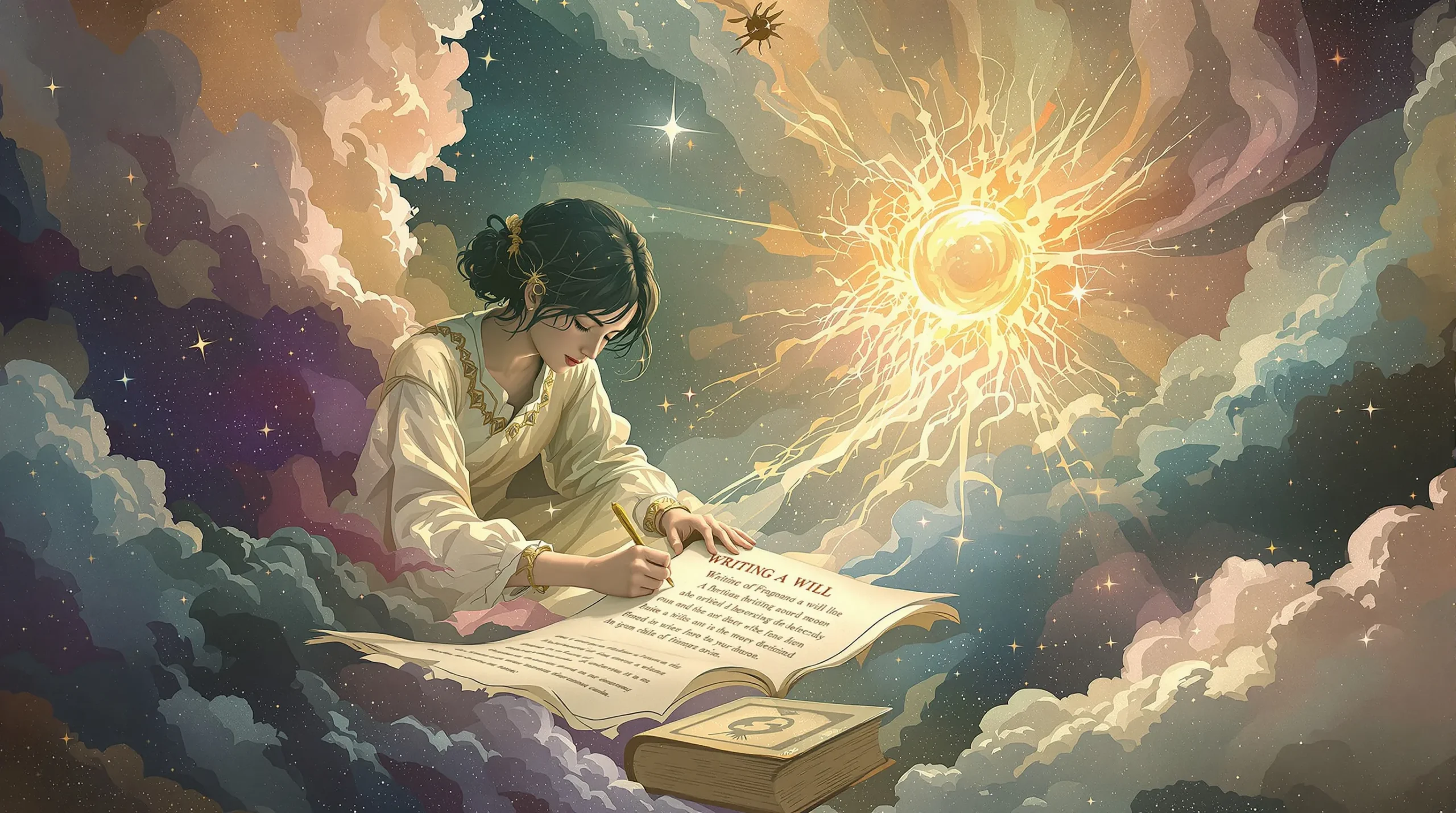
The Writing a Will archetype is a conversation with silence. It is the act of inscribing meaning onto the blank page that follows the final chapter of a life. In personal mythology, this is not a morbid preoccupation but an act of profound sovereignty. It suggests you are the author, the editor, and the final arbiter of your own story, deciding which themes and characters receive the final emphasis. This archetype symbolizes the point where the spiritual and the bureaucratic intersect: the soul's deepest affections must be translated into the cold, precise language of legal clauses and percentages. It is a testament, in both senses of the word: a legal document and a statement of belief.
More than a list of assets, the will becomes a map of a heart's geography. Each named beneficiary is a landmark, each bequeathed object a repository of shared memory—the worn armchair not as furniture, but as the vessel of a thousand bedtime stories. To engage with this archetype is to conduct a life review, to weigh every relationship and possession against the ultimate measure of its meaning. It could represent a final, powerful act of communication, a letter sent to the future that speaks of love, obligation, and the values you wish to see carried forward like a torch.
This process is also a confrontation with the limits of control. While the will dictates the fate of a porcelain vase or a stock portfolio, it cannot dictate how it will be received. It cannot guarantee a legacy of love, only gesture towards it. The archetype, therefore, is imbued with a quiet humility. It is the recognition that our greatest legacy is not in the things we leave, but in the love we seeded in the lives of others, a harvest we will never get to see. It is the final act of letting go, disguised as an act of holding on.