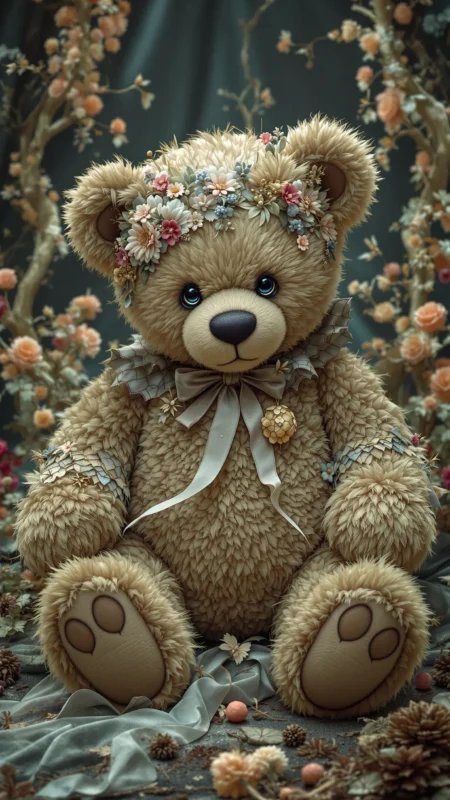


Worn Teddy Bear

Archetype Meaning & Symbolism

Patient, loyal, silent, comforting, nostalgic, enduring, scarred, beloved, innocent, keeper

  • My silence is not emptiness: it is the space I hold for your story.

If Worn Teddy Bear is part of your personal mythology, you may...

Believe

  • The things that have endured the most have the most beautiful stories to tell.

    Silence is a form of love; listening is a sacred act.

    True value is not in perfection, but in the history of affection an object or person carries.

Fear

  • Abandonment, or the discovery that your steadfast love is not reciprocated.

    Losing your connection to your past, your memories, and the person you used to be.

    A world so loud and fast that there is no room left for quiet comfort and gentle connection.

Strength

  • An immense capacity for loyalty and providing non-judgmental comfort to others.

    A deep appreciation for history, authenticity, and the beauty in imperfection.

    A resilient and self-contained inner life, finding peace in solitude and simple things.

Weakness

  • A reluctance to let go of people, situations, or things that are no longer healthy, mistaking attachment for loyalty.

    A tendency toward passivity or conflict avoidance, preferring to retreat into a comfortable space rather than face a difficult truth.

    A romanticization of the past that may prevent full engagement with the present and future.

The Symbolism & Meaning of Worn Teddy Bear

The Worn Teddy Bear is a reliquary of early affections, a totem of the first, uncurated self. Its symbolism is rooted in its profound passivity: it does not act, it receives. It absorbs the torrential emotions of childhood—the lonely nights, the whispered secrets, the unbridled joys—and holds them within its stitched seams. In a personal mythology, this archetype may represent the part of the self that remembers everything, the silent archivist of one’s own heart. It is the original vessel of unconditional love, a love that existed before language, before achievement, before the complex transactions of human relationships. Its presence suggests a deep-seated understanding that being is enough, that one's intrinsic value is not contingent on performance.

Furthermore, the 'worn' aspect is crucial. This is not the pristine bear on a collector's shelf. This is a veteran of emotional campaigns. Its scars are its story. A missing button eye is not a defect but a memory of a specific, forgotten drama. The matted fur is a cartography of tears and touch. For the individual whose mythos includes this archetype, imperfections may be sanctified. They may see their own history of hurts and repairs not as a sign of brokenness, but as evidence of their own resilience and capacity to be loved. The Worn Teddy Bear symbolizes the profound beauty in what has endured, a counter-narrative to a culture that often prizes the new, the flawless, and the disposable.

This archetype also functions as a bridge, a tangible link between the adult and the Inner Child. It is often the one object that survives the great purges of growing up, a silent ambassador from a past self. To connect with the Worn Teddy Bear is to acknowledge that the child one was still exists, with all their vulnerabilities and simple needs. It may signify a belief that solace is not a complex psychological puzzle to be solved, but a simple, almost primal state to be returned to: the feeling of safety, of being held, of knowing you have a steadfast, silent friend in the dark.


Worn Teddy Bear Relationships With Other Archetypes

The Inner Child:

The Worn Teddy Bear is the quintessential companion and totem of The Inner Child. It is the child's other half, the one who listens without judgment and provides constant, stable comfort when the world of adults feels chaotic and conditional. If the Inner Child represents pure, unfiltered emotion and vulnerability, the Worn Teddy Bear is the sacred vessel built to contain it. A person with a strong connection to this archetype may find that tending to their Inner Child involves reconnecting with the bear's symbolic qualities: providing themselves with simple comforts, quiet solitude, and unconditional self-acceptance.

The Empty House:

In the narrative landscape of a personal mythos, the Worn Teddy Bear stands in direct, poignant opposition to the archetype of The Empty House. Where the house symbolizes loneliness, vacancy, and the hollow echo of what's missing, the bear is a concentrated point of warmth, history, and presence. It is the one piece of furniture that is never cold. For someone haunted by feelings of abandonment or isolation (The Empty House), the Worn Teddy Bear archetype may serve as a critical anchor, a reminder that companionship and love are not just external structures but can be an internal, portable state carried within.

The Archivist:

The Worn Teddy Bear has a fascinating relationship with The Archivist, the keeper of records and histories. The bear is, perhaps, the first and most personal archive one ever curates. While The Archivist archetype might concern itself with letters, photographs, and data, the bear's archive is purely tactile and emotional. Its 'documents' are stains, worn patches, and the lingering scent of childhood. A person embodying The Archivist role might find that their impulse to collect and preserve history began with this single, profound object, teaching them that the most important stories are often held not in words, but in the things we have loved to pieces.

Using Worn Teddy Bear in Every Day Life

Navigating Grief:

When facing a loss, connecting with the Worn Teddy Bear archetype might mean allowing yourself to retreat into a state of quiet, non-judgemental sadness. It is not about analyzing the pain but simply holding it, the way the bear would absorb tears without question. This could manifest as creating a physical sanctuary, wrapping oneself in a soft blanket, and permitting a period of silent contemplation before re-engaging with the world’s demands.

Practicing Self-Compassion:

For the inner critic who fixates on flaws and mistakes, invoking the Worn Teddy Bear is an exercise in radical acceptance. You might look at your own perceived imperfections: the metaphorical loose threads and faded patches of your personality: not as failures but as proof of a life lived, of love given and received. It is a way of treating yourself with the same unconditional affection once bestowed upon this simple object.

Accessing Creativity:

When feeling creatively blocked or overly analytical, the Worn Teddy Bear serves as a portal to a more innocent, pre-logical state of mind. It represents a time before self-consciousness, when play was the primary mode of being. Holding this archetype in mind may help you approach a project not with an objective, but with simple curiosity, allowing ideas to emerge without the pressure of perfection, much like a child’s imaginative monologue spoken only to their trusted, silent friend.

Worn Teddy Bear is Known For

Silent Companionship

It is known for its role as the first confidant, a keeper of secrets and a witness to formative years who demands nothing in return. Its presence is a constant, quiet affirmation of one's existence.

Archive of Affection

The very fabric of the Worn Teddy Bear is a physical record of love. Each threadbare patch, matted spot, and loose stitch is a testament to countless hugs, tears, and adventures: a tangible history of comfort sought and given.

Symbol of Resilience

Despite being fragile, often repaired, and bearing the marks of time, the bear endures. It represents the idea that what is loved can survive, and that damage does not necessarily mean diminished value, but can instead be a source of character.

How Worn Teddy Bear Might Affect Your Personal Mythology

How Worn Teddy Bear Might Affect Your Mythos

When the Worn Teddy Bear is a central object in your personal mythos, your life story may be framed not as a hero's journey of conquest, but as a quiet pilgrimage of endurance. The narrative arc might prioritize survival over victory, and healing over battle. Key plot points may not be loud, external achievements, but silent, internal moments of finding comfort in the dark, of mending what was torn, or of holding onto a core sense of self amidst chaos. Your personal creation story might begin not with a bang, but with a quiet promise whispered to a cloth companion, establishing a foundational theme of gentle loyalty that informs all subsequent chapters.

This archetype shapes the texture of your mythos, infusing it with a sense of poignant nostalgia and a reverence for the past. Your personal history is not a ladder to be climbed and left behind, but a tapestry you carry with you. The 'ghosts' in your story may be less menacing and more like gentle presences of former selves, with the bear acting as their ambassador. Your narrative might be less about becoming someone new and more about integrating all the people you have been, recognizing that the 'worn' parts of your story are precisely what make it sacred and uniquely yours.

How Worn Teddy Bear Might Affect Your Sense of Self

Your perception of self may be deeply colored by a sense of gentle resilience. You might not see yourself as a warrior, but as a survivor, someone whose strength lies not in unbreakable armor but in the ability to be soft, to absorb blows, and to patiently endure. Self-worth is likely tied not to perfection or polish, but to authenticity and history. You may look upon your own scars, both physical and emotional, with a kind of tenderness, viewing them as proof of life rather than as blemishes to be hidden. There could be a quiet pride in your own steadfastness.

This archetype could also foster a rich inner life. Having had a primary relationship with a silent companion, you may be quite comfortable with solitude and your own thoughts. Your sense of self may feel self-contained, less dependent on external validation for its existence. The Worn Teddy Bear taught you that you are worthy of love simply by being, and this foundational belief can create a core of quiet self-assurance, a feeling of being 'enough' even when no one else is watching or applauding.

How Worn Teddy Bear Might Affect Your Beliefs About The World

Your worldview may be one that intrinsically values the old, the tested, and the loyal over the new, the flashy, and the fleeting. You might look at the world with a curator's eye, seeing the hidden stories and enduring spirit in things others discard. This could manifest as a deep appreciation for craftsmanship, for antiques, for old buildings with character, and for traditions that carry the weight of history. There might be a fundamental skepticism toward disposable culture and a belief that true value deepens with time and use.

Furthermore, you may see the world as a place where gentleness is a quiet superpower. In a reality that often rewards aggression and noise, your philosophy might be that the most profound connections and the most lasting impacts are made through quiet empathy, patient listening, and steadfast presence. You may believe that everyone carries their own invisible 'worn teddy bear'—a core of vulnerability and a need for simple comfort—and this perspective could foster a deeply compassionate and non-judgmental approach to humanity.

How Worn Teddy Bear Might Affect Your Relationships

In relationships, you may seek a profound level of emotional safety and unconditional acceptance. Your ideal of intimacy might be modeled on that first bond: a connection where you can be utterly vulnerable without fear of judgment or rejection. You may gravitate toward partners who are excellent listeners, who are comfortable with silence, and who possess a calm, steady presence. The drama of high-intensity, volatile relationships could feel deeply unsettling; you crave the harbor, not the storm.

You, in turn, may offer a rare and powerful form of loyalty. You might be the 'rock' for your friends and loved ones, the one they turn to when they need to be seen and heard without advice or interruption. You provide a space of quiet holding. The potential challenge, however, is a tendency to cling to relationships that, like a beloved but disintegrating toy, may have passed their time. Learning to distinguish between enduring loyalty and unhealthy attachment may be a key life lesson.

How Worn Teddy Bear Might Affect Your Role in Life

You may naturally assume the role of the Confidant or the Quiet Keeper in your family, community, or workplace. People may sense your capacity for holding secrets and pain without being burdened by them. You are the one others confess their fears to, not because you offer brilliant solutions, but because your presence itself is a comfort. This role is often quiet, behind-the-scenes, and foundational. You are not the leader charging ahead, but the steadying influence that makes the charge possible for others.

This archetypal influence could also lead you to the role of the Healer, but not necessarily in a clinical sense. You might be a healer of spirits, mending frayed nerves and hurt feelings with your patient, gentle demeanor. Your purpose may feel less about changing the world and more about providing sanctuaries of peace within it. Whether as a parent, a therapist, a teacher, or simply a good friend, your perceived role is to be a source of unconditional, restorative comfort in a world that often feels harsh and demanding.

Dream Interpretation of Worn Teddy Bear

In a positive context, dreaming of a Worn Teddy Bear often signifies a healthy connection to your core self, your history, and your need for comfort. Finding or being given the bear in a dream may suggest you are receiving or giving yourself the nourishment and safety you require. It can be a message from your subconscious to embrace vulnerability, to trust in the love you have, and to remember the simple, innocent parts of yourself. Holding the bear might indicate a moment of profound self-acceptance and healing, a sign that you are successfully integrating your past with your present.

Conversely, a negative dream involving the Worn Teddy Bear can be unsettling. Dreaming that the bear is lost, stolen, or destroyed could symbolize a lost connection to your inner child, a feeling of profound loneliness, or a fear that your foundational sense of safety has been violated. A bear that appears menacing or rejecting in a dream might represent a perversion of comfort, suggesting that something which once felt safe has now become a source of anxiety or that you are clinging to a past that is preventing your growth. It can be a potent symbol for innocence lost or a deep, unspoken grief.

How Worn Teddy Bear Archetype Might Affect Your Needs

How Worn Teddy Bear Might Affect Your Physiological Needs

The Worn Teddy Bear archetype establishes a foundational link between emotional well-being and physical comfort. If this is part of your mythos, you may find that your basic physiological needs are deeply intertwined with tactile sensations of softness and warmth. The abstract feeling of being 'okay' might translate into the concrete need for a soft blanket, a warm drink, or a quiet, dimly lit room. Your body may register stress not just as tension, but as a feeling of being 'exposed' or 'cold,' prompting a retreat to a literal or metaphorical nest.

This connection suggests that self-care, for you, is not a luxury but a fundamental physiological requirement. Neglecting the need for physical comfort might lead to genuine feelings of depletion and unease. Your personal mythology dictates that the spirit cannot be nourished if the body is not held in a state of gentle ease. Therefore, creating a physically comforting environment is not self-indulgence; it is the essential act of maintaining your baseline state of existence, the first step before any other need can be addressed.

How Worn Teddy Bear Might Affect Your Ideas of Belonging

The Worn Teddy Bear represents the first, perfect instance of belonging. It offered a bond that was absolute, pre-verbal, and unconditional. Therefore, your adult need for love and belongingness may be a search for that same quality of effortless acceptance. You may feel you truly 'belong' not in a group that shares your interests, but with a person or people with whom you can be completely silent and still feel utterly understood and accepted. Belonging is a quiet, felt sense, not a loud declaration of membership.

This can make you an incredibly loyal and devoted friend and partner, capable of offering a rare depth of non-judgmental love. However, it can also set an impossibly high bar for human relationships. You may feel a pang of loneliness even when surrounded by people if that deep, quiet connection is missing. Your quest for belonging is a quest for a 'home' that is not a place, but a state of being with another, a shared silence that feels as safe and complete as holding your first, most trusted companion.

How Worn Teddy Bear Might Affect Your Feelings of Safety

In your personal mythology, the Worn Teddy Bear is the original talisman against fear, the first guardian against the monsters under the bed. This shapes your adult need for safety into something more than just physical security; it is a profound need for emotional and psychological sanctuary. Safety is not merely the absence of threat, but the presence of dependable comfort. You may feel most secure not when you are powerful, but when you are protected in a quiet, unassuming way.

This translates into a life strategy of building 'burrows' or 'nests.' Your home may be a meticulously curated sanctuary, your car a private bubble, and your circle of friends a small, tightly-knit fortress of trust. You might be unsettled by large, unpredictable crowds, chaotic environments, or people whose behavior is erratic. The need for safety is a need for predictability and gentleness. A threat to this is not just a danger, but a violation of the primary law of your world: that there should always be a quiet, soft place to retreat to when the world gets loud.

How Worn Teddy Bear Might Affect Your Views of Esteem

Your esteem needs may be shaped in opposition to conventional metrics of success. The Worn Teddy Bear was loved not for what it did, but for what it was. Consequently, your self-esteem may not be nourished by achievements, promotions, or public accolades. Instead, it is likely built on a quiet, internal sense of your own intrinsic worth. You may feel most valuable when you are acting in accordance with your core nature: being a loyal friend, a compassionate listener, a gentle presence.

This can be both a great strength and a potential challenge. It can free you from the exhausting rat race of external validation, allowing for a more authentic and peaceful existence. However, in a world that constantly measures and ranks, you may sometimes feel invisible or undervalued by external systems. Your journey for esteem is not about proving your worth to others, but about consistently reaffirming to yourself that, like the Worn Teddy Bear, your value is inherent and requires no justification.

Shadow of Worn Teddy Bear

The shadow of the Worn Teddy Bear emerges when comfort curdles into stagnation. It is an unhealthy attachment to the past, a refusal to grow up and face adult responsibilities. Here, the bear is no longer a comforting totem but a cage of nostalgia, trapping the individual in a state of perpetual childhood. They may use their need for safety as an excuse to avoid all risk, all change, all challenge. Relationships may become cloying and possessive, an attempt to force others into the role of permanent, uncomplaining caregiver. The gentle retreat becomes a fearful, agoraphobic hiding, and the quiet inner life becomes an echo chamber of old hurts and idealized memories, completely detached from the reality of the present.

In its other shadow form, the archetype’s passivity becomes a weapon. It is a profound emotional withholding, a silent treatment that punishes and controls. The individual may absorb the emotions of others not to comfort, but to hoard, creating a dynamic where others are constantly trying to elicit a response that never comes. The 'steadfastness' becomes a stubborn refusal to engage, to compromise, or to be an active participant in one's own life. The Worn Teddy Bear, in this shadow, is not a keeper of secrets but a black hole of emotional energy, its worn-out state reflecting a spirit that has given up, offering only the limp, heavy weight of its own inertia.

Pros & Cons of Worn Teddy Bear in Your Mythology

Pros

  • You possess a deep well of empathy and are a source of profound, non-judgmental comfort for others.

    You have a strong sense of personal history and identity, grounded in an appreciation for authenticity.

    You are capable of deep, unwavering loyalty in your relationships.

Cons

  • You may struggle with necessary endings, clinging to things and people out of nostalgia rather than genuine connection.

    Your aversion to conflict can lead to passivity and allowing problems to fester rather than addressing them directly.

    You may over-idealize the past, which can lead to disappointment with the complexities of the present.