 Believe
 Fear
Fear Strength
 Weakness
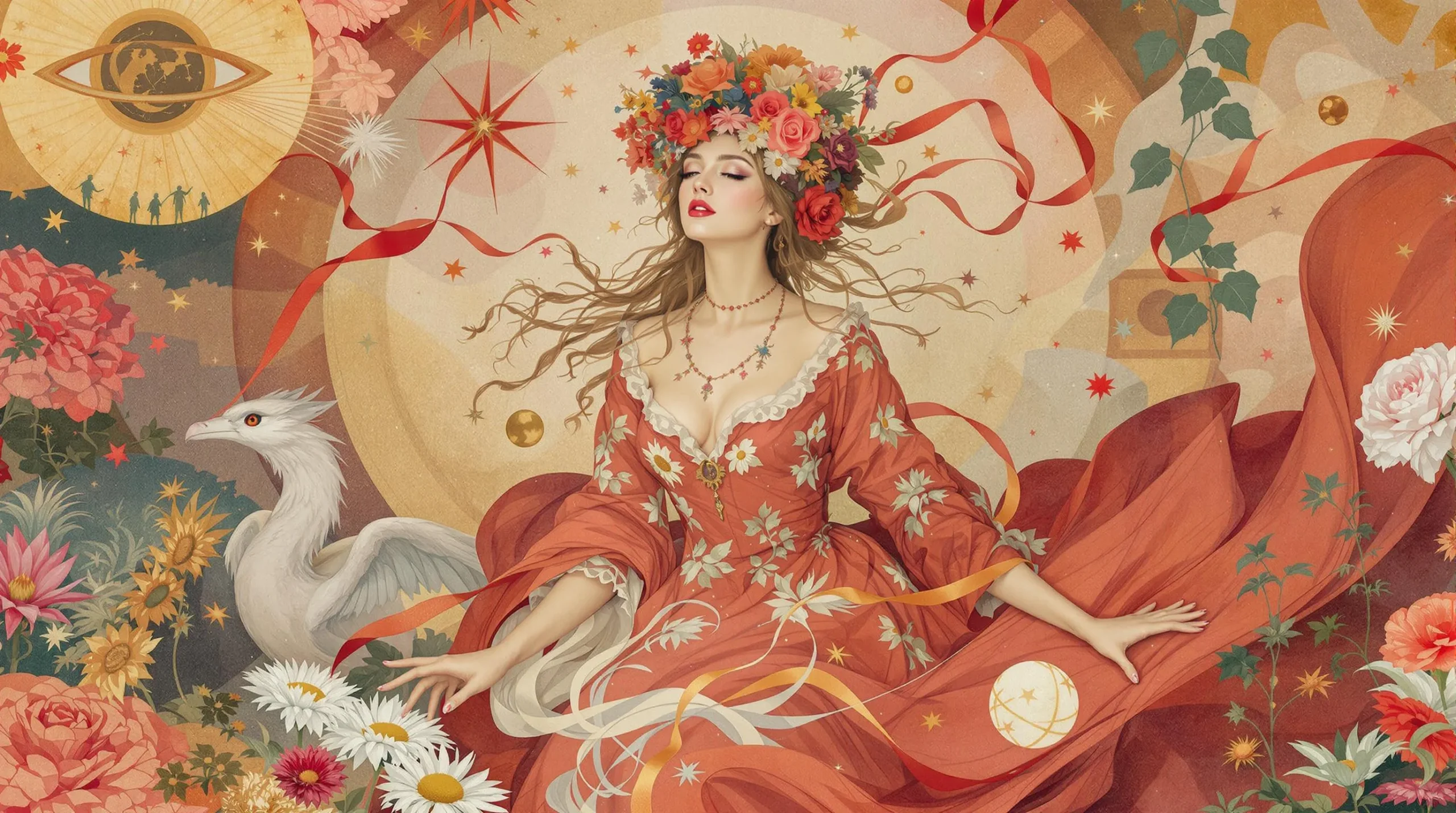
In the modern psyche, the Woman in The Red Dress has evolved beyond the simple femme fatale. She is a symbol of chosen visibility. In an age of curated digital selves and the noise of constant information, she represents the strategic, potent act of capturing attention. To have her in your personal mythology is perhaps to understand that one's life story is shaped by moments of deliberate emergence. She is the decision to stop waiting for the spotlight and to become your own source of light, even if that illumination casts long and complicated shadows. Her red is not just color; it is signal, it is declaration, it is the blood of a life fully lived and witnessed.
Her meaning is also deeply tied to the concept of the catalyst. She does not need to be the protagonist of the entire story, but her entrance marks a point of no return. In a personal myth, she may represent a pivotal job, a transformative relationship, or a moment of profound self-acceptance that splits life into a 'before' and 'after'. She is the embodiment of the idea that a single, bold choice can change the entire emotional or narrative landscape. Her presence asks: what happens when you stop accommodating the scene and, instead, force the scene to accommodate you?
The archetype also holds a mirror to our collective anxieties about female power, desire, and agency. She is often depicted as a lone figure, defined against a backdrop of the mundane. This singularity suggests both power and isolation. For an individual, this could symbolize a path that is powerful but perhaps lonely, a journey where one’s own conviction must be the primary source of affirmation. She is the courage to be the 'too much' that the world is not yet ready for, a living question about who is allowed to take up space and on what terms.