 Believe
 Fear
Fear Strength
 Weakness
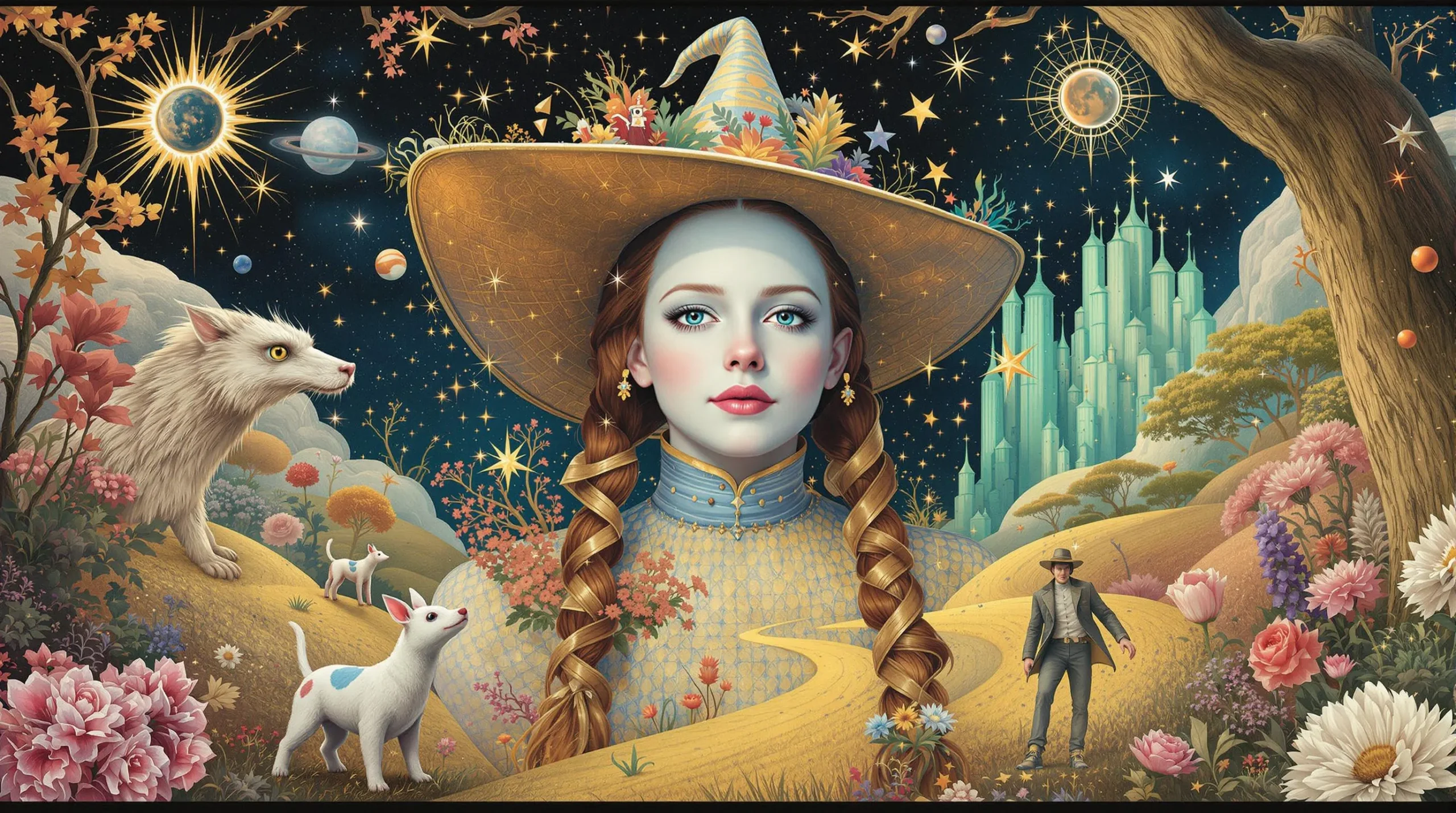
The Wizard of Oz archetype is the great metaphor for the performance of power. In our personal mythologies, he is the booming voice of every institution that appears infallible, every charismatic leader who seems to have all the answers, every social media feed that projects a life of flawless success. The Wizard is the curtain itself, the beautiful and terrifying illusion separating the public face of authority from the mundane, often fumbling, reality behind it. To have this archetype active in one's life is to be perpetually aware of this division, to understand that the Emerald City’s gleam may be an artifice, and its powerful ruler might just be a lonely man with a microphone and a box of gears. This archetype challenges us to question what is real: the effect of power, or the source of it?
He is also the mirror for our own projections. We create our wizards. We inflate others with the authority we are afraid to claim for ourselves, hoping they will grant us the courage, heart, or wisdom we need. The Oz mythos suggests this is a fundamental human pattern: to seek an external savior, to journey to a distant capital in search of a miracle. The Wizard’s meaning, then, is deeply tied to the moment of disillusionment. He represents the painful but liberating discovery that the power we outsourced was ours all along. The journey to Oz was never about what the Wizard could give, but about what the travelers discovered in themselves along the way.
Yet, the Wizard is not merely a villain or a fraud. He is, perhaps, a benevolent deceiver, a purveyor of necessary placebos. His deceptions, while self-serving at first, ultimately become the catalyst for genuine self-actualization in others. This introduces a profound ambiguity: perhaps some illusions are useful. Perhaps “faking it until you make it” is not just a personal strategy but a way of creating a space for others to grow into their potential. The Wizard symbolizes the idea that the right words, the right symbols, even if hollow in themselves, can unlock authentic power in another. He is the patron saint of well-intentioned humbugs, the proof that even a fraud can accidentally tell the truth.