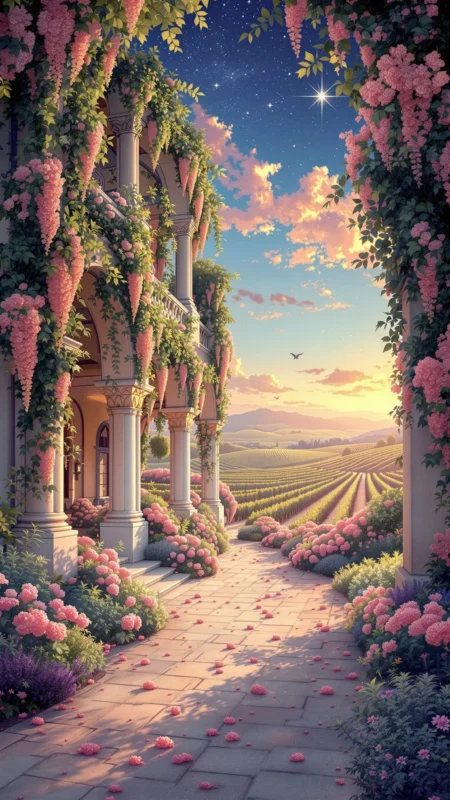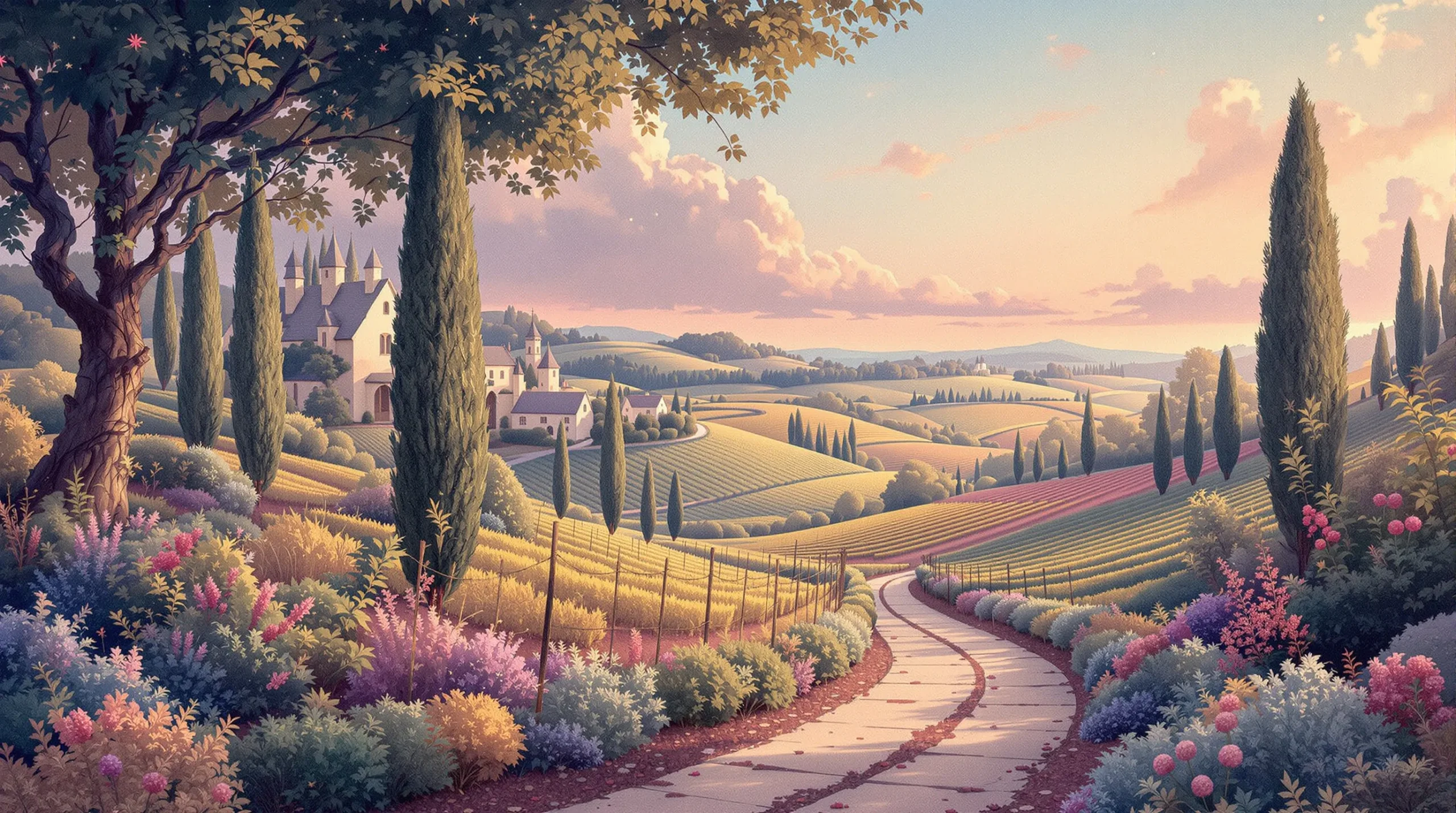


Winery

Archetype Meaning & Symbolism

Transformative, patient, celebratory, intoxicating, aged, cultivated, communal, laborious, volatile, refined

  • Do not rush the harvest, nor the press. The deepest truths require a slow, deliberate crush and time in the dark to become clear.

If Winery is part of your personal mythology, you may...

Believe

  • That time is the most crucial ingredient in developing anything of worth.

  • That the best things in life are a blend of nature, science, and a little bit of magic.

  • That every hardship and pressure can be transformed into a source of depth and character.

Fear

  • A 'bad harvest': that a period of your life's work will be ruined by a single, unforeseen event.

  • Premature exposure: that your ideas, projects, or self will be judged before they have had time to mature.

  • Contamination: that a negative influence or toxic element will spoil the entire endeavor.

Strength

  • Profound patience and a long-term perspective.

  • The ability to create the right conditions for others to grow and transform.

  • An appreciation for complexity, nuance, and the story behind things.

Weakness

  • A tendency towards slowness or inaction, waiting for the 'perfect' conditions that may never arrive.

  • An elitism or snobbery regarding process, looking down on quicker, simpler methods or results.

  • Over-controlling the process, refusing to allow for serendipity or the 'magic' of fermentation.

The Symbolism & Meaning of Winery

In the personal mythos, the Winery is the archetypal space of transformation. It is where raw material of experience is not merely consumed, but cultivated, crushed, and converted into something of greater complexity and value. Your life’s mundane or even painful events, the sun-scorched struggles and bitter harvests, are the grapes. The Winery insists these are not endpoints but ingredients. It is a symbol for the conscious, often laborious, process of turning personal history into wisdom, of fermenting loss into empathy, and aging youthful impulsiveness into mature judgment. To have the Winery in your mythos is to believe that your life is a vintage in the making, and you are both the vineyard and the vintner.

The concept of “terroir” becomes central: the untranslatable truth that a thing is inextricably shaped by the specific place it comes from. The Winery archetype invites you to view your own character not as a generic product, but as a unique expression of your personal terroir: the family soil you grew in, the cultural climate that nourished you, the specific storms you weathered. This fosters a radical self-acceptance. You are not flawed for having a certain sharp or earthy note to your character; you are simply expressing the ground you are from. It replaces the pursuit of a universal ideal with the art of understanding and expressing your own inimitable origin story.

Furthermore, the Winery embodies the sacred tension between labor and celebration. It is not an eternal party, nor is it a joyless work camp. It is the place where gritty, dirt-under-the-fingernails toil is the direct prerequisite for the clinking of glasses. This archetype suggests that true joy is not an escape from difficulty but its culmination. It sanctifies the process: the meticulous pruning of bad habits, the back-breaking work of self-improvement, the patient waiting in the dark. It whispers that the most profound celebrations are those earned through a season of dedicated, focused, and meaningful effort.


Winery Relationships With Other Archetypes

The Farmer

The Farmer is the Winery’s indispensable partner, the embodiment of grounded, cyclical work. While the Winery represents the controlled, alchemical transformation indoors, the Farmer is the master of the external world: the soil, the sun, the pests, the rain. Without the Farmer’s pragmatic tending of the vines, the Winery has no raw material to work with. In a personal mythos, this relationship highlights the need to balance introspective, transformative work with practical, real-world action. One cannot simply sit in the cellar of the mind and expect to mature; one must also go out into the field of life and do the work, get one's hands dirty, and humbly attend to reality.

The Alchemist

The Alchemist is the mystical soul of the Winery. If the Farmer provides the body and the Vintner the craft, the Alchemist understands the invisible magic: the secret life of yeast, the molecular dance within the barrel, the transmutation of sugar into spirit. The Winery is the Alchemist's laboratory. This relationship speaks to the element of faith and mystery in personal growth. You can do all the work, control all the variables, but there is still a point where you must surrender to a process you cannot fully see or understand. The Alchemist reminds the Winery that not all transformation can be explained by pure science; some of it requires a trust in the unseen.

The Reveler

The Reveler, or the spirit of Dionysus, represents the ultimate purpose of the Winery’s creation: communion and ecstatic release. The most perfect wine is meaningless if never uncorked, shared, and enjoyed. The Reveler prevents the Winery from becoming a sterile, self-obsessed museum of its own creations. This archetype pushes the individual to share their hard-won wisdom, to let their transformed self bring joy and connection to others. It is the force that insists that the point of all this patient self-cultivation is not to become a perfect, sealed bottle on a shelf, but to be poured out in generous, life-affirming celebration with others.

Using Winery in Every Day Life

Navigating Career Transitions

When faced with a career change that feels like a step back, the Winery archetype suggests viewing this period as a necessary dormancy, like a vine in winter. It is not a time of loss, but of gathering unseen strength. You may consciously treat new, seemingly basic skills as the essential pruning required for more robust future growth, trusting that this fallow period will enrich the "soil" for a more complex and rewarding professional vintage later on.

Cultivating Relationships

For a relationship passing through a difficult phase, this archetype provides a map. Instead of demanding immediate resolution, you might see the conflict as a volatile but necessary fermentation. It's a messy, bubbling, and often unpleasant process that, if contained with care and patience (the barrel), transforms the simple sweetness of initial attraction into a bond with depth, complexity, and lasting character. You learn to trust the chemistry of time.

Processing Difficult Emotions

When grappling with grief or trauma, the Winery archetype offers a model for transformation rather than suppression. You could consciously alchemize the raw pain (the grapes) by putting it under the managed pressure of reflection, therapy, or art (the winepress). The goal is not to forget the experience, but to process it over time in the dark, quiet cellar of the self, until it becomes not a raw wound, but a source of profound wisdom and empathy.

Winery is Known For

Transformation

The almost magical process of converting simple fruit into a complex, storied beverage. The winery is a stage for alchemy, where sun, soil, and sugar are transmuted by yeast and time into spirit.

Patience & Time

The profound understanding that some things cannot be rushed. The winery is a temple to the slow work of maturation, where value and character are bestowed not by force, but by the quiet, deliberate passage of seasons in a cellar.

Terroir

The unique expression of a specific place. A winery is known for its ability to bottle a landscape, to give you a taste of a particular hillside's soil, sun, and rain from a single year. It champions the idea that origin story matters profoundly.

How Winery Might Affect Your Personal Mythology

How Winery Might Affect Your Mythos

When the Winery takes root in your personal mythos, your life story ceases to be a linear progression and becomes a series of vintages. Each year, each era of your life, is judged not by its ease, but by the quality of the 'wine' it produced. A 'good year' might have been fraught with difficulty, a 'bad harvest' of loss and struggle, yet it yielded a profound depth of character. This perspective reframes tragedy and hardship as essential elements that create complexity. Your narrative is less about reaching a destination and more about the ongoing cultivation of your personal vineyard, with each season adding another layer to your story.

Your mythos also becomes deeply attuned to the importance of legacy and the passage of time. You may see your actions not for their immediate payoff but for how they will 'age.' The goal is to create something—a body of work, a family, a set of values—that will mature and deepen in meaning long after its creation. This infuses your story with a sense of immense patience and purpose. You are not just living for the moment; you are cellaring experiences, lessons, and love for a future self, or for future generations, to uncork and appreciate.

How Winery Might Affect Your Sense of Self

Your sense of self may be perceived as a complex blend, an assemblage of notes and aromas. You are not one thing, but many. There is the earthy foundation of your upbringing, the bright, acidic notes of your intellect, the sweet fruit of your joys, and the tannic structure of your hardships. The Winery archetype allows you to hold these contradictions with grace, understanding that they combine to make you interesting and whole. It replaces the pressure to be simple and consistent with the pleasure of being nuanced and deep.

Furthermore, you might identify deeply with the role of a vessel, a container for transformation. You see your own consciousness as the 'barrel' in which life's raw experiences are held, aged, and integrated. This fosters a quiet confidence. Your worth is not just in your outward achievements but in your internal capacity to process life. It's a shift from a self-concept based on doing to one based on being: being a space where growth, maturation, and alchemy can happen.

How Winery Might Affect Your Beliefs About The World

A worldview informed by the Winery is one that deeply values terroir. You may see every person, culture, and idea as a product of its specific environment, and you understand that you cannot judge one by the standards of another. This cultivates a profound, almost sensory empathy. Instead of asking 'Why are they like that?', you might ask, 'What soil produced this? What climate has it weathered?' It leads to a world seen not as a collection of competing truths, but as a vast cellar of unique vintages, each with its own story and integrity.

This perspective also creates a powerful skepticism towards the cult of speed and novelty. The world is not a feed to be scrolled through, but a library of aging wines to be savored. You may believe that true understanding requires time, and that the most valuable ideas, like the best wines, have been tested and matured over generations. This fosters an appreciation for history, tradition, and institutions that have endured, seeing them not as relics, but as reservoirs of accumulated, time-tested wisdom.

How Winery Might Affect Your Relationships

In relationships, you may operate like a master vintner, understanding that different connections require different processes. Some friendships are like a Beaujolais Nouveau, meant for immediate, joyous consumption. Others are like a Grand Cru Bordeaux, needing years of patience and quiet 'cellaring' to reach their full potential. You become comfortable with relationships that are not in constant contact, trusting that the bond is deepening in the silence. You learn to discern what a connection needs: time, pressure, or simply to be decanted and enjoyed.

This archetype may also lead you to orchestrate social gatherings with the care of a sommelier creating a wine pairing. You might have an intuitive sense of which personalities will 'pair' well, bringing out the best notes in each other. Gatherings are not just casual hangouts; they are curated experiences designed to foster connection and meaningful conversation. You seek to create an environment where each person feels savored for their unique 'flavor profile,' contributing to a rich and memorable communal experience.

How Winery Might Affect Your Role in Life

You may naturally assume the role of the Vintner in your family, community, or workplace. You are the one who creates the conditions for growth. You don't tell people what to be, but you provide the structure, the patience, and the right amount of pressure for them to transform themselves. You take the raw, chaotic energy of a new project or a family crisis and contain it, guiding its fermentation into a successful outcome or a valuable lesson. Your role is that of the patient cultivator of potential.

Alternatively, you could embody the role of the 'Cellar Master,' the guardian of what has already been created. You are the keeper of family stories, the archivist of an organization's institutional knowledge, the one who remembers the 'good years' and the lessons learned from the 'bad.' Your purpose is to ensure that the wisdom of the past is not lost, but preserved and aged, ready to be drawn upon when needed. You provide stability and continuity, reminding everyone that we are part of a longer story.

Dream Interpretation of Winery

In a positive context, to dream of a vibrant, orderly winery, perhaps with sunlight filtering through onto aging barrels, is to receive a profound affirmation from the psyche. It may suggest that the slow, often invisible work you are doing on yourself is succeeding. The dream is a message that your patience is well-founded, that disparate parts of your life are integrating beautifully, and that a period of rich, soulful maturity is developing within you. Tasting a delicious wine in such a dream could signify an imminent moment of well-earned joy and celebration.

Conversely, dreaming of a derelict winery—with broken bottles, sour, vinegary smells, or blighted vines—can be a potent warning. It may point to a potential squandered or a process of growth that has been corrupted by neglect, impatience, or a toxic influence. This dream could be highlighting an area of your life where you have abandoned the hard work of cultivation for quick fixes, or where bitterness and resentment are souring your inner world. It is a call to inspect your 'cellar' and tend to what is spoiling before it contaminates everything.

How Winery Archetype Might Affect Your Needs

How Winery Might Affect Your Physiological Needs

Physiologically, the Winery archetype emphasizes the body as the ultimate terroir. The need for nourishment is not just about fuel, but about curating the quality of the 'soil.' There may be an intuitive pull towards whole, natural foods, a sense of wanting to consume things that carry the story of where they came from. This is not about dieting, but about cultivating a rich inner landscape. Every meal is an act of tending to the vineyard of the self, ensuring the raw materials are of the highest quality for the transformations of energy and consciousness.

This archetype also instills a deep respect for the body’s need for dormancy. In a culture that prizes constant productivity, you may feel a natural, unapologetic pull towards periods of deep rest and inactivity, recognizing them not as laziness but as the essential 'winter' phase. Just as a vine gathers strength below the ground, you understand that physiological renewal happens in stillness. Sleep, rest, and quiet are not empty time; they are when the system repairs, integrates, and prepares for the next season of growth and expression.

How Winery Might Affect Your Ideas of Belonging

For the Winery archetype, belonging is forged in the fires of shared ritual. The simple but profound act of sharing a bottle of wine—the ceremony of opening it, pouring, clinking glasses, and tasting together—is a powerful sacrament of connection. You may find or create belonging in communities that value intentional gatherings. Love and friendship are reinforced not just by casual proximity, but by creating specific, repeated moments of communion and shared sensory experience, turning acquaintances into a chosen family.

Intimacy is often perceived as a delicate blending process. A healthy partnership is like a masterfully blended wine, where two distinct varietals (individuals) are combined to create something more complex and balanced than either could be alone. This requires skill, intuition, and the knowledge that neither party should overwhelm the other. The goal is not to lose your own 'flavor' but to contribute it to a shared identity that honors both origins while creating a new, singular vintage.

How Winery Might Affect Your Feelings of Safety

A sense of safety, through the lens of the Winery, is found in structure and containment. The thick stone walls of the cellar, the sturdy hoops of the barrel, the cork sealing the bottle—these are all symbols of a secure container where a volatile process can unfold safely. This may translate into a need for strong boundaries in life. Your safety lies in creating a well-defined personal space, a reliable routine, and clear emotional limits that allow your inner development to proceed without disruption from the outside world.

Security is also deeply connected to long-term provision. The image of a fully stocked wine cellar is one of abundance and preparedness for the future. This can manifest as a prudent and patient approach to financial and material security. You may find comfort in building resources slowly over time: a savings account, a pantry, a collection of skills, a network of loyal friends. This isn't about hoarding, but about cultivating a reserve of resources that ensures you can weather any unforeseen 'bad seasons' with grace and stability.

How Winery Might Affect Your Views of Esteem

Esteem is derived from the quiet mastery of a process, not from external applause. Your self-worth is tied to the knowledge that you can handle the raw materials of your life—the successes and the failures—and transform them with skill and patience. Like a vintner who is proudest of the wine made in a difficult, rainy year, you may draw the most esteem from having navigated challenges successfully. Your value is intrinsic to your character and capability, not dependent on the 'market rating' of your achievements.

Self-respect is also deeply rooted in an unwavering loyalty to your own 'terroir.' You honor the unique combination of heritage, experience, and place that makes you who you are. There is little desire to be a mass-market product or to imitate the flavor of someone else. Your esteem comes from authenticity, from expressing your own complex, sometimes difficult, but utterly unique character. You respect yourself by refusing to apologize for the ground you grew from.

Shadow of Winery

The shadow of the Winery arises when the process becomes a tyrannical obsession. This is the Vintner as sterile perfectionist, valuing the technique far more than the joy of the wine. It manifests as a life lived in a laboratory, not a vineyard. All spontaneity is crushed, all pleasure is suspect, and relationships are analyzed for their 'notes' rather than simply enjoyed. This shadow leads to creative paralysis and an inability to ever release one's work—or oneself—into the world, as it is never quite perfect. The cellar becomes a prison of impossibly high standards, where life's potential is aged into dust.

The other, more decadent shadow, is that of intoxication as an end in itself. Here, the transformative potential of the Winery collapses into mere escapism. It is the refusal to do the hard work of cultivation, wanting only the final, mind-numbing release of the drink. This shadow uses the 'celebratory' aspect of the archetype to avoid the labor, leading to a life of indulgence without substance. The vineyard of the self is left untended, the grapes rot on the vine, and the transformative cellar becomes a dank place of addiction and regret, where potential sours into vinegar.

Pros & Cons of Winery in Your Mythology

Pros

  • Develops a deep appreciation for process and the beauty of gradual development.

  • Fosters a life rich with ritual, celebration, and meaningful connection.

  • Builds resilience by framing challenges as necessary pressures that create character.

Cons

  • Can lead to analysis paralysis, endlessly waiting for the 'right time' to act.

  • May foster a sense of superiority or exclusivity, judging those with different 'tastes' or processes.

  • Risks romanticizing labor and hardship to a fault, potentially enduring toxic situations for the sake of 'character building.'