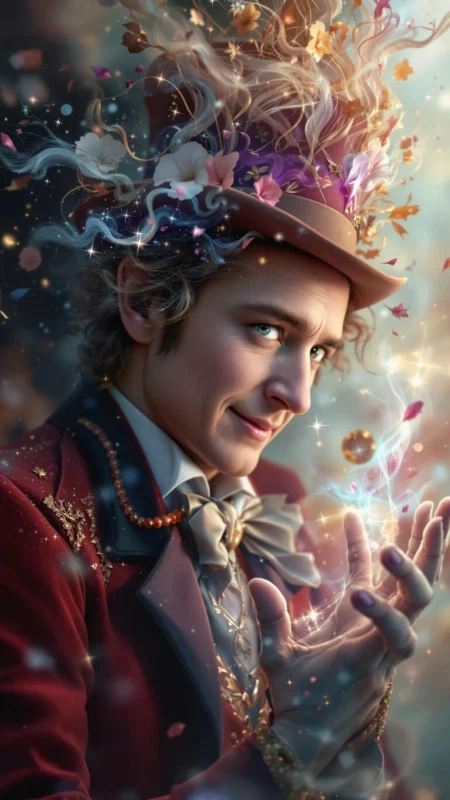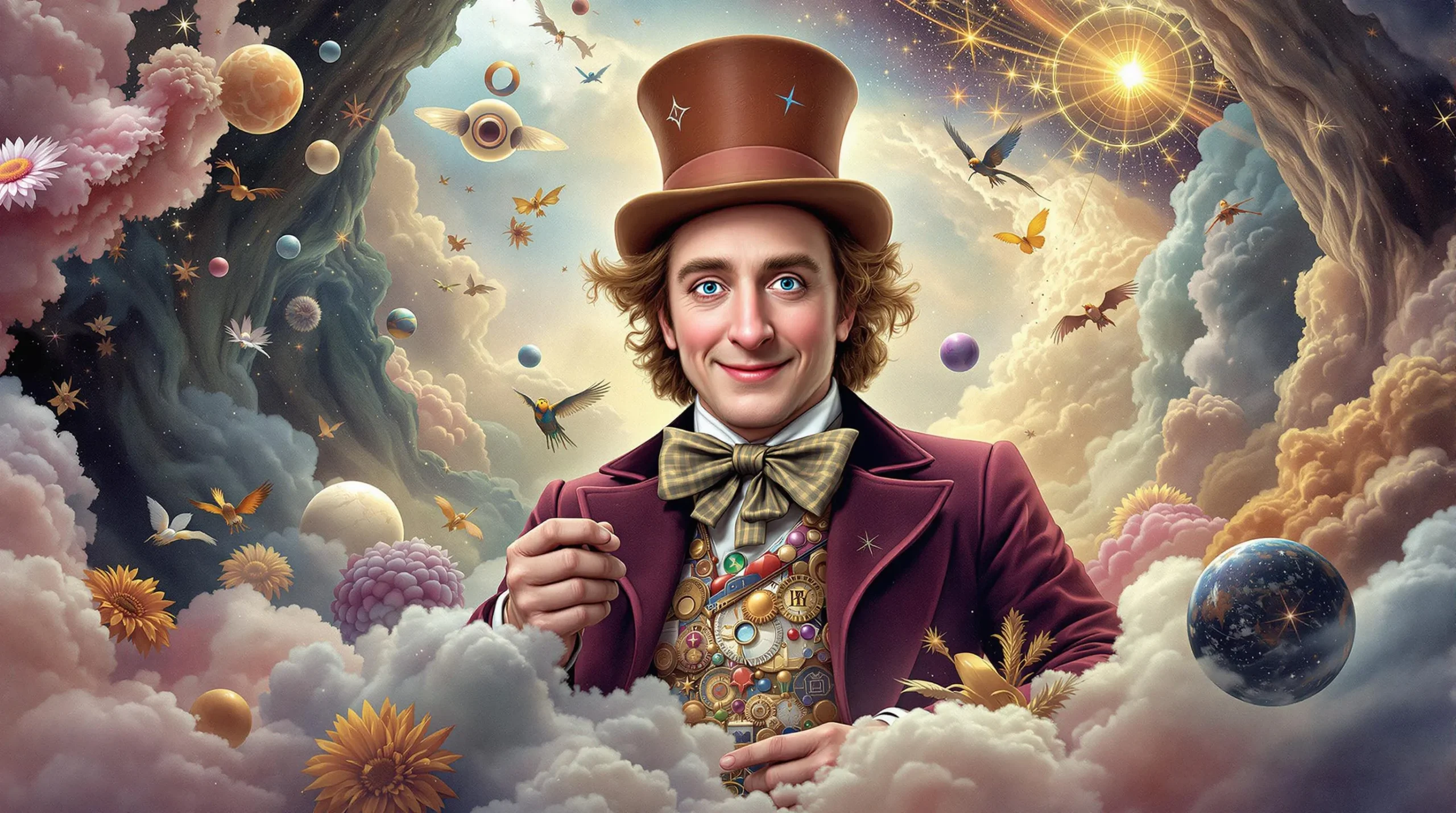


Willy Wonka

Archetype Meaning & Symbolism

Eccentric, Reclusive, Genius, Trickster, Whimsical, Cynical, Moralist, Inventor, Unpredictable, Playful

  • A little nonsense now and then, is cherished by the wisest men.

If Willy Wonka is part of your personal mythology, you may...

Believe

  • That the universe is a grand moral test, and a person's character is the ultimate author of their fate.
  • That a dash of nonsense and a commitment to one's own unique vision are more profound forms of wisdom than all the world's conventional knowledge.
  • That true sovereignty lies in creating and controlling your own environment, even if the price is a splendid isolation.

Fear

  • That the magic you create will be stolen, cheapened, or misunderstood by a world that values profit over purity.
  • That you are fundamentally unknowable, and that no one will ever possess the specific goodness required to share your world, condemning you to perpetual loneliness.
  • That your cynical judgment of others is merely a projection, and that you are just as flawed and unworthy as the 'bad nuts' you so easily cast aside.

Strength

  • An unparalleled imagination, allowing you to conjure novel solutions and create worlds of wonder where others see only emptiness.
  • A fiercely independent moral compass, which, though eccentric, provides a powerful and unwavering guide for your actions.
  • Radical self-reliance, a deep-seated ability to trust your own wit, resources, and vision to build the life you desire.

Weakness

  • A pervasive cynicism, a default assumption of others' negative motives that poisons potential connections and fosters isolation.
  • A reckless disregard for convention and safety, which can place you and others in unnecessarily precarious situations.
  • Emotional artifice, a tendency to hide behind layers of performance and whimsy, making genuine vulnerability and direct communication feel impossible.

The Symbolism & Meaning of Willy Wonka

The Willy Wonka archetype may represent the keeper of the gate between the mundane and the magical. He is the living embodiment of the suspicion that behind the bland, brick facade of the everyday world lies a realm of impossible wonder, a place governed by the logic of dreams. To have this figure in your personal mythology is to hold a belief in secret worlds: the hidden potential within a person, the unspoken creativity within an organization, the quiet magic humming beneath the noise of the ordinary. Wonka is the patron saint of inventors, eccentrics, and anyone who has ever felt the urge to build their own reality with its own peculiar, inviolable rules.

He is also, perhaps, a peculiar kind of moralist, a trickster god doling out a very specific form of karmic justice. His factory is a crucible, less a place of industry and more a carefully calibrated test of character. Each room, a new temptation: greed, gluttony, impatience, vanity. Wonka does not preach or forbid. He simply creates the conditions for flaws to bloom into their own spectacular, often comical, consequences. For the individual, this may foster a worldview where character is destiny, where people’s inner vices will eventually, and poetically, orchestrate their own downfall. It is a belief in a universe that is not indifferent, but is instead a grand, theatrical moral play.

Finally, Wonka could symbolize the profound loneliness of the creative genius. He is a king in a candy castle, a sovereign of a world of his own making, yet he is utterly alone, save for his cryptic employees. He is suspicious, scarred by past betrayals, hiding his vulnerability behind layers of wit and whimsy. His search for an heir is not just about legacy: it is a desperate search for understanding, for a kindred spirit who sees not just the delightful surfaces but appreciates the strict moral architecture beneath. This archetype speaks to the myth of the creator who must retreat from the world to build their vision, and the deep human cost of that magnificent isolation.


Willy Wonka Relationships With Other Archetypes

The Child Heir

The Willy Wonka archetype may find its most crucial and perhaps most poignant relationship with The Child Heir. This is not the simple affection of a mentor for a student, but something more akin to a dying star seeking a nascent planet to catch its last light. The Child is a vessel, a blank page upon which the Wonka figure, isolated by the sheer singularity of his own genius, hopes to scribe his legacy. The elaborate tests and moral traps laid throughout his domain are not, perhaps, acts of cruelty, but a desperate filtration process. They could be seen as the gestures of a master alchemist who must find the one soul pure enough to handle the philosopher’s stone without being vaporized by its power. In the unjaded eyes of the Child, the Wonka may hope to find a mirror that reflects not his own weary, eccentric face, but the possibility of a future that redeems his magnificent, solitary past.

The Labyrinthine Factory

The Factory is not merely a setting but the archetype’s very exoskeleton, a hardened shell of rococo machinery and weaponized whimsy. The relationship is one of terrifying symbiosis; one might wonder if the man could survive without his creation, or if the creation would simply hum on without him. Every bubbling vat could be a churning emotion, every intricate conveyor belt a synaptic pathway in his sprawling, sequestered mind. To tour the factory is to conduct a psycho-geography of the Wonka soul, from its sunlit confectionary cathedrals to its dark, industrial cellars where moral failings are processed with terrifying efficiency. The Factory, then, may be the ultimate cage of his own design, a dream from which he cannot wake, where he is both warden and sole prisoner, forever polishing the bars of his gilded, sugary cage.

The Trickster

With The Trickster, the Wonka archetype engages in a kind of self-dialogue, a dance with his own shadow. He does not simply employ trickery; he may be a conduit for it, a high priest of benevolent chaos. This relationship suggests a figure who has gazed so long into the amoral, playful abyss of pure creation that he has learned its native tongue. His pranks and moralistic punishments are perhaps not just for the benefit of his guests, but are the very syntax of his being—the only way he can still communicate with a mundane world he has otherwise abandoned. He could be a court jester who has forgotten the face of the king he once served, forever bound to the cap and bells, using disruptive absurdity not to create confusion, but to reveal a deeper, often more dangerous, form of order.

Using Willy Wonka in Every Day Life

Navigating a Creative Block

When inspiration feels like a locked gate, the Wonka archetype suggests the key is not more effort, but more nonsense. It encourages a deliberate pivot into the absurd: walk backward for an hour, invent a recipe for an impossible dish, speak only in questions for a day. The goal is not to find a direct solution but to scramble the logical mind, to shake the snow globe of consciousness, allowing a new, unexpected pattern to settle. It's about finding the fizzy lifting drink of perspective that elevates you above the problem.

Confronting Bureaucracy

Faced with a rigid system of rules and forms, a person channeling Wonka does not argue with the gatekeeper: they look for the golden ticket. This might mean finding a loophole, an overlooked clause, a human element in the machine that can be charmed. It is about treating the impenetrable system as a puzzle or a game. The strategy is not brute force but whimsical subversion, recasting oneself as the exception to whom the mundane rules simply, magically, do not apply.

Discerning True Character

When trying to understand a new acquaintance or colleague, the Wonka mythos provides a framework of subtle, playful tests. It is not about interrogation, but observation. One might introduce a strange idea to see if it's met with curiosity or scorn. One could present a small dilemma to see if generosity or selfishness prevails. Like the factory tour, life becomes a series of rooms designed to reveal a person's core nature, watching not what they say, but which piece of candy they cannot resist grabbing.

Willy Wonka is Known For

The Chocolate Factory

A self-contained universe of pure imagination, where the laws of physics are suspended and every landscape is edible. It is both a paradise of endless delights and a perilous moral labyrinth, a physical manifestation of its creator's mind.

The Golden Ticket

The ultimate key to a hidden world, bestowed not by merit but by pure chance, yet serving as a catalyst for a test of worthiness. It represents the rare, miraculous opportunity that can change a life, separating the chosen from the masses.

The Oompa Loompas

A loyal, mysterious workforce and a living moral chorus. They are the background hum of the factory, performing the work of magic while serving as judgmental observers who articulate the lessons of each character's downfall through song.

How Willy Wonka Might Affect Your Personal Mythology

How Willy Wonka Might Affect Your Mythos

When Wonka enters your personal mythos, your life story may begin to orbit around the theme of a 'hidden world.' You might perceive your own soul, your creative project, or your private passion as your own 'factory': a place of immense inner complexity and wonder, sealed off from the uninitiated. The narrative of your life could become a quest, not for wealth or status, but for a 'golden ticket,' that one rare, serendipitous opportunity that will grant you entry into your true calling, allowing you to finally inhabit the world you were meant to create. Setbacks may be framed as encounters with unworthy 'bad nuts,' and allies are those rare 'Charlies' who possess the simple goodness required to see the magic you are guarding.

Your personal myth could also be shaped by the powerful narrative of the 'worthy successor.' You may find yourself perpetually in one of two roles: the testator or the tested. As the testator, you are the mercurial genius, subtly evaluating friends, colleagues, and lovers, searching for someone to whom you can entrust your most precious ideas, your legacy, your secret recipe for life. As the tested, you are the humble protagonist navigating a world of temptations, striving to prove your quiet virtue to a mentor figure who is unpredictable, brilliant, and holds the key to the kingdom you wish to inherit. Your life becomes a story about passing or failing a series of unannounced, deeply personal examinations.

How Willy Wonka Might Affect Your Sense of Self

To see yourself through the lens of Willy Wonka is to grant yourself permission for radical self-acceptance. Your eccentricities, your oddball humor, your unconventional passions are no longer liabilities: they are the very hallmarks of your genius. You may construct a persona, a flamboyant coat and top hat of wit and whimsy, that serves to protect a vulnerable, deeply creative core. This archetype can foster a powerful sense of self as an inventor, not just of things, but of realities. You don't merely live in the world; you curate it, you reimagine it, you build your own edible teacups and lickable wallpaper, refusing to accept the bland menu of conventional existence.

This self-conception, however, could be a gilded cage. You may feel chronically misunderstood, a cryptic visionary whose grand intentions are reduced to mere quirks by a literal-minded populace. This can breed a deep-seated cynicism and a retreat into isolation. You might become a recluse in your own mental 'factory,' preferring the predictable company of your own ideas to the messy, disappointing realities of human relationships. The danger lies in becoming so identified with the role of the enigmatic genius that you forget how to remove the top hat and simply be present with another human being, your persona having consumed the person within.

How Willy Wonka Might Affect Your Beliefs About The World

A worldview informed by the Wonka archetype is one that is constitutionally suspicious of surfaces. You may look at a corporate headquarters and see a potential 'nut-sorting room,' or view a political promise as a 'three-course-meal chewing gum' destined to go wrong. It is a perspective that assumes a hidden layer to everything: a secret motive, an unseen design, a magical potential. You may believe the universe operates not on random chance, but on a kind of narrative or moral logic, where justice is not only served but served with a theatrical flourish. Magic, in this view, is not an escape from reality but a deeper, more true reality that is simply waiting for the right kind of attention to be paid to it.

This perspective may also instill a kind of detached, observational cynicism. You might see the world as a grand tour of human folly, watching the greedy, the spoiled, and the arrogant march toward their inevitable, self-created dooms. There is a certain dark delight in this, a feeling of being 'in on the joke.' The world is a stage, and you are the audience member who has read the script and knows how it ends for the foolish characters. This can lead to a sense of superiority, but also to a passive disengagement, a preference for watching the play of life rather than getting your own hands dirty on the stage.

How Willy Wonka Might Affect Your Relationships

In the realm of relationships, the Wonka archetype could compel you to establish subtle, imaginative 'tests' for those you let close. You are not looking for a perfect person, but for a pure heart. You might gauge a potential partner’s character by their reaction to your strangest hobby, their response to a moment of unexpected wonder, or their capacity for play. You are, in essence, searching for your 'Charlie Bucket': not someone who wants to own your factory or exploit its secrets, but someone with the soul to inherit its magic, to share in it without wanting to possess it. Authenticity and an absence of greed become the primary currencies of connection.

This same impulse can erect formidable barriers to intimacy. The wall of wit, the unpredictable behavior, the reclusive tendencies: these are all defense mechanisms designed to keep the unworthy out, but they often keep everyone out. You may be a source of immense delight and fascination to others, a purveyor of dazzling conversational confections, while the true self remains locked away. True vulnerability may feel like giving away the secret formula to your Everlasting Gobstopper. The result can be a life rich in admirers but poor in genuine, reciprocal intimacy, leaving you the lonely master of a magnificent world built only for one.

How Willy Wonka Might Affect Your Role in Life

Your perceived role in life might become that of the 'Catalyst of Truth' or the 'Mercurial Mentor.' You may see your purpose not as providing direct answers, but as creating experiences that force others to confront their own natures. You are the one who builds the maze, not the one who hands out the map. Your contribution is to shake people from their moral slumber, using absurdity, humor, and temptation to reveal the truths they hide from themselves. You are less a teacher and more a walking, talking moral fable, a disruptive force for authenticity in a world of performance.

Alternatively, you may feel your destiny is to be the 'Hermit Creator.' Your primary duty is not to society, but to your Vision. Your role is to build your factory: your company, your body of art, your grand unified theory of everything. The world's validation is secondary to the integrity of the creation itself. This path demands a monastic devotion, a willingness to sacrifice conventional social bonds for the sake of bringing something entirely new into existence. Your role is to be the guardian of that creation, to protect its magic from the grubby hands of a world that, in your view, would only seek to commodify and corrupt it.

Dream Interpretation of Willy Wonka

In a positive dream context, to find yourself inside Wonka’s factory—perhaps you are successfully navigating the chocolate river or inventing a candy that makes people kind—may symbolize a powerful connection to your own creative wellspring and inner child. The dream could be an affirmation from your subconscious, suggesting you are on the brink of an ingenious solution to a waking life problem by using unconventional thinking. Wonka appearing as a benevolent guide signifies an integration of your playful and wise aspects. It is an invitation to trust in the fantastic, to believe in your own magic, and to proceed with a project that others might deem impossible.

Conversely, a nightmare set in the factory—where you are being swept away by the river, shrinking, or being judged by an army of Oompa Loompas—could point to a deep-seated fear of your own nature. It might suggest a creative process that has become toxic, a sense that your own ambitions are out of control and leading you to peril. Wonka as a menacing, capricious figure may represent a punishing inner critic or a fear of being exposed as a fraud. The dream warns that your pursuit of a unique vision may be isolating you dangerously, or that the 'moral tests' you apply to others are really a reflection of your own harsh self-judgment.

How Willy Wonka Archetype Might Affect Your Needs

How Willy Wonka Might Affect Your Physiological Needs

From a personal mythology perspective, the Wonka archetype could transform one's relationship with basic physiological needs, turning them from mundane requirements into canvases for invention. Food is not mere sustenance; it is an experiment, a three-course dinner in a stick of gum, a river of chocolate. Shelter is not just a roof; it is a fantastical, self-contained world. This archetype might inspire you to meet your bodily needs with a sense of play and artistry, infusing the acts of eating, drinking, and resting with a quality of wonder. Survival itself becomes an act of creative expression.

However, this same archetype could foster a profound disconnect from the body’s natural state. The factory, while providing everything, is a wholly artificial environment, divorced from the earth, the sun, the rain. One might come to prefer the invented flavor to the natural one, the manufactured reality to the given one. This could manifest as a disregard for holistic health, seeing the body as a mere vehicle for the genius of the mind, its needs met with bizarre concoctions (a diet of pure sugar) or ignored entirely in fits of creative obsession. It risks trading organic well-being for manufactured delight.

How Willy Wonka Might Affect Your Ideas of Belonging

Belonging, in the Wonka narrative, is not a matter of being accepted by the many, but of being recognized by the one. It is a quest for a singular connection. The entire factory tour is a filter, designed to discard the unworthy and discover the one person who can truly belong in that magical space. This might lead you to seek friendships and love that are based on a profound, almost secret, understanding. You are not looking for someone who likes you, but for someone who *gets* you, a 'Charlie' whose goodness and wonder resonate with your own, making them worthy of entering the private factory of your soul.

This exacting standard for connection can be a recipe for profound loneliness. The use of playful tests, a defensive wall of wit, and a reclusive nature all serve to keep people at a distance. You may feel like you are offering the world dazzling, delightful sweets—the most charming version of yourself—while keeping the core of your being, the secret recipe, under lock and key. This creates a tragic paradox: a deep yearning for a kindred spirit, coupled with a personality structure that makes it almost impossible for anyone to get close enough to prove they are worthy.

How Willy Wonka Might Affect Your Feelings of Safety

For one who identifies with the Wonka mythos, safety may be found not in conforming to societal norms, but in the construction of a fortress of pure imagination. The locked gates of the factory are a potent symbol: security is achieved by creating a private world so unique and complex that no one else has the key. You may feel safest within the confines of your own rules, your own projects, your own home. It is a security built on radical independence and intellectual superiority, a belief that you can outsmart the dangers of the chaotic outside world by simply refusing to play its game.

Yet, the archetype is also a testament to the idea that there is no true safety in a world of wonder. The factory is an OSHA nightmare; every marvel contains a seed of peril. The Fizzy Lifting Drink that offers transcendence can also make you collide with a deadly fan. This could cultivate a worldview in which life is inherently risky, and that to avoid all danger is to live a dull, meaningless existence. Safety might feel like a cage, and you may find yourself courting manageable chaos, believing that a state of high alert and constant adaptation is the only honest way to live.

How Willy Wonka Might Affect Your Views of Esteem

Self-esteem, for the individual channeling Wonka, is likely forged in the fires of their own creativity. It is the esteem of the master craftsman, the sole inventor. Your worth is not measured by public accolades or social standing, but by the ingenuity of your creations and the flawless functioning of your own private world. You are the one who knows how the lickable wallpaper is made. This can foster a resilient, internally-derived sense of self-worth that is independent of external validation. You respect yourself because you know, with certainty, that you can do and see things that others cannot.

However, this foundation for esteem can be brittle. It is contingent upon maintaining the position of the singular genius. Any challenge to your intellectual authority, any flaw found in your creation, or anyone who sees through your tricks could cause a catastrophic collapse in self-worth. Furthermore, the constant need to see others as foolish or flawed—as Gloops and Salts—may be a defense mechanism. It protects your ego from the terrifying possibility that you are not, in fact, superior, and that your carefully constructed world is merely a fragile sanctuary from your own insecurities.

Shadow of Willy Wonka

The shadow of Willy Wonka rises when the playful moralist becomes a sadistic punisher. The factory ceases to be a place of wonder and becomes a meticulously engineered torture chamber. The tests are no longer about revealing character; they are traps from which there is no escape, designed to confirm the creator's cynical view of humanity. The creative genius curdles into a tyrant, delighting not in joy but in the downfall of others. His isolation deepens into a venomous paranoia, where every outsider is a spy and every gesture is a threat. He is no longer looking for an heir but for a victim, his whimsy a mask for a deep-seated cruelty.

This shadow can also manifest as a complete and total retreat from shared reality. The factory of the mind becomes a padded cell. The individual, lost in their own bizarre logic, can no longer connect with anyone. Their 'nonsense' is no longer a cherished delight but a sign of a fracturing psyche. Their creations become hollow and meaningless, gestures of a creativity that has lost its soul. They become the candy-maker who has forgotten the taste of joy, producing beautiful, elaborate, but ultimately empty confections in a desperate attempt to feel something, anything, within the lonely confines of their own skull.

Pros & Cons of Willy Wonka in Your Mythology

Pros

  • You have the capacity to be a source of wonder and inspiration, reminding people of the magic that exists just beneath the surface of the ordinary.
  • Your powerfully unique perspective allows you to devise brilliantly unconventional solutions to seemingly intractable problems.
  • You live with a rare form of integrity, guided by a personal code of creativity and ethics rather than the whims of society.

Cons

  • Your deep-seated cynicism and reclusive habits can make it profoundly difficult to form the trusting, intimate relationships necessary for a fulfilling life.
  • Your unwavering belief in your own unique genius can easily slide into arrogance, causing you to dismiss the valuable perspectives and wisdom of others.
  • Your commitment to your vision or moral 'tests' may lead you to behave recklessly, endangering the emotional or even physical well-being of yourself and those around you.