 Believe
 Fear
Fear Strength
 Weakness
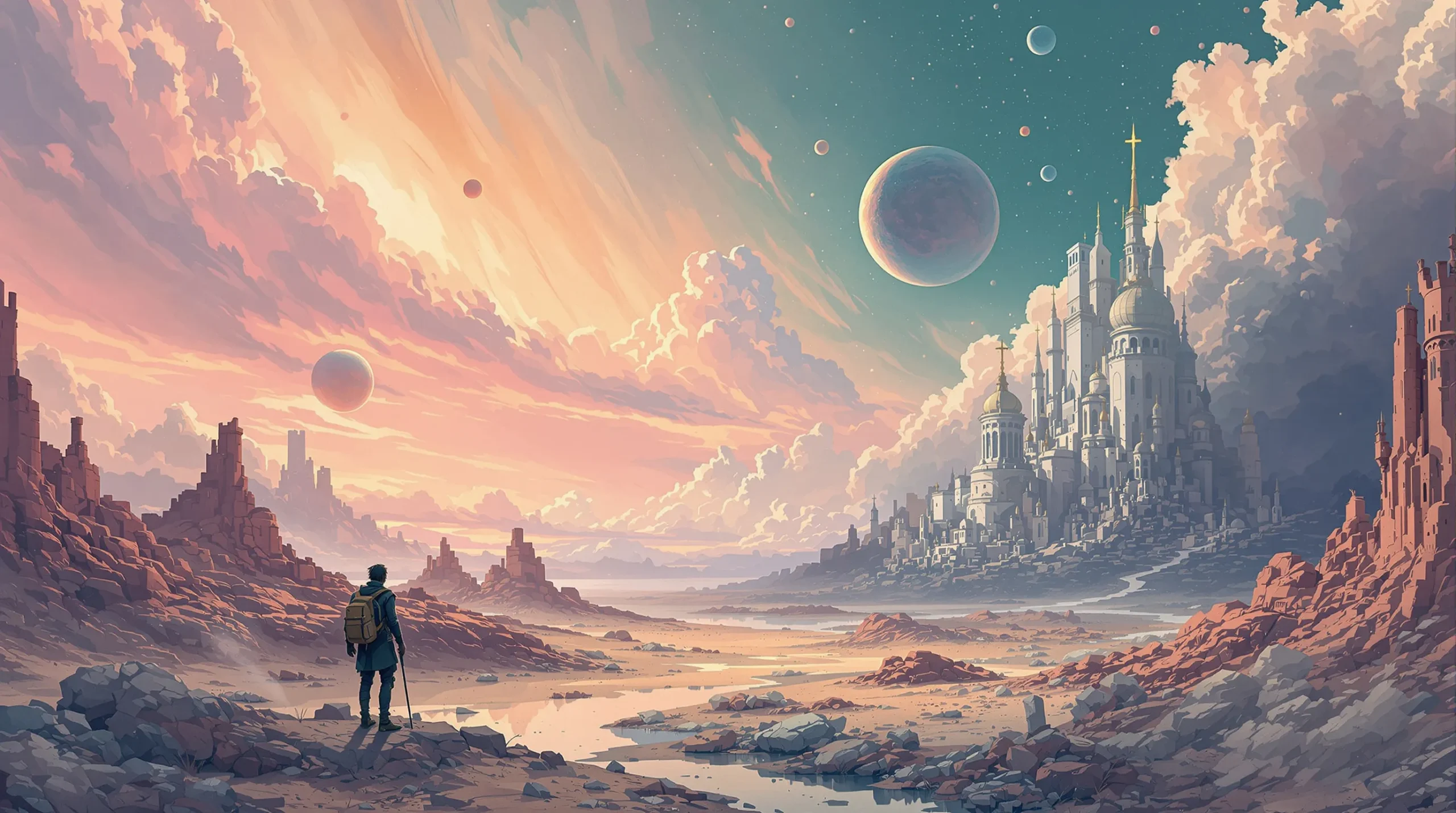
The Wasteland in your personal mythology is perhaps the silent chapter between louder, more dramatic acts. It is the landscape of 'after': after the fire, after the flood, after the love, after the faith has gone. It symbolizes a state of being stripped bare, a psychic ground zero where the intricate architecture of your identity has collapsed into dust and silence. This is not necessarily a tragedy. It could be a profound and holy emptiness, a space cleared of old ghosts and tired narratives. It is here, in the shimmering heat of absence, that you might hear the whisper of your own bedrock, the resonant hum of what cannot be taken from you because it is you.
This archetype is also a potent symbol of potential. It is the fallow field awaiting a seed, the blank canvas before the first stroke. Where others see only lack, your mythos may understand this as a place of pure possibility. Nothing grows here now, which means anything could. This perspective reframes desolation as a form of freedom: freedom from expectation, from history, from the tyranny of a crowded inner life. The Wasteland could be the necessary void from which a more authentic self, a more intentional world, is born. It is the stark and silent initiation into a deeper form of creativity, one that does not merely arrange what is already present but calls forth life from the very heart of nothingness.
The Wasteland may also represent a confrontation with meaning itself. In a lush, abundant inner world, meaning can be taken for granted, absorbed from the environment like water. But in the Wasteland, there are no external sources. Meaning is not found, but made. It must be generated from within, a defiant act of creation against a backdrop of cosmic indifference. This landscape could be your internal monastery, your desert of contemplation, where you are forced to build a spiritual or philosophical shelter with only the materials of your own spirit. The journey through it is a pilgrimage toward a self-authored truth.