 Believe
 Fear
Fear Strength
 Weakness
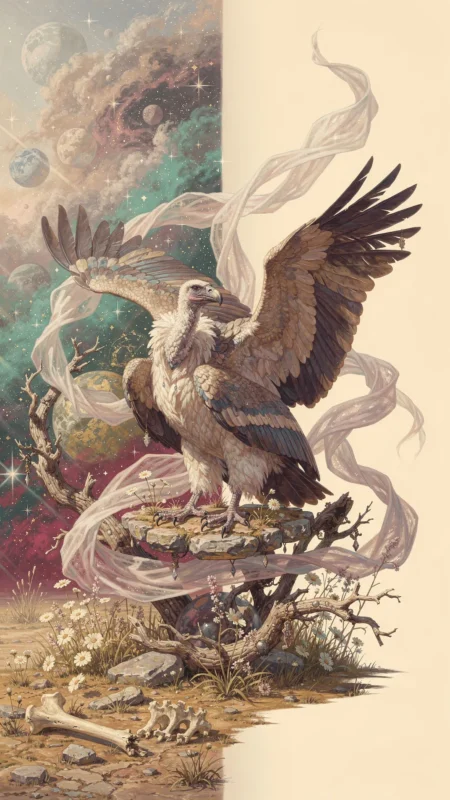
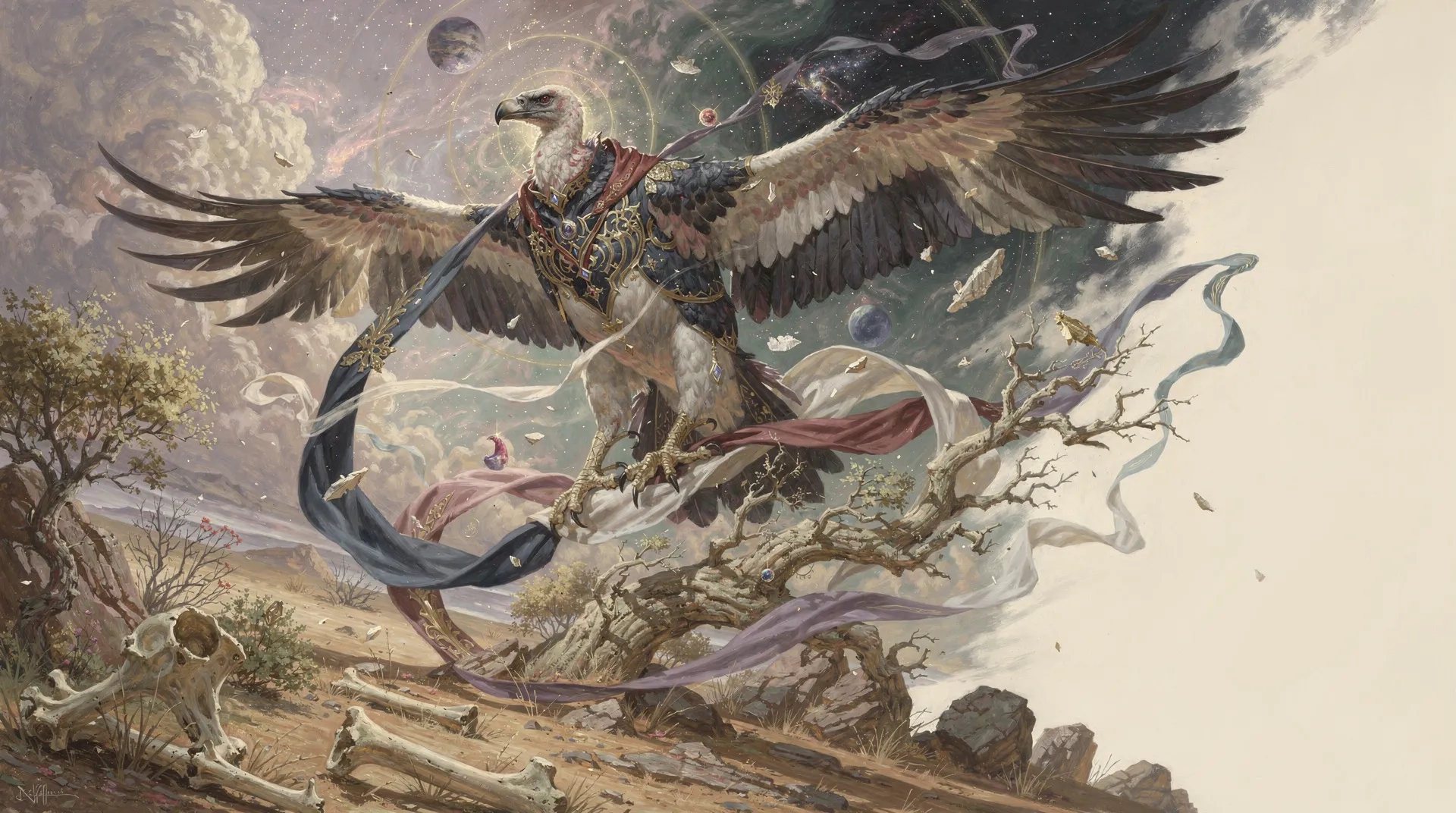
The vulture, often misconstrued as a morbid opportunist, holds profound symbolic meaning. In many cultures, it represents a crucial part of the cycle of life, death, and renewal, cleansing the world of decay and making way for new growth. Perhaps its presence in your personal mythology suggests a comfort with the ephemeral nature of existence, an ability to see beyond the surface of things to the underlying potential for transformation. The vulture may also symbolize resourcefulness and adaptability, reminding us that even in seemingly barren landscapes, sustenance can be found.
Modern interpretations often cast the vulture as a shadow figure, a harbinger of difficult truths we may prefer to avoid. Perhaps it represents the parts of ourselves that are drawn to the darker aspects of life, the shadows where our fears and insecurities reside. Embracing the vulture may mean confronting these hidden aspects of self, acknowledging their role in our personal narrative. This could be a challenging but ultimately rewarding process, leading to a deeper understanding of our motivations and a greater capacity for resilience.
The vulture’s connection to the cycle of death and rebirth could also signify a potent connection to the ancestral realm. Perhaps it suggests an ability to draw wisdom and strength from the past, to glean insights from those who have come before. The vulture’s keen eyesight might symbolize an intuitive understanding of the unseen forces that shape our lives, a capacity to see beyond the veil of the ordinary.