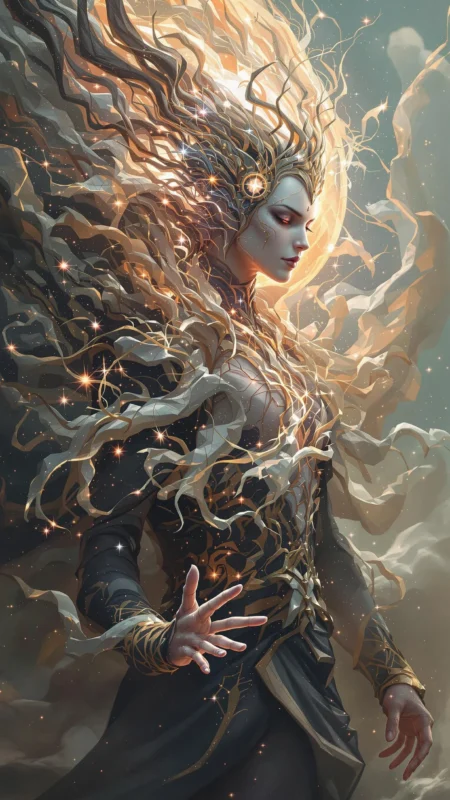
Vulcan

Archetype Meaning & Symbolism

Lame, industrious, creative, fiery, isolated, vengeful, masterful, resilient, cuckolded, transformative

  • Bear up, my dear mother, and endure, though you are grieving.

If Vulcan is part of your personal mythology, you may...

Believe

  • That the most profound truths are not spoken, but built.
  • That a wound is not a weakness but an aperture through which a unique light can enter and exit.
  • That the act of making something well is a form of prayer.

Fear

  • Creative barrenness; the forge growing cold and the hammers falling silent.
  • The casual, devastating betrayal of a lover who values surface beauty over foundational strength.
  • That your creations will be misunderstood or, worse, used to ends that violate the integrity of their making.

Strength

  • An alchemical ability to transform pain, failure, and ugliness into works of functional beauty and immense strength.
  • A profound, self-sufficient mastery of a chosen craft that can appear to others as a form of magic.
  • An unshakable resilience, rooted in the knowledge that you can build or rebuild whatever you need from the raw materials at hand.

Weakness

  • A tendency toward emotional isolation, preferring the company of projects to the complexities of people.
  • A capacity for holding grudges, using your creative intellect to forge intricate traps of vengeance for those who have wronged you.
  • A relentless work ethic that can curdle into a compulsive need to produce, defining your entire worth by your output.

The Symbolism & Meaning of Vulcan

Vulcan in the personal pantheon is the patron saint of the sacred wound, the alchemist of the soul's forge. To have him as a guide is to understand that life is not a garden to be tended but a quarry of raw material. Every experience, especially the jagged and painful, is ore to be smelted. The personal forge is the space of this transformation: the artist's studio, the programmer's terminal, the scientist's lab, the quiet kitchen where ingredients are reborn. It is a place of intense, often solitary, focus where the noise of the world recedes and the only sound is the hammer of will striking the anvil of circumstance. This archetype sanctifies the process, finding holiness not in the finished product but in the sweat, the soot, and the searing heat of its making.

The fire of Vulcan is a dual force, a paradox held in delicate balance. It is the creative spark, the divine inspiration that animates inert matter. It is also the destructive inferno, the volcanic rage of the spurned and ridiculed. To walk with Vulcan is to tend to this inner fire with immense care. It must be contained, channeled, and respected. Left untended, it can become a blaze of resentment that consumes the self; banked too low, it leaves the forge cold and the spirit inert. This archetype teaches a profound lesson in emotional regulation, not through suppression, but through redirection: channeling the heat of anger or grief into the focused, productive flame of creation.

Perhaps most profoundly, Vulcan represents the power of the imperfect. He is the lame god, the cuckolded husband, the brilliant but unlovely craftsman. He finds his power not in spite of his wounds but because of them. His exile from the pristine heights of Olympus forces him to build his own kingdom in the fiery heart of the earth. For the personal mythos, this means that your greatest strengths may be inextricably linked to what you perceive as your greatest flaws. The limp is what gives you your unique rhythm. The scar is what tells your story. Vulcan invites a radical acceptance of the self, not as a perfect, polished statue, but as a powerfully functional, beautifully scarred, and utterly unique tool, shaped and tempered in the fires of a life lived with intensity.


Vulcan Relationships With Other Archetypes

The Ocean

The relationship here seems to be one of profound, silent recognition. The Vulcan may look upon the vast, placid surface of the Ocean and see a mirror of their own cultivated stillness. Yet, they are perhaps uniquely aware of the crushing pressures and the unplumbed, cold darkness of the abyss, the strange and alien life that thrives where no light can reach. This is the landscape of their own inner world, a realm of immense feeling held in check by a surface tension so powerful it can appear as solid as glass. The Ocean, in turn, does not challenge the Vulcan but simply exists, a testament to the fact that the greatest power and the most profound mystery can be contained within a shell of absolute calm. It is a dialogue conducted not in words, but in the shared language of immense, controlled depth.

The Trickster

With the Trickster, the Vulcan may encounter their own intellectual and emotional antithesis, a walking, breathing paradox that logic cannot seem to parse. The Trickster is a chaotic variable in a carefully constructed equation, a dissonant chord played in a hall of perfect harmonics. Every interaction could be a test of the Vulcan’s formidable composure, a pebble tossed into a still pond not to see the ripples, but to shatter the reflection entirely. The Trickster’s reliance on impulse, emotion, and absurdity may represent a form of existence the Vulcan has consciously walled off, and yet, there could be a strange, unacknowledged pull. For in the Trickster’s chaotic dance, there is a kind of freedom—the freedom from the immense, self-imposed burden of perpetual sense—that the Vulcan might, in the deepest and most secret vault of their being, quietly envy.

The Archivist

In the Archivist, the Vulcan could find a kindred spirit, a fellow devotee at the altar of information. Both move through worlds of fact, pattern, and categorized knowledge, their minds like vast, silent libraries. Yet, their communion may be subtly fractured by a difference in purpose. The Vulcan seeks knowledge as a tool, a scalpel with which to dissect the universe and prescribe a logical course of action. The Archivist, perhaps, loves the information for itself—for its texture, its history, its sheer, static beauty. The relationship might be a quiet understanding between the engineer who uses a crystal to build a laser and the geologist who marvels at the crystal's facets. They share an appreciation for the raw material of truth, but one looks always toward application, while the other is content to simply preserve its perfect, silent form.

Using Vulcan in Every Day Life

Navigating Creative Block

When the wellspring of ideas runs dry and the will to create falters, the Vulcan archetype offers a shift in perspective. It suggests that creativity is not a gentle muse to be courted but a fire to be stoked. This may mean returning to the fundamentals of your craft, doing the rote, unglamorous work of practice and preparation. It is in the rhythmic, almost meditative, act of sharpening the tools, cleaning the workshop, or studying the masters that the fire may be coaxed back to life. The work itself becomes the prayer that calls the spark back to the kindling.

Healing from Betrayal

In the face of profound personal betrayal, a wound that can feel like being cast from a great height, Vulcan provides a map for transformation. The mythos does not ask you to forget or even forgive, but to transmute. The heat of that pain, the sharp edges of that injustice, can become the fuel for the forge. It could compel you to build something beautiful and intricate in defiance of ugliness, to create a masterwork so absorbing that the wound is not erased but integrated, becoming the unique, identifying mark on everything you produce from that moment forward.

Embracing Perceived Flaws

The Vulcan archetype speaks directly to the experience of feeling fundamentally 'lame' or flawed, whether physically, socially, or emotionally. It reframes this limp not as a deficiency but as a defining characteristic, the source of a unique gait and perspective. To channel Vulcan is to cease hiding the flaw and instead lean into it, to understand how it has shaped your strengths. Perhaps a social awkwardness has cultivated a rich inner world, or a physical limitation has forced a clever, more efficient way of working. The flaw becomes the fulcrum upon which your greatest strengths pivot.

Vulcan is Known For

The Forge of Lemnos

His subterranean workshop, a place of immense heat and ceaseless industry, where the raw elements of the earth were transformed into objects of divine power and beauty. It is the symbol of the solitary, creative crucible.

The Master Craftsman

The divine artisan responsible for creating the thunderbolts of Jupiter, the armor of Achilles, the shield of Aeneas, and the first woman, Pandora. His skill was unparalleled among gods and mortals.

The Lame God

Cast from Olympus by his mother, Juno, for his ugliness, or by his father, Jupiter, during an argument, he was left with a permanent limp. This physical imperfection became central to his identity as an outsider deity.

How Vulcan Might Affect Your Personal Mythology

How Vulcan Might Affect Your Mythos

When Vulcan claims a role in your personal story, your mythos ceases to be a hero's journey in the traditional sense; it becomes a creator's saga. The central plot is not about slaying the dragon, but about building the forge, mining the ore, and hammering out a new reality. Life's major events are reframed through the lens of craftsmanship. A lost job is not a failure but the demolition of an old structure to make way for a new one. A broken heart is the act of being thrown into the fire to be tempered. Your narrative is one of slow, deliberate, and often solitary construction, where the meaning of your life is measured by the integrity and utility of what you have built, be it a family, a company, a body of work, or a resilient self.

This mythos is also defined by a foundational wound, an initial act of being 'cast out'. This could be a literal or metaphorical event: a childhood rejection, a profound betrayal, or a keen sense of not belonging that sets you apart. This event is not a tragic backstory but the inciting incident of your true creative life. It is the moment you are exiled to your own personal Lemnos, forced to discover your own resources and build your own source of worth. The narrative arc, then, is about transforming this place of exile into a kingdom of creation, a place so powerful and productive that even the gods who cast you out come to depend on what you make.

How Vulcan Might Affect Your Sense of Self

Your sense of self may become deeply intertwined with what you produce. Identity is not something you are, but something you make. You might feel a kinship with the lump of iron on the anvil, seeing yourself as a work in progress, constantly being hammered and shaped by experience. Self-worth is not derived from social status or the affections of others (as Vulcan learned through his marriage to Venus) but from the tangible evidence of your skill and labor. This can lead to a powerful, internally-validated sense of identity, immune to the whims of fashion or public opinion. You know your worth because you have built it with your own hands.

However, this can also foster a self-perception of being an eternal outsider. You may identify more with the machinery of life than with the people living it. There can be a sense of being functionally essential but socially peripheral. You might see yourself as 'lame' or 'unlovely' compared to the polished, effortless grace of others, the Mars and Venus figures of the world. This can be a source of quiet pride, a badge of authenticity. But it may also be a source of deep loneliness if the identification with the wound overshadows the power of the craftsman.

How Vulcan Might Affect Your Beliefs About The World

The world, through the eyes of Vulcan, may appear not as a finished canvas but as a vast, chaotic workshop full of potential. You might see systems to be improved, materials to be repurposed, and problems to be solved with clever construction. There is a fundamental belief that reality is malleable, that with enough heat, pressure, and skill, anything can be broken down and remade into something stronger, more beautiful, or more useful. This perspective is pragmatic and deeply creative, finding opportunity in decay and raw material in ruin.

This worldview fosters a deep appreciation for authenticity and process. You might harbor a quiet disdain for things that are superficial, mass-produced, or achieved without effort. The mark of the hammer, the trace of the weld, the visible imperfections that speak of a thing's creation: these are what you value. You may see the 'polished' surface of modern society as a flimsy veneer, and you are always looking for the structural integrity underneath. Truth, for you, is not a concept to be debated but a quality to be built into the very fabric of things.

How Vulcan Might Affect Your Relationships

Relationships may be viewed with a craftsman's caution. The forge is a solitary space, and intimacy can feel like a disruption to the deep focus required for creation. You might appear distant, reserved, or emotionally utilitarian, expressing love not through effusive words but through acts of service: fixing a broken faucet, building a bookshelf, offering a meticulously thought-out solution to a problem. This is the Vulcan way of forging a bond: proving loyalty and care through tangible, useful action. The risk is that partners may feel like projects, or that emotional needs are met with pragmatic solutions, leaving them feeling unheard.

The specter of Venus and Mars looms large, creating a potential for deep mistrust in the realms of passion and romance. Having been mythologically cuckolded, you may carry a deep-seated fear of betrayal, always watching for the net you might have to cast. This could lead to building emotional walls as strong as any shield you might forge. Yet, if a bond of trust can be established, your loyalty is absolute. You seek a partner who is a fellow smith, someone who understands the heat of the forge and is willing to build a life together, appreciating the strength and utility of the bond over its superficial polish.

How Vulcan Might Affect Your Role in Life

You may perceive your role in the world as that of the essential Maker. You are the one who works in the engine room while others stand on the bridge. You build the infrastructure, forge the tools, and create the systems that allow society to function, innovate, and defend itself. There is a quiet pride in this role, a sense of being the foundational element, the load-bearing beam that is rarely seen but without which the entire structure would collapse. You may not seek the spotlight, preferring the glow of the forge fire.

This can also lead to the role of the 'power behind the power'. Like Vulcan crafting thunderbolts for Jupiter to wield, you may be the architect of influence, the creator of tools used by more charismatic leaders. Your satisfaction comes not from wielding the power yourself, but from the perfection of the instrument you have made. You are the indispensable advisor, the brilliant engineer, the master strategist who provides the means for others to achieve greatness, content with the knowledge that their victory was hammered out on your anvil.

Dream Interpretation of Vulcan

In a positive context, to dream of Vulcan, a forge, or the rhythmic clang of a hammer on an anvil is a powerful omen of creative awakening and personal alchemy. It may suggest that you are entering a period of intense productivity, where you have the strength and focus to take the raw, chaotic materials of your life—a difficult emotion, a challenging project, a new idea—and forge them into something of value and durability. The dream is an affirmation from your subconscious: the fire is hot, the tools are ready. It is time to make something real.

In a negative light, a dream of this archetype could manifest as a cold, abandoned forge, a broken hammer, or being trapped within an erupting volcano. A cold forge may symbolize a creative block, a sense of impotence, or a depression that has extinguished your inner fire. A broken tool could represent a feeling that your skills are no longer adequate for the tasks you face. Being trapped in a volcano is perhaps the most potent warning: it may signify that repressed anger, resentment, and bitterness are building to a destructive point, threatening to erupt and lay waste to your own life and the lives of those around you.

How Vulcan Archetype Might Affect Your Needs

How Vulcan Might Affect Your Physiological Needs

The Vulcan archetype may foster a view of the body as a tool, an instrument essential for the work of creation. The focus is on functional strength and endurance, not aesthetic perfection. Calloused hands, a strong back, and a capacity for sustained effort are the physiological ideals. This can lead to a deep, intuitive connection with the body's mechanics and a respect for its capabilities. The body is not something to be coddled but to be maintained like a well-oiled machine, ready for the demands of the forge.

However, the shadow side of this is a tendency to push the body beyond its limits in service of a creative obsession. The intensity of the forge can make you deaf to the body's signals for rest, food, or water. You may see sleep as an inconvenience, pain as something to be ignored. This can lead to cycles of manic productivity followed by physical collapse, a recurring pattern of burnout where the very tool you rely upon is neglected until it breaks down, forcing a halt to the work you deem so essential.

How Vulcan Might Affect Your Ideas of Belonging

A sense of belonging, for the Vulcan archetype, is rarely found in the glittering halls of popularity. You may feel a fundamental disconnect from mainstream social circles, from the 'Olympian' gods and goddesses of the world. Instead, belonging is forged in shared labor and mutual respect for a craft. You find your tribe among other makers, thinkers, and builders, regardless of their field. It is a community of the forge, where conversation is about process and problem-solving, and bonds are built on the quiet understanding of solitary dedication.

More often, a feeling of not belonging is a core part of the identity. The lame god is, by definition, an outcast. This exile can be a source of pain, but it is also a source of freedom. Not needing to belong to the popular group liberates you to pursue a unique and uncompromising path. You may find a paradoxical sense of belonging in the community of outsiders, a shared identity with those who, like you, were cast out and learned to build their own world from the ground up.

How Vulcan Might Affect Your Feelings of Safety

Safety, within the Vulcan mythos, is constructed, not found. It is the forge itself: a controlled environment you have built and mastered, with strong walls to keep the chaotic world out and a hearth to contain the dangerous fire within. Your sense of security may be tied to your workshop, your office, your home library—any space where you have dominion over the elements and can engage in your craft without interference. Safety is a product of your own labor and foresight, a shield you have personally hammered into shape.

Conversely, the greatest threat to your safety may not come from the outside world, but from the volcano within. The same fire that fuels your creation can become an uncontrollable, destructive force. The primary source of anxiety could be the fear of your own rage, your own passion, your own ambition erupting and destroying the carefully constructed life and relationships you value. The work of maintaining safety, therefore, becomes an internal task: managing the fire, venting the pressure, and ensuring the forge does not become a tomb.

How Vulcan Might Affect Your Views of Esteem

Esteem needs are met through the crucible of creation. Self-worth is not sought from the praise of others but is earned through the mastery of a skill and the integrity of the finished work. The profound satisfaction of a perfectly executed design, a well-written line of code, or a solid, beautiful piece of furniture becomes the bedrock of your self-esteem. It is an internal, self-sustaining source of value, dependent only on your own standards of excellence. You respect yourself because you can make things that are worthy of respect.

This foundation, however, can be brittle. Because your identity is so fused with your work, criticism of what you make can feel like a devastating personal attack. A creative failure may trigger a collapse of self-worth. Furthermore, the old wound of rejection—the memory of being deemed unworthy by Venus or Juno—can linger. This might create a compulsive need to keep producing, to keep proving your value through tangible output, fearing that if you stop working, you will once again be seen as nothing more than the lame, unwanted god.

Shadow of Vulcan

When the Vulcan archetype falls into shadow, the master craftsman becomes the bitter saboteur. Fueled by resentment for perceived slights and a lack of recognition, the creative fire turns acrid and destructive. Instead of building bridges, the shadow Vulcan forges cages. Instead of crafting tools for progress, he designs weapons of exquisite cruelty. This is the artist who secretly delights in the failure of a rival, the engineer who builds planned obsolescence into a beautiful machine, the intellect who uses his gifts to tear down rather than build up. The forge is no longer a place of transformation but a factory for grievances, producing only finely-wrought instruments of pain.

The shadow also manifests in the fetishization of the wound. Instead of transmuting his lameness into a unique strength, the shadow Vulcan makes it the entirety of his identity. He becomes a connoisseur of his own misery, rejecting any possibility of joy or healing as a betrayal of his tragic, artistic persona. He wraps himself in the mantle of the tortured genius, using his pain as a cudgel to ward off intimacy and as an excuse for his own toxic behavior. The volcano becomes his permanent home, and he mistakes the taste of ash for nourishment, believing the suffocating smoke is the only atmosphere in which true art can be made.

Pros & Cons of Vulcan in Your Mythology

Pros

  • You are a source of tangible value, bringing durable, beautiful, and useful things into the world.
  • You possess an extraordinary resilience, with the capacity to turn life's most difficult experiences into sources of strength and innovation.
  • Your sense of self-worth is internally generated, rooted in authentic skill and integrity rather than the fickle opinions of others.

Cons

  • You risk profound loneliness, as your dedication to your work can create a fortress against emotional intimacy.
  • A deep-seated wound from past betrayals may fester, leading to a cynical worldview and a thirst for retaliation.
  • Your identity is so tied to your creative output that a professional failure or creative block can trigger a full-blown existential crisis.