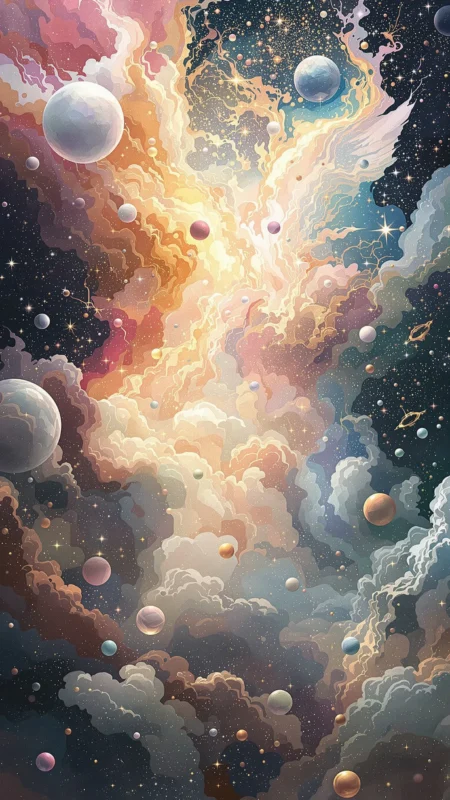
Void

Archetype Meaning & Symbolism

Vast, silent, potential, formless, still, absolute, receptive, consuming, neutral, pre-creative

  • Before the first word, there was listening. I am that listening.

If Void is part of your personal mythology, you may...

Believe

  • The most profound truths are not found in complex answers, but in the silence that follows a simple question.

    True wealth is not the accumulation of things, but the elimination of needs.

    The end of any story is not a failure, but the necessary clearing of the page for a new one to begin.

Fear

  • That beneath all the layers of identity, personality, and belief, there is simply nothing: an empty space devoid of essence.

    Being completely forgotten after you die, leaving no trace or impact, as if you never existed at all.

    A profound sense of cosmic loneliness, the feeling of being a fleeting consciousness in an indifferent, meaningless universe.

Strength

  • An extraordinary capacity for resilience. When you are comfortable starting from nothing, no loss can truly break you.

    A deep well of calm and presence. You can hold space for chaos and intense emotion in others without being thrown off balance.

    Unparalleled creativity. By being able to truly empty your mind and erase assumptions, you can access ideas that are radically new and original.

Weakness

  • A tendency toward passivity or nihilism. The belief that all forms are temporary can lead to a reluctance to commit or build anything lasting.

    Emotional detachment. Your comfort with emptiness can be perceived by others as aloofness, coolness, or a lack of investment in relationships.

    Vulnerability to existential dread. While you have a great capacity for peace, you are also more susceptible to profound crises of meaning and purpose.

The Symbolism & Meaning of Void

In the modern psyche, the Void holds a profound duality. It is, perhaps, our greatest terror: the fear of meaninglessness, of annihilation, of our lives being a brief flicker in an indifferent, empty cosmos. It is the nihilism that whispers that all our striving is for naught. This is the Void as a black hole, a consuming absence that threatens to swallow the self. To have this archetype in one's mythos is to walk alongside this existential dread, to know the fragility of the structures we build to keep it at bay.

Yet, the Void is simultaneously our greatest liberation. It is the clean slate, the Year Zero, the absolute freedom from the past. It is the silence between the notes that makes the music possible. It is the pause at the end of an out-breath, a moment of perfect stillness and potential before life begins again. When this aspect of the Void is dominant in a personal mythos, it suggests a life narrative not about accumulation, but about release. Freedom is found not in gaining more, but in needing less. It is the recognition that our true nature is not the story, but the page on which the story is written.

The Void symbolizes the space of pure potential that precedes any creative act. It is the empty studio, the blank page, the silent stage. It reminds us that for something new to be born, a space must first be cleared. In one's personal story, this can manifest as a comfort with uncertainty and the unknown. Instead of fearing the 'in-between' phases of life—the time after a job ends and before a new one begins, the period after a relationship dissolves—one might see them as sacred, fertile periods where the script is not yet written and anything is possible.


Void Relationships With Other Archetypes

The Creator

The Creator and the Void exist in a state of eternal, dynamic tension. The Creator's every impulse is to fill the Void, to give it form, color, and story. The Void, in turn, is the very condition for creation, the silent canvas that makes the Creator's marks visible. In a personal mythos, this relationship may play out as a conflict between a deep comfort with being and a relentless drive for doing. One might feel a pull towards a monastic, simple existence, while simultaneously being filled with a burning need to build, to write, to make an impact. The life's work becomes a dance: learning when to empty the canvas and when to pick up the brush.

The Hero

The Hero's journey is incomplete without a descent into the Void. This is the belly of the whale, the dark night of the soul, the abyss where all titles, tools, and allies are stripped away. The Void is the ultimate test for the Hero, forcing a confrontation not with a dragon or a villain, but with a seeming nothingness. The Hero who survives this encounter is reborn, their identity no longer forged by external deeds but by an internal understanding of their own essence. For someone with the Void in their mythos, life may feel like a series of these descents, with periods of 'normal life' punctuated by episodes of ego-dissolving emptiness that ultimately lead to greater wisdom.

The Seed

If the Seed is the archetype of compressed, specific potential, the Void is the archetype of infinite, undefined potential. The Seed needs the Void as a field in which to grow, a silent, nourishing darkness from which to draw sustenance. The Void, however, does not dictate what the Seed will become. This relationship speaks to the interplay of destiny and freedom. You may feel you carry a specific 'seed' within you: a talent, a calling, a purpose. Yet, you also understand that this potential can only be realized within a life that has enough space, enough unstructured time, enough 'void' for it to germinate and unfold in its own unpredictable way.

Using Void in Every Day Life

Navigating Creative Blocks

When the canvas of the mind is cluttered with failed attempts and the echoes of expectation, the Void offers a reset. Instead of forcing a new idea, you might invoke the Void by engaging in activities of emptying: taking a walk without a destination, sitting in a silent room, or focusing on the space between your thoughts. It is a practice of creating a vacuum, a receptive emptiness into which inspiration may, unbidden, arise. You are not searching for the muse; you are clearing a space for it to land.

Processing Grief

After a profound loss, society rushes to fill the new emptiness with condolences, distractions, and advice. The Void archetype suggests a different path: to honor the emptiness itself. It allows you to inhabit the space where something or someone used to be, to understand its specific shape, its weight, its texture. This isn't about wallowing, but about listening to the silence. In that quiet, the true meaning of what was lost can be felt, and the foundation for a new, altered existence can be laid, not on top of the grief, but around the space it holds.

Overcoming Decision Paralysis

When faced with a crossroads, the mind can become a cacophony of pros, cons, and imagined futures. The Void archetype provides a tool for radical simplification. You might find a quiet place and visualize all the choices, all the noise, dissolving into a vast, dark, silent space. The goal is not to find the right answer in the noise, but to let the noise die away until a single, intuitive impulse remains. It is an act of trusting the silence more than the clamor.

Void is Known For

Primordial Potential

The Void is known as the state before the beginning, the unmanifest reality from which all forms emerge. It is the cosmic silence, the dimensionless canvas upon which the universe is painted. In personal mythology, this is the source of all untapped potential and radical new beginnings.

The Great Dissolver

It is the force that breaks down old forms, identities, and structures that no longer serve. The Void is the abyss into which the hero falls during their journey, the ego death that precedes rebirth. It is the necessary ending that makes way for the new.

Silent Receptivity

The Void is the ultimate listener. It holds all existence, all sound, all fury, and all peace without judgment or reaction. This aspect represents the capacity for pure presence, the ability to be with 'what is' without needing to change it or even name it.

How Void Might Affect Your Personal Mythology

How Void Might Affect Your Mythos

When the Void shapes your personal mythos, your life story may not be a linear progression of accumulation, but a cyclical narrative of emergence and dissolution. The key turning points are not promotions or acquisitions, but moments of profound emptying: a great loss, a voluntary renunciation, a period of deep aimlessness that served as a fallow season for the soul. Your myth is one of becoming by unbecoming, of finding your true self by losing the one you thought you were. The plot is driven by questions rather than answers, and the climax might be a moment of silent realization rather than a dramatic action.

Your personal narrative might also be characterized by a deep appreciation for negative space. The story is told as much by what is not said, what is not done, what is absent, as by what is present. The meaning of your journey might be found in the gaps, in the transitions, in the quiet interludes between the noisy chapters of your life. You may see your purpose not as building a grand monument to yourself, but as tending to a sacred space, an inner clearing where new and unexpected things can grow.

How Void Might Affect Your Sense of Self

Your sense of self may be unusually fluid and undefined. Where others build a solid identity from their roles, beliefs, and accomplishments, you might experience yourself as the space through which those things pass. This could lead to a profound sense of inner freedom and non-attachment; you are not your job, your thoughts, or your relationships. You are the awareness that witnesses them. This allows for immense adaptability, as you are not shattered when a role or identity is lost.

The challenge of this self-concept is a potential for a crisis of identity, a feeling of being unmoored or insubstantial. In a culture that values strong, defined egos, you may feel formless, invisible, or lacking in substance. The work is to find comfort in this spaciousness, to see it not as a lack of self but as a self that is vast enough to contain everything and nothing at all. Your self-worth is not built upon achievements, but rooted in the simple, silent fact of your own being.

How Void Might Affect Your Beliefs About The World

You may perceive the world not as a collection of solid, separate objects, but as a shimmering dance of forms emerging from and returning to a single, silent source. Reality might seem more like a dream or a projection on a vast, empty screen. This can lead to a worldview that is less materialistic and more mystical. The ultimate reality is not the 'stuff' of the world, but the silent, aware space in which all the 'stuff' appears.

This perspective could foster a deep sense of peace and a radical acceptance of impermanence. If everything arises from and returns to the Void, then endings are not tragic, but natural. Change is not a threat, but the fundamental rhythm of existence. This can make it difficult to get caught up in the drama and urgency of politics, social climbing, or consumer culture, which may seem like a play of shadows. The risk is a slide into detachment, a sense that the events of the world are too ephemeral to warrant deep engagement.

How Void Might Affect Your Relationships

In relationships, you may value the silent presence between two people as much as, if not more than, the words they exchange. You could be deeply comfortable with lulls in conversation, seeing them not as awkward but as intimate moments of shared being. You offer others the gift of non-judgmental space, the ability to be fully themselves without any pressure to perform. You are the listener, the one to whom friends can confess their deepest fears, knowing you will simply hold them without trying to fix them.

However, this comfort with space can be misread as distance, disinterest, or emotional unavailability. You might struggle with the conventional demands of relationships: the constant communication, the shared future-planning, the defining of terms. Your love might be vast and unconditional but lack the specific, tangible expressions that others need to feel secure. The challenge is to bridge your inner spaciousness with the human need for connection, to be both the open sky and the bird that lands on a branch for a while.

How Void Might Affect Your Role in Life

Your perceived role in life might be less about being a specific actor and more about being the stage itself. You may gravitate towards roles that involve creating and holding space for others to transform: a therapist, a mediator, a coach, a minimalist designer, or a facilitator. Your genius lies not in providing answers, but in framing questions and creating an environment of psychological safety where others can find their own answers. You lead not by command, but by creating a vacuum that draws out the potential of the group.

This can be a subtle and often uncelebrated role. Your contribution is often invisible, like the stillness in a room that allows for a difficult conversation to occur. You may feel that your purpose is not to add something to the world, but to help clear away the clutter so that what is essential can be seen. You might not be the star of the show, but you are the reason the show can happen, the silent partner to every creative act.

Dream Interpretation of Void

In a positive context, dreaming of the Void—such as floating in a peaceful, starless expanse or standing at the edge of a calm, infinite abyss—may symbolize a profound release and a readiness for a new beginning. It could suggest that you have successfully let go of an old identity, a painful past, or a limiting belief. The dream is an invitation into a state of pure potential. It is the psyche signaling that the slate has been wiped clean, and you are now free to create your reality anew, unburdened by what came before.

In a negative context, a dream of the Void can be terrifying. It might manifest as being sucked into a black hole, falling endlessly through a featureless darkness, or witnessing the world dissolve into nothing. This often points to a fear of meaninglessness, a loss of identity, or a confrontation with deep-seated depression or nihilism. The dream may be reflecting a waking state where your sense of self feels precarious, where the structures that gave your life meaning are crumbling, and you fear there is nothing substantial underneath.

How Void Archetype Might Affect Your Needs

How Void Might Affect Your Physiological Needs

From the perspective of personal mythology, the Void’s influence on physiological needs highlights the importance of emptiness and rest. Your body may not just crave sustenance, but the space around it: the need for fasting to reset the digestive system, the deep, dreamless phase of sleep that truly restores the mind, the quiet moments of meditation that soothe the nervous system. You may recognize that health is not just about what you put into your body, but also about the periods of intentional emptiness that allow it to cleanse and regenerate.

The body itself may be experienced as a vessel, a container. Its rhythms are a constant play of filling and emptying—the breath, the heartbeat, the cycles of hunger and satiation. An attunement to the Void archetype could foster a deep, intuitive listening to these rhythms, a trust in the body's need for fallow periods. It is an understanding that perpetual activity and consumption, without the balance of stillness and release, leads to a depletion of life force.

How Void Might Affect Your Ideas of Belonging

Belongingness may be sought not through inclusion in a specific group or tribe, but through a connection to the fundamental ground of all being. Your sense of connection might be vast and universal, feeling a kinship with the stars, the stones, and the silence as much as with other people. This is a belonging that cannot be granted or taken away by any social group. It is the feeling of being at home in the universe simply by virtue of existing.

While this can provide a deep and unshakable sense of peace, it might make it difficult to participate in the rituals of human bonding. You may feel like an outsider at parties or family gatherings, not because you are rejected, but because the specific codes and shared histories of the group feel secondary to the larger connection you experience. Your challenge is to find ways to honor both: to touch the universal while also learning the language of the particular tribe you find yourself in.

How Void Might Affect Your Feelings of Safety

Your need for safety may be met in a paradoxical way. Instead of finding security in accumulation—a large bank account, a fortified home, a secure job—you may find it in radical non-attachment. True safety, in this mythos, comes from the realization that if you cling to nothing, you have nothing to lose. It is the security of the water that cannot be broken by a hammer, the sky that cannot be stained. This can lead to a remarkable fearlessness in the face of life's uncertainties.

However, this approach to safety can be disorienting and even dangerous if not balanced. It might lead to a neglect of practical, material needs, a kind of fatalism that eschews planning for the future or building stable foundations. The shadow of this perspective is the belief that since nothing is permanent, nothing is worth protecting. The wisdom of the Void is not to abandon the house, but to live in it with the quiet knowledge that it is a temporary shelter on a long journey.

How Void Might Affect Your Views of Esteem

Esteem, for you, may not be a structure built on the foundations of praise, awards, and accomplishments. It could be more like the quiet confidence of an empty room: its value lies in its potential and its inherent nature, not in the furniture that currently occupies it. Self-worth might come from an internal sense of sufficiency, a feeling that your being is complete and whole as it is, without needing to add anything to it. You don't need to prove your worth because, from the perspective of the Void, all beings are transient forms of equal value.

This can create a powerful immunity to both criticism and flattery. However, in a society that measures worth by external metrics, this quiet, internal esteem can be difficult to sustain. You might be perceived as lacking ambition or drive, and you may struggle with self-doubt when your inner sense of worth is not reflected by the outer world. The journey is to trust that silent, inner validation over the noise of external judgment.

Shadow of Void

The shadow of the Void is not darkness or evil, but a life-devouring nihilism. It is the black hole that consumes all light, hope, and motivation. When this shadow takes hold, the liberating sense of potential curdles into a paralyzing conviction that nothing matters. Action becomes pointless, love becomes a fleeting chemical reaction, and life becomes a cruel joke played on consciousness. This is the Void not as a fertile emptiness, but as a sterile vacuum. It can manifest as profound apathy, deep depression, a withdrawal from all relationships, and a quiet refusal to participate in the act of living, waiting for the inevitable return to nothingness.

Conversely, a frantic flight from the Void archetype also creates a deep shadow. This manifests as a compulsive need to fill every moment with noise, activity, and distraction. It is the person who cannot tolerate silence, who schedules every minute of their day, who hoards possessions and experiences in a desperate attempt to build a wall against their fear of emptiness. Their life becomes a performance of frantic business, but it lacks depth and resonance. By refusing to ever face the quiet, they deny themselves the very space where wisdom, creativity, and true peace can be found.

Pros & Cons of Void in Your Mythology

Pros

  • You possess a rare and profound freedom from the anxieties of materialism, status, and social comparison.

    You can be a grounding, calming presence for others, offering the gift of non-judgmental listening in a world full of noise.

    Your connection to primal emptiness gives you a direct line to radical creativity and the ability to reinvent yourself completely.

Cons

  • You may struggle with a chronic lack of motivation or a sense of purpose in a world driven by goals and ambitions.

    Your comfort with solitude and silence can lead to isolation, as others may find you distant or difficult to connect with.

    You are more prone to falling into periods of existential crisis, apathy, or a feeling that life is fundamentally meaningless.