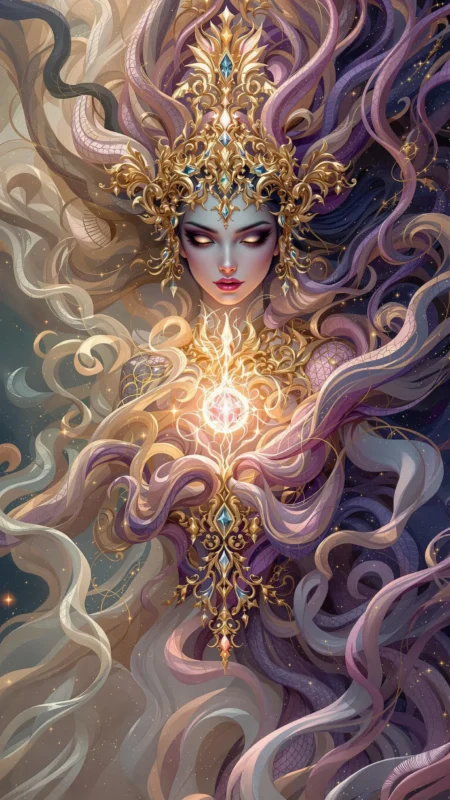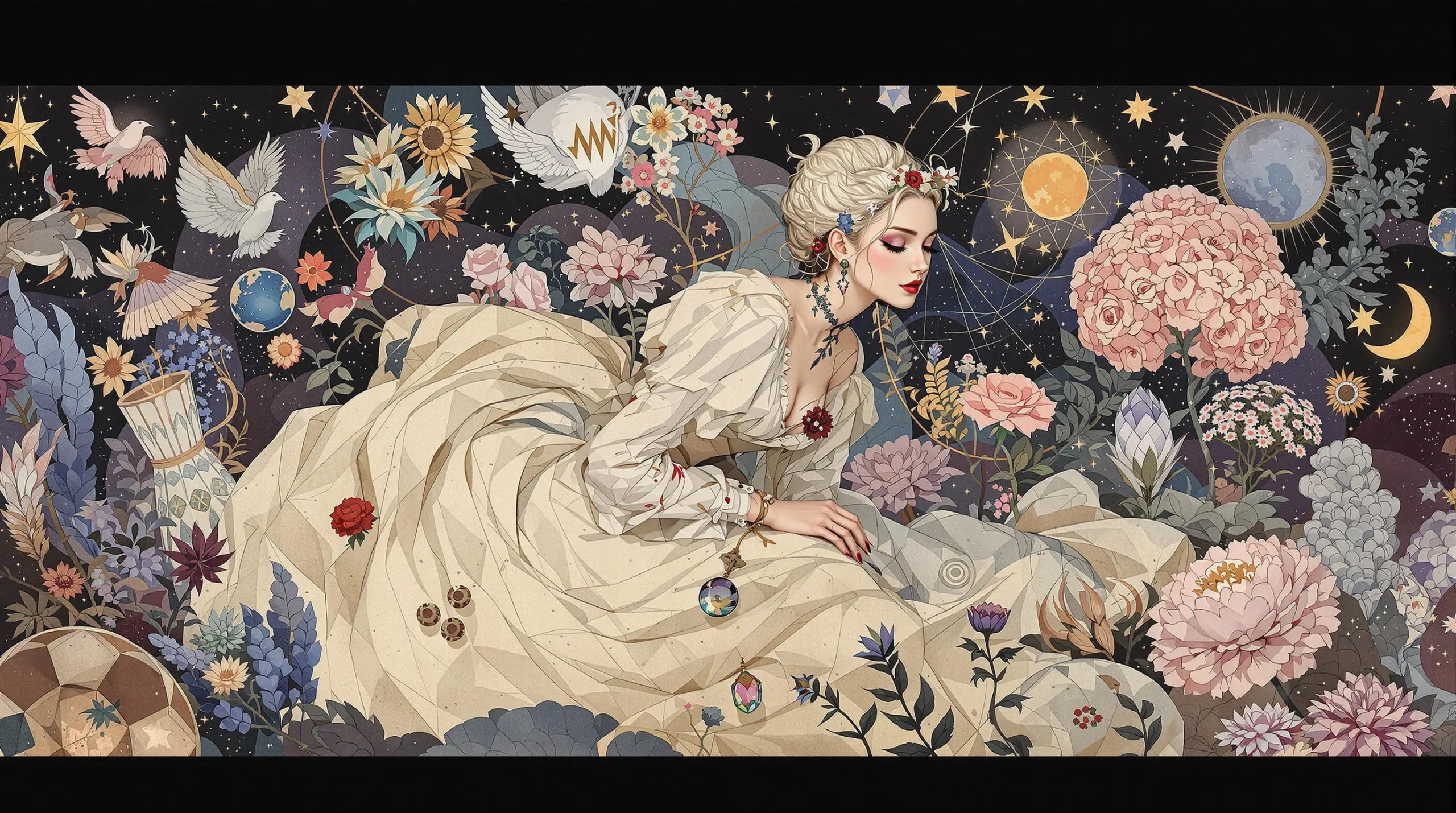


Violet Baudelaire

Archetype Meaning & Symbolism

Inventive, resourceful, responsible, pensive, determined, practical, protective, resilient, burdened, clever

  • If we wait until we're ready, we'll be waiting for the rest of our lives.

If Violet Baudelaire is part of your personal mythology, you may...

Believe

  • Any problem, no matter how daunting, has a mechanical solution if you just think hard enough and find the right parts.

    Relying on figures of authority—be they bosses, officials, or experts—is a strategic error; true solutions come from one's own intellect.

    The most sacred promises are the ones you make to protect those who depend on you, and these promises must be kept through action, not words.

Fear

  • Confronting a problem that is immune to logic and ingenuity, an emotional or existential crisis that cannot be engineered away.

    A catastrophic failure of one of your 'inventions,' leading to harm for the very people you are trying to protect.

    A moment of true peace, because a lifetime of experience suggests it is merely the quiet before an even more terrible storm.

Strength

  • Radical self-reliance, allowing you to not just survive but often thrive in chaotic, high-pressure environments that would paralyze others.

    A brilliant and deeply practical intelligence that can deconstruct any crisis into its component parts and devise a tangible plan of action.

    An unwavering, fierce loyalty to your inner circle, making you one of the most dependable and protective people they will ever know.

Weakness

  • A chronic inability to relax, delegate, or trust that things might resolve themselves, leading to sustained anxiety and burnout.

    A tendency to shoulder every burden, refusing help and isolating yourself in your role as the sole problem-solver.

    An emotional stoicism that can be mistaken for coldness, making it difficult to connect with others on a purely vulnerable, human level.

The Symbolism & Meaning of Violet Baudelaire

The Violet Baudelaire archetype is the patron saint of clever hands in a world of incompetent or malevolent authority. To find her within one’s personal mythology is to see oneself as a reluctant engineer, a clockmaker trapped in a burning museum. The core symbolism is ingenuity born of necessity. This is not the leisurely creativity of a well-funded lab but the frantic, brilliant spark that occurs when the only tools available are a hairpin, a length of rope, and the unyielding laws of physics. It speaks to a belief that the universe, while perhaps chaotic and hostile, is ultimately governed by principles that can be understood and manipulated. The ribbon in her hair is a crucial element: a mundane object transformed into a sacred tool, a way to lasso the wild horses of thought and harness them to a single, desperate purpose.

Furthermore, the archetype carries the profound weight of premature responsibility. She is a child forced into the role of provider, protector, and problem-solver. In a personal mythos, this may translate to a narrative of growing up too fast, of having to become the competent adult in the room long before one's time. This creates a person who is preternaturally capable yet perhaps emotionally sequestered, their heart encased in the very ingenuity that keeps it safe. The world is not a place of wonder to be explored, but a series of interlocking traps to be navigated or disarmed. There is a quiet tragedy to this: the inventor who can build anything except, perhaps, a carefree childhood.

Finally, Violet symbolizes a specific kind of hope: not the saccharine belief that things will get better, but the grimly optimistic conviction that one can *make* things better, or at least less bad. It is the hope of the castaway who sees a broken crate not as debris, but as a potential raft. For someone with this archetype, personal agency is paramount. They may feel that salvation, safety, and success will not be granted by any outside force. They must be constructed, piece by piece, with one’s own mind and hands, often while the tide is rising and the sky is growing dark.


Violet Baudelaire Relationships With Other Archetypes

The Trickster

The relationship with the Trickster is perhaps the grim engine of the Violet Baudelaire's existence. The Trickster may be seen as a kind of malevolent deity of entropy, relentlessly introducing chaos into the closed system of a life, while the Violet is the opposing force of emergent order, her mind a frantic loom weaving sense from senselessness. Their dynamic could be viewed not as a simple battle of good and evil, but as a terrible, symbiotic waltz. The Trickster composes the riddle of the locked room, the impossible knot, the impending disaster, and in doing so, perhaps unwittingly summons the very genius that can solve it. Each of Violet's inventions, then, is a direct, desperate rebuttal to the Trickster's latest thesis of despair, a temporary stay against a tide of absurdity that gives her intellect its sharp, tragic, and necessary form.

The Sage

In the presence of the Sage, the Violet Baudelaire might find a shadowed reflection of her own intellectual fire, but cast in a cooler, more stable light. The Sage represents knowledge as a vast, still ocean, charted and deep, while Violet’s knowledge is a geyser, erupting from the pressure of immediate need. Their connection could be one of profound, if fraught, respect. The Sage offers the comfort of the archive, the solace of established principles, yet this very stability may feel to the Violet like a form of paralysis. The Sage has the luxury of contemplation, of seeing the storm from a fortified library window. The Violet, by contrast, must build the lightning rod from scraps while standing on the roof. The Sage’s world, therefore, may be both a desperately sought sanctuary and a painful reminder of a peace she cannot afford to inhabit.

The Innocent

The Innocent is not merely a companion to the Violet Baudelaire; this archetype may be the very anchor and compass of her being. Her inventive spirit is rarely, if ever, for her own sake; it is a shield, a raft, a key forged for the one who cannot forge it themselves. The Innocent could be seen as the keeper of a fragile, irreplaceable melody, and all of Violet’s mechanical genius is simply the frantic, ongoing construction of an instrument capable of playing it. This relationship is a crucible, one that transforms raw intelligence into a tool of profound responsibility. Each time Violet ties back her hair, it is perhaps less a signal of impending invention and more a silent vow to the Innocent, a promise that the machinery of the mind will be marshaled, once again, to preserve the one small, warm light against the encroaching dark.

Using Violet Baudelaire in Every Day Life

Navigating a Career Setback:

When faced with professional obsolescence, a sudden layoff, or a project’s collapse, one might channel the Violet archetype. This is not about simply updating a resume. It is about retreating into the mental workshop, tying back the proverbial hair, and inventing a new application for one's skills. It could mean creating a grappling hook from a discarded skill set and a new piece of knowledge, pulling oneself toward an entirely unforeseen career ledge. It is the art of seeing a scrapyard of experience not as an ending, but as a collection of raw materials for the next, necessary machine.

Addressing Systemic Family Dysfunction:

In the face of intractable family conflicts, where personalities clash and history is a minefield, the Violet archetype offers a path. It is not a path of emotional catharsis, but of pragmatic engineering. One might approach the problem like a Rube Goldberg machine that needs a crucial gear replaced. This could manifest as creating a new communication system: a structured family meeting with a clear agenda, a shared digital calendar to prevent logistical arguments, or a simple, agreed-upon code word to de-escalate rising tempers. The solution is not meant to heal the core wound, but to build a functional apparatus that allows the family unit to operate without imploding, a temporary bridge over a chasm of resentment.

Overcoming Creative Block:

For the artist, writer, or creator staring into the void of a blank page, the archetype provides a ritual. The act of Violet tying her hair in a ribbon is a physical threshold into a mental space of invention. One could adopt a similar totem: a specific pen, a particular chair, a certain piece of music. This ritual is a conscious signal to the brain, a flicking of a switch from the passive world to the active workshop. It suggests that inspiration is not a passive muse to be awaited, but an active process of cognitive tinkering, of assembling disparate thoughts until they click into a functioning idea.

Violet Baudelaire is Known For

Inventiveness Under Duress

Her signature ability to conceptualize and construct intricate devices from mundane objects, often in moments of extreme peril. This is not creativity for art's sake, but for survival's sake.

The Ribbon Ritual

The specific, focused act of tying her hair back with a ribbon to signal to herself and others that her mind is at work, deep in the process of invention. It is a physical key to a mental lock.

Fierce Protection

An unwavering, often burdensome, sense of responsibility for her younger siblings, Klaus and Sunny. Her ingenuity is almost always directed toward their immediate safety and well-being.

How Violet Baudelaire Might Affect Your Personal Mythology

How Violet Baudelaire Might Affect Your Mythos

When the Violet Baudelaire archetype anchors one's personal mythos, life ceases to be a journey and becomes a series of unfortunate, yet surmountable, events. Your narrative is not a romance or a heroic epic in the traditional sense, but a gothic survival procedural. The central plot is one of outsmarting a perpetually hostile environment. You may see your past not as a collection of memories but as a portfolio of solved crises, a catalog of contraptions built to escape predicaments. The central conflict of your story is intellect versus absurdity, competence versus the gaping maw of chaos. The world of your myth is populated by well-meaning but useless figures and shadowy villains, leaving you, the protagonist, as the only reliable agent of change.

This mythic structure shapes your perception of your own destiny. You are not destined for greatness in the sense of accolades or power, but for the more grueling destiny of being the one who gets everyone else through the night. Your personal legend is written in blueprints and schematics, in moments of quiet, intense focus that precede a daring escape. Triumphs are not joyous celebrations but moments of brief, exhausted relief before the next problem appears on the horizon. The story you tell yourself about yourself is that of the brilliant, burdened mind, whose greatest task is to simply endure and to ensure the survival of your small, precious clan.

How Violet Baudelaire Might Affect Your Sense of Self

To see oneself through the lens of Violet Baudelaire is to build an identity on a foundation of competence. Your sense of self-worth is inextricably linked to your ability to solve, to fix, to invent. You are what you can build. This may foster a profound self-reliance, a quiet confidence that no matter the problem, you can think your way through it. Your mind is your greatest asset, a well-organized workshop you can retreat into. You may take a certain pride in your pragmatism, in your ability to remain clear-headed while others panic. Your internal monologue may sound less like a stream of consciousness and more like a diagnostic checklist.

However, this can also lead to a precarious sense of self. If your value is based on your utility, then a moment of failure, an unsolvable problem, could trigger a full-blown identity crisis. Who are you if you cannot fix what is broken? This may also foster a deep-seated loneliness, a feeling of being fundamentally different from those who can afford to be less vigilant. You may feel that no one truly understands the weight you carry or the constant whirring of the gears in your mind. Self-care may be framed as 'system maintenance' rather than pleasure, and rest can feel like a dereliction of duty.

How Violet Baudelaire Might Affect Your Beliefs About The World

The world, as seen through this archetypal filter, is an unreliable and often perilous machine. It is a place of flawed design, where systems of power, justice, and social order are either malevolent or, more frequently, laughably incompetent. One does not look to institutions for aid; one looks to them for the source of the problem. A core tenet of this worldview is that adults, bosses, and leaders cannot be trusted to make sensible decisions. This is not necessarily a cynical or paranoid position, but a pragmatic one, born from repeated observation. The world is a puzzle box with a missing key, and one must learn to pick the lock.

This perspective fosters a state of hyper-vigilance. You may find yourself constantly scanning your environment, not for beauty, but for resources and escape routes. A paperclip is not just a paperclip; it is a potential lockpick. A conversation is not just an exchange of ideas; it is a source of crucial data. This worldview is fundamentally materialist and mechanical. Problems have physical or logical causes and therefore must have physical or logical solutions. It leaves little room for faith, luck, or magic. Safety is not a state of being, but a thing that must be actively and ceaselessly constructed.

How Violet Baudelaire Might Affect Your Relationships

In relationships, the Violet archetype compels one to adopt the role of the capable protector. Love is an act of service, demonstrated by solving a partner’s problems, fixing a broken appliance, or devising a ten-step plan to help them achieve a goal. You may show your affection by being unbreakably reliable in a crisis. This can make you an incredibly dependable and cherished partner, friend, or family member, the person everyone calls when things fall apart. Your instinct is to shield those you love from the world’s sharp edges, often by taking on their burdens as your own technical challenges.

This dynamic, however, can strain relationships. Your focus on practical solutions might be perceived as a dismissal of your partner’s emotional experience. When a loved one needs empathy, you may offer a blueprint. This can create a sense of distance, making you seem stoic or emotionally unavailable. Intimacy may be challenging, as true vulnerability requires relinquishing control and trusting another person to handle a crisis, which runs counter to your deepest instincts. You may unconsciously seek out partners who need 'fixing,' creating a codependent dynamic where your role as the inventor is secure, but true, equal partnership remains elusive.

How Violet Baudelaire Might Affect Your Role in Life

Your perceived role in life, or in any given situation, is that of the Chief Engineer. You are not the charismatic leader who inspires the troops, nor the empath who soothes frayed nerves. You are the one who stays up all night with the schematics, the one who figures out how to reinforce the barricade or get the radio working. This role is often adopted out of necessity rather than ambition. You may step up because you perceive that no one else possesses the clarity or skill to solve the immediate, critical problem. You are the reluctant Cincinnatus of your social circle, called from your private world of thought to save the farm, then quietly retreating once the crisis is averted.

This role comes with a heavy mantle of responsibility. You may feel that the safety and success of any group you are a part of rests squarely on your shoulders. This can be empowering, as it confirms your core identity of competence. But it is also deeply isolating. It places you in a position of functional authority but not necessarily emotional connection. You are essential, but perhaps not integral to the celebratory aspects of group life. You are the architect of the party, but you may not know how to enjoy it, as you are too busy checking for structural weaknesses.

Dream Interpretation of Violet Baudelaire

To dream of being Violet Baudelaire, or to find oneself frantically inventing a device in a dream, can be a potent symbol of the psyche at work. In a positive context, this dream suggests that your subconscious mind is actively processing a complex problem from your waking life. The dream is a metaphorical workshop where you are assembling disparate pieces of information into a novel solution. Successfully completing the invention or escaping the peril in the dream may augur a breakthrough, a moment of clarity, or a surge of confidence in your own resourcefulness. It is your mind telling you: you have the tools, you can figure this out.

In a negative context, the dream can be one of profound anxiety. Dreaming that your invention fails, that the ribbon unravels, that the materials crumble in your hands, or that the peril is simply too vast to be contained by any contraption, may reflect a deep-seated fear of inadequacy. It could point to burnout from constant problem-solving, a feeling that your intellectual resources are depleted. This dream may arise when you face a problem that has no mechanical solution: a grief, a loss, or an existential dread that cannot be engineered away. It is the inventor’s nightmare, the moment the reliable laws of physics dissolve into pure, unmanageable chaos.

How Violet Baudelaire Archetype Might Affect Your Needs

How Violet Baudelaire Might Affect Your Physiological Needs

For one who embodies the Violet archetype, physiological needs are often seen as secondary functions, necessary inputs for the primary machine: the brain. Food is fuel, sleep is a recharge cycle. These needs may be attended to with a kind of detached efficiency, or more likely, neglected entirely when in the throes of a problem. The 'flow state' of invention, signaled by the ribbon, can supersede hunger, thirst, and fatigue. This can lead to a boom-and-bust cycle of energy, with periods of intense, sleepless focus followed by crashes of profound exhaustion.

The body itself may be viewed as a set of levers and pulleys, another system to be understood and maintained. An illness is a mechanical failure to be diagnosed and fixed. There might be a disconnect from the body’s more subtle signals of pleasure or ease. The physical act of building, of manipulating objects with one’s hands, is where the mind-body connection is strongest. The satisfaction comes not from the physical sensation itself, but from the successful translation of a mental concept into a physical reality.

How Violet Baudelaire Might Affect Your Ideas of Belonging

Belongingness is found not in a wide community but in a small, self-reliant, and fiercely protected unit. For Violet, it was her siblings; for someone with this archetype, it may be a chosen family, a partner, or a tiny circle of trusted friends. This core group is the 'us' against the 'world.' Love and connection are forged in the crucible of shared adversity. Loyalty is absolute, and the primary expression of love is protection. You demonstrate your belonging by being the unwavering, capable anchor in any storm.

This can make it difficult to feel a sense of belonging in larger, more casual social groups. Office parties, neighborhood gatherings, or wider social networks may feel frivolous or even threateningly unpredictable. You may feel like an outsider, observing social dynamics like an anthropologist studying a strange tribe. To be accepted, you feel you must be useful. This can lead to a transactional form of social engagement, where you offer your skills in exchange for a place in the group, but you may never feel truly at rest or unconditionally accepted for who you are, only for what you can do.

How Violet Baudelaire Might Affect Your Feelings of Safety

Safety, in the mythos of Violet Baudelaire, is not a baseline state. It is an unstable structure that must be perpetually built and reinforced. The world is inherently unsafe, and security is a temporary condition achieved through vigilance and ingenuity. This may manifest as a practical, almost obsessive, attention to preparedness. You might be the person with a perfectly curated first-aid kit, a deep pantry, and a mental map of every fire exit in a building. Your home is not just a place of comfort, but a fortress designed to withstand potential threats, both literal and metaphorical.

This constant pursuit of safety can, paradoxically, create a life devoid of it. It can lead to a state of low-grade, chronic hyper-vigilance, an inability to ever truly relax. A quiet moment is not a gift; it is a suspicious lull, a time to scan for the next incoming problem. True psychological safety, the ability to be at ease and trust in the environment, may be entirely foreign. Security is found not in stillness, but in the hum of one's own mind devising the next contingency plan.

How Violet Baudelaire Might Affect Your Views of Esteem

Self-esteem within this archetype is almost entirely performance-based, built upon the bedrock of competence. You feel good about yourself when you have successfully solved a problem, fixed something that was broken, or created something useful. The praise of others may be nice, but the true validation is internal: the quiet, deep satisfaction of a well-executed plan. Your accomplishments are the rungs on the ladder of your self-worth. Each successful invention, each averted disaster, adds to your confidence in your core identity as a capable person.

This foundation for esteem is, however, brittle. A failure is not just a setback; it is a direct assault on your sense of self. An unsolvable problem can feel like a personal indictment, proof of your inadequacy. This makes you highly self-critical and prone to immense pressure, most of it self-inflicted. You may also struggle to accept praise for qualities unrelated to your intellect or skills. Being complimented on your appearance or your kindness might feel pleasant but hollow, as it does not validate the part of yourself that you have designated as the source of your value.

Shadow of Violet Baudelaire

When the Violet archetype falls into shadow, the brilliant inventor becomes the detached tyrant of logic. This shadow self sees every human interaction as a problem to be optimized, every emotional display as an inefficiency to be corrected. Relationships become systems to be managed, and people become components to be manipulated, 'for their own good.' This shadow Violet may preemptively 'solve' problems that don't exist, creating intricate, suffocating structures around loved ones in the name of safety, stripping them of their own agency. The creativity that was once a tool for liberation becomes a cage.

The other side of the shadow emerges from the rejection of the archetype’s burden. It is the inventor who gives up. This manifests as a deep, corrosive cynicism. If the world is an irredeemably broken machine, why bother trying to fix it? This figure may use their sharp intellect not to build, but to deconstruct, mock, and criticize the efforts of others. They become experts in identifying flaws but offer no solutions. They are paralyzed by their own awareness of the world's absurdity, a brilliant mind rusting in a prison of learned helplessness, forever mourning the simple, elegant solution that they know they could build, if only it weren't all so pointless.

Pros & Cons of Violet Baudelaire in Your Mythology

Pros

  • You are exceptionally, almost preternaturally, capable in a crisis, able to maintain a clear head and devise solutions while others falter.

    You possess a rare form of practical creativity that generates tangible, useful results, allowing you to literally build a better reality for yourself and others.

    You are a deeply dependable and protective figure for your loved ones, who know they can count on you when things truly matter.

Cons

  • You may live in a state of chronic anxiety and hyper-vigilance, unable to trust in safety or enjoy moments of peace.

    You may struggle with emotional vulnerability and forming relationships outside of a protector/protégé or fixer/broken dynamic.

    Your self-worth is perilously tied to your utility, making you intensely vulnerable to feelings of worthlessness in the face of failure.