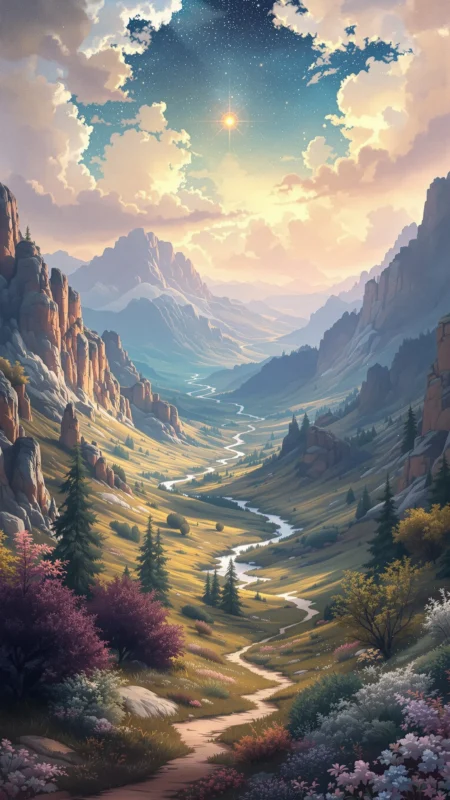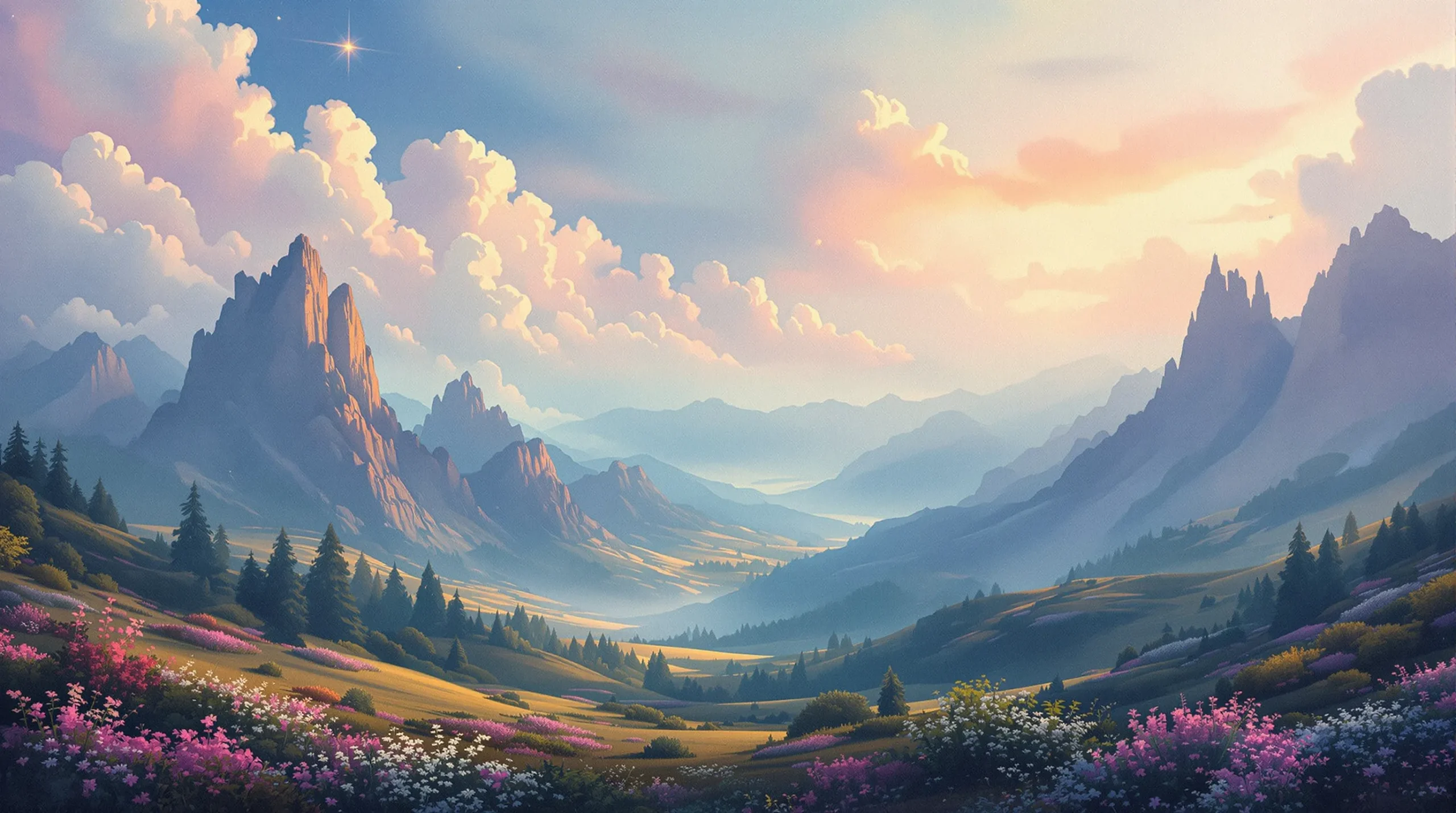


Valley

Archetype Meaning & Symbolism

Sheltered, fertile, foundational, passive, liminal, receptive, serene, cyclical, contained, shadowy

  • Do not mistake my quiet for emptiness. The grandest peaks are born from the deepest troughs. I am the breath between climbs, the cradle of becoming.

If Valley is part of your personal mythology, you may...

Believe

  • The lowest points of life are not pits to escape, but fertile basins where new life can begin.

    True strength is not about never falling, but about knowing how to make a home in the valley while you recover.

    The most important work is often done in the quiet and the dark, long before it is ready to see the sun.

Fear

  • That this period of rest will become a permanent state of stagnation.

    Being so sheltered and out of sight that you become forgotten or irrelevant to the world.

    A sudden, catastrophic event—a 'flash flood'—that will destroy the peace and safety you have so carefully cultivated.

Strength

  • A deep well of patience and an intuitive understanding of the cyclical nature of growth and life.

    The ability to create safe, nurturing environments where ideas, projects, and people can thrive.

    Profound resilience, and the capacity to find meaning and opportunity in periods of rest or apparent inactivity.

Weakness

  • A tendency towards passivity, sometimes avoiding necessary conflicts or challenges in favor of maintaining peace.

    A risk of becoming too isolated or withdrawn, mistaking a healthy sanctuary for a self-imposed prison.

    A potential for melancholy or a feeling of being 'stuck' if a valley period extends for too long without a sense of purpose.

The Symbolism & Meaning of Valley

In the personal mythos, the Valley is the landscape of soul-making. It is the necessary descent, the quiet chapter between heroic exploits. It symbolizes the womb, the tomb, and the cradle: a place where things end to be reborn. To have the Valley as a core part of your story is to reject the myth of perpetual ascent. Your narrative may be one of cyclical rhythms, where periods of retreat and seeming obscurity are not failures but deliberate acts of cultivation. This is the geography of the subconscious, a place you must enter to retrieve lost parts of yourself or to gestate a future you are not yet strong enough to birth into the world.

The Valley archetype suggests a profound connection to receptivity. Unlike the Mountain, which is defined by its striving towards the heavens, the Valley is defined by its embrace of what flows into it: water, seeds, fallen leaves, silence. It is an archetypal posture of allowing, of patience, of understanding that not all power is active. In your life, this may manifest as a quiet confidence in process. You might not need to force outcomes, trusting that by creating the right conditions—the fertile, protected soil of your inner valley—the right things will naturally grow. It’s a power sourced not from conquest, but from cultivation.

Furthermore, the Valley represents the beauty of the shadowed and the overlooked. It is what gives the mountain its grandeur, yet it is the mountain that gets the attention. To find the Valley in your mythos is to find worth in the foundational, the supportive, the unseen. It could be an acceptance of your own 'low' periods, seeing them not as pits of despair but as sacred hollows rich with potential. It is an invitation to explore the ecology of your own psyche, to appreciate the quiet life that flourishes in the shade, away from the glare of ambition and public acclaim.


Valley Relationships With Other Archetypes

The Mountain

The Valley and the Mountain are locked in a primal duality: one cannot exist without the other. The Mountain is the symbol of striving, achievement, and conscious awareness, the peak scaled and conquered. The Valley is its necessary counterpoint: rest, introspection, and the subconscious depths. If the Mountain is the heroic narrative you tell the world, the Valley is the quiet story you live with yourself. A person with both in their mythos understands that every ascent requires a descent, and that the height of one’s achievement is measured by the depth of one’s capacity for rest and reflection.

The River

The River is the active, shaping force to the Valley’s passive, receptive form. The River carves the Valley over millennia, bringing with it the silt and water that create fertility. In a personal mythos, the River may symbolize the flow of time, emotion, or life force itself. For the Valley individual, their relationship with their own emotional 'river' is paramount. They may not direct its course, but they provide it a container, allowing it to shape them, to enrich them, to move through them, trusting that its passage is what makes their inner landscape habitable and green.

The Cave

If the Valley is the subconscious, the Cave is a deeper recess within it, the heart of the mystery. The Valley is a place of sanctuary and growth, but it is still open to the sky. The Cave, often found within the Valley’s walls, is a place of total enclosure, of utter darkness where one might confront the rawest aspects of the self. To enter the Valley in one's mythos is to begin the journey inward. To seek out the Cave within that Valley is to commit to the deepest possible level of self-exploration, a confrontation with the primal self that dwells beyond even the quiet shelter of the valley floor.

Using Valley in Every Day Life

Creative Incubation

When an idea is too new, too fragile for the harsh winds of criticism, you might consciously enter a “valley” space. This is not procrastination, but protection. You allow the concept to germinate in a sheltered mental environment, feeding it resources without the pressure to perform, letting it grow roots before it must reach for the sun.

Navigating Grief or Burnout

Instead of fighting a period of emotional exhaustion or loss, you may choose to honor it as a valley crossing. This reframes the experience from a failure to a necessary landscape. It grants permission for rest, for quiet, for letting the emotional river carve new paths, understanding that fertility will only return after the fallow season is fully inhabited.

Cultivating Humility

After a period of great success or public visibility—a time on the mountaintop—you might intentionally seek the valley. This could mean stepping back from the spotlight, taking on a beginner's role in a new skill, or simply listening more than you speak. It is a conscious descent to reconnect with the foundational, the humble, the soil from which all growth begins.

Valley is Known For

Sanctuary

A valley is a place of natural refuge. Its enclosing walls may offer protection from harsh winds, both literal and metaphorical, creating a microclimate where vulnerable things can thrive away from exposure.

Fertility:

Often carved by a river, a valley is a basin for life. It collects water and rich sediment, becoming a landscape of lush growth, a testament to the life-giving potential of low places.

A Liminal Space:

The valley exists between the peaks. It is a place of transition, a necessary journey through the lowlands that connects one ascent to the next, representing the pauses and processes that enable progress.

How Valley Might Affect Your Personal Mythology

How Valley Might Affect Your Mythos

When the Valley shapes your personal mythos, your life story may cease to be a ladder and instead become a landscape. The narrative is not one of linear progress, of climbing from one success to the next. Instead, it becomes a story of seasons and cycles. The 'low points' are reframed as chapters of profound importance: the fallow winter before a creative spring, the sheltered hollow where a plan was hatched, the quiet riverbed where strength was gathered for the next great endeavor. Your myth is less a hero’s journey to a single summit and more an ecologist’s map of a rich, diverse terrain, where the lowlands are just as vital as the highlands.

This mythos might also be populated by acts of quiet cultivation rather than loud conquest. Your legendary deeds may not be dragons slain but gardens tended. The central conflicts could revolve around protecting your sanctuary, learning to trust the slow process of growth, or finding the courage to descend when everything screams for you to climb. Your story becomes a testament to the power of receptivity, patience, and the profound strength required to simply be, to hold space, and to allow life to unfold in its own time, within the protected walls of your own making.

How Valley Might Affect Your Sense of Self

Your sense of self may be deeply intertwined with the idea of being a container or a cultivator. You might see your primary value not in what you achieve, but in what you can hold and nurture: be it the emotions of others, a fragile creative project, or your own inner life. This can lead to a quiet, unshakeable self-worth that is not dependent on external validation. You may feel a sense of being 'grounded,' rooted in the foundational aspects of your being. This self-perception is not about being the best, but about being the bedrock.

However, this could also lead to a self-concept that feels passive or hidden. You may struggle with visibility, feeling more comfortable in a supportive role than in the spotlight. There might be a tendency to undervalue your own importance because your contributions are often subtle and foundational, like the valley that makes the mountain possible but is rarely the focus of the photograph. Your journey of self-development may involve learning to see the immense power in your receptive nature and honoring the quiet, life-giving space you embody.

How Valley Might Affect Your Beliefs About The World

Your worldview may be one that deeply values process over product. You might see the world not as a hierarchy to be climbed, but as an ecosystem where every part has a role, especially the quiet, unseen ones. This perspective could foster a deep appreciation for the 'in-between' moments of life: the commutes, the waiting periods, the quiet mornings. These are not seen as obstacles to 'real' living but as the fertile ground where life is actually lived. It is a worldview that finds meaning in the shadows, believing that the most important growth happens away from the sun.

This could also engender a certain skepticism towards cultures of ceaseless ambition and self-promotion. You may view the constant striving for the 'peak' as a form of exhaustion, a frantic energy that misses the point. Your philosophy might be that true progress is cyclical, like a river flooding and receding, enriching the soil each time. This perspective values sustainability over explosive but short-lived success, and it may see a profound wisdom in the societies and natural systems that honor cycles of rest and activity.

How Valley Might Affect Your Relationships

In relationships, you may be the sanctuary. People might be drawn to you for your ability to listen, to hold space for their vulnerability without judgment. You could create a sense of safety and calm that allows others to let down their guard. Your role in a partnership or friendship might be that of the nurturer, the one who provides the quiet, stable ground upon which the relationship can build. You may gravitate towards deep, long-term connections that feel like a hidden, fertile valley: protected from the outside world, a shared secret garden.

Conversely, you may sometimes struggle with being overly passive or receptive in relationships, inadvertently creating a dynamic where you do all the emotional holding. You might attract 'mountaineers' who see you as a beautiful resting place but not a fellow traveler on their ascent. The challenge could be to ensure the relationship is a shared valley, not simply you providing a service station for someone else’s journey. It involves learning to voice your own needs from the low ground, trusting that your quiet truth is as powerful as a shout from the peak.

How Valley Might Affect Your Role in Life

You may perceive your role in life not as the star, but as the ecosystem that allows the stars to shine. This could manifest as being a fantastic mentor, parent, editor, or community builder: someone whose work creates the conditions for others to succeed. Your sense of purpose might be tied to cultivating fertile ground, whether that's a positive work culture, a loving family, or a safe neighborhood. Your contribution is foundational, and you may take quiet pride in the health of the things that grow from the soil you have tended.

This can lead to a fulfilling life rich with meaning, but it can also present the challenge of recognition. Society often celebrates the flower, not the soil. You may have to find your own metrics for success, learning to value the invisible and the long-term. Your role is that of the steward, the guardian of the process. It's a role that requires immense patience and a faith in unseen growth, a quiet but powerful position in the larger drama of life.

Dream Interpretation of Valley

To dream of a lush, peaceful valley may suggest your psyche is calling for a period of rest, sanctuary, and recuperation. It could be a sign that you are successfully integrating a difficult experience and have found a place of inner peace. A sun-drenched valley with a clear river might symbolize a fertile period of creativity or emotional well-being that is about to begin. It is an affirmation from your subconscious that it is safe to let down your guard, to be receptive, and to nurture the seeds of new beginnings.

Conversely, dreaming of a valley that is barren, flooded, or from which you cannot escape could indicate feelings of depression, stagnation, or being trapped by circumstances. A valley shrouded in an impenetrable fog might reflect confusion or a sense of being lost in a transitional phase of life. If the walls of the valley feel impossibly steep, it could represent a feeling that your 'low point' is insurmountable. The dream is not a prophecy of doom, but an invitation to examine what is causing this feeling of entrapment or sterility in your waking life.

How Valley Archetype Might Affect Your Needs

How Valley Might Affect Your Physiological Needs

The Valley archetype may ground your physiological needs in the rhythms of rest and recovery. You might intuitively understand that the body is not a machine for constant output but an ecosystem that requires periods of fallow quiet to maintain its health. The need for sleep, gentle movement, and nourishing food is not a mere requirement but a sacred practice of tending to your inner landscape. You may feel how stress acts like a drought or a flash flood upon your physical being, and you might prioritize creating a life that offers shelter from these harsh elements.

This connection could lead to a deep respect for the body's signals. Fatigue is not a failure to be pushed through with caffeine but a clear message to seek the valley of rest. Hunger is a call to bring enriching nutrients to the soil of the self. This perspective reframes bodily maintenance as a form of stewardship, a conscious act of cultivating the physical ground from which all your energy and creativity must grow.

How Valley Might Affect Your Ideas of Belonging

A sense of belonging, for you, may be found in the shared hollow, not the crowded peak. You might seek intimacy in small, trusted circles where vulnerability is the currency of connection. Love and belongingness are not about being part of a large, impressive tribe, but about co-creating a protected, shared space with a few others. It is the feeling of being 'in the valley' together, sheltered from the world, that fosters your deepest sense of community.

This can lead to incredibly profound and loyal relationships. The love you cultivate might be quiet, steady, and deep-rooted, like the ancient trees on a valley floor. The challenge may be in reaching out beyond this comfortable sanctuary. You might have to consciously make the journey to the ridges to meet new people, reminding yourself that while the valley is home, the entire landscape is worth exploring and that new rivers can carve beautiful new paths in your life.

How Valley Might Affect Your Feelings of Safety

Your need for safety may be defined by shelter rather than fortification. Safety is not a high wall to keep others out, but a low profile that avoids unwanted attention. It is the psychological safety of a space where you don't have to perform, where you can be vulnerable without fear of the 'harsh winds' of judgment or competition. You might seek safety in smaller communities, quiet environments, and a life that is less exposed to public scrutiny.

This drive for sanctuary could mean creating a physical home that feels like a sheltered hollow, a true refuge from the world. It might also manifest as a need for emotional safety, for relationships where you are protected and can, in turn, protect others. The potential danger is when this need for safety curates an existence that is too small, too sheltered, transforming a sanctuary into a prison where risk is avoided at all costs.

How Valley Might Affect Your Views of Esteem

Your self-esteem may be built on a foundation of resilience and inner fortitude. It is not the flashy esteem of the peak-bagger, who collects achievements, but the quiet confidence of the survivor and the cultivator. You might derive pride from your ability to weather the low points, to find meaning in the quiet times, and to nurture fragile things into strength. Your worth is measured not by the height you reach, but by the depth from which you can rise, and the life you can foster within that space.

This provides a stable, internal source of esteem that is less susceptible to the whims of external praise or criticism. However, you might also struggle to recognize your own accomplishments, as they are often gradual, subtle, and private. The work of building esteem might involve learning to celebrate the slow, quiet processes of your life with the same reverence that others celebrate their public victories, acknowledging the profound power inherent in the act of cultivation.

Shadow of Valley

The shadow of the Valley emerges when shelter curdles into stagnation. It is the refusal to ever leave the low ground, a fear-based clinging to safety that suffocates all possibility of growth. Here, the fertile soil becomes a stagnant swamp, and the life-giving river slows to a murky crawl. A person deep in this shadow may use 'rest' as an excuse for abdication, and 'sanctuary' as a justification for agoraphobic withdrawal from life's necessary challenges. They may become overly passive, letting opportunities float by, convinced that the risks of the ascent are too great to ever attempt the climb.

Another manifestation of the shadow is the smothering valley. In this aspect, the desire to protect becomes a need to control and contain. The valley doesn't nurture, it entraps. This might play out in relationships where a person's love becomes possessive, their care becoming a cage that prevents the other's growth. They create a 'safe space' that is, in reality, a gilded prison, designed to keep the object of their affection dependent and close. The walls of the valley, meant to protect from harsh winds, instead block out the sun entirely.

Pros & Cons of Valley in Your Mythology

Pros

  • You cultivate a deep, inner resilience that is not dependent on external success.

    You can be a source of profound comfort and safety for others, a true sanctuary in a chaotic world.

    You develop a unique wisdom based on an understanding of cycles, patience, and the value of process.

Cons

  • You may be underestimated or overlooked in a culture that prizes visibility and aggression.

    There is a significant risk of falling into passivity, isolation, or a state of permanent inertia.

    You might avoid the healthy risks and challenges that are necessary for transformative growth and peak experiences.