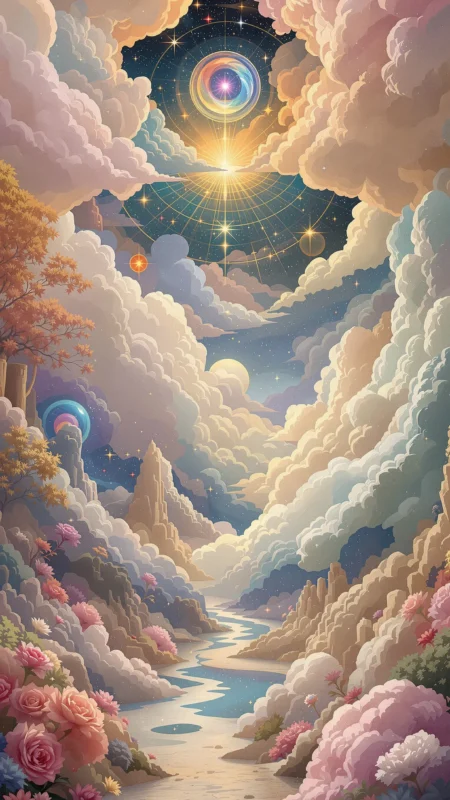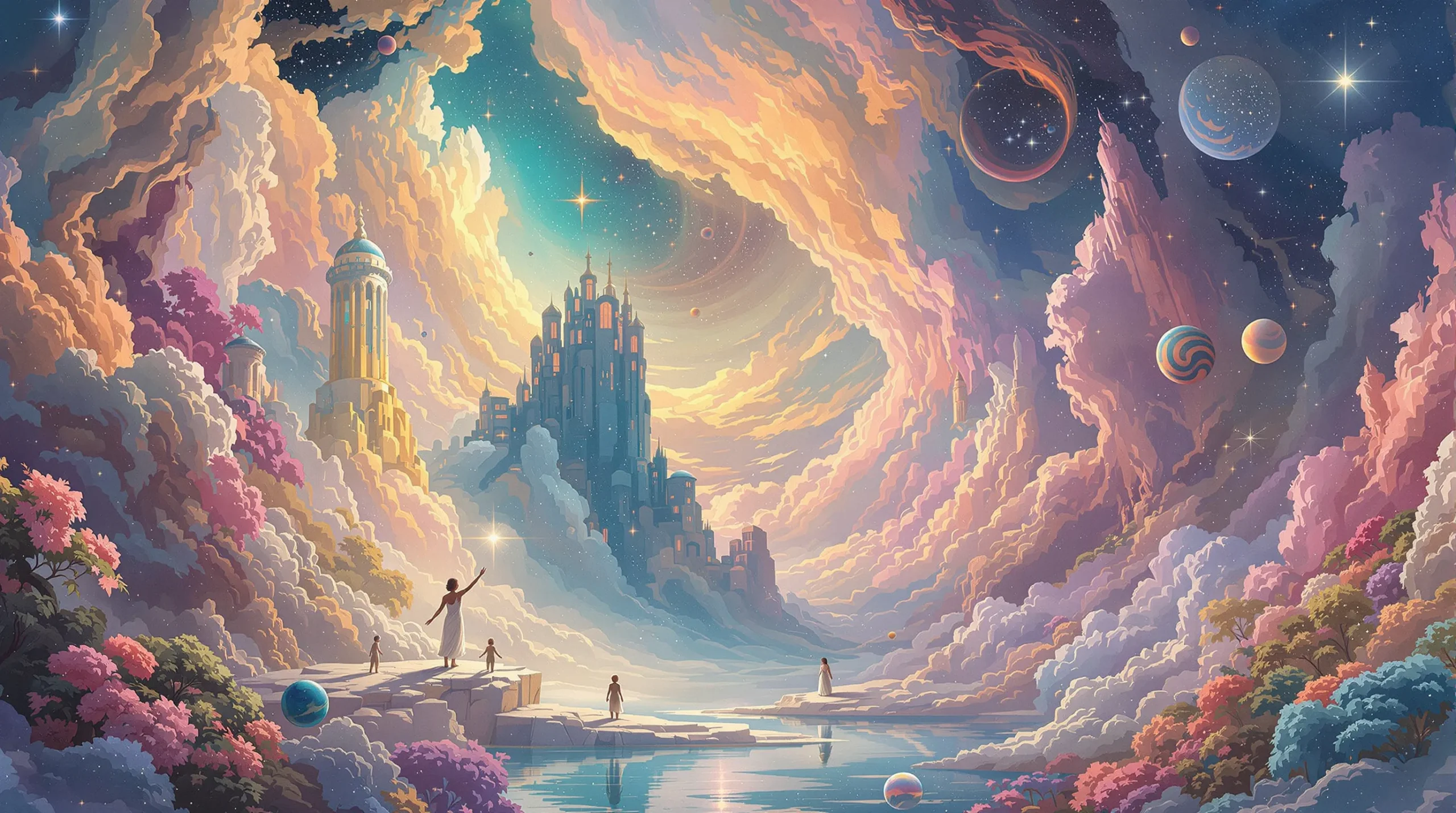


Utopia

Archetype Meaning & Symbolism

Harmonious, ordered, pristine, static, theoretical, aspirational, placid, sterile, unattainable, serene

  • Perfection is not a destination to be reached, but a horizon that recedes as you approach, its true purpose the quality of your journey toward it.

If Utopia is part of your personal mythology, you may...

Believe

  • You may believe that a perfect world is not only possible, but is a moral imperative to strive for.

  • You may believe that most human suffering is a result of flawed systems, and that with the right design, it could be eliminated.

  • You may believe that your inner vision of how things *should* be is more real and more important than the way things currently are.

Fear

  • You may fear chaos, messiness, and unpredictability above all else, seeing them as existential threats to your well-being.

  • You may secretly fear that you are not good enough to achieve the perfect standards you set for yourself and your world.

  • You may fear that if you were to achieve your Utopia, you would be left with a profound and terrifying sense of emptiness and purposelessness.

Strength

  • You may possess an extraordinary capacity for vision and long-term planning, able to see the ideal outcome and map the steps to get there.

  • You may be incredibly resilient in the face of setbacks, as your unwavering belief in your Utopian goal allows you to see them as temporary obstacles rather than final defeats.

  • You may be a powerful force for positive change, using your idealism and high standards to inspire others and improve the world around you.

Weakness

  • You may be prone to analysis paralysis, where the gap between your perfect plan and messy reality is so vast that you are unable to take the first step.

  • You may be seen as judgmental or controlling by others, as you may unconsciously try to force them to fit into your vision of a perfect world.

  • You may suffer from chronic dissatisfaction and disappointment, as the real world will never fully align with the flawless blueprint you hold in your mind.

The Symbolism & Meaning of Utopia

In the personal mythology of a modern individual, Utopia may represent the persistent, shimmering mirage of the life that could be. It is the filtered photograph, the flawlessly curated career path, the relationship without friction. This archetype symbolizes the deep human yearning for order and meaning, a desire to smooth the jagged edges of reality into a seamless whole. It is the ghost of potential that haunts our choices, a silent benchmark against which we measure our messy, beautiful, and imperfect lives. Having Utopia in your mythos might mean you carry an internal architectural plan for a better self or a better world, a vision so clear and compelling it can feel more real than reality itself.

Perhaps this archetype manifests not as a grand societal vision, but as an intimate, personal one: the small, walled garden of a perfect morning routine, the flawless logic of a well-organized project, or the serene inner state achieved through meditation. It is the search for a place, internal or external, where the soul can be at ease, unburdened by contradiction and strife. This symbolism speaks to a need for control, for a patch of cultivated ground in the wild, untamable forest of existence. It is the belief in the possibility of a final draft, a state of being where no more edits are necessary.

However, Utopia’s meaning is also entwined with a profound melancholy. It is, by its very name, “no-place.” Its perfection is a function of its nonexistence. To hold Utopia in one's heart is to be in a constant state of mild mourning for what will never be. It is to be an idealist, a dreamer, and perhaps, a soul finely tuned to the inherent disappointment of the real. The symbolism is thus twofold: it is both the engine of our highest aspirations and the source of our most persistent dissatisfaction.


Utopia Relationships With Other Archetypes

The Wasteland:

Utopia and The Wasteland are mirror images, born from the same seed of human endeavor. The Wasteland is the ever-present shadow of Utopia, the result of a utopian dream that has failed, collapsed, or soured into tyranny. Where Utopia offers sterile perfection, The Wasteland presents fertile chaos and decay. In a personal mythos, a journey might be framed as an escape from a personal Wasteland—a toxic job, a broken family system—driven by a shimmering vision of Utopia. Conversely, one might discover that their supposed Utopia was a gilded cage, its oppressive order creating a spiritual Wasteland within.

The Pioneer:

The Pioneer is the active agent of the Utopian dream. While Utopia is a static concept, a place, The Pioneer is the one who charts the map, crosses the desert, and attempts to build the city on the hill. The Pioneer’s mythos is defined by the journey toward Utopia, while Utopia itself is the destination that gives that journey its meaning. There is a potential tension here: The Pioneer thrives on challenge and discovery, while Utopia is a realm where such things may no longer be necessary. The Pioneer may, upon arriving at their long-sought paradise, feel a sense of profound purposelessness, realizing the quest was more vital than the prize.

The Rebel:

The Rebel stands in direct opposition to the homogenization that a perfect society might demand. For The Rebel, Utopia is not a dream but a potential nightmare of conformity, a silencing of the individual voice for the sake of a harmonious chorus. The Rebel is the glitch in the perfect system, the wildflower cracking the pristine pavement. While the architect of Utopia seeks to eliminate all friction, The Rebel believes that friction is what creates the necessary heat for growth, creativity, and freedom. Their relationship is one of ideological conflict: Utopia's peace is The Rebel's prison.

Using Utopia in Every Day Life

Navigating Career Dissatisfaction:

When your professional life feels like a barren landscape, the Utopia archetype could serve as a mental blueprint for your ideal work environment. Instead of just seeking a new job, you might draft the constitution of your perfect role: the balance of collaboration and autonomy, the quality of light in the office, the nature of the problems you solve. This inner vision may not be fully attainable, but it provides specific, meaningful criteria for navigating your next move, turning a desperate search into a deliberate construction.

Healing from a Chaotic Upbringing:

For those whose personal history is a geography of chaos and instability, Utopia may function as a sanctuary for the mind. It is a consciously cultivated inner space of peace, order, and predictability. You might use this archetype to design routines and personal rituals that create pockets of perfect calm in your daily life. This isn't about escaping the past, but about terraforming your present, proving to yourself that you are the capable architect of your own inner peace.

Envisioning Social Change:

When confronting overwhelming social or political problems, the archetype of Utopia could offer a radical vision that fuels action. It allows you to imagine a world not just incrementally better, but fundamentally reordered around principles of justice, equality, or sustainability. This internal model of a perfect society can become a source of resilience, a reminder of what you are fighting for, preventing burnout by keeping the beautiful, seemingly impossible goal in sight.

Utopia is Known For

The Blueprint of Perfection

Utopia is known as the ultimate standard, the conceptual model of a flawless society, place, or state of being. It is the imagined end of all struggle, a realm where conflict, pain, and want have been engineered out of existence.

The Seduction of Order:

It is famous for its powerful allure, the promise of harmony and stability in a chaotic world. This pull can be so strong that it inspires immense creativity and devotion, but also a dangerous willingness to sacrifice complexity for the sake of simplicity.

The Paradox of Stasis:

Utopia is also known for its inherent contradiction: a perfect place has no need for change, growth, or striving. It is a finished story, a beautiful but ultimately static endpoint that may stand in opposition to the very dynamism that defines life.

How Utopia Might Affect Your Personal Mythology

How Utopia Might Affect Your Mythos

When Utopia is a central landmark in your personal mythos, your life story may be narrated as a constant pilgrimage. Every decision, every relationship, every career move could be interpreted as a step closer to, or a frustrating detour from, this idealized destination. Your personal history might not be a series of disconnected events, but a carefully plotted map with a single, shining X marking the spot. This can lend your life a powerful sense of purpose and direction, framing you as the noble seeker of a higher state of being. The key plot points of your mythos could revolve around moments of near-arrival, glimpses of the promised land that fuel the rest of the journey.

Alternatively, your mythos might be a story of disillusionment and escape. Perhaps you were raised in a supposed Utopia—a restrictive community, a family with impossibly high standards of perfection—and your life's work is to break free from its sterile confines. In this narrative, Utopia is not the goal but the gilded cage you must escape to find your authentic, flawed self. Your story becomes one of deprogramming, of learning to embrace the beauty of imperfection and the wildness of a life unscripted. You are the refugee from paradise, seeking the messy, vibrant truth of the real world.

How Utopia Might Affect Your Sense of Self

Your sense of self may be deeply intertwined with your capacity to envision and strive for perfection. You might see yourself as a visionary, an architect of better futures, whether on a grand scale or in the quiet design of your own life. This could foster a powerful sense of competence and idealism, a belief in your ability to transcend circumstances and create order from chaos. Your identity is that of the builder, the planner, the one who holds the blueprint. This can be a source of immense strength and self-respect, casting you as the protagonist in a story of constant improvement and aspiration.

On the other hand, the Utopian ideal could function as an internal critic of impossible standards. Your self-perception might be colored by a persistent sense of inadequacy, a feeling of always falling short of the flawless version of yourself that exists in your mind. This could lead to a state of chronic dissatisfaction, where every accomplishment is diminished by the vast distance that remains between you and your inner Utopia. The self is not a being to be nurtured, but a flawed project to be perpetually renovated, a source of constant frustration.

How Utopia Might Affect Your Beliefs About The World

With Utopia as a lens, you may view the world as a fundamentally flawed project, a beautiful but broken machine in need of repair. This perspective can foster a deep sense of empathy and a powerful drive for justice, as you are acutely aware of the gulf between what is and what could be. Problems like poverty, conflict, and inequality may seem not just tragic, but like solvable engineering problems. Your worldview could be one of hopeful and determined potential, seeing humanity as being on a long, arduous journey toward a more perfect union.

This same lens, however, might lead to a cynical or despairing worldview. The sheer, immovable imperfection of the world, when contrasted with the clarity of your internal vision, can be overwhelming. You might become disdainful of the compromises and complexities of human systems, viewing them as contemptible failures rather than necessary adaptations. This can lead to a sense of detachment or superiority, a withdrawal into the safety of your ideal world because the real one is too disappointing to bear. The world becomes a constant source of frustration, a testament to humanity's inability to live up to its potential.

How Utopia Might Affect Your Relationships

In relationships, you may be the partner who is always seeking to improve, refine, and perfect the dynamic. You might have a clear and beautiful vision of what the relationship *could* be: a space of perfect harmony, understanding, and mutual growth. This can make you a wonderfully attentive and aspirational partner, someone who encourages growth and is always willing to work on things. You may approach conflicts with a solution-oriented mindset, viewing them as bugs in the system that can be patched to bring the relationship closer to its ideal state.

However, this Utopian impulse can also be stifling for others. Your partner may feel that they are constantly being measured against an impossible ideal of who they should be, or that the relationship itself is a project under constant, critical review. The pressure to live up to a flawless standard can feel exhausting, leaving little room for human error, bad moods, or unsolvable contradictions. You might struggle with accepting the messy reality of another person, and your love could feel conditional, contingent on their willingness to participate in the construction of your shared paradise.

How Utopia Might Affect Your Role in Life

You may see your role in life as that of the Architect or the Visionary. You are not here merely to participate, but to design and build. This could manifest in your career, your community, or your family. You might feel a profound sense of responsibility to leave things better than you found them, to create systems, structures, or environments that are more orderly, just, and beautiful. Your purpose is not simply to live, but to elevate life itself, guided by a clear blueprint of a more perfect existence. This role gives you a sense of direction and importance; you are an agent of positive transformation.

Conversely, you may feel perpetually miscast in the role of the Exile. If your internal world is a pristine Utopia, then the real world, with all its compromises and grit, may feel like a foreign land. You could experience a chronic sense of not belonging, of being a citizen of a country that doesn't exist. This can lead to a feeling of alienation and loneliness, as if you are speaking a language no one else understands. Your role becomes that of the lonely observer, the critic who points out the flaws of a world they can never truly feel a part of, forever longing for a home that is only a dream.

Dream Interpretation of Utopia

To dream of a Utopia in a positive context may signal a deep subconscious need for peace, order, and respite from the chaos of your waking life. The dream could be a sanctuary created by your mind, offering a moment of perfect harmony and reassurance. The specific features of the Utopia—its architecture, its social rules, its landscape—might provide clues about what your psyche currently craves. A vision of a lush, natural paradise could indicate a need to reconnect with your instincts and the earth, while a dream of a gleaming, technologically advanced city might reflect a desire for logic, efficiency, and intellectual clarity in solving your problems.

When a dream of Utopia feels unsettling, oppressive, or nightmarish, it may point to a fear of losing your individuality. This shadow-Utopia could symbolize a situation in your life where you feel pressured to conform, to sacrifice your authentic, messy self for the sake of fitting into a smooth, harmonious system—be it a corporate culture, a family dynamic, or a social group. The dream may be a warning from your subconscious that the price of this particular paradise is too high. The feeling of being trapped in perfection suggests a conflict between your need for belonging and your more fundamental need for personal freedom and self-expression.

How Utopia Archetype Might Affect Your Needs

How Utopia Might Affect Your Physiological Needs

The drive for Utopia may manifest as a meticulous attention to the body as a perfectible system. Your approach to physiological needs—diet, exercise, sleep—could be highly disciplined, guided by the latest science and a desire to achieve an optimal state of being. You might see your body not just as a vessel, but as a project: The Utopian Body. This could lead to exceptional physical health and vitality, as every meal is balanced, every workout is optimized, and every hour of sleep is tracked. The body becomes the first and most immediate territory where a perfect order can be established.

However, this pursuit of physiological perfection can easily curdle into obsession. The body, being an organic and unpredictable system, will ultimately resist flawless control. This can lead to profound anxiety, orthorexia, or a hyper-vigilance toward any sign of imperfection: a wrinkle, a pound gained, a minor illness. The body is no longer a source of pleasure and vitality, but a source of constant stress and potential failure. The slightest deviation from the perfect plan can feel like a catastrophic collapse of the entire Utopian project, turning the basic needs of life into a battlefield of control.

How Utopia Might Affect Your Ideas of Belonging

Your need for belongingness might be expressed as a search for, or an attempt to create, the perfect community. You might yearn for a circle of friends, a family, or a partnership that functions with seamless harmony, free from conflict, misunderstanding, and betrayal. You may be the person who works tirelessly to mediate disputes and organize gatherings, driven by a vision of a flawless social fabric. When successful, this can make you a cherished hub of your community, the creator of a space where everyone feels understood, valued, and perfectly in sync.

This ideal of a Utopian community, however, can place an immense strain on your real-world relationships. You may have little tolerance for the inevitable messiness of human connection: the arguments, the letting people down, the awkwardness. When others fail to live up to the ideal of perfect friendship or love, you might feel deeply disappointed or even betrayed. This can lead to a pattern of serial disillusionment, where you are always searching for the next, better group of people, or it may cause you to retreat into isolation, finding the company of your imagined perfect community preferable to the flawed reality of others.

How Utopia Might Affect Your Feelings of Safety

The Utopia archetype may translate into a desire to construct a life of absolute safety and predictability. Your need for security might go beyond the physical, extending to the emotional, financial, and social realms. You may be drawn to stable careers, predictable routines, and well-vetted social circles. Your goal is to build a fortress of certainty, a life with no sudden drops or dangerous surprises. This can lead to a life that is secure and well-managed, a personal haven shielded from the unpredictable storms of the outside world. Safety is achieved through meticulous planning and the elimination of variables.

This intense focus on creating a perfectly safe environment, however, can become a prison of its own making. The world is inherently uncertain, and the attempt to eliminate all risk is not only impossible but can lead to a crippling fear of the unknown. You might avoid new experiences, shun opportunities that involve any degree of risk, and view spontaneity as a threat. The quest for absolute safety could paradoxically make you feel more vulnerable, as you become acutely aware of all the potential threats that lie outside your carefully constructed walls. Your world shrinks, and true resilience—the ability to adapt to unforeseen circumstances—may atrophy.

How Utopia Might Affect Your Views of Esteem

Your self-esteem may be directly tied to your ability to create order and perfection in your environment and in yourself. Esteem is earned through successful execution of the plan. When your life aligns with your Utopian vision—your career is on track, your home is immaculate, your goals are being met—you may experience a profound sense of self-worth and competence. You are the capable creator of your world, and your self-respect is built on the tangible evidence of your ability to manifest your ideals. Your esteem is the feeling of a world well-built.

This foundation for esteem, however, is fragile. Because perfection is an unattainable standard, your self-worth could be subject to constant, violent fluctuations. A single failure, a messy room, or a deviation from the plan can trigger a crisis of confidence, as it provides evidence that you are not the masterful architect you believe you should be. This can create a dynamic of all-or-nothing self-esteem: either you are perfectly in control and thus worthy, or you are failing and thus worthless. There is little room for the quiet, resilient self-esteem that comes from accepting oneself as a flawed but valuable work-in-progress.

Shadow of Utopia

The shadow of Utopia is tyranny, born from the belief that a perfect end justifies any means. When this archetype operates in the shadow, the visionary becomes a despot. In the name of harmony, dissent is crushed. In the name of order, freedom is sacrificed. This can manifest on a grand, political scale, but it more commonly appears in the small kingdoms of our lives: the family where authentic expression is forbidden in favor of a perfect facade, the workplace where creativity is stifled by rigid process, the individual who purges their own personality of any “unacceptable” trait. The shadow turns the beautiful garden into a sterile greenhouse, where anything wild or unexpected is ruthlessly weeded out.

The other face of the shadow is a profound and crippling inaction. The Utopian ideal can become so sublime, so perfect, and so intimidating that it paralyzes the will. The fear of failing to realize the vision flawlessly prevents one from even beginning. It is the writer who never finishes a sentence because it isn't the perfect sentence, the artist who never shows their work because it falls short of the masterpiece in their head. The archetype, in its shadow, builds a paradise so perfect it can only exist in the imagination, leaving the individual trapped there, unable to engage with the messy, imperfect, and ultimately more vital real world.

Pros & Cons of Utopia in Your Mythology

Pros

  • Your unwavering vision can inspire incredible innovation and progress, both for yourself and for others.

  • You possess a deep-seated optimism and resilience, fueled by a core belief in the possibility of a better world.

  • You are likely highly organized, disciplined, and capable of creating pockets of genuine beauty and order in your life.

Cons

  • You may struggle with chronic disappointment and a sense that nothing is ever quite good enough.

  • You risk alienating others with your impossibly high standards and a perceived intolerance for imperfection.

  • You can become rigid and inflexible, unable to adapt when reality inevitably fails to conform to your perfect plan.