Believe
 Fear
Fear Strength
 Weakness
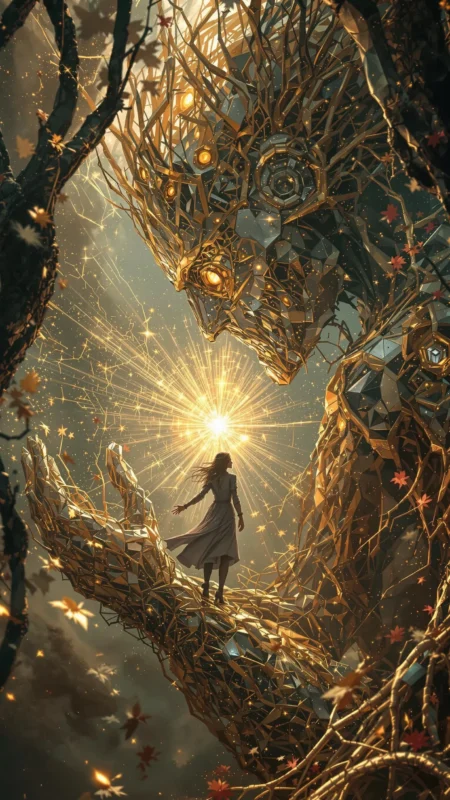
To find the Tin Woodman in your personal mythology is to grapple with the ghost in the machine, to feel the ache of a heart you believe you do not possess. He is the patron saint of those who have been alienated from their own emotions by trauma, by labor, by the relentless mechanization of modern life. He is the man who was systematically replaced, piece by piece, until nothing original, nothing flesh, was left. His quest is a pilgrimage born of this perceived lack, a belief that wholeness is a thing to be acquired, a transplant from a benevolent wizard. His symbolism speaks to a profound dissociation, the sense of watching oneself perform the acts of life and work from a distant, metallic shell.
His central paradox, of course, is that his every action is motivated by the very feeling he seeks. His journey is fueled by a deep well of compassion for his friends and a poignant yearning for connection. He is the most tenderhearted of the companions, yet he cannot grant himself credit for it. The Tin Woodman mythos, then, becomes a meditation on this blindness. It suggests that we may already possess the qualities we so desperately seek externally. His journey is not toward acquisition, but toward recognition. The heart is not in a velvet cushion in the Emerald City; it is in the tears that rust his joints and the loyalty that keeps him on the path.
In a contemporary sense, he is the archetype of the person who fears their own softness. His armor is both a prison and a form of protection. His greatest fear is rusting, a paralysis brought on by his own sorrow. This speaks to a culture that often encourages us to suppress grief, to “keep a stiff upper lip,” lest our feelings render us non-functional. The Tin Woodman’s story suggests this is an impossible bargain. The feeling will emerge, and its emergence may be painful and immobilizing, but it is also the only true sign of life, the only proof that the man inside the tin has not, in fact, disappeared.