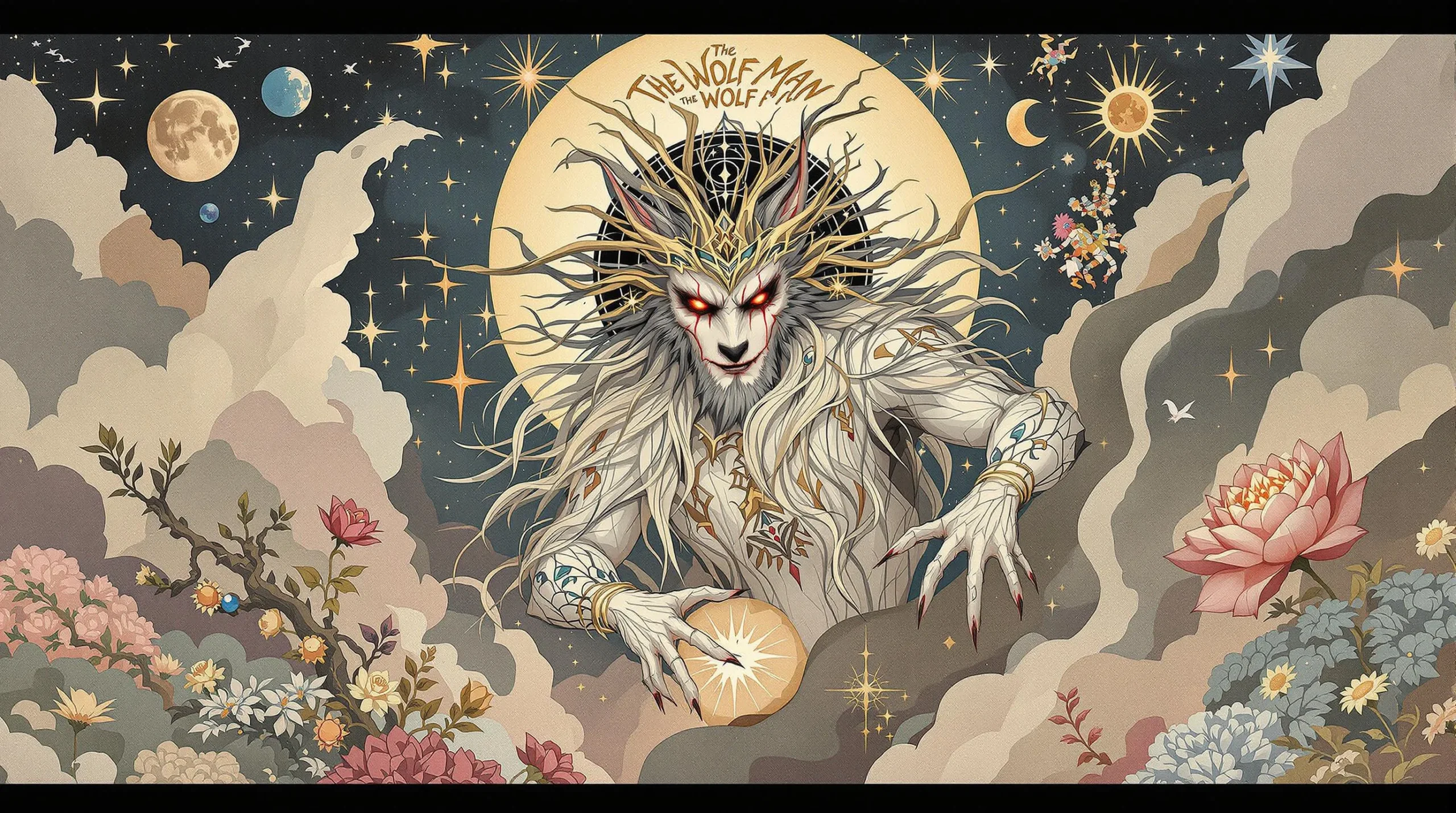


The Wolf Man

Archetype Meaning & Symbolism

Dualistic, instinctual, tormented, cursed, powerful, feral, misunderstood, primal, lunar, cyclical

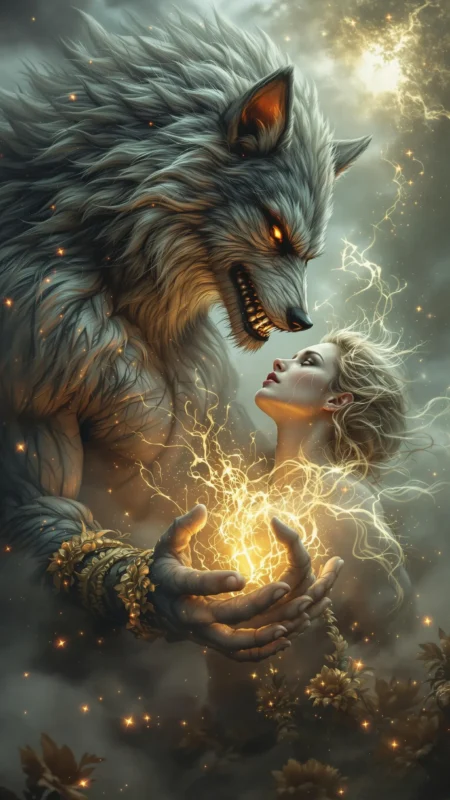
  • Even a man who is pure in heart and says his prayers by night, may become a wolf when the wolfbane blooms and the autumn moon is bright.

If The Wolf Man is part of your personal mythology, you may...

Believe

  • You may believe that everyone has a beast inside them, but most people are fortunate enough never to meet it.
  • You may believe that true self-control is not the absence of dark impulses, but the strength to master them.
  • You may believe that your life is governed by cycles beyond your command, and wisdom lies in adapting to them, not fighting them.

Fear

  • You may fear losing control and causing irreparable harm to someone you love, confirming your own monstrousness.
  • You may fear that if anyone saw the real, uncensored you, they would be horrified and abandon you.
  • You may fear the full moon, not just literally, but metaphorically: those predictable triggers that you know will bring out the worst in you.

Strength

  • You may possess a profound intimacy with your own instincts and intuition, a gut-level wisdom that others have lost.
  • You may have an immense capacity for empathy, especially for the outcast, the misunderstood, and the tormented.
  • You may embody an incredible resilience, a strength forged in the crucible of repeated internal struggle and transformation.

Weakness

  • You may be prone to self-sabotage and isolation, pushing away connection to 'protect' others from yourself.
  • You may suffer from a chronic sense of guilt and shame for your natural impulses, leading to depression or anxiety.
  • You may have a fatalistic streak, a sense of being cursed or doomed that prevents you from striving for a better future.

The Symbolism & Meaning of The Wolf Man

The Wolf Man is the grand allegory for the thin veneer of civilization we layer over our own untamed wilderness. He is the walking, snarling embodiment of the Freudian id, a creature of pure impulse and appetite that erupts from the psyche when the watchman of the ego is asleep or distracted. His story is not about good versus evil but about the violent, often tragic, negotiation between our curated selves and the ancient, instinctual truths of our bodies. He is the part of us that remembers the hunt, the part that responds not to reason but to the moon, to scent, to the call of something wilder than our own names.

In a personal mythology, the Wolf Man may represent a confrontation with a part of the self that has been suppressed or denied. This could be raw ambition, fierce anger, or untethered sexuality. The transformation is the moment of eruption: the consequence of too much repression. The terror of the archetype lies in its involuntariness. This is not a power one chooses to wield; it is a condition one is cursed to endure. It is the fear that our deepest nature is fundamentally destructive, and that despite all our efforts at morality and control, a certain configuration of the stars can undo us completely.

His meaning deepens beyond mere rage. He is also the symbol of profound alienation. He is the man who cannot trust himself, who must sequester himself from those he loves for fear of what he might become. This speaks to a modern condition, to the person wrestling with a mental illness, an addiction, or a secret history that makes them feel monstrous and unfit for society. The Wolf Man is the patron saint of those who feel their own mind, their own body, is a haunted house, a place of terrible and unpredictable power.


The Wolf Man Relationships With Other Archetypes

The Full Moon

The Full Moon may not be a mere catalyst for the Wolf Man, but rather the stark, unblinking eye of a cosmos indifferent to the niceties of civilization. It is a celestial monocle under which the carefully tailored suit of the self is revealed to be a shabby costume. Its light is not a trigger, but perhaps a kind of solvent, dissolving the mortar of repression and allowing the primal architecture beneath to show its terrible form. This relationship is less about cause and effect and more about a cyclical, cosmic appointment. The moon, in its silent, silver judgment, could be seen as pulling the tide of the subconscious to its highest, most dangerous point, forcing what is hidden in the deep to breach the surface, gasping and ravenous on the shores of the conscious mind.

The Forest

With the Forest, the Wolf Man enters into a communion that is both a homecoming and an exile. The ordered garden of his waking life gives way to this tangled, amoral wilderness, a landscape that mirrors his own internal state. The trees may not be mere wood and leaf, but the silent, looming witnesses to his undoing—or perhaps, his truest becoming. The forest could be the psychic territory where the grammar of society is forgotten and a more ancient, guttural language is remembered in the blood and sinew. It is a place of dreadful liberation, where the path forward is lost, but the scent of the self, the real and unchained self, is finally, intoxicatingly found. He is at once king and prisoner of this verdant labyrinth.

The Silver Bullet

The Silver Bullet suggests a relationship not of simple animosity, but of a tragic, purifying finality. Silver, a metal of reflection and purity, may represent the one, unbearable truth that the Wolf Man’s divided nature cannot withstand. The bullet is not just an object but a concept, a piercing moment of clarity that is itself lethal. It could be a long-repressed memory, a word of love from a world he can no longer inhabit, or the sudden, horrifying recognition of his own face in a moonlit puddle. This small, cold object is perhaps the only thing that can resolve the central conflict, not by healing the man or taming the beast, but by imposing a terrible, singular peace upon their war, a final, chilling synthesis in death.

Using The Wolf Man in Every Day Life

Navigating Inner Conflict

When you feel a profound schism between your professional, civilized self and a wilder, more impulsive nature, the Wolf Man archetype provides a map. It suggests this is not a flaw to be eradicated but a fundamental duality to be managed. You might learn to create controlled outlets for this primal energy: a demanding physical regimen, a passionate artistic pursuit, a solitary retreat into nature, acknowledging the beast's needs without letting it command the entirety of your life.

Accepting Involuntary Cycles

For those who experience dramatic, cyclical shifts in mood, energy, or sociability that feel beyond their conscious control, the Wolf Man's lunar curse offers a powerful metaphor. It reframes the experience from one of personal failure to one of grappling with a powerful, recurring force. This allows for a strategy of anticipation and mitigation rather than resistance and self-flagellation. You learn to recognize the signs of the “rising moon” in your own psyche and adapt your environment and commitments accordingly, building a life that honors these tides instead of drowning in them.

Understanding Alienation

The archetype may resonate with a deep-seated feeling of being an outsider, of carrying a secret that, if revealed, would lead to rejection or fear. The Wolf Man mythos gives a name to the experience of being profoundly misunderstood. It can foster a strange sort of solace, a narrative framework for why intimacy feels perilous and why you keep the world at arm's length. It is the story of those who fear their own intensity, who love from a distance to keep others safe from a part of themselves they have not yet tamed.

The Wolf Man is Known For

The Lunar Transformation

The involuntary, often painful, metamorphosis under the light of the full moon. It is a surrender of the human form and rational mind to a primal, bestial state, a cycle of becoming that is both terrifying and absolute.

The Contagious Curse

The affliction is not innate but transferred, typically through a bite. This passing of the curse speaks to the nature of trauma, how one person's unhealed wound can be inflicted upon another, creating a lineage of suffering.

The Tragic Hero

At its heart, the Wolf Man is a story of a good person tormented by an inescapable darkness. The true horror is not the monster he becomes, but the consciousness of the man trapped inside, aware of the carnage he is forced to wreak.

How The Wolf Man Might Affect Your Personal Mythology

How The Wolf Man Might Affect Your Mythos

To integrate the Wolf Man into your personal mythos is to structure your life story around a central, defining conflict. Your narrative ceases to be a simple arc of progress and becomes a cyclical saga of transformation and containment. Key events in your life may be interpreted through this lens: moments of losing your temper become “transformations,” periods of isolation are seen as necessary quarantines, and achievements in self-control are celebrated as hard-won victories against the inner beast. Your personal history is no longer just a sequence of events; it's a mythology of a divided self, a tale of a noble soul wrestling with a primal curse.

This archetype shapes your mythos into a tragedy, but one with the potential for profound grace. You are the protagonist who carries a great and dangerous power not of your own choosing. This reframes personal failings, not as simple mistakes, but as battles lost in a much larger, ongoing war. Your life story becomes a testament to endurance. It is the narrative of someone who walks in daylight burdened by the knowledge of what the moonlight brings, fostering a mythic identity defined by resilience, self-awareness, and a constant, vigilant dance with the shadow.

How The Wolf Man Might Affect Your Sense of Self

When the Wolf Man takes residence in your psyche, your perception of self may become fractured. You could see yourself as two distinct beings inhabiting one body: the rational, socialized human and the feral, instinctual beast. This may lead to a perpetual state of self-monitoring, a constant inner dialogue where the human self is trying to manage, predict, or bargain with the bestial self. There can be a deep-seated shame associated with this inner creature, a loathing for its perceived needs and desires, which feel alien and threatening to your conscious identity.

Conversely, this archetype might also foster a strange form of self-respect. You may come to admire the beast's raw power, its uncompromising honesty, its survival instinct. The challenge, then, is not to kill the beast but to build a stronger cage, or perhaps, to find a way to listen to its growls without letting it bite. This can cultivate a unique form of integrity, one rooted not in purity, but in the harrowing and noble effort of holding immense, contradictory forces within a single being. You see yourself as complex, dangerous, and profoundly resilient.

How The Wolf Man Might Affect Your Beliefs About The World

Your view of the world may become one of deep suspicion towards surfaces. Seeing the Wolf Man within yourself allows you to sense the potential for it in others. Society, from this perspective, is a fragile agreement, a collective effort to pretend the moon isn't full. You may look at institutions, social norms, and polite conversation and see only the flimsy structures designed to keep the collective beast at bay. There's a cynicism here, a belief that beneath the tailored suits and careful words of others lies a similar, snarling potential, waiting for its moment of release.

This worldview, however, is not just pessimistic; it is also deeply perceptive. It allows you to see the hypocrisy in others with startling clarity and to have a greater empathy for their failings. When someone “loses it” or acts out of character, you may not see a moral failure but a fellow creature whose cage has momentarily broken. You see the world not as a stage for saints and sinners, but as a wilderness populated by complex beings, each struggling with their own hidden cycles and transformations, each just one silver bullet away from their own tragedy.

How The Wolf Man Might Affect Your Relationships

Relationships become a landscape of risk and reward. The primary fear for the person with a Wolf Man mythos is the fear of contagion, of harming those they draw close. This can manifest as a pattern of pushing people away, of maintaining a self-imposed isolation to act as a cordon sanitaire. Intimacy is a terrifying prospect because it requires a level of vulnerability that might expose the inner beast, risking the horror of being seen and the greater horror of losing control and hurting the one who sees.

And yet, the longing for connection is immense. The desire is for a partner who is not a 'tamer' but a 'witness,' someone unafraid of the moonlight. You may seek relationships that can withstand the full spectrum of your being, from the tender and civilized to the raw and ferocious. Such a connection would not be about fixing or curing the curse, but about creating a sanctuary where the transformation is understood, where the beast is acknowledged without judgment, and where the human who returns with the dawn is welcomed back with love, not fear.

How The Wolf Man Might Affect Your Role in Life

Your perceived role in life might shift from that of a participant to that of a guardian or an outcast. You may feel your purpose is not to build or create in the conventional sense, but to contain a powerful, destructive force. Your life's work becomes the management of your own soul. This can lead to a sense of solemn duty, the belief that you are playing a vital, albeit invisible, role in protecting the world from a darkness it doesn't understand. You are the lonely shepherd of your own inner wolf.

Alternatively, you may embrace the role of the fringe-dweller, the one who lives by a different set of rules because the conventional ones do not apply. Your place is on the edge of the village, in the forest, existing in a liminal space between the wild and the civilized. This is not a role of weakness but of strange authority. You are the one who understands the night. Your purpose, perhaps, is to be a reminder to the comfortable and the complacent that the world is still wild, and that not all of its creatures can be domesticated.

Dream Interpretation of The Wolf Man

In a positive context, to dream of becoming the Wolf Man can be an invitation to integrate your primal power. If the transformation in the dream is controlled, or if you as the beast are powerful but not mindlessly destructive, it may symbolize a healthy union of instinct and intellect. The dream could be urging you to embrace your own strength, to act on your gut feelings, to tap into a more assertive or sexually confident part of yourself that you have kept caged. It suggests that you are learning to wield your power rather than be victimized by it, finding a way to let the wolf run without it consuming you.

In a negative context, dreaming of a violent, rampaging Wolf Man often signifies a profound fear of your own repressed emotions. It is the psyche's warning siren that suppressed anger, grief, or desire is reaching a breaking point and threatens to erupt in a destructive way. Being chased or attacked by the Wolf Man in a dream may represent an aspect of yourself that you are terrified of and are trying to flee from. The dream is a confrontation, demanding that you turn and face the beast within before it tears your waking world apart.

How The Wolf Man Archetype Might Affect Your Needs

How The Wolf Man Might Affect Your Physiological Needs

Adopting the Wolf Man mythos can create a heightened, almost mystical, awareness of your own physiology. Bodily needs like hunger, sleep, and sexual desire are no longer mundane requirements but may be interpreted as messages from the inner beast. A sudden pang of hunger might feel like a primal urge to hunt; deep fatigue could be seen as the body's need to retreat to its lair. You may find yourself charting your own energy levels, noting your personal ebbs and flows with the same gravity that the Wolf Man watches the moon. Your body is not just a vehicle; it is a wilderness with its own seasons and its own weather.

This can lead to a life lived in rhythm with these internal cycles. You might organize your work and social life around periods of high energy (the full moon) and periods of withdrawal and recovery (the new moon). This is not merely time management but a form of ritual self-care designed to honor the dual nature within. It’s a way of giving the beast what it needs—rest, sustenance, release—in a structured way, so that it does not need to take it by force. Health becomes a matter of balancing the needs of the man with the needs of the wolf.

How The Wolf Man Might Affect Your Ideas of Belonging

The archetype of the Wolf Man profoundly complicates the need for belonging. There is a deep, animalistic desire for a pack, for the warmth and strength of a community. Yet, this is paired with the constant, gnawing fear that you are too dangerous or too different to ever truly belong. You may feel like an eternal exile, observing the cozy fires of other people's lives from the cold darkness of the woods. You might attempt to join groups, only to feel like an impostor, your secret monstrosity making a mockery of your efforts to be normal.

True belonging, then, may only seem possible under specific, rare conditions. You might seek out other “monsters”—fellow outcasts, artists, and misfits who understand the feeling of carrying a dark secret. Belonging is not found in assimilation but in shared exile. The other path is the search for a singular, profound love with someone who can see the beast and not run, who can tend to the wounds of the man after the transformation. Love and belonging become less about fitting in and more about being seen, fully and without fear.

How The Wolf Man Might Affect Your Feelings of Safety

The need for safety becomes a complex, two-way street. Your primary concern may shift to ensuring the safety of others *from* you. This can manifest as a carefully constructed life, full of rigid routines, self-imposed limits, and social buffers designed to prevent situations where you might “lose control.” Safety is a cage you build around yourself, not just of locks and alarms, but of habits and avoidances. You might avoid intense arguments, intoxicating substances, or highly stimulating environments, not out of personal preference, but out of a deep-seated fear of unleashing something you cannot command.

Simultaneously, there is the need to protect the vulnerable, cursed self. You may feel a constant, low-grade sense of being hunted. This “hunter” could be societal judgment, the misunderstanding of others, or even your own internal critic. Safety, then, is also about finding or creating a “lair”: a physical or psychological space where you can undergo your transformations without fear of discovery or harm. This could be a private studio, a solitary hobby, or a trusted relationship where the entirety of you, beast and all, is safe from the proverbial silver bullet.

How The Wolf Man Might Affect Your Views of Esteem

Self-esteem, when viewed through the Wolf Man's eyes, is a volatile and paradoxical thing. On one hand, you may feel a surge of power, a secret pride in the immense strength and resilience you contain. You have survived transformations that would break others; you harbor a power that the mundane world cannot comprehend. This is the esteem of the beast: raw, confident, and rooted in pure capability. It is the knowledge that you are, in some fundamental way, more than just human.

On the other hand, this power is yoked to a profound sense of shame and self-loathing. The esteem of the man is constantly eroded by the guilt of the beast's deeds, even if they are only thoughts and impulses. You may judge yourself harshly for your anger, your desires, your wildness. Esteem is not built on praise or external achievement, but on precarious moments of control. Your greatest accomplishment, the source of your deepest, most fragile pride, might be simply getting through another night without letting the monster win.

Shadow of The Wolf Man

The shadow of the Wolf Man emerges when the delicate balance is lost. When there is too much of the archetype, the man is consumed by the wolf. This is not a managed duality but a complete surrender to the id. The person becomes their rage, their appetite, their most destructive impulse. They may lash out, destroying relationships, careers, and their own well-being in a blaze of uncontrolled, feral energy. They justify their cruelty as “honesty” and their impulsiveness as “passion,” but it is the tragic spectacle of a soul that has given up the fight and let the monster rule.

Conversely, the shadow can manifest in the absolute repression of the wolf. Fearing the beast, the person attempts to kill it entirely. They become overly civilized, sterile, and disconnected from all instinct, passion, and vitality. They live a life of rigid control, devoid of spontaneity or joy. This repression is a pressure cooker; by denying the wolf even a sliver of moonlight, they ensure that when it inevitably does break free, the explosion will be catastrophic and utterly alien to the person they thought they were. This is the man who is a pillar of the community until, one day, he inexplicably burns it all to the ground.

Pros & Cons of The Wolf Man in Your Mythology

Pros

  • You have access to a deep well of primal energy. When channeled constructively, this can fuel immense creativity, passion, and the drive to achieve incredible things.
  • You possess an unflinching awareness of the darker aspects of humanity, which makes you a keen judge of character and difficult to deceive with superficial charm.
  • You may develop profound self-knowledge and discipline from the constant necessity of monitoring and managing your powerful inner world.

Cons

  • You may live with a persistent sense of tragedy or doom, feeling that your life is defined by a struggle you cannot win.
  • It can be incredibly difficult to build and sustain trust in relationships, as you constantly fear your own potential to cause harm.
  • You may feel like a passenger in your own life, at the mercy of internal cycles and triggers that diminish your sense of free will and agency.