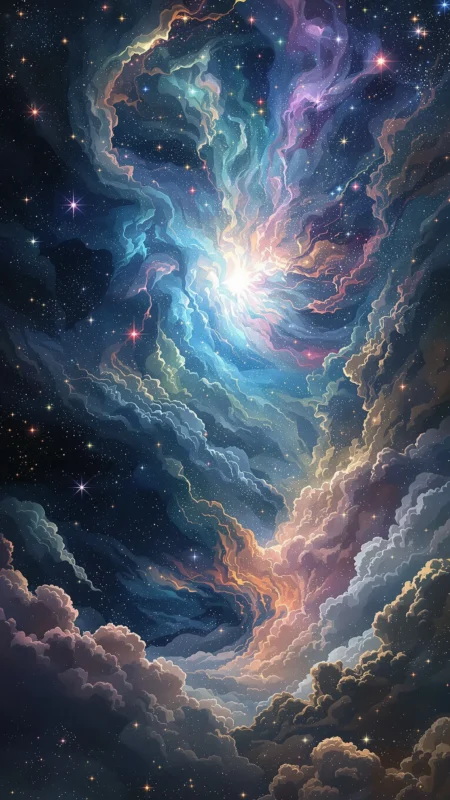
The Void

Archetype Meaning & Symbolism

Vast, potential, silent, still, abyssal, formless, receptive, primordial, mysterious, absolute

  • Before the first word, I was the page. After the last, I will be the silence. I am the space between your breaths where your real story begins.

If The Void is part of your personal mythology, you may...

Believe

  • True creation only begins after a period of absolute emptiness; you cannot write a new sentence on a page that is already full.
  • Silence is a form of communication more profound and truthful than any word.
  • What is not there—the space in a house, the rest in a piece of music—is what gives shape and meaning to what is there.

Fear

  • That beneath all the layers of personality and experience, you are fundamentally empty and without substance.
  • Losing your identity entirely, dissolving into a state of nothingness from which you can never return.
  • That there is no inherent purpose or meaning to existence, and all human striving is just noise against an indifferent, silent backdrop.

Strength

  • An immense capacity for stillness and deep listening, which allows others to truly find themselves in your presence.
  • The radical ability to start over, to let go of the past completely and embrace a new beginning without baggage.
  • A profound comfort with uncertainty and the unknown, allowing you to navigate life's transitions with a grace and calm that others find enviable.

Weakness

  • A tendency towards passivity and inaction, remaining in the realm of pure potential without ever manifesting anything tangible.
  • Difficulty in forming and maintaining committed, lasting attachments, as you may shy away from the definitions and obligations they entail.
  • Appearing aloof, detached, or unfeeling to others, who may mistake your inner peace for a lack of care or engagement.

The Symbolism & Meaning of The Void

In your personal mythology, the Void may represent the sacred pause, the winter of the soul where energy is gathered in silence. It challenges the modern mandate to be always producing, always visible, always becoming. To align with the Void is to find power in rest, in not-knowing, in letting the field of your life lie fallow. It’s the recognition that the most profound growth happens in the dark, beneath the surface, long before any green shoot breaks the soil. This archetype could be the quiet sanctuary you build in your mind, a place to retreat from the tyranny of noise and expectation, a space where your essence can be felt without the need for definition or performance.

The Void is also the face of the Great Mystery. It is the ultimate question mark that hangs at the end of every sentence about existence. To have the Void in your mythos is to be comfortable, or at least familiar, with ambiguity. You might find more truth in a Zen koan than in a scientific paper, more solace in an unresolved chord than in a perfect cadence. It suggests a life story that is not a linear progression toward a known goal, but an exploration of an ever-deepening enigma. Meaning isn’t a treasure to be found; it’s a constellation you trace against the backdrop of an infinite, silent darkness.

Furthermore, the Void might symbolize the ultimate act of surrender and trust. It is the freefall without a parachute, the dive into a bottomless ocean. This archetype could inform a personal mythology where the greatest moments of transformation arrive not through heroic effort but through letting go. It’s the moment you stop struggling and allow the current to take you. This could manifest as a profound capacity to release old identities, grievances, and plans, creating a psychic spaciousness that allows for grace, serendipity, and the emergence of a self you could never have planned.


The Void Relationships With Other Archetypes

The Creator

The Creator and the Void share the most intimate of relationships: one cannot exist without the other. The Void is the pristine canvas, the silent marble, the unplowed field upon which the Creator must work their magic. For a mythos guided by the Void, the Creator archetype may feel like a visiting force, a bolt of lightning that momentarily illuminates the expanse. There could be a tension here: the Void’s peaceful stillness is disrupted by the Creator’s restless urge to make, to define, to fill. Yet, it is a generative tension. The Void provides the infinite potential, and the Creator gives it temporary, beautiful form, knowing full well that all creations will eventually return to the quiet embrace of the Void once more.

The Hero

The Hero often perceives the Void as the ultimate antagonist: the abyss to be stared into, the dragon of nihilism to be slain, the meaningless darkness that threatens to swallow the world of light and order. A journey into the Void, for the Hero, is the descent into the underworld, the belly of the whale. For a person whose mythos is shaped by the Void, however, the Hero's frantic questing may seem misguided. Perhaps the point is not to conquer the abyss but to learn its language, to float in its depths, to understand that it is not a threat but a source. Your inner Hero may need to learn not to fight the darkness, but to integrate it, emerging not with a trophy, but with a quiet, unshakable peace.

The Seed

The Seed archetype has a symbiotic, nurturing relationship with the Void. The Void is the dark, silent earth in which the Seed must rest to gather its strength. It is the necessary period of introversion, of unseen, unknown gestation. A person with the Void in their mythos may understand intrinsically that great projects, ideas, and transformations require a long, quiet time underground. They provide the 'soil' for others, holding a patient, dark space where potential can safely incubate. While others might grow anxious at the lack of visible progress, you understand that the most crucial work is happening in the silent, fertile darkness, and you trust the process implicitly.

Using The Void in Every Day Life

Navigating Creative Blocks

When the canvas of your mind feels cluttered with failed ideas and the echoes of other artists, you might invoke the Void. This is not an act of erasure, but of release. You consciously create a space of pure potential, a silent, dark room in your psyche where no ideas are judged, and no previous attempts exist. You sit in that conceptual emptiness until a single, authentic impulse emerges from the quiet, untethered to the pressure of what has come before.

Healing from an Ended Chapter

After a relationship or career concludes, the space it occupied can feel like a wound. The Void archetype offers a different perspective. It suggests this is not a deficit but a fallow field. Instead of rushing to fill the emptiness, you may choose to inhabit it, to learn its contours. This period becomes a sacred pause, a time of un-becoming, allowing the old identity to dissolve fully before the seeds of the new one can be thoughtfully planted, rather than sown in panic.

Deepening Mindfulness

In meditation, the goal is often to quiet the mind's chatter. The Void is the destination of that quiet. You may use it as a focal point: the darkness behind your closed eyelids, the silence between sounds, the pause at the top of an inhale. By befriending this internal emptiness, you might cultivate a profound resilience, a portable sanctuary of stillness you can access amidst the noise of daily life, transforming anxiety into a simple, observable phenomenon against a backdrop of infinite calm.

The Void is Known For

The Primordial Canvas

The Void is known as the state before creation, the cosmic silence from which all sound, light, and form eventually emerged. It is not nothingness as a lack, but nothingness as pure, undifferentiated potential.

The Great Dissolver

It is the destination to which all things return. The Void represents entropy, endings, and the gentle or terrifying dissolution of form. It is the necessary decomposition that allows for new life, the cosmic compost heap.

The Well of Possibility

From this emptiness, all possibilities arise. It is the ultimate source of novelty and surprise, the unwritten page where any story could be inscribed. It is the freedom from the determinism of the past.

How The Void Might Affect Your Personal Mythology

How The Void Might Affect Your Mythos

If the Void is a central feature of your personal mythos, your life story may not follow a traditional arc of rising action, climax, and resolution. Instead, it might resemble a series of deep breaths, of cosmic pulsations. Your narrative is punctuated by periods of profound emptiness, of 'fallow time' where you seem to disappear from your own story, only to re-emerge later, subtly or radically transformed. These gaps are not empty pages; they are the most important part of the text, the silent pauses that give the words their meaning. Your mythos champions the 'un-story,' the periods of un-becoming as essential chapters of becoming.

Furthermore, your mythos may be defined less by what you have done and more by the possibilities you contain. You are the character whose potential is their primary characteristic. This can be a source of great freedom, as you are not pinned down by a single identity or past achievement. Your story is one of perpetual openness, where the central theme is the embrace of the unknown. The climax of your mythos may not be a great battle won, but a moment of complete surrender to the mystery, a final acceptance that the most authentic life is one lived without a map, guided only by the feel of the vast, open space ahead.

How The Void Might Affect Your Sense of Self

Your sense of self could be wonderfully fluid, like water taking the shape of any container yet belonging to none. You might not see yourself as a solid, definable entity with fixed traits, but as a field of awareness, a conscious emptiness in which experiences arise and pass away. This can lead to a profound lack of ego-attachment. Insults and praise may land with less impact, as there is no solid 'you' to receive them. You are the space in the room, not the furniture. This perspective may grant you a quiet, unshakable peace that others mistake for detachment or aloofness.

However, this fluid sense of self might also bring existential vertigo. There may be moments of panic, a terrifying feeling of groundlessness, a fear that if you are not a 'something,' then you must be a 'nothing.' Your personal work may involve learning to distinguish between the fertile emptiness of pure potential and the barren emptiness of nihilism. It is a path of learning to trust that this inner space is not a lack but a source, the very ground of being. Your identity is a paradox: you are most yourself when you are undefined.

How The Void Might Affect Your Beliefs About The World

You may view the world not as a collection of solid objects and established facts, but as a shimmering, quantum field of possibilities constantly collapsing into temporary form. You see the space between things: the silence between notes in a symphony is as important as the notes themselves, the unbuilt land in a city defines its character. This perspective could make you a natural mystic or artist, sensitive to nuance, subtext, and the hidden architecture of reality. You might be more interested in questions than answers, believing that the purpose of knowledge is to lead to ever more profound mysteries.

This worldview could challenge the frantic pace and materialistic values of modern society. You might perceive the relentless pursuit of goals, wealth, and status as a kind of noise, a fear-driven attempt to fill a sacred emptiness that should be revered. Your philosophy could be one of radical subtraction rather than accumulation. You might believe that truth is found not by adding more information, but by stripping away illusions, by becoming quiet enough to hear what remains when all the chatter stops. The universe, for you, is not a problem to be solved, but a silent presence to be sat with.

How The Void Might Affect Your Relationships

In relationships, you may be the ultimate listener. You offer others the rare gift of a truly empty space in which to be heard, free of judgment, advice, or the intrusion of your own ego. Your presence can be incredibly calming and healing, as you don't need your friends or partners to be anything other than what they are. You are comfortable with silence, allowing for a depth of communion that constant conversation can sometimes obscure. You understand that true intimacy often grows in the unspoken spaces between two people.

Conversely, your comfort with emptiness might be challenging for partners who require more explicit validation or engagement. Your self-contained nature could be misinterpreted as indifference or a lack of passion. You may have a tendency to create a 'void' in moments of conflict, withdrawing into a silent, unreachable space rather than facing the issue directly. Your journey in relationships might be to learn how to invite others into your stillness without losing yourself, and how to bridge your inner expanse with the tangible world of shared feelings and commitments.

How The Void Might Affect Your Role in Life

Your role in the world may not be that of the actor, but of the stage itself. You are the one who creates the space for things to happen. In a group, you may not be the leader who sets the agenda, but the quiet member whose presence allows for a deeper, more honest conversation to emerge. You are a catalyst by way of vacuum: your stillness and openness draw out the potential in others. You might excel as a therapist, a mediator, a coach, or any role that requires holding a safe, non-judgmental container for another's process.

This can also mean you feel a sense of 'role-lessness,' which can be both liberating and disconcerting. While others define themselves by their careers, families, and accomplishments, you may resist all labels. Your purpose might be more subtle: to be a reminder of the background state of being that everyone else has forgotten in their rush to become 'someone.' You are the human pause button in a world stuck on fast-forward. Your contribution is your state of being, a living embodiment of the peace that underlies all chaos.

Dream Interpretation of The Void

When the Void appears in your dreams in a positive context, it may manifest as a peaceful, silent darkness or the experience of floating in an infinite, starless sky. This is often a dream of profound rest and release. It could signify that your psyche is entering a necessary fallow period, letting go of old psychic structures and creating space for a major new chapter of life. To embrace this dark expanse in a dream without fear is to accept the unknown and trust in the process of dissolution and rebirth. It may be a call from your deepest self to stop striving, to rest in the mystery, and to allow your next form to emerge organically.

In a negative context, the Void can be terrifying. It might appear as a consuming black hole, a precipice overlooking a bottomless abyss, or a feeling of being utterly lost and alone in an empty, soundless world. Such a dream could point to a fear of losing your identity, a sense of meaninglessness, or a deep-seated depression. It might reflect a real-life situation where you feel groundless and untethered, perhaps after a major loss. The dream is not the Void itself, but your fear of it. It may be an invitation to examine your relationship with uncertainty, non-existence, and the parts of your life that feel empty and without purpose.

How The Void Archetype Might Affect Your Needs

How The Void Might Affect Your Physiological Needs

On a physiological level, this archetype may manifest as a deep, instinctual need for sensory quiet. You might feel physically unwell in noisy, chaotic, or over-stimulating environments. Your body's core need isn't just for sleep, but for profound stillness: floatation tanks, silent retreats, or simply lying in a dark room might feel as essential as food and water. You could be drawn to practices like fasting or dietary cleanses, which are physical enactments of the 'emptying' process. The body is not just a machine to be fueled, but a space to be cleared.

This need for emptiness also relates to breath. You may find that your most settled state is in the pause after the exhale, that brief moment of suspension before the next inhale is needed. Your personal mythology might frame physiological well-being not in terms of energy and vitality, but in terms of release and relaxation. The goal is not to be 'full of life' but to be a clear, open channel through which life can move without obstruction. Health is a state of unobstructed flow, which requires internal spaciousness.

How The Void Might Affect Your Ideas of Belonging

Your need for belonging may be satisfied not by inclusion in a specific tribe or social group, but by a sense of connection to the universal whole. You might feel a kinship with the night sky, the deep ocean, or the silence of a forest. Your sense of 'family' could be cosmic. You belong not to a 'people,' but to existence itself. This provides a deep, unshakable foundation of belonging that is not dependent on the approval or presence of others. You are a child of the cosmos, a fragment of the original silence.

This universal perspective can, however, lead to a feeling of profound loneliness and alienation in the human world. While others bond over shared interests, histories, and identities, you may feel like an outsider, a visitor from another realm. You might struggle to form intimate bonds because the level of connection you seek is so absolute that it transcends ordinary human interaction. Your path may involve learning to bridge the cosmic and the personal, to find the infinite in a lover's eyes and the universe in a simple, shared silence.

How The Void Might Affect Your Feelings of Safety

Your sense of safety might be paradoxically located in formlessness. While others find security in high walls, large bank accounts, and solid plans, you may find it in anonymity, adaptability, and the ability to have nothing to lose. Safety is not a fortress to be defended, but a state of being so fluid and unattached that you cannot be pinned down or broken. It is the wisdom of water, which cannot be harmed by a hammer. You may feel safest when you are untethered from possessions, identities, and expectations that could be threatened.

However, the shadow side of this is a profound sense of existential insecurity. The lack of a solid foundation can feel like perpetually standing on the edge of a cliff. A fear of annihilation, of simply ceasing to be, can be a constant, low-level hum beneath the surface of your consciousness. Your quest for safety may involve finding a way to feel secure within the groundlessness itself, to make a home in the mystery rather than constantly seeking an escape from it. It's learning that the abyss can also be a womb.

How The Void Might Affect Your Views of Esteem

Esteem, for you, may not be tied to achievement, recognition, or external validation. Your self-worth could be rooted in your very being, in the simple, quiet fact of your existence as a conscious space. You may derive a sense of value from your capacity for stillness, your ability to hold potential, and your comfort with the unknown. It is the esteem of the mountain, which does not need to do anything to justify its existence. This can grant you a powerful immunity to both criticism and praise, a quiet confidence that is internally sourced and unshakeable.

The shadow of this is the risk of feeling like a complete nobody, a zero with no value. In a society that measures worth by what one produces and accumulates, your innate 'emptiness' can be mistaken for worthlessness, both by others and by yourself. You may struggle with feelings of insignificance and invisibility. The challenge to your esteem is to fully own the power and value of the Void, to see the number zero not as a lack but as the origin of all other numbers, the point of infinite potential.

Shadow of The Void

When the Void archetype falls into shadow, it ceases to be a fertile, creative emptiness and becomes a consuming black hole. This is not the peaceful stillness of potential, but the terrifying vortex of nihilism. In this state, you may actively drain the energy, meaning, and joy from every situation. You become a connoisseur of despair, arguing eloquently for the pointlessness of all things, not from a place of mystical acceptance, but from a wounded cynicism. This shadow Void doesn't hold space; it annihilates it, creating a psychic vacuum that pulls others into its orbit of apathy and hopelessness.

In its personal expression, the shadow Void is not just rest, but a deep, clinical depression or a state of catatonic dissociation. It is the refusal of life, the retreat from connection and feeling into a state of utter numbness. You might use your 'emptiness' as a defense mechanism, a way to avoid the messy, painful, beautiful business of being human. Instead of being a source of potential, the shadow Void becomes a tomb, a place where you bury your vitality, your creativity, and your capacity for love, all under a heavy blanket of philosophical justification about the ultimate meaninglessness of it all.

Pros & Cons of The Void in Your Mythology

Pros

  • You are a master of beginnings, possessing the rare ability to truly clear the slate for yourself and to hold the space for others to do the same.
  • You have access to a profound sense of inner peace that is independent of external circumstances, a portable sanctuary of stillness.
  • Your presence can be deeply restorative for those who are overwhelmed by the noise of the world; you are a human oasis of calm.

Cons

  • You may struggle to bring your ideas and dreams into reality, becoming perpetually stuck in the comfortable, undefined realm of pure potential.
  • You can be perceived by others as emotionally unavailable, apathetic, or frustratingly passive, which can strain relationships.
  • You might be prone to debilitating existential crises or periods of profound, isolating loneliness when you mistake the fertile Void for a barren wasteland.