

The Far Shore

Archetype Meaning & Symbolism

Distant, unattainable, aspirational, final, tranquil, mysterious, liminal, hopeful, spectral, beckoning

  • The journey is the map, but I am the destination. You arrive only when you cease to seek me.

If The Far Shore is part of your personal mythology, you may...

Believe

  • You may believe that arrival is inevitable and that all suffering endured along the way will be justified and redeemed in the end.

  • You may believe that the present moment is primarily a training ground, a preparation for the 'real' life that awaits on the other side.

  • You may believe there is a state of perfect peace, understanding, or wholeness, and that it is your personal destiny to reach it.

Fear

  • You may fear that The Far Shore is a mirage, an illusion you have constructed to escape the meaninglessness of an endless ocean.

  • You may fear that when you finally arrive, you will be judged and found unworthy, or that the shore will be nothing like you imagined.

  • You may fear that in your focus on the destination, you have squandered the journey and missed the true substance of your life.

Strength

  • You likely possess an extraordinary resilience and long-term focus, allowing you to endure hardships that would break others.

  • You may have a profound and unshakable sense of purpose that provides meaning and direction to your entire life.

  • You may find it easy to let go of material possessions, trivial conflicts, and temporary setbacks, as they are insignificant to the overall quest.

Weakness

  • You may suffer from a chronic dissatisfaction with the present, a 'destination addiction' that prevents you from finding joy in the here and now.

  • You may struggle to form deep, lasting connections with people who are not part of your journey, leading to potential isolation.

  • You may be prone to a catastrophic disillusionment if your goal is achieved and fails to deliver the promised fulfillment, or if you are forced to abandon the quest.

The Symbolism & Meaning of The Far Shore

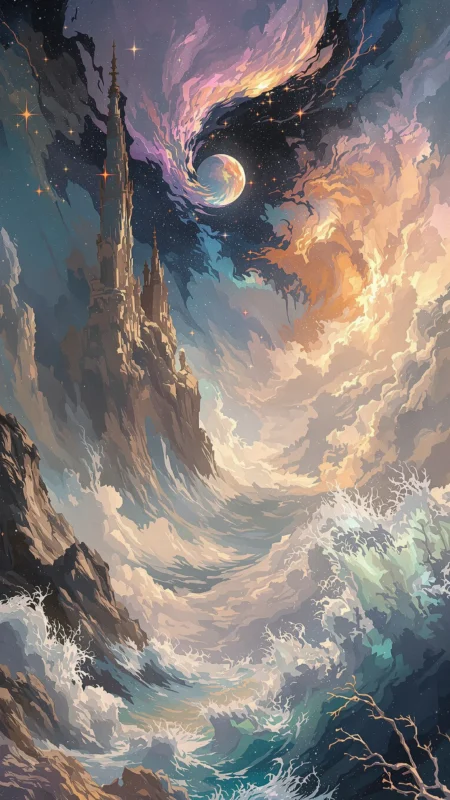
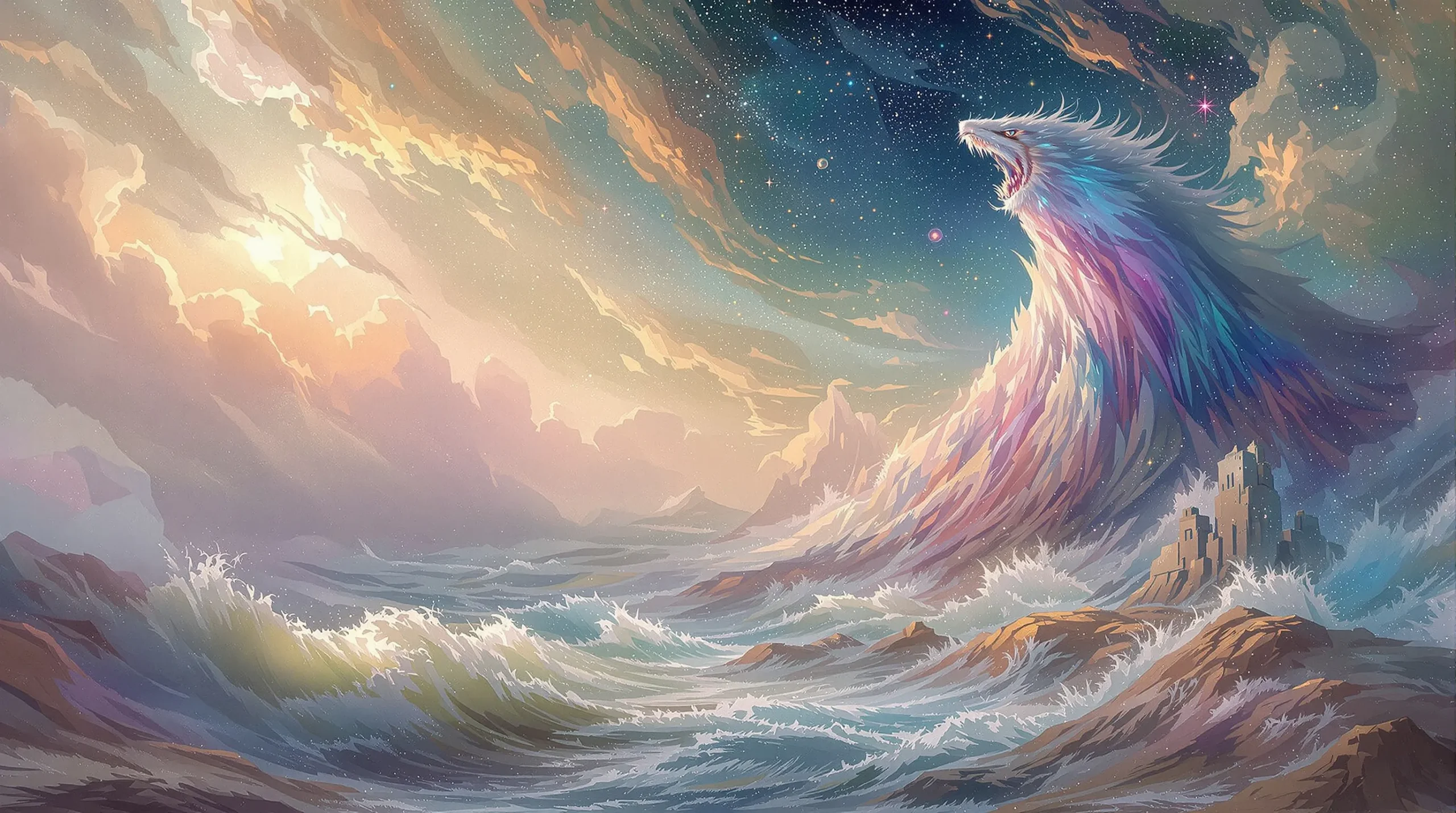
In personal mythology, The Far Shore is the ultimate repository of one’s hopes, dreams, and sense of finality. It is the coast glimpsed through fog, the island on the horizon that gives the sailor direction. This place may represent a concrete goal: retirement, the end of a project, a state of financial security. More often, however, it is an internal landscape. It is the person you hope to become, the inner peace you strive to achieve, the resolution of a deep-seated trauma. The symbolism is potent because the shore is defined by the water that separates you from it. The water is life’s challenges, its uncertainties, its sorrows, and its long, monotonous stretches. The Far Shore gives that water meaning. It transforms a random, chaotic ocean into a navigable, purposeful strait.

This archetype might not be a gentle, welcoming paradise. For some, The Far Shore could be a stark, silent place of reckoning. It is where one finally meets oneself without distraction, where the illusions nurtured during the journey are stripped away by the salt-laced wind. Its meaning is therefore deeply personal: it is the externalization of your life's ultimate question. Is your Far Shore a place of communion, of rest, of judgment, or of lonely triumph? The answer shapes the way you build your boat, the companions you choose to sail with, and the stars you navigate by. It organizes the narrative of your existence into a pilgrimage, where every action is either a stroke of the oar toward it or a drift away into aimless waters.

Embracing The Far Shore archetype is to accept that a part of you is always oriented toward the future, toward a state of becoming. It suggests a life of longing, which can be both a source of divine discontent and a powerful engine for growth. It is the belief that there is a version of reality, a place, a self, that will make sense of the voyage. It is the quiet hum of a destination beneath the noise of the everyday. It asks you to live with a certain tension: to be present in the journey while never losing sight of the shimmering line of coast that is your ultimate purpose, your final peace, your own mythical Ithaca waiting for your return.


The Far Shore Relationships With Other Archetypes

The Boatman

The Far Shore is unreachable without The Boatman. This figure is the facilitator of transition, the keeper of the passage. In a personal mythos, The Boatman might not be a spectral ferryman but a therapist, a mentor, a sudden illness, or a profound book: any catalyst that provides the vessel and guidance to cross a significant internal chasm. The Far Shore waits passively, its existence a promise, but it is The Boatman who demands the toll, who navigates the treacherous currents of change, and who ultimately deposits you, transformed, upon its sands. The relationship is symbiotic: without the shore, The Boatman has no destination; without The Boatman, the shore remains a mere dream.

The Island

While The Far Shore is a destination, The Island is often a temporary stop, a place of trial, temptation, or rest along the way. Think of Circe's island in the Odyssey: a place that could enchant a traveler into forgetting their journey to Ithaca, The Far Shore. In one's life, an Island could be a comfortable job that stifles growth, a relationship that offers security at the cost of purpose, or a period of blissful ignorance. The allure of The Island archetype is a direct challenge to the pull of The Far Shore. It tests the traveler’s resolve, asking: Is the comfort of this present moment worth abandoning the promise of your ultimate destination?

The Wanderer

The Wanderer lives in perpetual motion, defined by the journey, not the destination. The Far Shore is The Wanderer's deepest desire and greatest terror. Its existence provides the direction and meaning for the endless travels. Yet, to arrive would be to cease to be The Wanderer. This creates a complex dance of approach and avoidance. The individual embodying this dynamic may sabotage their own success, always keeping the goal just out of reach. They may fear that the reality of the shore could never match the beauty of its promise, a promise that has fueled their entire identity as a seeker on the path.

Using The Far Shore in Every Day Life

Navigating a Career Change

When the current professional landscape feels like a barren desert, The Far Shore may manifest as the vision of a fulfilling career. It is not a specific job title but a state of being: a place where your skills are in harmony with your values. Meditating on the qualities of this shore, its light, its sounds, its feeling, can provide the compass needed to make difficult decisions, not based on immediate gain, but on whether a choice steers you closer to that distant, more authentic coast.

Processing Grief

In the disorienting sea of loss, The Far Shore could represent a future state of peace, a time when the pain has been integrated into the whole of your story. It is the land one can see, shimmering and distant, from the boat of mourning. It is not a place of forgetting, but of remembering differently. Holding this vision does not rush the grieving process but assures the soul that the storm will eventually pass and a quiet harbor awaits, validating the long, sorrowful paddle through the waves.

Completing a Creative Work

For the artist, writer, or creator, The Far Shore is the finished work, the masterpiece that exists fully formed in the mind's eye. The daily struggle with canvas, clay, or keyboard is the choppy water that must be crossed. This archetype helps maintain faith during creative blocks or self-doubt. It reminds you that the frustrating, imperfect attempts are not failures but the necessary tacking and adjusting of the sails required to finally make landfall on the shores of the completed project.

The Far Shore is Known For

The End of a Journey

It represents the culmination of a quest, the final destination after a long and arduous passage. This is not just a physical arrival but a psychological or spiritual one: the point of resolution, integration, or enlightenment.

The Land of the Dead

In many mythologies, it is the afterlife, the place souls travel to after their mortal journey is complete. Crossing the water to reach it symbolizes the transition from life to death, such as the Greek Fields of Asphodel or the Celtic Avalon.

A Place of Transformation

Reaching The Far Shore often implies a fundamental change in the traveler. One does not arrive as the same person who set out. The journey itself remakes you, and the shore is the place where this new self is finally born or acknowledged.

How The Far Shore Might Affect Your Personal Mythology

How The Far Shore Might Affect Your Mythos

When The Far Shore anchors your personal mythos, your life story ceases to be a rambling collection of anecdotes and becomes an epic poem, an odyssey. Every chapter, every event, is cast in the light of this ultimate destination. A lost job is not a failure but a necessary course correction. A difficult relationship is not a tragedy but a storm that tests the seaworthiness of your vessel. This archetype provides a powerful teleological framework: everything is happening for a reason, and that reason is to prepare you for arrival. Your personal history is read as a map of the voyage, with each scar and memory a marker of a league traversed, a monster overcome.

This narrative structure can imbue a life with profound significance. You may see yourself as a protagonist on a sacred quest, a pilgrim journeying toward a personal Mecca. The world becomes enchanted, filled with omens and helpers, obstacles and distractions, all relevant to your passage. However, this also carries a risk. If the mythos is too rigid, it can lead to a deterministic view, stripping spontaneity from life. There is a danger of becoming so focused on the meaning of the destination that you fail to live the story as it unfolds, becoming a narrator of your life rather than its active, present participant.

How The Far Shore Might Affect Your Sense of Self

Your sense of self may be fundamentally split. There is the 'self-of-the-journey' and the 'self-of-the-shore'. The current self is a provisional being, a traveler who is inherently incomplete, defined by striving and movement. This self can feel transient, restless, and perpetually dissatisfied, for it measures its worth by its proximity to the destination. Its virtues are those of the voyager: resilience, patience, vigilance. Its flaws are also of the voyager: an inability to be still, a potential for loneliness, a disconnect from the solid ground of the present moment.

The 'self-of-the-shore,' conversely, is an idealized, future version of you. It is whole, peaceful, and has achieved the wisdom the journey is meant to bestow. This idealized self can serve as a powerful source of inspiration, a North Star for personal development. Yet, it can also be a tyrannical standard against which the present self is always judged and found wanting. The core challenge becomes integrating these two selves: learning to honor the weary traveler you are today while still holding the hopeful vision of the person you are becoming, the one who is waiting for you on that distant beach.

How The Far Shore Might Affect Your Beliefs About The World

The world may cease to be a home and instead become a medium to be traversed. Like a sailor who sees the ocean not as a place to live but as the space between ports, you might view your environment—your city, your workplace, your social circles—primarily in terms of its utility to your journey. Places and people are assessed: Do they help me move forward, or do they hold me back? This can foster a kind of instrumentalism, where the inherent value of the present is secondary to its role in the grand narrative of your passage.

This perspective can grant a powerful immunity to the trivialities and chaos of the world. Political upheavals, social trends, market fluctuations—they may all feel like shifting weather patterns, significant only in how they affect your immediate navigation, but ultimately insignificant compared to the fixed reality of your destination. This fosters a stoic detachment. The world is a temporary and often-treacherous sea, and the only thing that truly matters is keeping your eyes on the horizon and your hand on the tiller, trusting in the existence of a land beyond the waves.

How The Far Shore Might Affect Your Relationships

Relationships could be sorted into distinct categories based on their relation to your journey. Fellow travelers, those who seem to be sailing toward a similar shore, may be cherished with a unique and profound intensity. With them, there is a deep, unspoken understanding, a camaraderie of the quest that transcends ordinary friendship. You are not just friends; you are shipmates, bound by a shared destination and the shared perils of the sea. These bonds can be the most meaningful of your life.

Conversely, those who seem content in their home port, who do not feel the pull of a distant horizon, might be viewed with a mixture of pity, confusion, or even disdain. They are the 'land-dwellers', and you may struggle to connect with their grounded concerns. This can lead to a sense of isolation, even when surrounded by people. Intimate partnerships may be particularly fraught, as the central question becomes: Will you sail with me? If the answer is no, the relationship may feel like an anchor, a beautiful, heavy thing that prevents the voyage from ever truly beginning.

How The Far Shore Might Affect Your Role in Life

Your perceived role in life shifts from that of a citizen, a worker, or a family member to something more mythic: a Pilgrim, a Seeker, an Emissary. You are not just living; you are undertaking a sacred mission. This can imbue your life with a sense of dignity and purpose that is unshaken by external validation or failure. Your role is defined not by your social standing but by your commitment to the journey. You are one who has heard a call from beyond the horizon, and your primary duty is to answer it.

This self-conception can also be isolating. It may feel as though you are playing a different game than everyone else, with higher stakes and a more profound goal. You might adopt the ascetic habits of a pilgrim, shedding unnecessary possessions, relationships, or comforts that could weigh you down. Your role is to travel light and stay focused. This could lead to a life of great moral or spiritual clarity, but also one of severe self-discipline and perhaps a detachment from the simple, earthly joys that the 'non-pilgrims' seem to enjoy so freely.

Dream Interpretation of The Far Shore

In a positive context, dreaming of The Far Shore can be profoundly reassuring. Seeing it clearly on the horizon, bathed in a welcoming light, may signify that you are on the right path in your waking life. It can be a message from the subconscious that your struggles have a purpose and that a period of resolution and peace is approaching. Actually landing on the shore in a dream is a powerful symbol of achievement, integration, and arrival. It may suggest the successful completion of a major life phase, the healing of a deep wound, or a moment of spiritual enlightenment. The feeling upon waking is often one of profound calm and clarity.

In a negative context, The Far Shore in a dream can represent unattainable desires or deep-seated fears of failure. Dreaming that the shore continuously recedes as you approach it might reflect a waking feeling that your goals are impossible, that you are trapped in a futile struggle. A stormy sea that prevents you from reaching the shore could symbolize overwhelming emotional turmoil or external obstacles blocking your progress. To arrive on the shore and find it desolate, empty, or menacing could represent a fear that your life's ambition is an illusion, or that achieving your goal will bring not fulfillment but a devastating emptiness.

How The Far Shore Archetype Might Affect Your Needs

How The Far Shore Might Affect Your Physiological Needs

Your relationship with your body may become instrumental. The body is not a source of pleasure or an end in itself; it is the vessel for the voyage. This can manifest in two opposing ways. On one hand, you might neglect your physical needs, viewing bodily demands as inconvenient distractions from the more important spiritual or psychological journey. Sleep, food, and comfort become secondary to making progress. The body is a stubborn mule to be prodded along, not a companion to be cared for.

On the other hand, you might become hyper-vigilant about your health, maintaining your body with the meticulous care a captain gives their ship. Diet, exercise, and rest are not for their own sake, but are part of a strategic regimen to ensure the vessel is strong enough to withstand the long passage. Physical sensations may be interpreted as omens related to the journey: a sudden burst of energy is a favorable wind, while an ache or illness is a sign that the hull needs mending before the next leg of the voyage can begin.

How The Far Shore Might Affect Your Ideas of Belonging

The need for belongingness may become a complex and often painful negotiation. You might feel a profound sense of alienation from your immediate community, family, or culture. Their values, concerns, and rituals can seem trivial or misguided when viewed from the deck of your ship, with your gaze fixed on a distant horizon they cannot see. This can create a deep loneliness, the feeling of being a stranger in your own land, speaking a language of purpose that no one else understands.

True belonging, then, is found not in a place but with a people: the other voyagers. You may actively seek out fellow seekers, forming intense bonds based on a shared understanding of the quest. This community of pilgrims becomes your true tribe, your chosen family. Love and intimacy may be conditional on finding a partner who is willing to share your map or, at the very least, respects your need to sail. The ultimate sense of belonging, however, is reserved for the shore itself. It is the homecoming, the final arrival in the one place you were always meant to be.

How The Far Shore Might Affect Your Feelings of Safety

A sense of true safety may become an abstract concept, a quality that exists only on The Far Shore. The current world, the sea of life, is perceived as inherently unpredictable and dangerous. There is no safe harbor here, only temporary anchorages. This can lead to a state of constant, low-level vigilance, an awareness that security is an illusion and that one must always be prepared for the next storm. You may find it difficult to fully relax or feel at home in your present circumstances.

This deferred sense of safety can also foster a unique kind of courage. If the world is already considered an unsafe passage, then taking risks in service of the journey feels less daunting. What is one more storm to a sailor who has committed to crossing the ocean? This can lead to bold life choices, a willingness to abandon conventional security in pursuit of the ultimate goal. Safety is not found in avoiding danger, but in navigating it skillfully with the unshakable belief that a truly safe harbor is waiting at the end of it all.

How The Far Shore Might Affect Your Views of Esteem

Self-esteem may be inextricably linked to the journey's progress. Your self-worth is not a fixed attribute but a fluctuating measure of your momentum. When you feel you are making headway, overcoming obstacles, and the shore seems closer, your esteem soars. You feel competent, purposeful, and validated. During periods of stagnation, when you are becalmed in the doldrums or pushed back by contrary winds, your self-esteem can plummet. You may feel like a failure, a fraud, or a fool for ever believing you could complete such a voyage.

This makes your inner world highly volatile, dependent on external signs of progress. The challenge becomes divorcing your inherent worth from the success of the mission. Esteem might be cultivated not just from moving forward, but from the act of journeying itself: the courage to stay on the water, the skill developed in navigation, the wisdom gained from surviving storms. True self-esteem arises when you can value the traveler for their endurance, regardless of how far they are from the shore.

Shadow of The Far Shore

The shadow of The Far Shore emerges when the journey becomes an end in itself, a sophisticated form of procrastination against the act of living. Here, the individual becomes a professional seeker, a perpetual traveler who secretly dreads arrival. To land on the shore would mean the death of their identity as a voyager. So they endlessly circle the destination, always finding a new reason the time isn't right, a new flaw in their vessel, a new storm on the horizon. The quest for the future becomes a cage that traps them out of their present. The romantic ideal of the journey serves to mask a deep fear of the stillness, responsibility, and finality that arrival represents.

Another shadow aspect is the tyrannical idealism of the shore. It becomes a perfect, imagined paradise against which the real world is constantly found wanting. No real place can be as good, no real relationship as pure, no real achievement as fulfilling. This leads to a life of contempt for the messy, imperfect beauty of reality. The person may become a harsh critic of others and themselves, a purist who rejects any port that is not the final, mythical one. They do not sail; they flee. The Far Shore ceases to be a beacon of hope and becomes a weapon used to devalue and destroy any actual happiness found along the way.

Pros & Cons of The Far Shore in Your Mythology

Pros

  • It provides a powerful, overarching narrative for your life, giving meaning and coherence to disparate events and suffering.

  • It can be an incredible engine for personal growth, constantly pushing you to learn, adapt, and transcend your current limitations.

  • It fosters resilience and a long-term perspective, allowing you to weather temporary crises with a sense of ultimate purpose.

Cons

  • It can lead to a fundamental dissatisfaction with the present moment, as life is perpetually deferred to a future that may never arrive.

  • It can create a sense of isolation and make it difficult to connect with others who do not share your singular, epic focus.

  • It risks a devastating crisis of meaning if the destination is reached and proves to be hollow, or if the journey itself becomes impossible.