 Believe
 Fear
Fear Strength
 Weakness
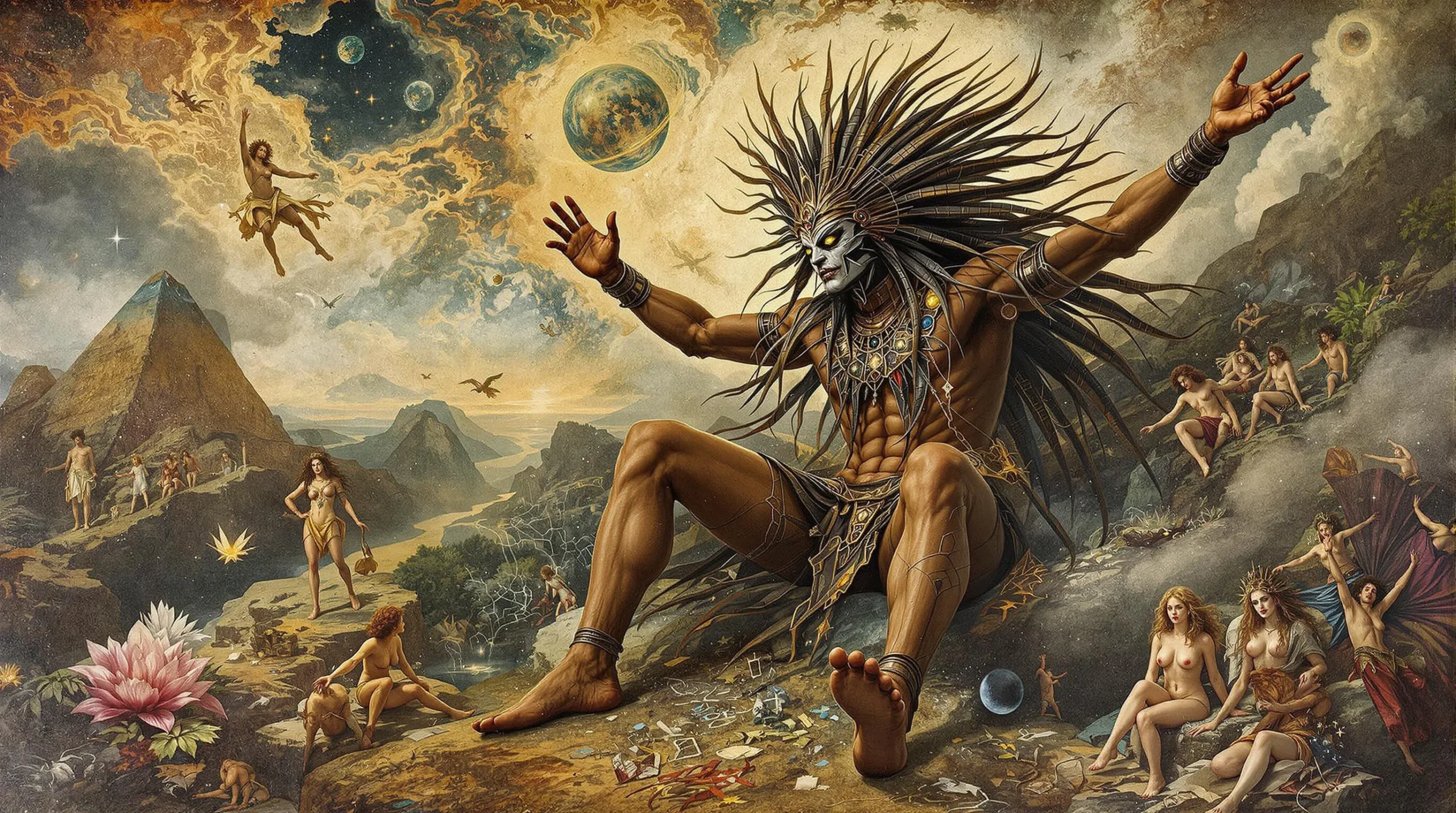
In the modern psyche, Tezcatlipoca emerges as the archetype of radical uncertainty and the unpredictable nature of fate. He is the cosmic gambler, the divine trickster who reminds us that our carefully constructed plans are built on shifting ground. To have him in one’s personal mythology is to court the beautiful, terrifying notion that chaos is a creative force, not merely a destructive one. He represents the voice that whispers during a crisis: this is not an end, but a transfiguration. He is the patron saint of the sudden plot twist, the unexpected inheritance, the ruin that clears the way for a palace. His presence suggests a life that will not be linear or predictable, but a labyrinth of trials, illusions, and revelations.
His symbolism is rooted in paradox. He is both the tempter who leads humanity into ruin and the arbiter who presides over the resulting judgment. He is the sorcerer, the master of illusion, yet his smoking mirror reveals the deepest truths. This duality speaks to a sophisticated understanding of the self, one that acknowledges the necessity of the shadow. The Tezcatlipoca archetype may suggest that true wisdom isn't found by eliminating our darker impulses, but by understanding them, even harnessing them. He is the force that pushes us to confront our own capacity for betrayal, for greatness, for self-deception, forcing a constant and often uncomfortable state of self-awareness.
Ultimately, Tezcatlipoca’s meaning is about sovereignty. Not the sovereignty of a king who rules by decree, but the sovereignty of one who masters the shifting tides of fortune. He is the power that comes from looking into the abyss and not flinching. He symbolizes the moment you realize that security is an illusion and that your only true power lies in your ability to adapt, to change masks, to dance with unpredictability. His presence in a personal mythos is a sign that one’s destiny is not to build a fortress against the world, but to become the storm itself.