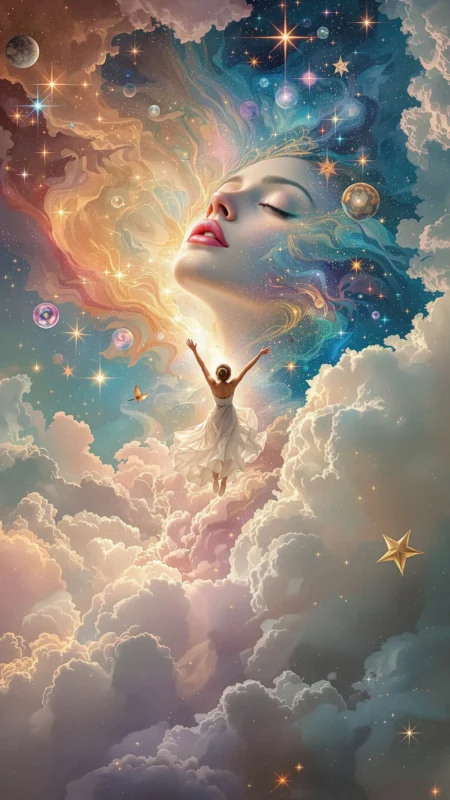


Synchronicity

Archetype Meaning & Symbolism

serendipitous, meaningful, uncanny, connective, acausal, resonant, numinous, fleeting, patterned, mysterious

  • The universe doesn't shout its secrets: it whispers them in echoes. Your job is not to listen for the sound, but to notice the rhyme.

If Synchronicity is part of your personal mythology, you may...

Believe

  • There is a hidden order, an invisible architecture of meaning beneath the surface of everyday life, and you have the ability to perceive it.

    Chance is an illusion. Every event, no matter how small, is a potential thread in the tapestry of your personal destiny.

    You are in a constant, silent dialogue with the universe, and it responds to the questions you hold in your heart, even the unasked ones.

Fear

  • That you will miss or misinterpret a crucial sign, leading your life down the wrong path and squandering your destiny.

    That the patterns you see are not real, that it is all just wishful thinking—a projection of your own need for meaning onto a random and indifferent world.

    That you are not special or 'in tune' enough for the universe to communicate with you, leading to feelings of being cosmically ignored or unworthy.

Strength

  • A powerful and resilient sense of faith and trust in the unfolding of your life, providing comfort and guidance in times of great uncertainty.

    A highly developed intuition and an exceptional ability to recognize subtle patterns and connections that others overlook.

    The capacity to find profound meaning, wonder, and a sense of magic in the fabric of everyday existence.

Weakness

  • A tendency towards passivity or decision paralysis, as you may wait for an external 'sign' before taking necessary action.

    A vulnerability to magical thinking and confirmation bias, potentially leading you to ignore logic and practical evidence in favor of perceived omens.

    Difficulty accepting that some events are simply meaningless or tragic, and a need to force a narrative of higher purpose onto every occurrence.

The Symbolism & Meaning of Synchronicity

In a personal mythology, Synchronicity is the ghost in the machine of reality, the secret, unwritten law that runs parallel to the laws of physics. It symbolizes the belief that the universe is not a cold, indifferent mechanism but a responsive, intelligent field in constant dialogue with our inner lives. To have this archetype active in your mythos is to feel that your consciousness is not merely a passenger in the material world but an active participant, whose thoughts, feelings, and questions can ripple outward and find their echo in external events. It is the universe winking at you, confirming a hidden connection, suggesting that the boundary between self and world is perhaps more permeable than we imagine.

This archetype reframes the narrative of a life. Random chance is demoted; meaningfulness is promoted. A wrong turn that leads to a life-changing encounter is no longer a mistake, but a course correction from an unseen hand. A recurring number or symbol is not a quirk of statistics, but a thematic motif, a breadcrumb left on the path of your personal quest. Synchronicity imbues the mundane with the potential for the sacred, transforming a simple walk to the store into a pilgrimage where signs and omens might appear at any moment. It suggests a world that is fundamentally narrative, where plot twists are not just possible, but orchestrated.

Ultimately, Synchronicity symbolizes the union of opposites: the spiritual and the material, the inner and the outer, the individual and the collective. It acts as the bridge between the logical, waking mind and the intuitive, dreaming soul. It may represent a yearning for an enchanted world, a world where we are not alone in our journey but are accompanied by a mysterious and often playful guide. It is the evidence, however fleeting and unprovable, that our personal story is part of a much larger, incomprehensible, and beautiful cosmic drama.


Synchronicity Relationships With Other Archetypes

The Trickster:

Synchronicity often wears the mask of The Trickster. Its messages are rarely straightforward; they are delivered with a cosmic playfulness that can be both enlightening and maddening. The sign you receive might be a pun, a bizarre juxtaposition, or a series of coincidences so absurd they provoke laughter rather than solemnity. This relationship reminds the individual that the search for meaning is not always a serious affair. The Trickster's touch ensures that synchronistic events disrupt our rigid expectations, forcing us to abandon logic and embrace a more fluid, curious, and even humorous engagement with the mystery of our own lives.

The Oracle:

As an archetype, Synchronicity functions as a deeply personal, modern Oracle. Unlike the Oracles of old, located in a fixed temple and speaking in arcane riddles, this one is decentralized, democratic, and speaks through the vernacular of everyday life: a song lyric on the radio, a sentence in a book opened at random, an image on a passing truck. It provides guidance not through divine decree but through resonant suggestion. It does not tell you what to do, but rather confirms or questions the path you are already on, acting as a mirror that reflects the unconscious knowledge you already possess but have not yet brought to light.

The Weaver:

Synchronicity hints at the unseen work of The Weaver, the archetypal force that spins the threads of individual lives into a vast, interconnected tapestry. Each meaningful coincidence may be a glimpse of the pattern, a point where your personal thread crosses with another in a way that reveals a small piece of the grand design. This relationship fosters a sense of being part of something larger than oneself. It suggests that our lives are not isolated strands but are integral to a cosmic fabric, and that the seemingly random knots and tangles are, from a higher perspective, essential parts of a breathtaking and coherent whole.

Using Synchronicity in Every Day Life

Navigating Career Crossroads:

You may find yourself adrift after a layoff, idly scrolling through jobs, when an old college acquaintance, unheard from in a decade, sends a message about an obscure documentary. You watch it, captivated by the subject of artisanal map-making. The next day, you see a flyer for a calligraphy class, and on the way, you find a vintage fountain pen on the sidewalk. Synchronicity is not a single sign pointing to 'map-maker,' but the quiet conspiracy of details that awakens a dormant passion, suggesting a direction where none seemed to exist.

Healing from a Breakup:

In the quiet devastation following a separation, the world may seem muted and hostile. Then, the specific, rare flower you both loved appears in a stranger's window box on a street you've never walked. You overhear a snippet of conversation between strangers that directly answers a question you'd been asking yourself about the relationship. These are not solutions, but grace notes of meaning in the static of grief. They suggest that your personal story is still being written, that the world still converses with you even when one person no longer does.

Finding Creative Inspiration:

A novelist might be stuck on a character's motivation. She takes a walk and sees a child trying to fit a square peg into a round hole with furious, illogical determination. Later that day, she reads a historical article about a general who won a battle by breaking every rule of engagement. The two events, causally unrelated, collide in her mind, and her character is born: someone who succeeds precisely because of their refusal to see the world as it is. Synchronicity provides the conceptual rhyme, the spark created by striking two unrelated flints together.

Synchronicity is Known For

Meaningful Coincidence

Its primary expression is the uncanny, acausally connected timing of two or more events, one subjective and one objective. It's thinking of a long-lost friend and having them call that very minute, a moment that defies probability and feels charged with a significance beyond mere chance.

The Numinous Encounter:

Synchronistic events are often accompanied by a feeling of awe, a shiver of recognition, the sense that one has briefly peeked behind the curtain of ordinary reality. It's the feeling of being seen and acknowledged by a hidden, intelligent order.

Pattern Recognition:

It is known for demanding a different kind of sight: not just looking, but seeing. It is the capacity to perceive the subtle, resonant patterns that connect the inner world of the psyche with the outer world of events, like seeing a constellation in a scatter of random stars.

How Synchronicity Might Affect Your Personal Mythology

How Synchronicity Might Affect Your Mythos

When Synchronicity is a key feature of your personal mythos, your life story ceases to be a straightforward biography, a linear progression from A to B. It becomes, instead, a detective story or a scavenger hunt designed by an invisible intelligence. The protagonist, yourself, is not simply moving through time but is actively decoding a world rich with clues, symbols, and hidden messages. Major life events are not just milestones but 'plot points' that feel cosmically sanctioned, imbued with an almost literary sense of foreshadowing and thematic resonance. Your narrative is punctuated by these moments of uncanny alignment, which serve as chapter breaks or turning points, assuring you that your story has a direction and a deeper meaning, even when the plot is unclear.

The very texture of your personal history may change. Memories are not just recollections of events, but of the meaningful coincidences surrounding them. You might not just remember getting a job; you remember the strange dream you had the night before the interview and the chance encounter with a former boss that morning, seeing it all as an orchestrated prelude. This transforms your mythos from a chronicle of personal effort into a collaborative tale co-authored by you and the universe. It is a story defined less by what you did and more by how you listened, how you noticed, and how you responded to the uncanny rhymes of existence.

How Synchronicity Might Affect Your Sense of Self

The presence of Synchronicity can fundamentally alter your perception of self. You may see yourself less as an isolated, autonomous ego navigating a random world, and more as a tuning fork, designed to resonate with the frequencies of the cosmos. The self becomes a locus of meaning, a place where the inner world of thought and the outer world of events meet and reveal their hidden connection. This can foster a profound sense of self-worth, not based on achievement, but on the feeling of being 'in tune' with a larger reality, of being a person to whom the universe speaks.

This perspective could also lead to a diffusion of the self. If your choices are constantly being guided or validated by external signs, it may become difficult to locate the source of your own will. The question 'What do I want?' might be replaced by 'What is the universe telling me to want?' This can create a passive self, one that is more of a receiver than a transmitter, more of a reader of signs than an author of actions. The risk is a self that feels special and guided, but also potentially less grounded in its own innate desires and responsibilities.

How Synchronicity Might Affect Your Beliefs About The World

To view the world through the lens of Synchronicity is to reject a purely materialistic, mechanistic model of the universe. The world is no longer a collection of inert objects governed by predictable laws of cause and effect; it becomes an animate, responsive, and mysterious field of intelligence. Reality is perceived as having a psychological dimension, a layer of meaning that exists concurrently with the physical one. Every object, every event, every person holds the potential to be a symbol, a messenger from this deeper layer of existence.

This worldview fosters a state of perpetual curiosity and openness. The universe is a text to be read, not a problem to be solved. It replaces cynicism with wonder, and the feeling of cosmic alienation with a sense of intimate participation. However, it may also blur the line between objective reality and subjective interpretation. The world becomes a mirror of the psyche, which can be illuminating, but also risks solipsism, a state where one can no longer distinguish between what the world is and what one wishes it to be.

How Synchronicity Might Affect Your Relationships

In the realm of relationships, Synchronicity acts as a master storyteller. Meetings are never accidental; they are appointments. A shared glance, a discovered mutual friend, a series of uncanny parallels in life stories—these are all seen as clues that a particular connection is 'meant to be.' This can imbue relationships with a powerful sense of destiny and significance from the very beginning. The initial stages of a romance or friendship may feel magical, as if orchestrated by a benevolent cosmic playwright, which can create a deep and immediate bond.

Conversely, this archetype can place an immense burden on relationships. If a connection is perceived as cosmically fated, it may be expected to be perfect and free of mundane conflict. When challenges inevitably arise, it can lead to profound disillusionment: 'If this was meant to be, why is it so hard?' It can also make it difficult to end a relationship that is clearly unhealthy, as one might cling to the initial 'signs' as proof of its inherent rightness, ignoring all subsequent evidence to the contrary. The magic of a destined meeting can curdle into the prison of a destined pairing.

How Synchronicity Might Affect Your Role in Life

Living with Synchronicity as a guiding principle shifts your perceived role in life from that of a builder to that of a navigator. A builder surveys a plot of land and imposes their will upon it, erecting a structure according to a predetermined blueprint. A navigator, however, does not control the ocean; they learn to read its currents, its winds, and the stars above it. Their skill lies not in force, but in perception, alignment, and responsiveness. Your role becomes less about making things happen and more about allowing things to happen, about positioning yourself to catch the favorable winds of fate.

This may cultivate a role of a mystic, a poet, or a seer in your own life. Your primary task is interpretive. You are the one who walks through the museum of the everyday and notices the art that others miss. This role can feel deeply fulfilling, a path of wisdom and attunement. Yet, it may also lead to a sense of powerlessness. If your role is simply to interpret and follow signs, you might feel that you lack true agency, that you are merely a passenger on a journey whose destination and route are ultimately out of your hands. The challenge is to be both the sailor and, when the sea is calm, the one who rows.

Dream Interpretation of Synchronicity

In a positive dream context, experiencing a synchronicity—such as dreaming of a specific, obscure object and then being gifted it upon waking—may symbolize a powerful alignment between your conscious intentions and your unconscious wisdom. The dream world and the waking world are shown to be in harmony, speaking the same language. This could be interpreted as a profound confirmation from your deepest self that you are on the correct path, that your inner and outer realities are integrated, and that you should trust the flow of your life. It is the psyche’s way of saying 'Yes, continue.'

In a negative context, dreaming of overwhelming or nonsensical synchronicities might reflect a psyche in distress. It could symbolize a state of apophenia, where you are desperately seeking meaning in randomness out of anxiety or a fear of making your own choices. The dream may be filled with a cascade of chaotic 'signs' that lead nowhere, representing a conscious mind that has abdicated its responsibility to the whims of misinterpreted coincidence. It might be a warning that you have lost your own inner compass and are looking for external validation so intently that you are becoming lost in the noise.

How Synchronicity Archetype Might Affect Your Needs

How Synchronicity Might Affect Your Physiological Needs

When Synchronicity is central to your mythos, your physiological needs may feel as though they are met by a kind of grace. You might not just work for your daily bread; you may find it. This is the experience of finding a twenty-dollar bill on the sidewalk just when you realize your pantry is empty, or a friend offering a place to stay the very week your lease is up. There can be a deep, embodied trust that the universe will provide for your basic survival needs: shelter, food, water. This trust may reduce the chronic stress and anxiety associated with survival, allowing for a more relaxed physiological state.

However, this reliance on universal provision can become a form of magical thinking that undermines practical security. It may lead to a failure to plan, to save, to secure steady employment, under the assumption that 'something will turn up.' While this may work for a time, a prolonged period without such fortunate events can lead to a sudden and acute survival crisis. The physiological calm of trusting the universe can quickly be replaced by the intense stress of genuine deprivation, a shock to the system that feels like a betrayal by the cosmos itself.

How Synchronicity Might Affect Your Ideas of Belonging

The archetype of Synchronicity can address the need for belonging in a profound and cosmic way. You may feel you belong not just to a family or a community, but to the universe itself. Friendships and romantic partnerships feel less like choices and more like recognitions: 'There you are. I've been waiting for you.' These relationships are seen as pre-ordained, woven into your destiny, which provides a powerful antidote to feelings of loneliness and alienation. Belonging is not something you have to search for; it is something that finds you when the time is right.

This can, however, complicate and idealize human connection. If you believe your friendships are cosmically arranged, you might have less patience for the messy, difficult work that real relationships require. The ordinary conflicts and misunderstandings that are part of any deep bond may feel like evidence that the connection was not 'meant to be' after all. It can also lead to a sense of passive waiting, a reluctance to actively seek out community in the hope that your 'soul tribe' will simply manifest through a series of serendipitous encounters, potentially leading to prolonged periods of isolation.

How Synchronicity Might Affect Your Feelings of Safety

Your sense of safety may become less dependent on physical locks and alarms and more reliant on an internal feeling of being 'in flow' or 'protected.' Safety is perceived as a state of alignment with the universe. A missed flight that later crashes, a sudden, inexplicable urge to leave a place moments before a problem occurs—these events are woven into a narrative of cosmic guardianship. This can lead to a remarkable sense of peace and a lack of fear in situations that might otherwise cause anxiety, as you feel that as long as you are following the signs, you will be kept from harm.

This belief system, however, can foster a dangerous naivete. It might lead you to ignore concrete warnings or take unnecessary risks, believing that your intuitive sense of rightness will protect you. You might trust an untrustworthy person because the meeting felt 'fated,' or venture into an unsafe neighborhood because a 'sign' seemed to point you there. The shadow side of feeling cosmically protected is a diminished capacity for practical risk assessment, where the belief in a safety net can obscure the reality of a long fall.

How Synchronicity Might Affect Your Views of Esteem

Self-esteem, when viewed through the prism of Synchronicity, is often linked to being a worthy recipient of cosmic messages. Your value is affirmed not by your achievements, but by the universe’s apparent engagement with your life. Each meaningful coincidence acts as a form of external validation, a whisper from the cosmos that says, 'You are seen. Your journey matters.' This can foster a deep, resilient sense of self-worth that is independent of societal approval or material success. It is the esteem that comes from feeling you have a special, personal relationship with the mystery of existence.

Nevertheless, this foundation for esteem can be fragile. Its stability depends on the continued appearance of signs and synchronicities. During inevitable 'dry spells,' when the world seems silent and random, you may experience a crisis of faith and a corresponding collapse in self-worth. You might wonder, 'What have I done wrong? Why has the universe abandoned me?' Esteem becomes contingent on the perceived attention of a whimsical cosmos, rather than being grounded in intrinsic self-love and the tangible results of your own efforts.

Shadow of Synchronicity

The shadow of Synchronicity is a state of psychological paranoia known as apophenia: the compulsive need to find meaningful patterns in meaningless noise. It is the point where wonder curdles into obsession. Every conversation is eavesdropped for hidden messages, every license plate is scrutinized for numerical significance, every crack in the pavement is a potential omen. The world becomes an overwhelming, cacophonous barrage of 'signs,' and the individual is no longer a calm navigator but a frantic code-breaker, terrified of missing a single clue from a universe that has become a demanding and inscrutable tyrant.

In this shadow state, personal agency is completely surrendered. The self is no longer a co-author of its story but a slave to it, incapable of making a simple choice—what to eat for breakfast, which route to take to work—without consulting the cosmic oracle of random data. This can lead to a life of profound stagnation and anxiety, a state of constant, feverish interpretation that is cut off from genuine intuition and grounded action. It is the tragic state of looking so hard for a map that you forget how to walk.

Pros & Cons of Synchronicity in Your Mythology

Pros

  • Life is imbued with a sense of enchantment, purpose, and profound personal significance.

    It provides a powerful internal framework for navigating uncertainty and trusting the process of one's life path.

    It fosters a feeling of deep connection to the world, alleviating loneliness and existential dread by suggesting an interactive, meaningful cosmos.

Cons

  • It can encourage passivity and an abdication of personal responsibility for one's choices and circumstances.

    There is a significant risk of misinterpreting random events, leading to poor life decisions based on flawed, superstitious reasoning.

    It can create a fragile ego and a sense of spiritual specialness that is dependent on the continued appearance of external validation from the universe.