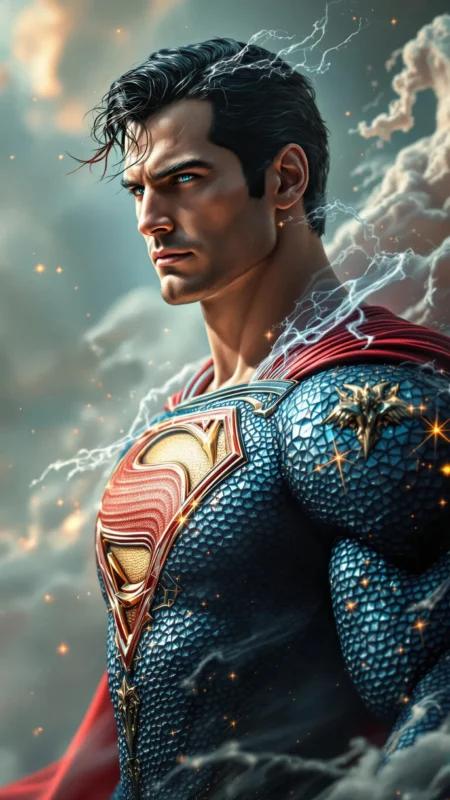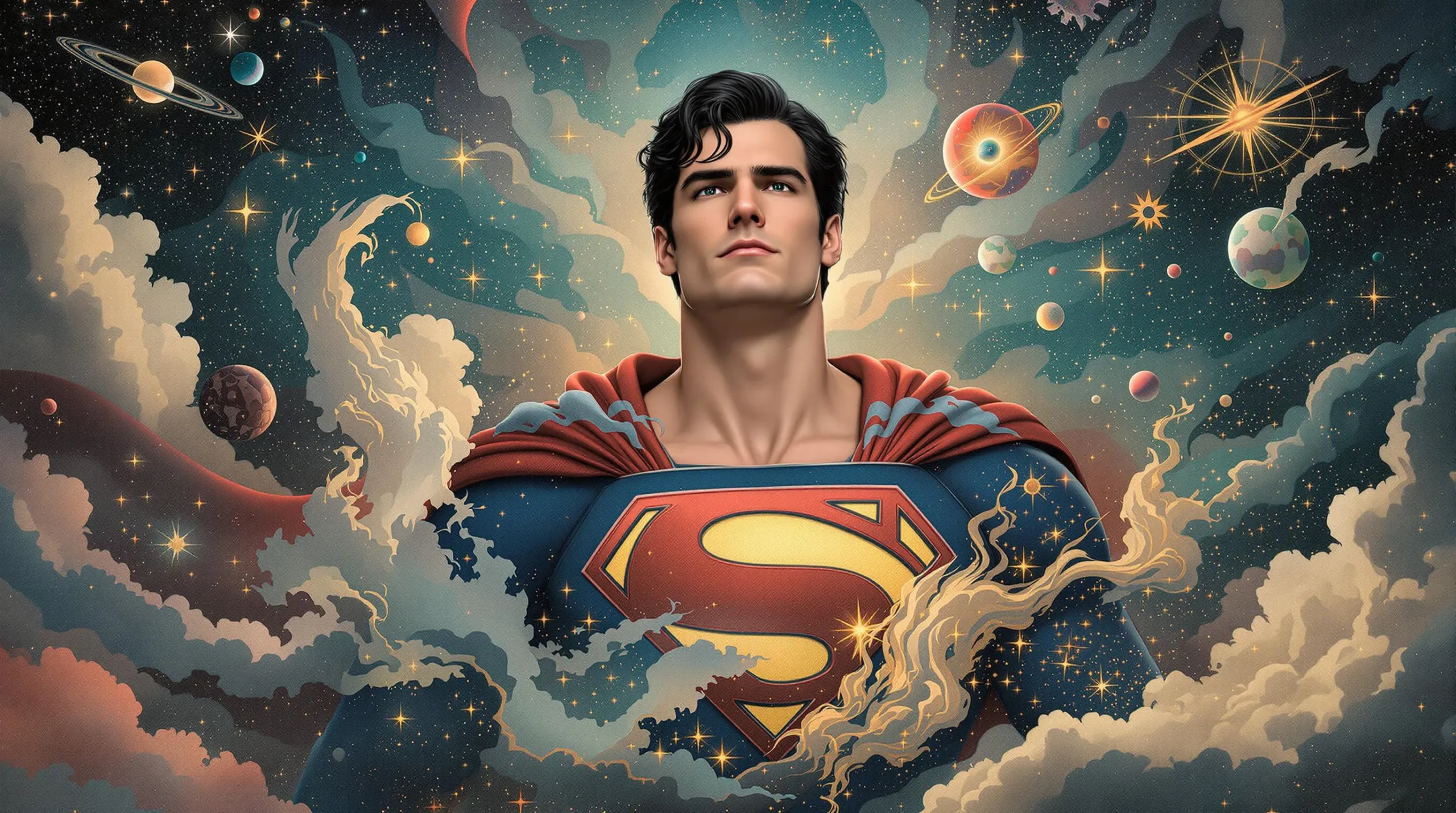


Superman

Archetype Meaning & Symbolism

Hopeful, powerful, dutiful, alienated, dualistic, sacrificial, moral, strong, restrained, immigrant

  • You are much stronger than you think you are. Trust me.

If Superman is part of your personal mythology, you may...

Believe

  • That one person, acting with pure intent and unwavering resolve, can be a fulcrum to move the world.
  • That there is an absolute moral right and wrong, and it is my duty to stand for the right, regardless of the personal cost.
  • That my greatest strengths must be hidden or tempered by humility, and that my ordinary, human identity is what keeps me grounded and sane.

Fear

  • That my power, if unchecked or misused, could cause catastrophic harm to the very people I wish to protect.
  • That I am fundamentally and irrevocably alone, and that no one will ever truly understand or share the burden I carry.
  • That when a true crisis comes, a moment where everything is on the line, I will not be strong enough, and I will fail.

Strength

  • A powerful and deeply ingrained moral compass that guides your actions, providing clarity in confusing times.
  • An immense well of hope and resilience that allows you to face darkness and despair without surrendering to cynicism.
  • A profound sense of responsibility that drives you to serve others and contribute to the greater good.

Weakness

  • A tendency toward self-negation, where your own needs, desires, and even safety are consistently sacrificed for the sake of others.
  • A crushing sense of loneliness and alienation stemming from the belief that your true self is too different to be fully accepted.
  • A rigid, black-and-white view of morality that can devolve into paternalism or an inability to comprehend life's nuance.

The Symbolism & Meaning of Superman

The Superman archetype is a vessel for our most modern anxieties and aspirations. He is perhaps the quintessential American myth: the ultimate immigrant who arrives with nothing but his innate gifts and a yearning to belong, and who in turn dedicates his life to protecting the ideals of his adopted home. He is a secular messiah, a figure of hope whose power is terrifying in its scope, yet tempered by a Kansas-bred humility. His symbolism is a study in contrasts: he is a god who chooses to be a man, an alien who is more human than most, an icon of impossible strength whose greatest struggles are matters of the heart and soul. To have him in one's personal mythology is to engage with the notion that great power does not corrupt, but rather reveals.

His meaning today has perhaps shifted from a simple power fantasy to a complex meditation on responsibility. In a world saturated with irony and moral relativism, his unwavering ethical clarity can feel both antiquated and desperately needed. He represents the audacious belief that goodness is not a weakness and that there is such a thing as objective truth, a 'right thing to do.' He is a walking, flying paradox: the quiet solitude of his Fortress is the necessary counterpoint to his public deeds. The symbolism suggests that true strength requires moments of profound isolation and self-reflection, a private world where the weight of the public one can be properly understood and borne.

Furthermore, the archetype is a powerful exploration of restraint. What does it mean to be able to shatter worlds, yet choose to rescue a cat from a tree? This is not about the grand gesture, but the constant, quiet, and deliberate choice to use power with precision and gentleness. His mythology suggests that the greatest measure of strength is not its application, but its withholding. He is a constant reminder that one's potential for destruction is always present, and that true heroism lies in the daily decision to build, to protect, and to inspire rather than to dominate.


Superman Relationships With Other Archetypes

The Metropolis

The city, for the Superman, is perhaps a sprawling, electronic nervous system to which he is the sole, sentient nerve ending. He may feel its every tremor, from the tectonic groan of a subway car to the whispered prayer in a top-floor apartment, a constant symphony of human frailty that he alone is tuned to perceive. This metropolis of glass and steel could be seen as his garden, one he tends with a cosmic patience, pulling the weeds of disaster and crime. Yet, he may forever remain the gardener, never one of the flowers. He walks among its citizens as a shepherd of unfathomable power, a custodian of a flock so fragile that a single, unguarded sigh could scatter it. The city is at once his purpose and his most profound isolation, a cathedral built in his honor where he can never truly kneel.

The Kryptonite

More than a mere mineral, the Kryptonite may be a shard of a dead star’s ghost, a poisonous nostalgia made tangible. It is the fatal inheritance, the one piece of a long-lost home that cannot nourish but only corrupts. Its glow might not just be radiation, but the visible frequency of grief itself, a signal that unspools his celestial DNA and reminds him that he is, and always will be, the universe’s most solitary orphan. This vulnerability is not simply a plot device; it could be the anchor that chains the god to the mortal coil, the fever dream of a home he can never reach, reminding him that the source of his magnificent power is inextricably tethered to the source of his ultimate demise. It is, perhaps, the universe’s most poetic cruelty: the only thing that feels like home is the one thing that will kill you.

The Bumbling Alter Ego

The meek persona, the Clark Kent, is not so much a disguise as it is a carefully constructed shadow, a vow of invisibility taken by a being of pure light. It is a suit of ill-fitting skin worn to feel the texture of a world he would otherwise shatter. The slumped shoulders and the dropped briefcase may be a form of penance, a constant performance of the very fallibility he has transcended. This act of self-effacement could be the Superman’s greatest feat of strength—a god playing at being a ghost, haunting the periphery of human connection. Perhaps in inhabiting weakness, in feigning the need for help, he finds the only safe way to touch the humanity he so desperately loves, experiencing its warmth without the risk of incinerating it with his own terrible, glorious sun.

Using Superman in Every Day Life

Navigating Moral Ambiguity:

When faced with a complex ethical choice where the lines are blurred, one might invoke the Superman archetype not as a provider of easy answers, but as a lodestar for intent. You may ask not “What is the perfect solution?” but “What action stems from a place of genuine compassion and responsibility?” It becomes a practice of aligning with a core of unwavering principle, even when the application of that principle is fraught with difficulty. The goal is not a flawless outcome, which is impossible, but a pure motive, which is a choice.

Coping with Feelings of Alienation:

In moments of profound loneliness, of feeling like a stranger in a strange land, the archetype offers a potent re-framing. Your perceived strangeness, your unique perspective, is not a deficit: it is your Kryptonian heritage. It is the very source of your unique gifts. This mythos encourages you to see your isolation not as a sign of being unwanted, but as a consequence of carrying a different kind of starlight within you, a perspective that others may not immediately understand but that allows you to see the world with singular clarity.

Accessing Inner Strength:

During periods of powerlessness or despair, the archetype serves as a metaphor for tapping into hidden reserves. Superman is powered by the sun: a vast, external, life-giving force. You might then ask, what is your sun? Is it nature, art, a specific relationship, a deep-seated belief? Identifying this source becomes a ritual. You can consciously turn toward it, to bask in its light, to recharge the very cells of your spirit until you feel capable of lifting the immense weight before you.

Superman is Known For

Invulnerability

The symbolic weight of being physically and emotionally untouchable. It represents both an immense strength and a profound source of isolation, the curse of being unable to truly share in the fragility of the human experience.

Flight

The power of unaided flight is a potent symbol of freedom, transcendence, and perspective. It is the ability to rise above the fray, to see the world from a god's-eye view, and to move with a grace unbound by earthly limitations.

Dual Identity

The constant negotiation between the superhuman alien (Kal-El/Superman) and the gentle, unassuming human (Clark Kent). This duality is a core metaphor for the public self versus the private self, the persona versus the soul, and the ongoing struggle to integrate the extraordinary with the ordinary.

How Superman Might Affect Your Personal Mythology

How Superman Might Affect Your Mythos

Integrating the Superman archetype into one's personal mythos might mean reframing one's life story as a narrative of hidden potential and profound responsibility. You may begin to see your unique talents, quirks, or sensitivities not as random traits, but as components of a secret identity, the source of a power you must learn to steward. The ordinary, mundane aspects of life—the 'Clark Kent' job, the quiet evenings—are no longer seen as a compromise but as the vital anchor that grounds your extraordinary capabilities. Your life story ceases to be a sequence of events and becomes a mission, whether grand or intimate. The central conflict of your mythos could become the struggle to balance the human need for connection and normalcy with the call to use your gifts for a purpose larger than yourself.

This personal myth may also be defined by a sense of being 'other' or an outsider, not as a source of shame but as a point of origin. Like Kal-El sent from a dying world, you might feel you carry a legacy or a perspective that is fundamentally different from those around you. Your personal history could be interpreted as a long journey of acclimating to a world you were not entirely made for, and discovering how your 'alien' nature can be a gift to that world. The narrative arc of your life may shift toward one of discovery: uncovering the full extent of your abilities and learning the moral grammar required to wield them wisely. Your myth becomes less about finding your place in the world, and more about creating a place for your unique contribution to it.

How Superman Might Affect Your Sense of Self

Embracing the Superman archetype could instill a profound, almost unshakeable belief in your own inherent goodness and capacity for positive action. It may foster a view of the self as a vessel for something noble, a conduit for hope. You might develop a powerful internal locus of control, believing that your choices have weight and that you possess the inner strength to face incredible adversity. This can lead to a deep sense of purpose and a resilient form of self-esteem, one rooted not in external validation but in moral consistency and the act of service. The self is perceived not as a fixed entity, but as a constant becoming, a project of cultivating strength in the service of compassion.

Conversely, this internal narrative may also burden the self with an impossible standard of perfection. You might develop a harsh inner critic that mirrors the world's expectation of a savior, where any mistake, any moment of weakness or selfishness, is seen as a catastrophic failure. This can create a deep-seated fear of letting people down, leading to a state of constant, low-grade anxiety. The self can become bifurcated, with a public-facing persona of competence and strength hiding a private self wracked with doubt and the immense loneliness that comes from being, in your own mind, the only one who can hold up the sky.

How Superman Might Affect Your Beliefs About The World

Adopting a Superman-inflected worldview could cultivate a stubborn, defiant optimism. The world, despite its myriad horrors and corruptions, is seen as fundamentally good and worth saving. It is a perspective that actively looks for the best in humanity, that believes in second chances, and that holds hope not as a passive wish but as an active, defiant force. This worldview suggests that even in the face of overwhelming darkness, a single act of courage and kindness can radiate outwards, that there is always a way to help. It is a philosophy that rejects cynicism as a moral surrender, choosing instead to believe in the potential for redemption and progress, however slow or painful.

This perspective, however, may also foster a certain naivete or a struggle with the world's complexities. A belief in absolute moral clarity can make it difficult to navigate the gray areas of life and politics. The world may be seen in stark terms: good versus evil, right versus wrong, saved versus fallen. This can lead to a kind of benevolent paternalism, a belief that one knows what is best for others, and a frustration when the world and its people refuse to conform to this clear moral vision. There is a risk of seeing the world as a problem to be solved or a project to be managed, rather than a complex, living system of which you are only one small, albeit powerful, part.

How Superman Might Affect Your Relationships

In relationships, this archetype might cast you in the role of the steadfast protector. You could feel an immense, almost instinctual responsibility for the emotional and physical well-being of your loved ones. You are the rock, the shoulder to cry on, the one who remains calm in a crisis. This can create deep bonds of trust and reliance. People may feel profoundly safe in your presence, seeing you as a source of unwavering strength and support. You might derive a great deal of your identity and purpose from being this bastion for others, finding fulfillment in providing a sanctuary of stability and care.

However, this same dynamic can create a subtle but persistent distance. The burden of being the 'strong one' can prevent you from ever showing vulnerability, creating a hidden gulf between you and those you love most. It can foster a profound loneliness, a feeling that no one can see the 'Clark Kent' beneath the cape—the person with doubts, fears, and needs of their own. This can lead to imbalanced relationships where you give far more than you receive, not out of selfishness on the part of others, but because you've conditioned them to believe you need nothing. The fear of burdening others with your own fragility may keep you from experiencing true, reciprocal intimacy.

How Superman Might Affect Your Role in Life

The Superman archetype may deeply inform your perceived role in life, casting you not as a seeker of glory but as a quiet guardian. In your family, community, or workplace, you may feel an unspoken duty to be the moral compass, the person who upholds standards and advocates for fairness, even when it's unpopular. Your role is that of the silent pillar: you don't need the spotlight, but you feel a profound internal obligation to ensure the structure doesn't collapse. This could manifest as being the coworker who always does the right thing, the friend who shows up without being asked, or the family member who absorbs conflict to maintain peace.

This perceived role can also be a heavy one. You may feel that your purpose is defined entirely by your utility to others, leading to a sense of your own identity becoming secondary to the function you serve. The role of 'savior' or 'protector' can become a cage, limiting the other, more complex parts of your personality. There is a risk of becoming trapped in a narrative of constant service, where taking time for personal joy or ambition feels like a dereliction of duty. Your role in the world feels less like a choice and more like a pre-ordained, inescapable fate tied to the gifts you possess.

Dream Interpretation of Superman

To dream of Superman, or to dream of possessing his powers—flight, strength, invulnerability—in a positive context can be a powerful symbol from the subconscious. It may signify an awakening to your own untapped potential and a burgeoning sense of agency in your waking life. Soaring through the sky could represent a new level of freedom from a previous constraint, a transcendence of an old problem, or gaining a new, higher perspective on a difficult situation. Such a dream could be your psyche's way of telling you that you are, in fact, stronger than you think, and that you have the inner resources to overcome the challenges you face. It is an affirmation of your capacity and your inner hero.

In a negative context, dreaming of this archetype can be a manifestation of anxiety about power and responsibility. You might dream of being unable to control your flight, crashing into buildings, or your strength causing accidental destruction. This could reflect a fear of your own anger or ambition, a worry that your actions might have unintended, harmful consequences. A dream where you are Superman but fail to save someone could point to a crushing weight of expectation, either self-imposed or from others. It might also symbolize a messiah complex, a warning from your subconscious that you are taking on too much responsibility and heading for burnout or hubris.

How Superman Archetype Might Affect Your Needs

How Superman Might Affect Your Physiological Needs

The Superman archetype could subtly re-code your relationship with your body's most basic needs. From a mythological perspective, the body becomes a tool for a higher purpose. This might lead to a kind of asceticism, where physiological needs like rest, food, and comfort are seen as secondary, even indulgent, compared to the mission at hand. You might push your body to its limits, ignoring signals of exhaustion or hunger because the 'world needs saving'—whether that world is your family, your company, or a creative project. There is a nobility in this, but also a danger of treating the self as a mere machine, leading to burnout when the human body inevitably asserts its limits.

Conversely, this archetype could foster a heightened sense of stewardship over your physical self. Recognizing that your strength and energy are the resources you use to help others, you may become diligent about maintaining your health. Sleep, nutrition, and exercise are not for vanity or simple comfort, but are part of the discipline required to remain 'mission capable.' Your body is the Fortress of Solitude, the vessel that must be maintained in peak condition to serve its function. This perspective transforms self-care from a selfish act into a responsible one, a prerequisite for fulfilling your perceived duty in the world.

How Superman Might Affect Your Ideas of Belonging

The archetype deeply complicates the need for belonging. The Clark Kent persona is a masterclass in the desire to belong. It is a performance of normalcy, an attempt to be loved and accepted for the simple, human parts of oneself. If this myth is active in you, you may feel a desperate ache for connection, for someone to see past your strengths and competencies and love the awkward, uncertain person underneath. You might hide your greatest talents or most unique thoughts for fear they will mark you as 'other,' as an 'alien,' and thus sabotage your chance at true intimacy and community.

This creates a painful paradox. You feel a duty to use your gifts, but fear that those very gifts are what create the chasm between you and others. The sense of belonging is therefore conditional and fragile. You may feel you belong as long as you are useful, as long as you are playing the role of the savior or the strong one. The ultimate fear is that if people saw the full scope of who you are—the strange visitor from another world—they would react with fear or rejection. True belonging would mean finding someone who can embrace both Clark Kent and Kal-El, a union that the mythos often presents as heartbreakingly rare.

How Superman Might Affect Your Feelings of Safety

From a personal mythology standpoint, the Superman archetype could instill a powerful drive to create safety and security, not for yourself, but for others. You may feel a hyper-vigilant responsibility for the safety of your loved ones, your community, or even abstract ideals. This can manifest as meticulous planning, a career in a protective field like medicine or law enforcement, or simply being the person everyone turns to in a crisis. Your sense of well-being becomes tied to the security of your environment and the people within it. You are the shield, and the integrity of that shield is paramount to your psychological stability.

On the other hand, the invulnerability aspect of the myth can be perilous. It might foster a denial of your own personal vulnerability, a subconscious belief that 'bad things happen to other people.' You may take unnecessary risks, neglect your own safety precautions, or dismiss threats to your well-being, operating under a magical belief in your own resilience. This isn't arrogance, necessarily, but a deep-seated narrative that your role is to endure harm, not to avoid it. This can leave you exposed, as the myth of your own invincibility prevents you from taking the practical steps needed to ensure your own very human safety.

How Superman Might Affect Your Views of Esteem

Esteem needs, within this mythological framework, are inextricably linked to action and morality. Your self-worth is not derived from who you are, but from what you do. Esteem is the quiet satisfaction that comes after a day spent using your strength for good. It is built not on praise or accolades—which may even feel uncomfortable—but on the private knowledge that you have lived up to your own impossibly high ethical code. A strong sense of esteem comes from being a reliable force for good, from shouldering burdens without complaint, and from seeing your positive impact on the world.

However, this makes esteem incredibly brittle. Because it is contingent on performance, any failure can shatter your self-worth. If you fail to 'save the day,' if you make a mistake, or if you act selfishly, the fall from grace is precipitous. It is not just a mistake: it is a betrayal of your very essence. This can lead to a cycle of intense pressure, where you must constantly perform heroic acts simply to maintain a baseline level of self-respect. There is little room for mediocrity or human error in this internal economy of esteem, making genuine, unconditional self-acceptance a near-impossible ideal.

Shadow of Superman

When the Superman archetype falls into shadow, it manifests as a tyrant god. The overwhelming need to protect and to impose a 'correct' moral order becomes a justification for absolute control. This is the Superman who, grieving a loss or frustrated by humanity's failings, decides he knows best. He stops asking and starts telling. He sacrifices freedom for safety, choice for order. The shadow is not evil in its intent; it is a terrifying amplification of good. It is the belief that one's power and moral clarity grant the right to override the will of others 'for their own good.' This shadow self is paternalistic, suffocating, and ultimately, anti-human, for it strips away the very messy, beautiful, and often flawed gift of free will.

Conversely, the repressed or inverted shadow of Superman is the cynical powerhouse. It is the being of immense potential who, paralyzed by fear of making a mistake or embittered by the world's ingratitude, refuses to act. He stands by and watches the world burn, justifying his inaction with sophisticated arguments about non-interference or the futility of it all. This is the tragedy of potential squandered. This shadow is not a tyrant, but a void where a hero should be. It is the deep bitterness that comes from knowing you could help but choosing not to, a self-imposed isolation that curdles into a quiet contempt for the world you secretly still yearn to save.

Pros & Cons of Superman in Your Mythology

Pros

  • It inspires a powerful, actionable drive to be a force for good, translating compassion into service.
  • It fosters a deep and resilient optimism, allowing one to face adversity with hope and a belief in a better future.
  • It cultivates a strong sense of personal integrity and responsibility, forming a solid moral foundation for one's life.

Cons

  • It can lead to a burdensome and isolating messiah complex, resulting in chronic burnout and emotional exhaustion.
  • It may create a profound sense of alienation, a feeling of being fundamentally different and misunderstood by others.
  • It risks the development of a rigid, absolutist worldview that struggles with moral ambiguity and the complexities of human nature.