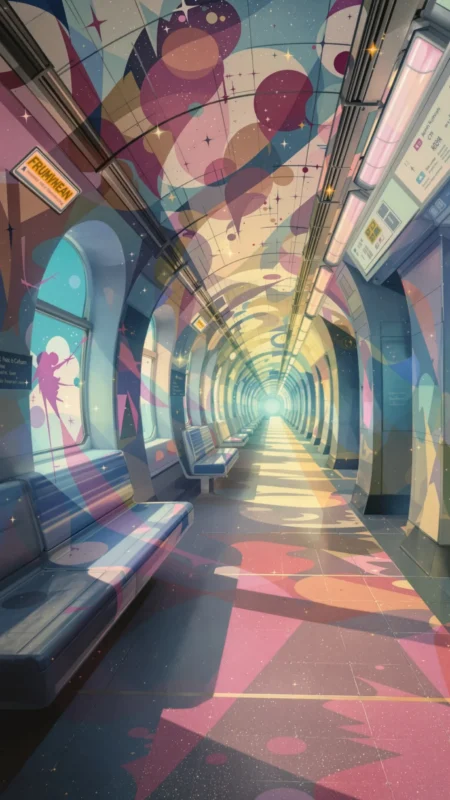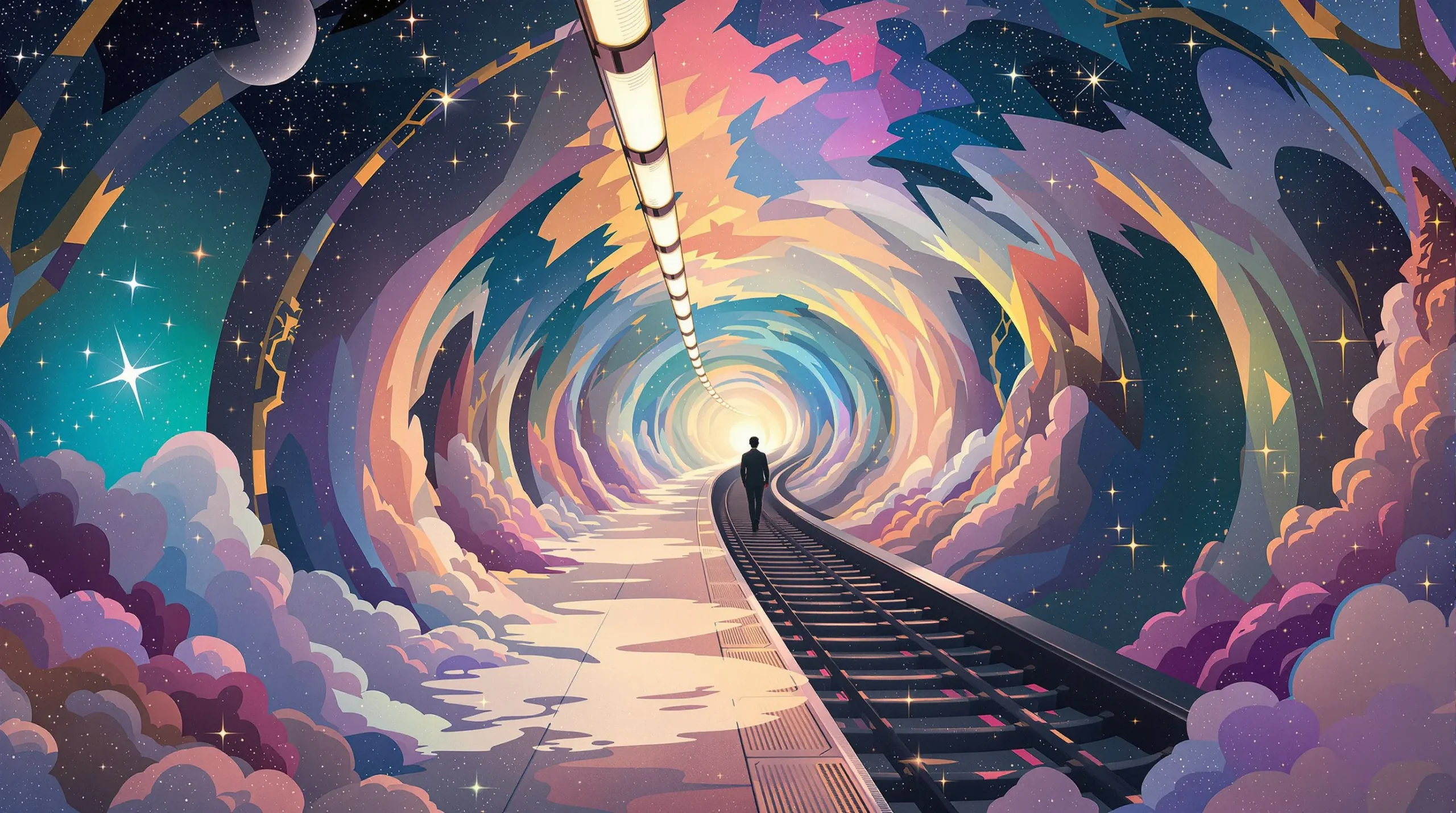


Subway

Archetype Meaning & Symbolism

Subterranean, rhythmic, connective, anonymous, relentless, liminal, indifferent, functional, cacophonous, shared

  • Mind the gap between who you are and who you are becoming: the doors are closing.

If Subway is part of your personal mythology, you may...

Believe

  • You may believe that life's most profound moments occur not at the grand destinations, but in the quiet, transitional spaces in between.

    You may believe that we are all connected by invisible structures and that individual journeys are part of a much larger, collective movement.

    You may believe that to get anywhere new, a descent into darkness and uncertainty is not only necessary, but routine.

Fear

  • You may fear being irrevocably trapped, stuck between stations in a life that has lost all momentum.

    You may fear taking the wrong turn and ending up somewhere you don't recognize, hopelessly disconnected from your intended path.

    You may fear losing your identity, your face dissolving into the anonymous, crushing mass of the crowd.

Strength

  • You may possess an unflappable resilience, an ability to find an inner core of stillness and purpose no matter how chaotic the external world becomes.

    You may have an intuitive grasp of complex systems, seeing the hidden connections and understanding how a change in one part affects the whole.

    You may be extraordinarily adaptable, able to change your route and navigate disruptions with a calm and practical mindset.

Weakness

  • You may cultivate a protective emotional distance, observing the world with a cynical detachment that prevents you from fully engaging with it.

    You may struggle with a deep sense of restlessness, finding it difficult to commit to a place, a person, or a project, always feeling the pull to the next train.

    You may become jaded by the daily exposure to the raw, unvarnished side of humanity, leading to a general misanthropy or loss of faith in others.

The Symbolism & Meaning of Subway

The Subway is the modern myth of the underworld journey, made routine. Each day, you descend, leaving the sunlit world of the specific for a liminal realm of pure transit. It is a space between spaces, a non-destination where you are neither at your origin nor your end. In this potent void, transformation is possible. Your personal mythology might frame these daily descents as opportunities for psychic reset, a moment to shed the skin of one role before donning another. It is the river Styx with fluorescent lighting, and the fare is your attention and a bit of your soul.

This archetype symbolizes the vast, hidden network that connects us all. It is the city's vascular system, pulsing with a life of its own, indifferent to the individual blood cells it carries. To have the Subway in your mythos is to understand that you are part of a colossal, interconnected system, moved by currents far larger than yourself. It speaks to a destiny that is partly choice (which train you take) and partly fate (the tracks laid long before you arrived). It is the rhythm of the collective, the shared pulse of a million separate journeys converging in the dark.

It is also a crucible of paradoxical experience: enforced intimacy and profound anonymity. You may stand closer to a stranger on a crowded train than you will to a lover all day, yet no connection is made. This teaches a powerful lesson in boundaries, in the creation of an inviolable internal space amidst external chaos. The Subway is a theater of humanity, where you are both audience and actor, observing the infinite variety of human expression from behind a carefully constructed wall of indifference. It is a masterclass in being alone, together.


Subway Relationships With Other Archetypes

The City

The Subway is the City’s subconscious, its network of hidden arteries and jolting nerves. While the City archetype presents the face, the architecture, the visible personality, the Subway is its deep, unglamorous, and absolutely essential inner working. The City is the conscious thought; the Subway is the dream-state that processes the day's experiences. One cannot be understood without the other. To know the City, you must ride its veins, feeling its true, rhythmic, and sometimes troubled heartbeat in the subterranean dark.

The Labyrinth

The Subway is a rationalized Labyrinth for the modern age. Unlike the disorienting maze of myth, its paths are mapped, its destinations named. Yet, the existential monster remains. The Minotaur is not a beast but the threat of system failure, the wrong transfer, the terror of being disgorged into a neighborhood of your own life you do not recognize. The challenge is not to find the center, but to navigate the entire system with purpose, to avoid becoming one of the ghosts who rides the lines aimlessly, forever lost in a perfectly logical maze.

The River

The Subway is a mechanical, subterranean river, with currents of steel and passengers as sediment. Like Heraclitus's river, you can never step into the same train twice: the collection of souls is always different, the energy always in flux. It flows from one part of the world to another, carving its path through the bedrock of daily life. This relationship speaks to the flow of time and experience, sometimes a gentle current, sometimes a flash flood of humanity, but always moving, always carrying you from what was to what will be.

Using Subway in Every Day Life

Navigating Career Transitions

When faced with a professional crossroads, you may invoke the Subway archetype not as a direct path, but as a complex map of possibilities. Choosing a new career is not a single leap but a transfer: you must get off one line, navigate the platform of uncertainty, and wait for the next train, trusting it leads where the map says it will. This perspective allows for delays, for the express train that becomes a local, and for the wisdom in knowing when to switch to a different line altogether to reach your ultimate professional destination.

Understanding Social Dynamics

Viewing your social world as a subway system can clarify its structure and your place within it. Some friend groups are like the express train: fast, direct, and heading toward a shared goal. Others are local lines, with frequent stops for intimacy and connection. Understanding this allows you to appreciate the different energies of your relationships, to accept that not everyone is on the same line as you, and to value the transfer stations: those rare people who connect your disparate social worlds.

Embracing The Subconscious Journey

The archetype provides a model for introspection. To understand a deep-seated issue, you must be willing to 'go underground'. This is a conscious descent into the darker, unseen tunnels of the psyche. The journey may be noisy and uncomfortable, populated by strange and fleeting thoughts, but it is necessary. The Subway teaches that you cannot get to a new part of your inner city without traveling through the dark, trusting the process that moves you from one state of awareness to another.

Subway is Known For

The Map

An abstract schematic of a complex reality. It represents the human attempt to impose order on the labyrinthine chaos of life, offering a comforting illusion of predictability and control over one's journey.

The Rush Hour:

A collective ritual of compressed humanity. It is a testament to shared endurance, a moment of profound, anonymous intimacy where personal space is sacrificed for the sake of a common destination.

The Unforeseen Delay:

The sudden, inexplicable halt in the darkness between stations. It is a powerful metaphor for life's interruptions, a forced pause that tests patience and surrenders the individual to a force beyond their control.

How Subway Might Affect Your Personal Mythology

How Subway Might Affect Your Mythos

When the Subway informs your personal mythos, your life story may cease to be a linear quest and become a complex, intersecting map of journeys. Key moments of your epic are not battles won or peaks summited, but transfers made under pressure. Your narrative is punctuated by the screech of brakes, the opening of doors to new worlds, and long, dark tunnels of introspection. Your personal history is a series of lines: the youthful local line with many stops, the express line of a demanding career, the abandoned line of a past love. The myth is not about reaching a final station, but about mastering the art of the ride.

This archetype introduces the underworld journey as a recurring, necessary motif. The descent is not a singular, life-altering trauma, but a daily, mundane practice of leaving the familiar world behind. Your mythos could be defined by this rhythm of disappearance and reappearance. You are the hero who must routinely go underground, confronting the collective unconscious in its raw, unfiltered state, to gain the energy or insight needed to function in the upper world. Your wisdom comes not from the sunlit destinations, but from what you learn in the dark between them.

How Subway Might Affect Your Sense of Self

Your sense of self may become fluid, adaptable, and transient. You are not a fixed entity, but a passenger moving through various states of being. The self is defined by the journey, not the point of origin or arrival. Like the train car that is empty at the end of the line and full at the center of the city, your identity might feel contingent on the context and company surrounding you. This can foster a remarkable ability to blend in, to observe, and to inhabit different roles without losing a core sense of who is doing the traveling.

A deep resilience, a form of urban stoicism, may become central to your character. The self is forged in the daily negotiation of minor discomforts and major unpredictabilities. You may learn to cultivate an inner sanctum of peace amidst a cacophony of external stimuli. This fosters a self-concept based on endurance and quiet competence. Your strength is not in changing the world, but in your unshakeable ability to move through it, unaffected by its jolts and surges, your gaze fixed on your destination.

How Subway Might Affect Your Beliefs About The World

The world may appear as a massive, interconnected system of visible and invisible forces. You might perceive the underlying structures that govern society, much like the subway map reveals the hidden paths beneath the city streets. A problem in one area is understood to have ripple effects throughout the network. This perspective is systemic and complex, valuing the intricate web of causality over simple, linear explanations. You may see the hidden 'tracks' of history, power, and influence that direct the flow of human events.

A form of pragmatic egalitarianism could shape your worldview. Down in the tunnels, the external signifiers of wealth, status, and power are muted. The CEO and the janitor are subject to the same delays, the same crowded car, the same screeching wheels. This experience might foster the belief that beneath our social constructions, we are all just travelers, subject to the same fundamental forces, sharing a brief, often uncomfortable, journey. It's a view of humanity stripped of its pretense, revealed in the raw state of commuting.

How Subway Might Affect Your Relationships

Relationships might be understood through the metaphor of subway lines. Some people are on your line for the long haul, sharing every stop. Others are brief transfers, crucial for changing your direction but not meant for the entire journey. This view allows for a graceful acceptance of the transient nature of many connections, seeing them not as failures but as necessary interchanges on the map of your life. It encourages you to cherish the fellow travelers on your specific route, knowing you share a common destination for at least a part of the way.

The subtle etiquette of the subway car may become your model for social intimacy. You might develop a profound respect for personal boundaries and the power of unspoken communication. The art of being physically close yet psychically distant is one you may master. In relationships, this could translate into an intuitive understanding of a partner's need for space, a comfort with silence, and a way of communicating presence and support without the need for constant engagement or validation.

How Subway Might Affect Your Role in Life

You may perceive your role in life as that of a 'conduit' or a 'commuter' between worlds. Your purpose is not to settle and build in one place, but to facilitate movement and connection. You might be the person who connects different social circles, translates ideas between disciplines, or helps others navigate their own life transitions. Your identity is tied to your mobility and your function within a larger network, bringing people and ideas from one station of life to another.

Alternatively, your role could become that of the 'Observer.' You are the passenger with the window seat, watching the fleeting drama of humanity both inside and outside the train. Your purpose is not to act, but to witness. You may find meaning in cataloging the small, profound moments that occur in these liminal spaces: the shared glance, the musician's song, the kindness of a stranger. Your contribution is your perception, your ability to see the mythic in the mundane daily journey.

Dream Interpretation of Subway

In a positive dream context, the Subway signifies effortless movement through the subconscious and the successful navigation of your inner world. Awaiting you is a clean, well-lit train, arriving on time. This suggests you are aligned with your life's path and are making progress on deep emotional or psychological work. Arriving at your intended stop signifies the achievement of a goal or a newfound state of clarity. The dream assures you that, even if the path forward is unseen, you are on the right track.

In a negative context, a dream of the Subway can evoke powerful anxieties about a loss of control or direction. You might be running to catch a train that pulls away just as you arrive, symbolizing a missed opportunity. Perhaps you are trapped on a train going the wrong way, or stuck in a tunnel between stations, reflecting a feeling of stagnation or being powerless in your waking life. A dark, dangerously crowded, or filthy train could represent being overwhelmed by collective anxiety or the more unsavory aspects of your own psyche.

How Subway Archetype Might Affect Your Needs

How Subway Might Affect Your Physiological Needs

Physiological needs may be viewed as secondary to the demands of the journey. The body is a vessel that must endure for the sake of reaching the destination. This can cultivate a high tolerance for physical discomfort: ignoring hunger, thirst, or fatigue until the task is complete. There is a pragmatic understanding that the body's demands are subordinate to the schedule, a belief that one's physical self must be disciplined to serve the larger purpose of movement and progress.

The rhythmic, mechanical nature of the Subway could deeply entrain your body's own rhythms. The predictable sway of the car, the percussive clatter of the wheels, the metronomic opening and closing of doors: these may become a source of comfort. This can manifest as a need for strong, consistent routines in daily life to feel grounded and regulated. Your physiological well-being might become tied to this external, imposed pulse, finding stability in the relentless, repetitive beat of the system.

How Subway Might Affect Your Ideas of Belonging

Belonging may be experienced as a fleeting, situational state. For the twenty minutes between stops, you belong to the temporary community of your train car. This is a powerful, anonymous form of kinship based on a shared, immediate experience. You might seek and find profound connection in these transient moments of shared humanity, where a nod or a shared smile forges a bond that dissolves the moment the doors open. Love and belonging are not about permanence, but about the quality of these brief intersections.

This archetype can also foster a feeling of perpetual rootlessness. Because your identity is so tied to being 'in transit', you may feel like you don't truly belong anywhere. The stations are just stops, not homes. This can lead to a deep-seated loneliness or, more positively, a sense of kinship with other travelers and outsiders. You may find your tribe not in a place, but among others who understand that home is not a destination, but the journey itself.

How Subway Might Affect Your Feelings of Safety

A sense of safety may be rooted in a combination of system-trust and personal vigilance. You place faith in the invisible driver, the structural integrity of the tunnels, and the logic of the map. This translates to a belief that safety is found by understanding and adhering to the rules of the larger system you inhabit. At the same time, you are acutely aware of your immediate environment, practicing a constant, low-level situational awareness. Safety is a pact between your trust in the collective and your personal responsibility.

Conversely, this archetype may instill a profound awareness of the fragility of safety. The subway is a space where the unexpected can and does happen. A sudden stop, a strange encounter, a system-wide shutdown: these moments teach that order is a thin veneer over potential chaos. This can lead to a worldview where safety is never guaranteed but is a continuous, active negotiation with an unpredictable environment. You may feel that true security is an illusion and that one must always be prepared for disruption.

How Subway Might Affect Your Views of Esteem

Self-esteem may be derived from a quiet competence and mastery of the system. Knowing the quickest transfer, navigating the rush-hour crowd with grace, giving perfect directions to a tourist: these are the small victories that build a sense of self-worth. Your esteem is not based on external praise, but on an internal confidence in your ability to navigate the complex, often harsh, realities of your world. You are capable, you are efficient, you know the map.

On the other hand, the sheer indifference of the Subway can be a challenge to esteem. To the system, you are an anonymous fare, a statistic. This can foster feelings of insignificance, of being a powerless cog in a vast, impersonal machine. To counteract this, you must cultivate a source of self-worth that is entirely independent of the roles you play or the systems you move through. Your value cannot be derived from your function, but must be inherent and self-validated.

Shadow of Subway

The shadow of the Subway manifests as a cold, mechanical determinism. When this archetype is out of balance, life becomes nothing but a schedule to be met. People are not fellow souls but obstacles slowing your progress. Empathy is sacrificed for efficiency. The journey is no longer an experience but a problem of logistics. This shadow aspect turns you into a human machine, ruthlessly optimized for transit but disconnected from the heart, unable to appreciate the poetry of a delay or the humanity in a crowded car. You arrive on time, but you arrive empty.

The other side of the shadow is a permanent state of aimless transit. This is the individual who identifies so completely with the journey that they refuse ever to arrive. They ride the lines endlessly, mistaking movement for meaning. They change careers, cities, and relationships with the ease of a transfer, but never build anything lasting. This shadow figure fears the commitment and responsibility that a destination implies. They are lost in the system, a ghost in the machine, forever caught in the liminal space and unable to emerge into the sunlit world of purpose and belonging.

Pros & Cons of Subway in Your Mythology

Pros

  • You develop a profound resilience and a high capacity for navigating chaos and uncertainty with grace.

    You gain a unique, systemic perspective on the world, understanding the deep interconnectedness of people and events.

    You cultivate a strong sense of self-reliance and the ability to maintain your inner peace in stressful environments.

Cons

  • You may risk developing a cynical or jaded view of humanity due to constant exposure to its raw and indifferent aspects.

    A deep-seated restlessness can make it difficult to form lasting attachments or feel a sense of belonging in any one place.

    You might adopt a detached, observational stance towards life, becoming a passenger in your own story rather than an active participant.