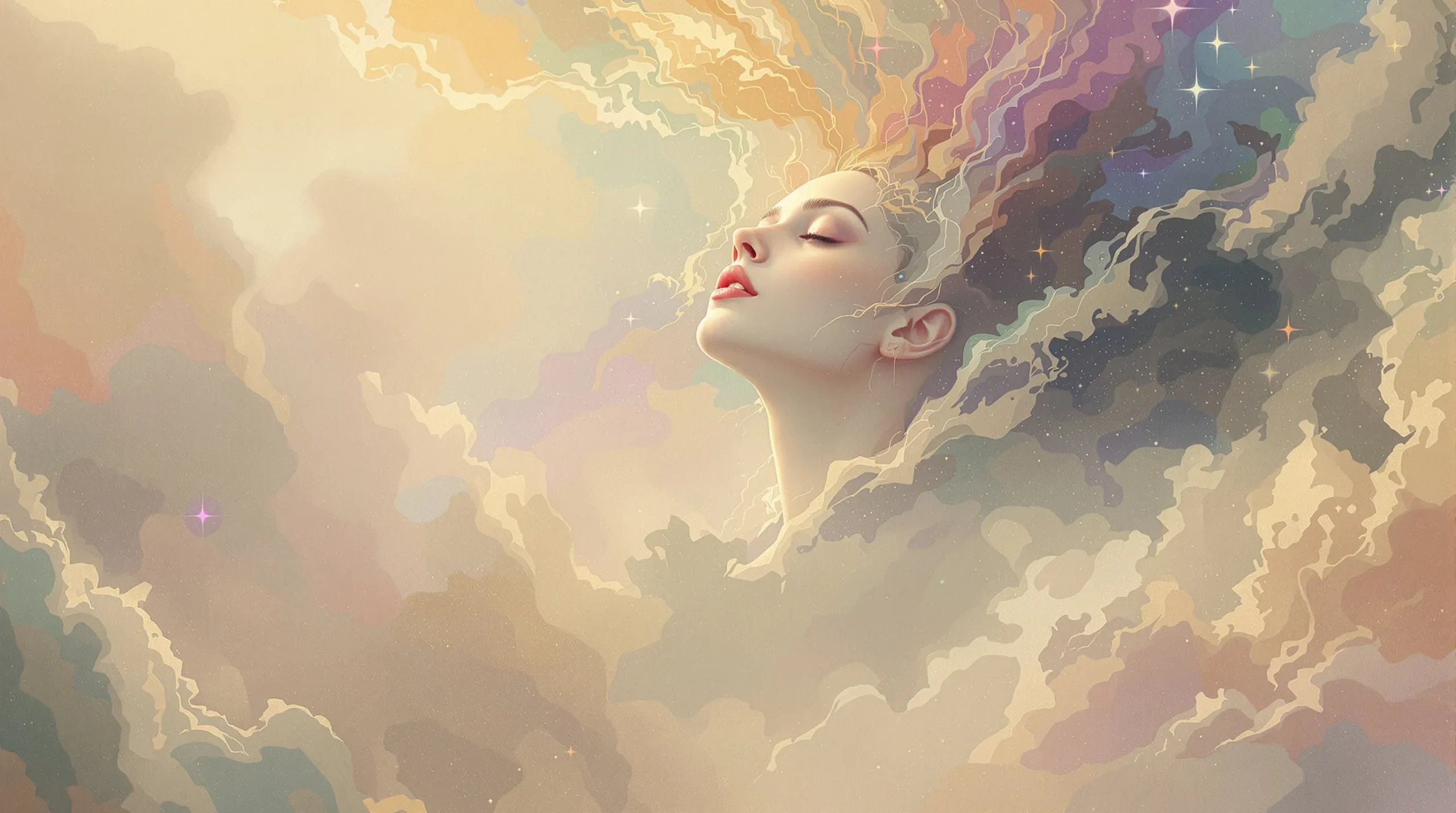


Standoff

Archetype Meaning & Symbolism

Tense, Unyielding, Poised, Defiant, Frozen, Calculated, Mutual, Precarious, Resolute, Suspended

  • The first to move may not be the one who loses, but the one who forgets why they are standing still.

If Standoff is part of your personal mythology, you may...

Believe

  • That the most powerful action is often a deliberate and strategic non-action.

    That true strength is shown not in attack, but in the ability to endure.

    That silence is a canvas; what you don't say can paint a clearer picture than what you do.

Fear

  • Making the first move and discovering it was a catastrophic miscalculation.

    That the fragile balance will be broken by an unpredictable outside force, rendering your patient strategy meaningless.

    Being seen as weak or indecisive for holding your position instead of forcing a conclusion.

Strength

  • An almost supernatural patience, allowing you to out-wait and out-think your opponents.

    Profound self-control and emotional discipline, even under immense pressure.

    A deep understanding of boundaries and the unwavering resolve to defend them.

Weakness

  • A tendency toward stubbornness that can curdle into self-defeating paralysis.

    An inability to compromise, viewing collaboration as a form of surrender.

    A risk of becoming isolated, as your unyielding nature can push others away.

The Symbolism & Meaning of Standoff

In personal mythology, the Standoff is not merely an argument waiting to happen; it is a sacred, liminal space. It is the charged silence between lightning and thunder, a moment of pure potential where every possible outcome is still on the table. To have the Standoff archetype in your mythos suggests a life narrative punctuated by these critical pauses, where your character is defined not by your actions, but by your deliberate, potent inaction. It is the story of holding a boundary, of refusing to yield to pressure, of understanding that sometimes the most powerful position is to simply hold your position. This archetype represents the awesome power of the word ‘no,’ not spoken aloud, but embodied.

This archetype may also symbolize a profound internal balance, or lack thereof. It could be the internal standoff between the person you are and the person you wish to become, a frozen moment in your personal evolution. Or perhaps it is the standoff between your fear and your ambition, two equally powerful forces holding your life in a state of suspended animation. The story becomes about navigating this internal gridlock. The mythic quest is not to slay a dragon, but to convince one of the dragons inside you to finally take a step, knowing it will change the entire landscape of your inner world.

The Standoff teaches a difficult wisdom: that not every problem requires an immediate solution, and not every conflict needs a victor. It introduces the idea of the dignified impasse, the respectful disagreement where both sides maintain their integrity. It suggests that growth can occur in stillness, that clarity can arise from tension. In your story, the Standoff could be the recurring motif of the respectful adversary, the worthy opponent, or the difficult choice that you honor by refusing to make it lightly. It is the recognition that some things are so important they are worth bringing the world to a complete halt for.


Standoff Relationships With Other Archetypes

The Judge

The Standoff creates the very conditions under which the Judge must eventually preside. It is the hung jury, the legal impasse, the moment before a verdict that cannot yet be rendered. The Standoff presents the Judge with two equally weighted arguments, two immovable truths, and forces the Judge to find a new law, a higher principle, to break the deadlock. The Standoff is the question; the Judge is the archetype that must find the answer, however costly.

The Bridge

The Standoff sees the Bridge not as a path to be crossed, but as a no-man's-land, a precarious neutral territory. The Bridge is the physical embodiment of the space between the two opposing forces in a Standoff. To step onto the Bridge is to make the first move, to risk everything. The Standoff may revere the Bridge as a sacred, inviolable space, or may fear it as the place where its own static power becomes irrelevant, where movement and connection, however dangerous, are the only options.

The Trickster

The Trickster is the Standoff's natural enemy and secret admirer. Where the Standoff is defined by its rigid, unyielding posture, the Trickster is all about fluid movement, disruption, and changing the rules of the game. The Trickster might break a standoff with a joke, a lie, or an absurd action, revealing the fragility and often the foolishness of the frozen conflict. The Trickster exposes the Standoff as a performance, and delights in pulling back the curtain.

Using Standoff in Every Day Life

Navigating a Professional Negotiation

When a negotiation reaches an impasse, you might embody the Standoff not as an act of aggression, but as one of supreme patience. Instead of filling the silence or offering another concession, you hold the space. You allow the tension of the unresolved issue to hang in the air, a silent testament to your position's validity. This isn't about winning; it's about communicating that your ground is firm, forcing the other party to reconsider their own position against the weight of your stillness.

Overcoming a Creative Block

A writer facing a blank page or a painter a stark canvas may enter into a Standoff with their own creativity. Instead of forcing mediocre ideas, they consciously refuse to produce anything but the authentic. This is a tense waiting game: the artist against the void. By holding this line, by refusing to blink and fill the space with noise, they create a pressure vacuum that can, perhaps, pull a genuine, unexpected insight from the depths.

Healing a Relationship Crossroads

In a partnership where a difficult truth has been revealed, a Standoff can be a period of grace. It's the mutual, unspoken agreement to not make a decision right now. Both parties stand on the precipice of the future, looking at each other across the divide of the new reality. This pause allows the emotional shock to settle, preventing a reactive choice and honoring the gravity of the situation. It is a shared, frozen moment where the future of the relationship hangs in a delicate, painful, and necessary balance.

Standoff is Known For

Mutual Impasse

It is best known as the moment when two opposing forces are held in perfect, fragile equilibrium. Neither side can advance without incurring unacceptable cost, creating a state of suspended conflict where potential energy is at its absolute peak.

The Unspoken Communication:

A standoff is a conversation conducted in silence and posture. It is a profound, often intimate, exchange of intent, resolve, and limits, all without a single word being uttered. The entire narrative is conveyed through the act of not acting.

The Test of Wills:

It represents a pure contest of resolve. Victory is not about superior strength but superior endurance. It is a psychological battleground where the core question is simply: who will break first?

How Standoff Might Affect Your Personal Mythology

How Standoff Might Affect Your Mythos

When the Standoff is a central archetype, your personal mythos may be less a heroic epic of grand deeds and more a taut psychological drama. Your life story is not defined by the mountains you conquered, but by the lines in the sand you refused to let anyone cross. Major turning points in your narrative might be marked by silent refusals, by patient waiting, and by the strategic decision to not engage. You are the protagonist who wins by outlasting the opponent, whose strength is measured in their capacity to absorb pressure without breaking. Your legend is one of quiet, unshakeable resolve.

The narrative arc of your life may appear cyclical, returning to similar points of impasse until a lesson is learned or a new strategy is developed. The central conflict of your mythos could be the quest to learn when to hold the line and when to walk away. Each Standoff is a test, a chapter in which your character is forged in the crucible of inaction. The story's climax is not a dramatic battle, but that quiet, internal click of realization when you finally understand what the standoff was meant to teach you, and you are, at last, free to move.

How Standoff Might Affect Your Sense of Self

Your perception of self may be intrinsically linked to your own resilience. You might see yourself as an anchor, an immovable object against which the storms of life break. There could be a deep sense of pride in your ability to remain calm and steadfast when others are panicking or acting rashly. Self-worth may not be derived from achievements or accolades, but from a quiet, internal knowledge of your own integrity and your refusal to be compromised. You are the one who holds, the one who waits, the one who knows their ground.

Alternatively, this archetype could foster a self-image of being perpetually stuck. You may feel that you are always on the verge of a breakthrough that never comes, trapped in a state of indecision. This can lead to a feeling of being a passive observer in your own life, defined more by what you are resisting than what you are creating. The inner critic's voice might accuse you of being stubborn, difficult, or cowardly for refusing to make a decision, framing your patience as paralysis.

How Standoff Might Affect Your Beliefs About The World

You may view the world as an intricate web of competing forces held in a delicate, often tense, balance. Geopolitics, office politics, and family dynamics are all seen through the lens of power, leverage, and deterrence. You might be less interested in grand ideologies and more in the practical realities of who holds what cards. Progress is not seen as a straight line but as a series of negotiations, feints, and strategic pauses. You understand that much of what appears to be peace is simply a well-managed standoff.

This perspective could also foster a certain cynicism. You may believe that true resolution is rare and that most agreements are merely temporary ceasefires in an ongoing conflict. Trust might be a difficult concept; you may be more inclined to trust predictable opposition than fickle alliances. The world is not a collaborative project but a chessboard, and you are acutely aware of the precariousness of the pieces. Every quiet moment may feel like it is simply the precursor to the next inevitable confrontation.

How Standoff Might Affect Your Relationships

In relationships, you might value unspoken understanding above all else. A deep connection may be felt not through constant communication, but through the shared ability to navigate a difficult silence together. You may create relationships that have an inherent, manageable tension, believing this tension creates strength and respect. You show love by holding a space for the other person, by refusing to pressure them, and by demonstrating through your steadfastness that you can be counted on when things get difficult.

However, this can also manifest as a tendency to avoid direct confrontation, leading to long, simmering conflicts that are never resolved. You might use silence as a weapon, creating a standoff to punish or control a partner. Intimacy may be challenging, as the vulnerability required for true connection can feel like lowering your guard. Relationships may become emotional battlefields of will, where admitting fault or making the first move toward reconciliation feels like a profound defeat.

How Standoff Might Affect Your Role in Life

You may naturally assume the role of the mediator or the fulcrum in any group dynamic. You are the one who can stand in the middle of a conflict without taking sides, your stillness creating a space for others to find their own resolution. In your family or workplace, you might be the keeper of boundaries, the person who quietly and firmly enforces the rules of engagement. Your role is not to lead the charge, but to establish the perimeter, to define the territory on which any action will take place.

This can also cast you in the role of the obstructionist. Others may see you as the roadblock to progress, the stubborn traditionalist who refuses to adapt. You might feel that your role is to be the eternal opposition, the necessary counterweight, but this can be an isolating position. You risk being perceived as being against everything and for nothing, a force of resistance without a clear purpose beyond the act of resisting itself. Your life's work may feel like a series of defensive maneuvers rather than a forward-moving creation.

Dream Interpretation of Standoff

In a positive context, dreaming of a standoff—two figures in a silent confrontation, a game of chess paused at a critical juncture—may symbolize an integration of opposing forces within your psyche. It is the moment before a major breakthrough. The dream could be affirming your ability to hold complexity, to tolerate ambiguity, and to manage powerful internal energies like ambition and contentment, or anger and compassion, without letting one overwhelm the other. It is a sign of immense psychological strength and readiness for the next stage of your evolution, a pause that is pregnant with possibility.

Conversely, a negative dream of a standoff can signal a profound state of paralysis. You might dream of being frozen, unable to move, as an adversary stands before you, or of a door that will not open and a key that will not turn. This imagery could reflect a waking-life situation where you feel hopelessly stuck, caught in an intractable conflict either with another person or within yourself. It may be a manifestation of deep-seated indecision, of a fear of making the wrong choice that has become so powerful it prevents you from making any choice at all. The dream is a warning from your subconscious that the strategic pause has become a prison.

How Standoff Archetype Might Affect Your Needs

How Standoff Might Affect Your Physiological Needs

If the Standoff is part of your mythos, your body might exist in a state of perpetual readiness. This isn't the explosive energy of fight-or-flight, but the sustained, high-tension state of freeze. Your physiological narrative may be written in braced muscles, a tight jaw, and breathing that is shallow and controlled. It is the physical embodiment of holding your breath, waiting for the other shoe to drop. You may be so accustomed to this state of low-grade, constant alert that you no longer recognize it, interpreting it simply as your baseline state of being.

This chronic tension can become the body's default setting, a mythology inscribed directly onto the nervous system. Rest and relaxation might feel alien or even dangerous, as letting your guard down could mean losing your position. The story your body tells is one of vigilance and endurance. It conserves energy not by relaxing, but by maintaining a perfectly still, highly charged posture, ready to act in an instant, even if that instant is delayed for years. It's a body that has mastered the art of waiting.

How Standoff Might Affect Your Ideas of Belonging

A sense of belonging might be forged in the crucible of shared opposition. You may feel the deepest connection to those with whom you have stood your ground, whether it's a partner in a difficult marriage, a co-worker in a toxic workplace, or a friend during a personal crisis. The bond is not one of easy affection, but of mutual respect earned by weathering the same storm without flinching. Love and loyalty are proven in these moments of shared tension; they are unspoken agreements to hold the line together.

However, this archetype can also be profoundly isolating. The need to maintain your position can create distance between you and loved ones, as you may be unwilling to show vulnerability or compromise. You might feel that no one truly understands the pressure you are under or the importance of the principle you are defending. This can lead to a lonely existence, standing guard on a hill of your own making, respected perhaps, but rarely approached. The very act of creating a standoff to protect yourself can become a wall that prevents true intimacy and belonging.

How Standoff Might Affect Your Feelings of Safety

Your sense of safety might be paradoxically rooted in the presence of a known threat. You may feel most secure when you can see your opposition clearly, when the danger is identified and held at a predictable distance. Safety is not the absence of risk, but the management of it. This can lead to a worldview where you find comfort in a state of mutual deterrence, believing that as long as the balance of power is maintained, you are safe. The unknown is the true enemy, while a familiar adversary provides a strange and unsettling form of stability.

This can lead you to unconsciously create or perpetuate conflict to maintain this feeling of control. A peaceful environment might feel unnerving, full of hidden dangers, whereas a tense negotiation or a clear rivalry feels safe because the rules of engagement are understood. Your search for safety could, therefore, lead you into a life of constant, low-level warfare, where you keep potential threats engaged in a standoff to prevent them from surprising you, sacrificing peace for the illusion of predictability.

How Standoff Might Affect Your Views of Esteem

Esteem, for you, could be built upon a foundation of immovability. Your self-respect is directly tied to your ability to withstand pressure, to remain true to your principles, and to not back down. Each time you successfully hold your ground in a difficult situation, your sense of self-worth is reinforced. You don't need external validation; your pride comes from the internal knowledge that you were tested and you did not break. You see yourself as a person of substance, of weight, whose word and position have meaning.

This can also make your self-esteem incredibly brittle. If your entire sense of value is invested in not yielding, then any necessary compromise can feel like a devastating personal failure. You might be unable to distinguish between a healthy concession and a complete surrender of your identity. This can make you rigid and fragile, prone to shattering under the right kind of pressure. Your esteem requires a constant state of tension to exist, and you may struggle to feel worthy in times of peace and collaboration.

Shadow of Standoff

The shadow of the Standoff is a cold and desolate landscape of perpetual, pointless gridlock. When this archetype takes over, it transforms principled stands into monuments of ego. It is the person who sacrifices their relationships, their career, and their own happiness for a victory no one else remembers or cares about. This is the shadow that thrives on the tension, manufacturing conflict to feel alive, turning every conversation into a negotiation and every relationship into a power struggle. It is a profound fear of resolution, because in the quiet after the conflict, the shadow self would have to confront its own emptiness.

This shadow expression leads to a life lived in a fortress of one's own making. It is the mythos of the lonely king who trusts no one, the bitter employee who obstructs every project, the family member who wields silence like a guillotine. The strategic pause becomes a permanent state of emotional winter. The shadow Standoff doesn't preserve sovereignty; it ensures isolation, guaranteeing that you will stand your ground, perfectly, resolutely, and completely alone.

Pros & Cons of Standoff in Your Mythology

Pros

  • It creates necessary space for careful consideration, preventing rash and costly decisions.

    It communicates strength and resolve without resorting to aggression.

    It can effectively de-escalate volatile situations by refusing to add fuel to the fire.

Cons

  • It can waste time and energy, maintaining a state of high stress with no progress.

    It can permanently damage relationships by making compromise impossible.

    It can lead to missed opportunities, as you may wait too long to act.