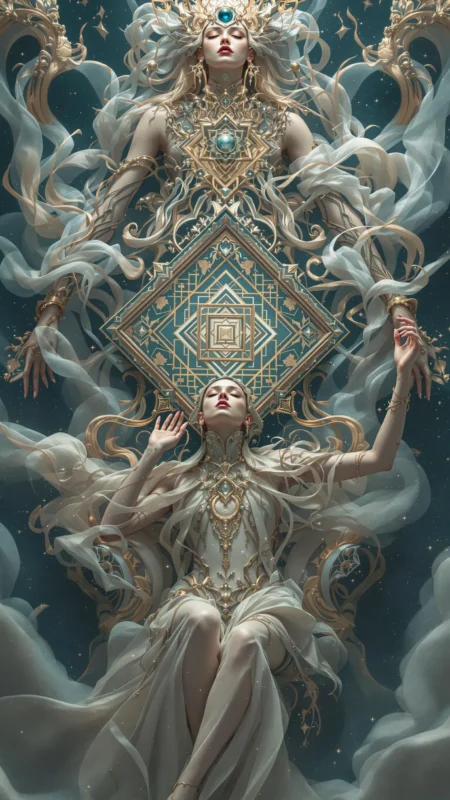
Square

Archetype Meaning & Symbolism

Orderly, predictable, stable, rigid, foundational, reliable, confining, structured, fair, mundane

  • Measure twice, cut once, and know that every corner holds a truth you have defined.

If Square is part of your personal mythology, you may...

Believe

  • A place for everything, and everything in its place, is the highest form of peace.

    Fairness is the most important virtue, and it is best achieved through clear, impartial, and consistently applied rules.

    If you cannot measure it, map it, or build it, it may not be real.

Fear

  • Chaos. The unpredictable event, the irrational emotion, the collapse of order terrifies you.

    Failure of the structure. The thought of your plans failing, your finances collapsing, or your reputation for reliability being shattered is a source of deep dread.

    Being seen as illogical or out of control. You fear your own messy, emotional depths and what might happen if they were ever exposed.

Strength

  • Your ability to create order and stability is unparalleled. You can build secure, lasting structures—be they businesses, families, or systems—where others see only chaos.

    You possess a powerful and unwavering sense of fairness and justice, allowing you to mediate disputes and make decisions with clarity and integrity.

    You are a master of practical reality. Your skills in planning, logistics, and execution allow you to turn abstract ideas into tangible results.

Weakness

  • Your rigidity can be a cage. You may resist necessary change, clinging to outdated plans and rules long after they have ceased to serve you or others.

    You can be uncomfortable with the world of emotion and intuition, both your own and that of others, leading to a lack of spontaneity and deep intimacy.

    You may become trapped in the very structures you create, living a life that is safe and predictable but devoid of passion, creativity, and joy.

The Symbolism & Meaning of Square

In the personal mythos, the Square may represent the constructed self, the identity built brick-by-brick through discipline, logic, and adherence to a chosen code. It is the part of us that builds the house, balances the budget, and drafts the five-year plan. This archetype speaks to a deep human yearning for order in a universe of entropy, a desire to carve out a predictable, reliable space in the world. It is the map, not the territory; the schedule, not the lived moment. To have the Square prominent in your story is to be, in some way, an architect of your own reality, believing that the world can and should be made to conform to a rational design. It is the quiet confidence of the grid, the reassurance of a right angle, the belief that problems have solutions that can be graphed and executed.

Yet, this symbol is a paradox. Its strength—stability—is also its potential cage. The Square is the office cubicle as much as it is the temple foundation. It may symbolize the laws that protect us, but also the rigid regulations that stifle us. In a personal mythology, this can manifest as a narrative of feeling boxed in, of yearning for the wild, untamed territories that lie outside the city walls you so carefully constructed. The Square asks a profound question: when does a foundation become a prison? When does the map become more important than the journey? It represents the human intellect's triumph and its limitation, our ability to create order and our terror of the beautiful, unpredictable chaos that defies it.

To integrate the Square is to understand the power and necessity of form. It is to know how to build a container strong enough to hold your dreams, your work, your family. It is the conscious creation of reliability. This might mean your word is your bond, your home is a sanctuary of order, and your ethics are as clear and defined as a geometric proof. The mythology of the Square is one of substance and solidity. It is not about fleeting inspiration or passionate whims, but about the slow, deliberate work of making something that lasts, whether it be a business, a relationship, or a system of belief. It is the grounded force that allows for flight, the platform from which the rocket of ambition can safely launch.


Square Relationships With Other Archetypes

The Circle

The Square and the Circle exist in a state of eternal, elegant tension. Where the Square is the manufactured grid of the city, the Circle is the sun, the moon, the cycle of seasons. The Circle speaks of wholeness, intuition, and the unending flow of nature, while the Square speaks of human intellect, division, and constructed stability. In a personal mythos, this relationship might manifest as a core conflict between the need for a structured, logical life (Square) and a yearning for spiritual completeness and natural, spontaneous living (Circle). The ancient alchemical challenge of "squaring the circle" becomes a personal quest: how to integrate the rational, constructed self with the intuitive, boundless soul.

The Architect

The Architect is the natural collaborator of the Square. The Square is the grammar, the fundamental unit of creation, but it has no vision of its own. The Architect is the visionary, the dreamer who sees the cathedral in the stone. The Architect archetype uses the principles of the Square—balance, structure, integrity—to manifest a grand design. If the Square is a prominent feature of your personal mythos, you may also find the Architect is the one who puts it to use. This relationship suggests a personality capable of not only creating stability and order, but of doing so with purpose and a clear, overarching goal. It's the difference between merely having a tidy house and having designed a home that perfectly reflects and supports one's life.

The River

The River is the archetypal antithesis to the Square. The River represents flow, change, erosion, and the path of least resistance. It is wild, emotional, and seeks only to reach the sea. The Square, in contrast, is the dam, the canal, the levee: humanity's attempt to contain, control, and redirect this natural force. Within a person, this relationship could symbolize the struggle between a disciplined, orderly life and the powerful currents of emotion, passion, or circumstance. A person strong in the Square archetype might try to schedule grief, budget for love, or apply logic to heartbreak, only to find the untamable River of their own inner life overflowing the neat channels they have built.

Using Square in Every Day Life

Navigating Career Ambiguity

When your professional path feels like an uncharted wilderness, the Square archetype offers a blueprint. It encourages you to define the parameters of success not as a distant, hazy peak, but as a well-surveyed plot of land. You might literally draw a box: inside are the non-negotiable elements of a job—salary, location, values, work-life balance. Outside is everything else. This act of creating a container for your ambition transforms a paralyzing sea of options into a manageable set of coordinates, a foundation upon which to build your next move.

Managing Internal Chaos

For a mind besieged by anxiety or a swirling vortex of thoughts, the Square provides the solace of structure. It suggests the creation of rituals, not as empty repetitions, but as the four walls of a sanctuary. A morning routine, a weekly planning session, a designated space for work and a separate one for rest: these are the right angles that contain the flood. The mythos here is not about defeating chaos, but about building a reliable vessel to navigate it, proving that stability can be a conscious act of creation.

Framing a Creative Project

The blank page or empty canvas can be an abyss. The Square archetype suggests that true creativity doesn't spring from infinite freedom, but from elegant constraint. It is the sonnet's 14 lines, the film's three-act structure, the four-by-four grid of a comic panel. By imposing a framework—setting a deadline, choosing a limited color palette, defining the rules of your world—you provide the very structure against which your imagination can push. The boundaries become the catalyst, the container that gives form to the formless.

Square is Known For

Foundations

It is the cornerstone, the blueprint, the very grid upon which cities are planned and arguments are built. The Square represents the necessary starting point, the stable ground required for any structure, tangible or intellectual, to rise.

Boundaries

A square is a line drawn in the sand of chaos. It defines inside from outside, mine from yours, sacred from profane. It is the property line, the city wall, the very concept of a room, creating safety and identity through deliberate enclosure.

Equality

With four equal sides and four equal angles, the Square is a pure symbol of fairness, impartiality, and man-made justice. It is the public square where all are heard, the level playing field, the mathematical certainty that informs our ideals of law and order.

How Square Might Affect Your Personal Mythology

How Square Might Affect Your Mythos

When the Square shapes your personal mythos, your life story may read less like an epic poem and more like a masterful blueprint. The central narrative is likely one of construction, of building a life, a career, a family, or a reputation on a solid and meticulously planned foundation. Your heroic quests might not involve slaying dragons, but rather navigating complex contracts, designing systems, or establishing enduring institutions. The major plot points could be the laying of a cornerstone, the successful completion of a decade-long plan, or the establishment of a just and fair system within your sphere of influence. Your story is one of imposing order on the inherent chaos of existence.

The conflict in this mythos often arises when the structure you've built is threatened, either by external chaotic forces or by an internal rebellion. The plot may revolve around a struggle to maintain your carefully constructed world against the tides of change, or a personal crisis where you feel suffocated by the very walls you built for safety. The central dramatic question of your life story might be: Can my creation withstand the storm? Or, perhaps more profoundly: Have I built a fortress or a prison? Your legend is that of the builder, the lawgiver, the stabilizer, a testament to the power of human will to create order and meaning.

How Square Might Affect Your Sense of Self

Your sense of self may be deeply intertwined with what you have built and what you can control. You might see yourself as reliable, rational, and eminently fair-minded. Your identity could be founded on your competence, your consistency, and your ability to be a rock for others. This provides a powerful sense of self-worth rooted in tangible reality: the balanced checkbook, the well-organized project, the stable home. You may pride yourself on being a person whose 'yes' means yes and whose 'no' means no, finding a deep integrity in this predictability. The self is a well-managed estate.

However, this can also lead to a self-concept that is brittle and rigid. You may equate your self-worth with the perfection of your external structures, leading to immense anxiety if things fall out of place. Your view of yourself might lack room for messiness, for irrationality, for the spontaneous and playful aspects of your own humanity. You could perceive your own deep emotions as threats to your stability, and your creativity as a dangerous distraction unless it can be neatly contained and purposed. There is a risk of identifying with the container rather than the contents, mistaking the neat box of your life for the living, breathing person inside it.

How Square Might Affect Your Beliefs About The World

The world, seen through the lens of the Square, may appear as a grand, solvable puzzle. It is a system of systems, governed by laws—both natural and societal—that can be understood, mastered, and utilized. You might possess a fundamental belief that for every problem, there is a logical solution waiting to be implemented. This worldview fosters a sense of agency and optimism: chaos is not a terrifying abyss, but simply a state of disorganization waiting for a good plan. You may have a deep respect for expertise, data, and proven methods, and a corresponding skepticism for anything that seems too mystical, emotional, or unsubstantiated. Justice and progress are seen as products of sound engineering and fair rules.

This perspective, however, may flatten the world into a two-dimensional grid, filtering out its texture, mystery, and paradoxical beauty. You might struggle to appreciate or even perceive phenomena that defy logical categorization: synchronicity, wild creativity, profound spiritual experience. Your worldview could become a machine for sorting and labeling, leaving you frustrated by the world's refusal to conform to your neat boxes. It can foster a belief that anything that cannot be measured does not truly exist, potentially blinding you to the unquantifiable richness of human experience and the wisdom held in ambiguity and not-knowing.

How Square Might Affect Your Relationships

In relationships, you may seek and provide stability above all else. Love and friendship are, perhaps, contracts of mutual support, built on clearly defined expectations and unwavering reliability. You likely show your affection through acts of service: fixing the leaky faucet, offering sound financial advice, being the designated driver. You are the person your friends call when they need a plan to get out of a crisis. Partnerships may be evaluated on their practicality and fairness, seeking an equal distribution of labor and emotional investment. You strive to build a relationship that is a safe harbor, a predictable sanctuary from the storms of the world.

This structural approach can come at a cost. You might be uncomfortable with the messy, unpredictable, and illogical nature of human emotion. A partner's passionate outburst or a friend's chaotic indecision may be perceived not as a cry for connection, but as a problem to be solved or a flaw in the system. Your emphasis on fairness can sometimes slide into score-keeping, and your need for predictability can stifle spontaneity and romance. You risk building relationships that are solid and secure but lack the vital, life-giving currents of vulnerability and unscripted intimacy, creating a structure that is safe but ultimately lonely.

How Square Might Affect Your Role in Life

You may naturally gravitate towards the role of the stabilizer, the foundation-layer, the administrator of reality. In any group, family, or organization, you are the one who creates the spreadsheet, drafts the bylaws, and ensures the rent is paid on time. Your perceived role is to be the provider of structure, the bedrock upon which others can build their more precarious, creative, or chaotic lives. This is a role of immense importance, often unsung: you are the maintainer of civilization in miniature, the one who ensures the lights stay on and the walls stand firm. You may feel a profound sense of duty to uphold this order.

This role, however, can feel profoundly limiting. You might feel perpetually cast as the 'responsible one,' unable to be playful, spontaneous, or vulnerable for fear of the entire structure collapsing. Others may come to depend on your stability to such a degree that it prevents their own growth, and your identity can become so enmeshed with this function that you forget you are more than your role. There's a danger of becoming the permanent stage manager for everyone else's play, always behind the scenes ensuring things run smoothly but never taking center stage to express your own unscripted self.

Dream Interpretation of Square

In a positive context, dreaming of a Square—a perfect cube, a well-proportioned room, a grid-like city plan—may be your subconscious signaling the successful establishment of order in your life. It can represent the achievement of a long-sought stability, the creation of a solid foundation for a new project or phase of life, or the clarification of a complex problem. The dream might feel calm, secure, and satisfying. It could suggest that your efforts to build, plan, and structure your world are bearing fruit, resulting in a sense of safety, clarity, and psychological containment. Seeing a square might be an affirmation that you are on the right path towards creating a tangible, reliable reality for yourself.

Conversely, a Square appearing in a dream in a negative light can be a potent symbol of confinement and stagnation. You might dream of being trapped in a small box, of endlessly navigating identical, sterile corridors, or of a landscape unnaturally gridded and devoid of life. These images may point to a feeling of being suffocated by routine, trapped by your own rules, or creatively and emotionally stifled. The Square in this context becomes the cubicle, the prison cell, the rigid dogma. It is a warning from your psyche that your need for order has become tyrannical, cutting you off from growth, spontaneity, and the vital, chaotic essence of life itself.

How Square Archetype Might Affect Your Needs

How Square Might Affect Your Physiological Needs

The Square archetype might translate your physiological needs into a regimented system of inputs and outputs. The body is not a mysterious vessel of desires but a machine requiring precise maintenance. Sustenance is found not in the joyful mess of a shared meal, but in the balanced macronutrients of a pre-planned weekly menu. Sleep is not a surrender to dreams but a scheduled eight-hour block for cellular repair. Exercise is a calculated expenditure of calories on a treadmill, tracked by an app.

This approach can foster remarkable physical health and discipline. However, it may also divorce you from the body's intuitive wisdom. It risks ignoring the sudden craving that signals a deficiency, the exhaustion that begs for unscheduled rest, or the simple, unquantifiable pleasure of moving for joy's sake. The body’s own rhythm may be silenced in favor of a man-made schedule, creating a physiological state that is efficient and stable, but potentially lacking in vitality and connection to its own innate intelligence.

How Square Might Affect Your Ideas of Belonging

A sense of belongingness may be sought in groups with clear boundaries, explicit rules, and defined roles. You might find your tribe in a professional association, a formal club, a religious institution with a clear hierarchy, or a traditional family structure. Love and friendship are demonstrated through loyalty, duty, and reliability. You belong because you fulfill your part of the bargain, you adhere to the group's code, and you contribute to its stability.

While this provides a secure and predictable social container, it may inhibit the experience of profound, unconditional belonging. Love can be perceived as a transaction, and inclusion as conditional upon performance. This framework may leave little room for the messy, paradoxical nature of human connection. It can be difficult to feel truly seen and accepted for your whole self, flaws and all, if the primary basis for belonging is adherence to a set of external, structural norms. You might feel part of the structure, but still feel lonely within it.

How Square Might Affect Your Feelings of Safety

Safety, through the lens of the Square, is a fortress built of foresight and control. It is the solid house with a robust security system, the diversified investment portfolio, the ironclad insurance policy, and the emergency preparedness kit in the basement. Safety is not a feeling; it is a demonstrable state of being, achieved by methodically identifying and eliminating all possible risks. The world is a place of potential threats that must be managed through structure.

This pursuit can create a life of exceptional physical and financial security. Yet, the shadow of this need is a pervasive, low-grade anxiety that fuels the constant building of higher walls. The focus on eliminating all external risk may prevent the healthy risk-taking required for growth and adventure. True safety—a deep, internal sense of being okay—can remain elusive, as there is always another variable to control, another contingency to plan for. The fortress built for safety can become a prison of fear, isolating you from the very world you sought to secure yourself against.

How Square Might Affect Your Views of Esteem

Esteem is earned and maintained through competence, achievement, and the visible evidence of a well-managed life. Your self-worth may be directly proportional to your accomplishments: your job title, the size of your savings, the orderliness of your home, the success of your children. You feel good about yourself when the plan is working, when you are seen by others as dependable, rational, and having it all together. Respect is gained by being the rock, the pillar of the community, the one who builds things that last.

This is a powerful engine for achievement, but it can make your self-esteem a fragile construct. A professional setback, a financial loss, or a moment of public messiness can feel like a devastating blow to your core identity. Your worth becomes externalized, dependent on the constant, perfect maintenance of the structures you have built. This leaves little room for the self-esteem that comes from simply being, from embracing imperfection, and from valuing yourself independently of your productivity or societal standing.

Shadow of Square

The shadow of the Square is the prison of perfection. It emerges when the healthy desire for order metastasizes into a tyrannical need for control. This is the realm of the soul-crushing bureaucracy, the manager who values the process over the people, the parent who schedules every minute of a child's life, suffocating their spirit. In its shadow form, the Square is not a foundation for life but a coffin for it. It creates environments that are sterile, lifeless, and intolerant of any deviation. It is the perfectly manicured lawn where no wildflower is allowed to grow, the dogma that has no room for doubt, the relationship built on rules instead of love.

When you are living in the Square's shadow, your own life becomes this prison. You are the warden and the inmate. Your fear of chaos becomes so great that you eliminate all possibility of spontaneity. Your adherence to a plan becomes so rigid that you miss the beautiful, unexpected detours that life offers. The shadow Square convinces you that your worth is entirely dependent on maintaining a flawless facade of order. The result is a brittle existence, wracked with anxiety, where any crack in the foundation feels like total annihilation. It is a life measured, but not lived; a structure, perfect and empty.

Pros & Cons of Square in Your Mythology

Pros

  • It provides the discipline and structure necessary to build tangible, lasting achievements and bring ambitious visions into reality.

    It fosters a deep sense of security, reliability, and safety in a world that is often chaotic and unpredictable.

    It champions fairness, impartial justice, and equality, providing a clear ethical framework for navigating complex social situations.

Cons

  • It can lead to a rigid and inflexible approach to life, stifling creativity, innovation, and the ability to adapt to change.

    It may create an emotional distance in relationships, prioritizing logic, fairness, and predictability over vulnerability and spontaneous connection.

    It can foster a deep-seated fear of the unknown, the messy, and the uncontrollable, resulting in a limited and overly-controlled life experience.