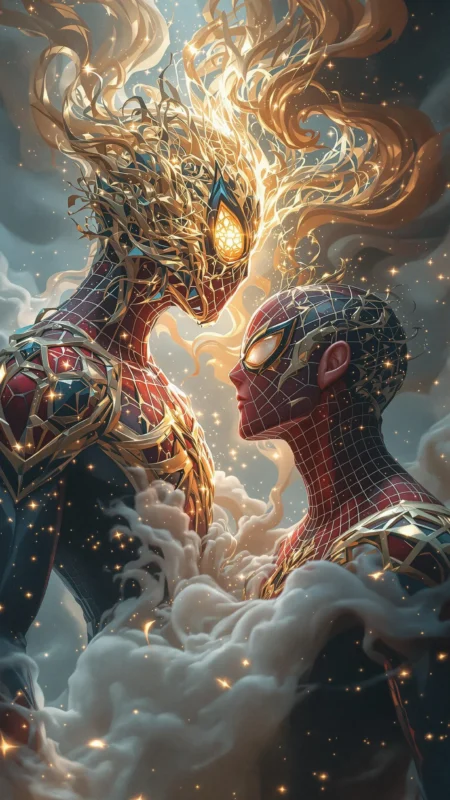
Spider-Man

Archetype Meaning & Symbolism

Responsible, witty, burdened, agile, resourceful, self-sacrificing, solitary, tenacious, improvisational, guilt-ridden

  • Anyone can win a fight when the odds are easy! It's when the going's tough, when there seems to be no chance, that's when it counts!

If Spider-Man is part of your personal mythology, you may...

Believe

  • You may believe that your unique gifts, whatever they may be, come with an implicit and non-negotiable obligation to use them for the benefit of others.

  • You may believe that true character is not revealed in how you win, but in how many times you are willing to get back up after being knocked down.

  • You may believe that anonymity in doing good is the highest virtue, as it purifies the act from the taint of ego.

Fear

  • You may hold a deep-seated fear that a single moment of selfishness or inattention on your part could lead to irreversible tragedy for someone else.

  • You may fear that the people you love will inevitably become targets or collateral damage simply by being associated with you and your struggles.

  • You may fear being fundamentally misunderstood by the very people you are trying to protect, of your best intentions being twisted and seen as a menace.

Strength

  • An almost preternatural resilience, an ability to absorb incredible amounts of physical, emotional, and psychological punishment and still find the strength to carry on.

  • Ingenious and improvisational resourcefulness, a unique talent for finding clever, unconventional solutions to seemingly intractable problems using whatever is at hand.

  • A profound and deeply ingrained sense of duty that serves as an unwavering moral compass, providing clarity and purpose even in the most chaotic of circumstances.

Weakness

  • A crippling and pervasive sense of guilt that can lead to self-punishing behaviors, an inability to forgive oneself for past mistakes, and chronic anxiety.

  • A powerful tendency toward self-isolation, pushing away potential sources of love and support out of a misguided desire to protect them from your own troubles.

  • A chronic inability to prioritize your own personal needs and well-being, often leading to burnout, exhaustion, and the neglect of your own life and happiness.

The Symbolism & Meaning of Spider-Man

The Spider-Man archetype could be seen as the modern parable for a secular age: power is not bestowed by divine right or noble lineage but can arrive by fluke, a radioactive accident in the laboratory of life. The core of its symbolism is not the power itself, but the subsequent, self-imposed ethical framework. It posits that ability incurs obligation. For one whose personal mythology resonates with this story, competence in any field—be it intellectual, emotional, or financial—may feel less like a gift to be enjoyed and more like a tool to be deployed in service of others. It’s the myth of the ordinary person who is granted an extraordinary burden and, through sheer force of will and a bruised conscience, decides to carry it. This transforms personal potential from a private asset into a communal trust.

The mask is perhaps the archetype’s most profound symbol. In a culture obsessed with recognition and personal branding, the Spider-Man mask represents the radical act of anonymous altruism. It suggests that the deed, not the doer, is what matters. For the individual, this could translate to a life philosophy where true satisfaction is found in actions untethered to ego or the anticipation of reward. The mask allows anyone to project themselves onto the hero, but it also allows the hero to shed the anxieties of the self. Behind it, Peter Parker’s insecurities may vanish, replaced by a focused, even witty, competence. It symbolizes a separation of role and self, a necessary fiction one might create to perform difficult tasks.

The web itself is a rich metaphor for interconnection and ingenuity. It is a fragile, temporary structure created from within, a testament to making your own tools to navigate a hostile world. For an individual, this could symbolize a belief in their own resourcefulness, the ability to create networks of safety and connection where none existed before. Each strand represents a choice, an action, a link to another person. To see the world as a web is to understand that a vibration in one corner can be felt across the whole structure. It is a visual reminder of cause and effect, and of the intricate, often precarious, balance one must maintain in their own life and community.


Spider-Man Relationships With Other Archetypes

The Skyscraper

The Skyscraper and The Spider-Man exist in a state of profound, if one-sided, intimacy. For the hero, these glass-and-steel canyons are not merely an environment but a sprawling, vertical accomplice—a silent partner in the kinetic ballet of his existence. Each window ledge is a potential foothold, each flagpole a pivot point in a life lived on the edge of gravity. Yet, the relationship is perhaps defined by its asymmetry. The Skyscraper offers up its cold façade as both ladder and launchpad, but it remains an unfeeling confessor, a witness that registers no awe and offers no comfort. It may be that The Spider-Man, in clinging to these towers, is embracing the very architecture of loneliness, finding a strange solace in a landscape that mirrors his own internal isolation while granting him the perspective to watch over a city he can never quite belong to.

The Secret

The Secret is not so much a possession of The Spider-Man as it is a parallel existence, a second, more fragile heartbeat thrumming just beneath the first. It is a burdensome cloak worn under summer clothes, a whisper that must be perpetually shushed in a crowded room. This relationship could be seen as a kind of phantom limb; the hero is constantly accommodating a presence that no one else can perceive, contorting his life to protect its formlessness. The Secret is a jealous guardian, demanding sacrifice and isolating him from the very intimacy he craves. It may be the ultimate source of his strength, the crucible that forges his character, but it is also a slow-acting poison, a promise that has metastasized into a prison of his own making, ensuring that the man can never be as whole as the mask.

Guilt

Guilt, for The Spider-Man, is more than an emotion; it is a form of gravity. It is the invisible tether that pulls the soaring hero back to the pavement, the moral anchor that prevents him from floating away into the abstraction of his own power. This relationship is not one of antagonism, but of a dark, foundational symbiosis. Guilt is the quiet partner in every heroic act, the resonant echo of a single, unforgivable failure that has been transmuted into a relentless engine of responsibility. It is, perhaps, a compass whose needle points perpetually toward a debt that can never be paid. In this, Guilt may be his most intimate and enduring collaborator, the ghost at the feast of his own myth, ensuring that every victory is tinged with the metallic taste of remembrance and that the great power he wields remains, forever, a burden.

Using Spider-Man in Every Day Life

Navigating Moral Ambiguity:

When faced with a choice that pits personal well-being against a communal good, the Spider-Man archetype may offer a framework. It suggests that the harder path, the one demanding sacrifice, is often the one that affirms character. It isn't about choosing perfectly, but about consciously choosing to shoulder the weight of a difficult decision because you are the one who happens to be there, the one who sees the problem.

Finding Strength in Isolation:

The metaphor of the mask can serve as a potent tool for processing feelings of being misunderstood or alone in one’s struggles. If your personal mythos includes this archetype, you may find solace not in being seen, but in the integrity of your unseen actions. The loneliness becomes less a void and more a silent testament to the private burdens you have the strength to carry, a quiet space where resolve is forged.

Embracing Everyday Heroism:

This archetype could ground an impulse for heroism in the mundane. It isn't always about stopping a world-ending threat; more often, it is about being the 'friendly neighborhood' presence. It's paying for a stranger's coffee, staying late to help a colleague, or speaking up for someone in a small way. The mythos reminds you that the fabric of a good society is woven with these tiny, often anonymous, threads of decency.

Spider-Man is Known For

Web-Slinging

An iconic form of movement that symbolizes freedom, ingenuity, and a unique connection to the urban environment. The web itself is a construct of his own intellect, a fragile, self-made tool to traverse a world not built for him.

The Secret Identity

The perpetual, nerve-wracking tightrope walk between the life of Peter Parker and the duties of Spider-Man. It is the core conflict

the tension between personal desire and public responsibility, a symbol for the divided self many people experience.

The Weight of Responsibility

The foundational ethos, “With great power comes great responsibility,” born from the trauma of personal failure. This principle is not a suggestion but an absolute, a moral gravity that dictates his every heroic act and informs his every personal sacrifice.

How Spider-Man Might Affect Your Personal Mythology

How Spider-Man Might Affect Your Mythos

Integrating the Spider-Man archetype into one's personal mythos could mean structuring your life story around a central, formative failure. This is the 'Uncle Ben moment': a point in the past defined by inaction, a mistake, or a selfish choice that resulted in painful consequences. This event, rather than being a source of permanent shame, is transmuted into the origin story of your moral compass. Your life's narrative may then become a quiet, lifelong act of atonement or a continuous effort to honor the lesson learned from that singular tragedy. Every subsequent choice is weighed against that initial failure, creating a life story not about achieving perfection, but about the relentless striving to be better than you were at your worst moment.

Furthermore, this archetype may shape your mythos into one of the 'reluctant hero.' Your life may not feel like a grand, predetermined quest, but rather a series of inconvenient, often unwelcome, calls to action. The defining moments of your narrative are not sought out but stumbled upon. You are the person who just happens to be there when the crisis, large or small, unfolds. The story of your life could be one of quiet endurance, punctuated by moments of intense, unwilling responsibility. The narrative arc isn't about seeking glory but about accepting the thankless job because someone has to do it, and for some reason, that someone is you.

How Spider-Man Might Affect Your Sense of Self

A self-perception informed by the Spider-Man archetype may be one of inherent duality. You might experience a distinct separation between your inner self, with all its anxieties, doubts, and vulnerabilities (Peter Parker), and the competent, resilient persona you present to the world (Spider-Man). This can lead to a profound, if sometimes isolating, sense of inner privacy. You might feel that your greatest strengths and most significant burdens are fundamentally unknowable to others. This isn't necessarily a deceit, but a protective measure, creating a psychological space where you can manage the pressures of your role without letting them consume your core identity.

This archetype could also instill a persistent feeling of inadequacy, a sense that you are never quite doing enough. Spider-Man is perpetually juggling his responsibilities and famously, when he succeeds as a hero, he often fails as a student, a nephew, or a friend. This may translate into a deeply ingrained pattern of self-criticism. You might hold yourself to impossibly high standards in every facet of your life, viewing any compromise or failure in one area as a profound moral lapse. The self becomes a project of constant, exhausting effort, driven by a deep-seated guilt and the belief that you should be able to handle everything, perfectly, all at once.

How Spider-Man Might Affect Your Beliefs About The World

Adopting a Spider-Man archetype into your personal mythology may color your view of the world as a 'friendly neighborhood' writ large. This is a worldview focused on the granular, the immediate, the human-scale problem. While you may be aware of vast, systemic injustices, your sense of agency and duty is directed toward the tangible effects on individuals. It’s a perspective that prioritizes direct intervention: helping the person who has fallen, rather than solely critiquing the faulty pavement. The world is not a political chessboard of abstract forces, but a concrete city block of real people who need help right now.

This perspective could also foster a belief in the power of individual, anonymous action within a chaotic system. The world may seem overwhelming, a concrete jungle of competing interests and moral decay, yet the archetype insists that one person's choices matter. It is a worldview that rejects cynicism, not out of naivete, but as a matter of principle. It posits that creating small pockets of justice and safety is a meaningful, even noble, pursuit. The world may be flawed, but one's responsibility is not to fix all of it, but to mend the small piece of the web that is within your reach.

How Spider-Man Might Affect Your Relationships

In the realm of relationships, this archetype might introduce a painful paradox. Love and friendship may be seen as both life's greatest reward and its most significant liability. The core drive to protect others can manifest as a self-imposed emotional distance. You may fear that true intimacy, being fully known, could inadvertently endanger the ones you love, making them targets or collateral damage in your struggles. This can lead to a pattern of keeping even the closest partners at a slight remove, hiding the full extent of your burdens not from a lack of trust, but from an excess of protective love.

Consequently, relationships might become unbalanced, casting you in the perpetual role of the capable, self-reliant guardian. You may find yourself instinctively shouldering the emotional and practical burdens of your friends, family, and partners, often without being asked. This sublimation of your own needs can prevent true reciprocity and vulnerability. The desire to maintain the 'secret identity' of your own struggles and anxieties makes it difficult for others to offer you support, creating a dynamic where you are the constant rescuer, rarely allowing yourself to be rescued.

How Spider-Man Might Affect Your Role in Life

If the Spider-Man archetype shapes your personal myth, your perceived role in life might be that of the invisible pillar. In your family, community, or workplace, you may be the one who quietly ensures things run smoothly, the person who anticipates problems and solves them without seeking credit. Your role is defined not by title or authority, but by your competence and your unwavering sense of obligation. You are the one who stays late to finish the project, who mediates the argument, who notices and fills the gap, not for praise, but simply because it needs to be done and you have the ability to do it.

This can also cast you in the role of the 'outsider within.' You are a crucial part of the group, yet feel fundamentally separate. This separation may stem from a secret burden, a unique skill set, or simply a perspective that keeps you at a slight remove, always observing. You could feel like a participant and a spectator simultaneously, your 'spidey-sense' always active, scanning your environment not just for social cues but for potential crises. This role can be lonely, as you are integrated into the life of the collective but never fully at rest within it.

Dream Interpretation of Spider-Man

In a positive context, to dream of being Spider-Man—swinging effortlessly between skyscrapers, apprehending a foe, or catching someone who is falling—could symbolize a burgeoning sense of mastery and empowerment in your waking life. It may reflect a newfound confidence in your ability to navigate complex situations ('the city') with grace and agility. The dream could be your subconscious acknowledging that you possess the resourcefulness and resilience to handle your responsibilities. It is an affirmation of your capacity to create your own path and to act decisively for the good of others, even if you feel you are doing so alone.

In a negative context, a dream featuring the failure of the Spider-Man archetype can be a potent symbol of anxiety. Dreaming of your web-shooters jamming, of webs dissolving mid-swing, or of falling helplessly through the air might represent a fear of your resources and support systems failing you when you need them most. A dream where you are unmasked, or where you fail to save someone, could point to a deep-seated terror of your vulnerabilities being exposed or a crushing guilt over a perceived failure. These nightmares may be your psyche's way of signaling that the weight of your self-imposed responsibilities has become unbearable.

How Spider-Man Archetype Might Affect Your Needs

How Spider-Man Might Affect Your Physiological Needs

When the Spider-Man archetype is integrated into a personal mythos, one's own physiological needs—the base of Maslow's pyramid—may be relegated to the status of a persistent inconvenience. Sleep, proper nutrition, and rest can become luxuries to be sacrificed at the altar of duty. The narrative of your life might be one of running on fumes, of pushing your body to its absolute limits, fueled by caffeine and sheer willpower. There could be a quiet pride in this neglect, a sense that your mission is too important to be derailed by the mundane demands of your own physical shell.

The body itself may be viewed not as something to be nurtured for its own sake, but as a tool, a piece of equipment that must be maintained for optimal performance in your duties. This could lead to a hyper-awareness of its functions and limitations. Every ache, every wave of exhaustion, every pang of hunger is a data point, a reminder of the physical cost of your choices. Your body may become a living ledger of your sacrifices, its wear and tear a testament to the burdens you have chosen to carry.

How Spider-Man Might Affect Your Ideas of Belonging

The need for love and belonging, when filtered through the Spider-Man archetype, becomes a source of profound conflict. The dual identity, the secret life of struggle, erects a wall that complicates intimacy. You might operate under the belief that to be fully known is to be a liability, that sharing your deepest burdens would endanger or unfairly obligate the people you love. This can lead to a painful, self-imposed isolation where love is a treasure to be guarded from a distance, rather than a home to be lived in.

Belonging may instead be sought in a more abstract, impersonal connection to a place or a cause. You might feel the strongest sense of place when you are serving your community or your city, finding your identity in the role of the anonymous guardian. The feeling of belonging comes not from the intimate embrace of a loved one, but from the distant, abstract approval of the collective—the metaphorical cheers for the mask, not the face beneath it. This provides a sense of purpose, but it can leave the individual feeling profoundly unseen.

How Spider-Man Might Affect Your Feelings of Safety

For someone whose personal myth contains the Spider-Man archetype, the need for personal safety may be systematically overridden. The defining characteristic of the hero is to willingly move toward danger for the sake of others. This could translate into a life where personal risk—be it emotional, financial, or even physical—is normalized or even romanticized. You may develop a habit of placing yourself in vulnerable positions to shield others, viewing your own security as an expendable resource in the service of a greater good.

Conversely, this internal narrative can manifest as a hyper-vigilance projected outward onto the safety of others. Your own need for security is transformed into an obsessive drive to protect your loved ones, your home, or your community. This may create a constant, low-grade hum of anxiety, a 'spidey-sense' that perceives potential threats everywhere. Your environment ceases to be a place of rest and becomes a landscape of potential dangers to be anticipated and neutralized, making true peace and relaxation feel like a dereliction of duty.

How Spider-Man Might Affect Your Views of Esteem

Esteem, within this mythic framework, may become detached from external validation and instead tethered to an internal, often punishing, moral scorecard. Self-worth is not measured by promotions, praise, or public acclaim, but by a simple, private question: 'Did I do everything I could?' Esteem is earned through the integrity of your effort and your adherence to the code of responsibility. It is a quiet, internal confidence that comes from knowing you chose the harder, more honorable path, regardless of the outcome or whether anyone noticed.

However, this same mechanism can be a crucible for chronic low self-esteem. The archetype is defined by a foundational, unforgivable failure—the death of Uncle Ben—which sets a baseline of guilt. Every new challenge carries the weight of that original sin. Because the standard is perfection and the responsibility is infinite, any failure can feel catastrophic, reinforcing a core belief of not being good enough. Self-worth is not a stable state but a constant, exhausting struggle to outrun the ghost of your past mistakes.

Shadow of Spider-Man

When the Spider-Man archetype falls into shadow, the profound sense of responsibility metastasizes into a sanctimonious savior complex. The guiding principle twists from 'I must help' to 'Only I can help.' This dark reflection of the hero becomes a vigilante of the soul, one who oversteps boundaries, makes decisions for others, and denies them their own agency, all under the justification that he knows best. The witty, charming banter of the hero becomes a condescending shield for arrogance. The web, once a tool of rescue and connection, becomes a net of control, ensnaring others in his own moral judgments. This shadow is not a hero serving the people, but a man playing God, convinced his burden grants him a divine right to rule over the lives of those he deems weaker.

A complete absence or inversion of this archetype's energy manifests as a profound and corrosive cynicism. This is the shadow of abdication. It is the Peter Parker who, after the trauma of his failure, learns the opposite lesson: 'Never get involved.' This shadow self is paralyzed by the fear of making things worse, convinced that altruism is a fool's errand and that the world is an irredeemable mess of suffering. Personal survival becomes the only rational ethos. This figure lives in the memory of the 'Uncle Ben moment' not as a call to action, but as a permanent, crippling wound that warns against any form of risk, connection, or responsibility. It is the ghost of a hero who chose to walk away, forever.

Pros & Cons of Spider-Man in Your Mythology

Pros

  • You are guided by a strong moral foundation and a clear sense of purpose that provides stability and direction, even when life is chaotic and confusing.

  • You develop remarkable adaptability and resilience, becoming capable of navigating immense stress and finding creative solutions under extreme pressure.

  • You naturally inspire a deep sense of loyalty and trust in others, who are drawn to your unwavering and selfless commitment to doing what is right.

Cons

  • You are highly susceptible to chronic stress, deep-seated anxiety, and eventual burnout from the immense weight of the burdens you choose to shoulder.

  • You may find it difficult to build and maintain truly intimate relationships, as your tendency toward secrecy and fear of vulnerability creates emotional barriers.

  • Your own personal life, from career ambitions to simple happiness, is consistently and often willingly sacrificed for the sake of your perceived duties to others.