 Believe
 Fear
Fear Strength
 Weakness
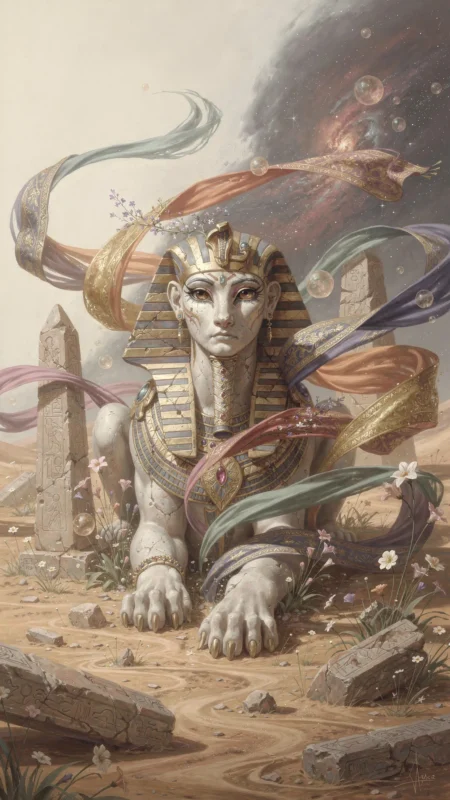
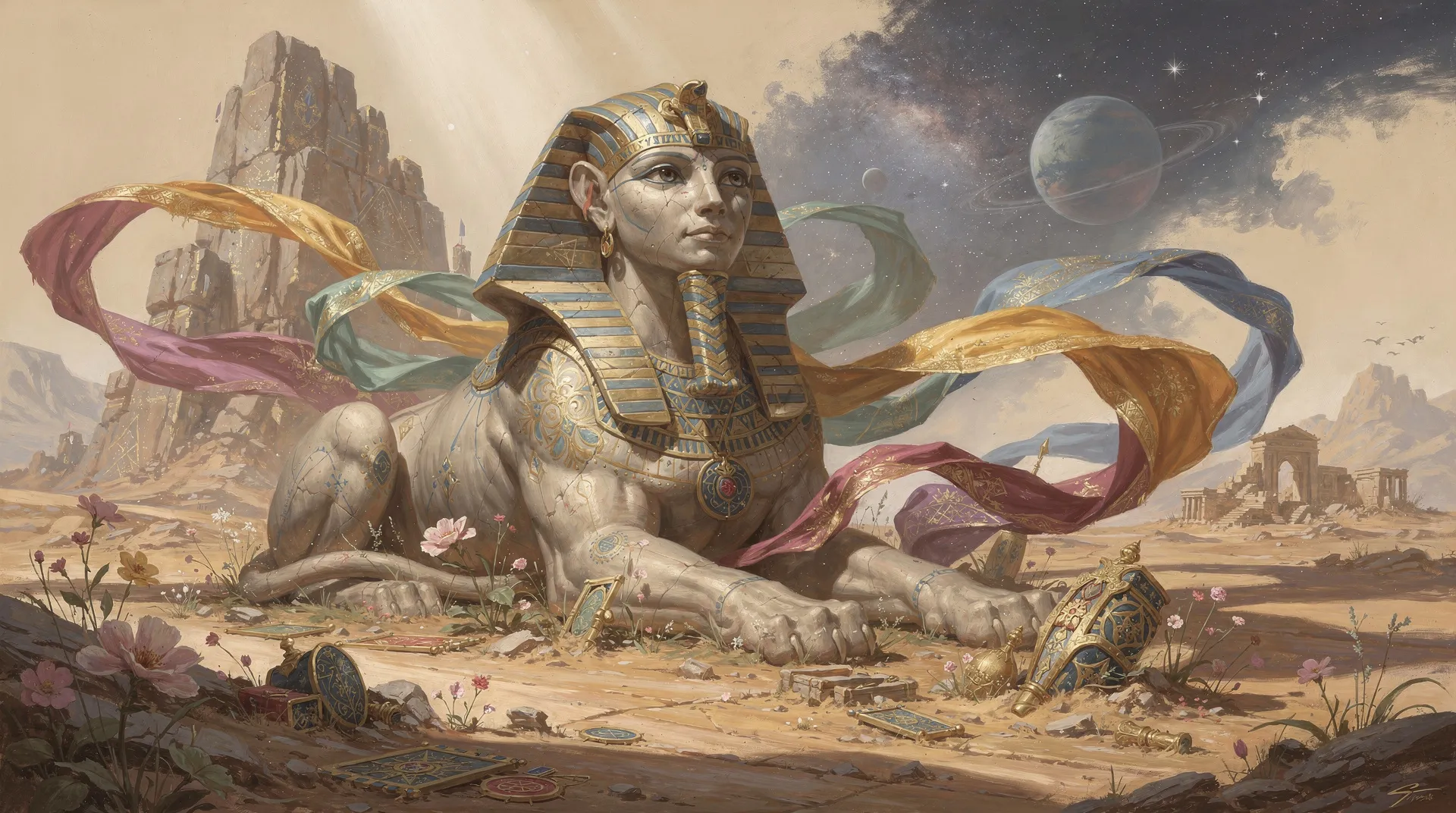
To find the Sphinx in your personal mythology is to encounter the sentinel at the crossroads of your own consciousness. She is not a monster to be slain but a question to be lived. She represents the liminal spaces: the pause between thought and action, the silence between question and answer, the twilight between the known self and the undiscovered self. The Sphinx is the eternal gatekeeper, and the gate is always an initiation into a deeper layer of your own story. Her presence suggests that the most important journeys are not geographical, but psychological, and that passage is granted not through brute force, but through the courage of self-inquiry.
Her hybrid form speaks to a fundamental integration. You may feel the pull of your own animal nature: the fierce, instinctual power of the lion, coiled and ready. Yet this power is guided by the serene, watchful gaze of the human mind. The Sphinx archetype suggests a life lived in balance between primal energy and elevated consciousness. She is the embodiment of stillness as a source of power, a reminder that true strength doesn't always roar; sometimes it waits, watches, and knows. To welcome her is to accept the paradoxical nature of your own being: you are both beast and sage, mystery and solution.
Ultimately, the Sphinx symbolizes the profound idea that the universe's greatest riddle is the self. When Oedipus solved her puzzle, the answer was 'Man'. He was looking at her, but the answer was himself. In your own mythos, the Sphinx may appear whenever you are projecting a problem outward, blaming circumstance or others. She sits patiently, her stony gaze directing you back inward. She is the quiet, persistent whisper that the obstacle, the monster, the gatekeeper, and the key are all, and have always been, you.