 Believe
 Fear
Fear Strength
 Weakness
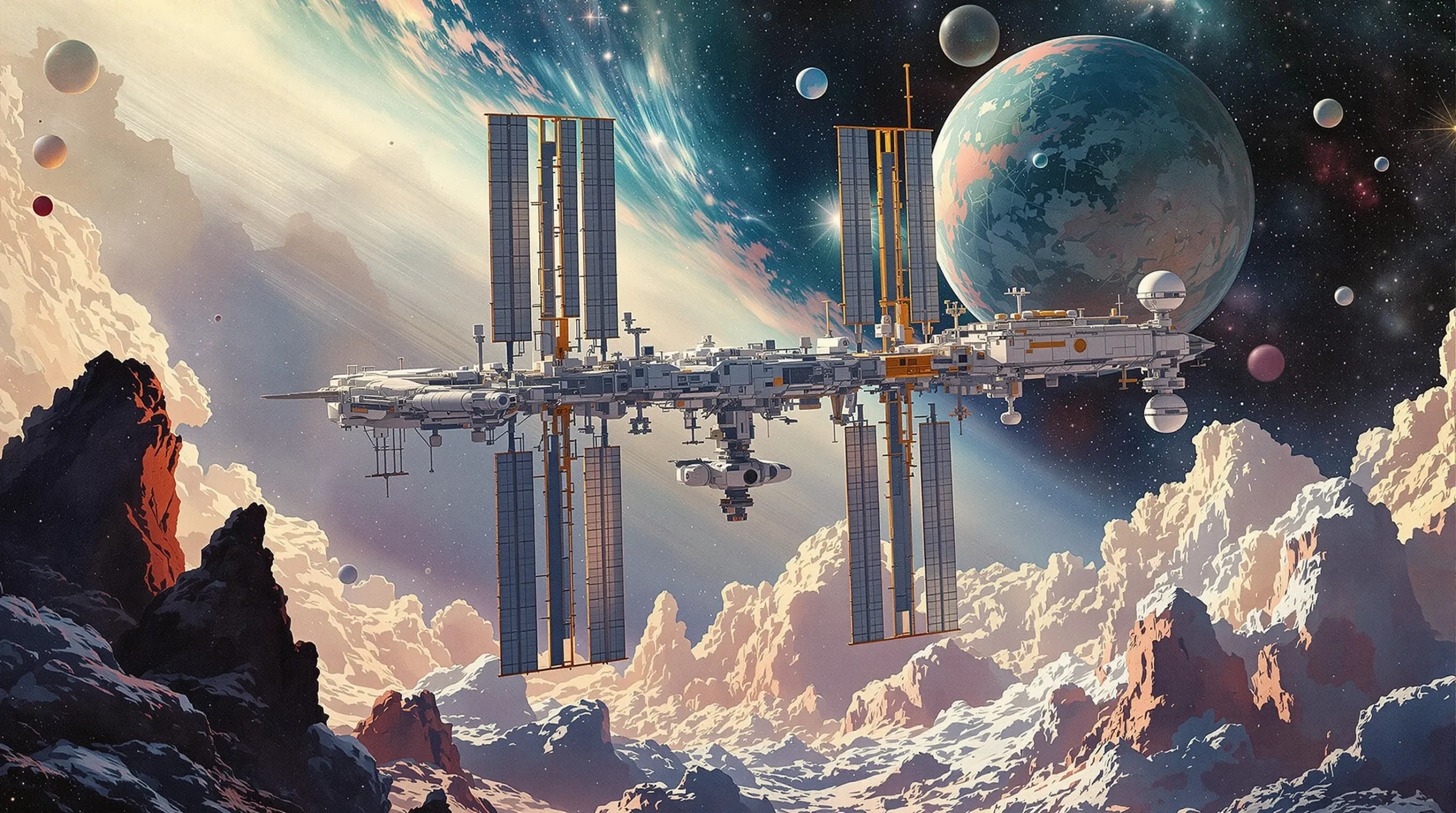
In the personal mythos, the Space Station may symbolize the pinnacle of human intellect and collaboration, a place constructed piece by piece in the void. It is the conscious mind building a habitat for itself outside the chaotic pull of the terrestrial, emotional world. It represents a willed existence, one that requires constant maintenance, careful planning, and a deep understanding of systems. To carry this archetype is to feel, perhaps, that your own consciousness or your life's project is a similar feat of engineering: a carefully assembled structure of beliefs, routines, and relationships designed to keep you alive and purposeful in the vast emptiness of the unknown. It is the part of you that observes, analyzes, and connects disparate points of data from a privileged, if lonely, vantage point.
Furthermore, the Space Station is a potent symbol of liminality. It is neither Earth nor the heavens, but a way station between them. It exists in a perpetual state of falling, a continuous, controlled orbit that is a triumph of physics over gravity. For an individual, this may represent a life lived in transition, or a psyche comfortable in the spaces between firm definitions: between career and calling, between one identity and the next, between the internal world of thought and the external world of action. This archetype suggests a personality that thrives not on arrival, but in the journey itself, finding a strange stability in constant motion and a unique perspective from the threshold.
Finally, this archetype speaks to a profound paradox of connection and isolation. The inhabitants are tethered to Earth by a constant stream of data, communication, and vital supplies; they are never truly alone. Yet, they are physically separated by an impassable gulf. A person whose mythos includes the Space Station might experience this in their own life: feeling deeply connected to humanity through digital means or intellectual pursuits, while simultaneously feeling a sense of profound separateness or alienation in their day-to-day existence. It is the scholar in the library, the remote worker in their home office, the thinker whose ideas orbit the globe while their body remains still: a node in a network, yet an island unto themselves.