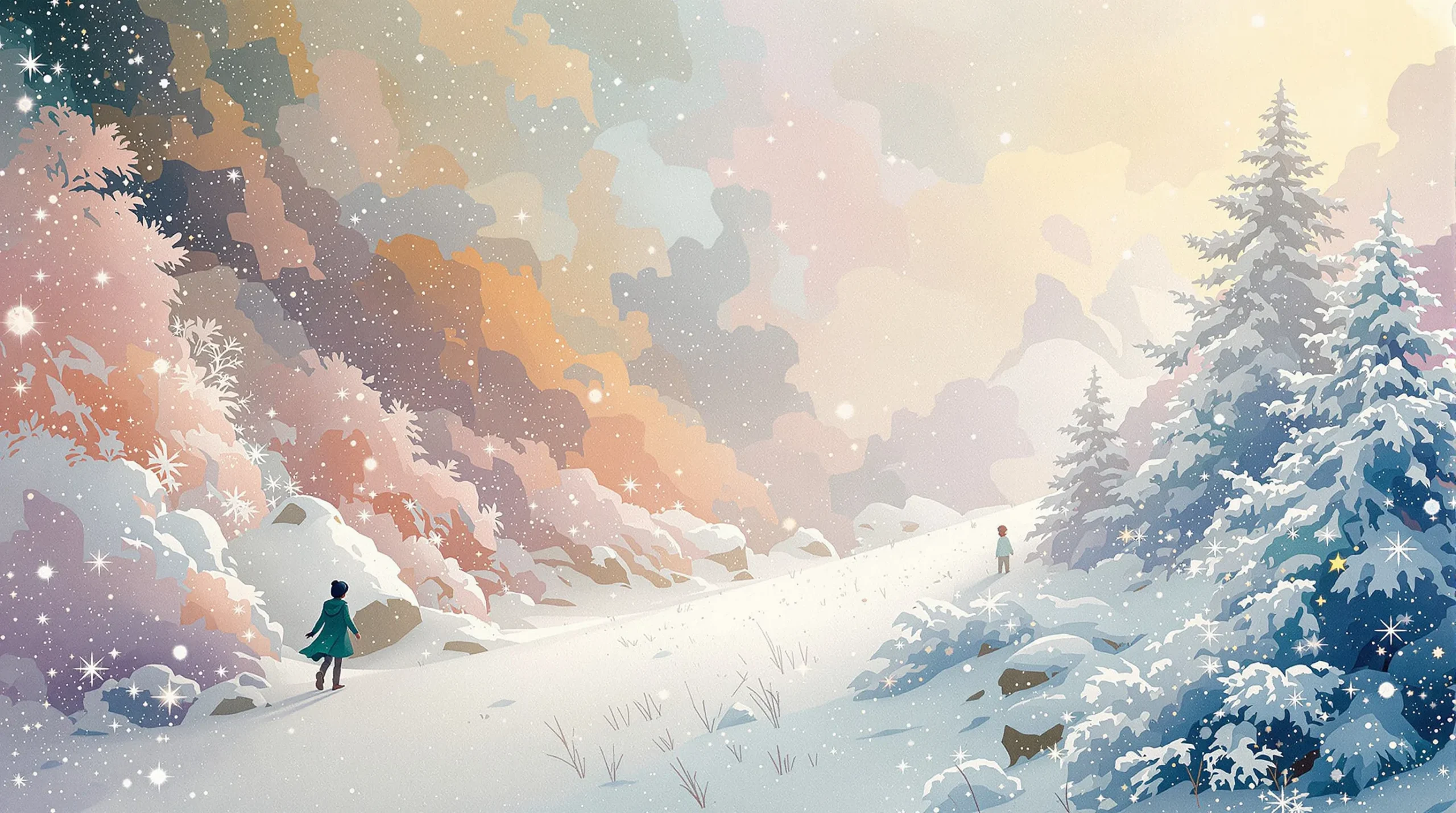


Snow Day

Archetype Meaning & Symbolism

Spontaneous, quiet, suspended, liberating, still, unexpected, magical, cozy, introspective, playful

  • The schedule is a suggestion; the cosmos just offered a better one.

If Snow Day is part of your personal mythology, you may...

Believe

  • That the best moments in life are often unplannable interruptions.

    That rest is not laziness but a sacred and necessary act of restoration.

    That there is a benevolent, chaotic force in the universe that sometimes cancels your plans for your own good.

Fear

  • Losing control over one's schedule and falling behind on responsibilities.

    Isolation and being cut off from help or essential resources.

    The silence and unstructured time, which might force confrontation with thoughts or feelings one usually keeps at bay with busyness.

Strength

  • The ability to find joy and opportunity in unexpected disruption.

    A deep capacity for presence, able to fully inhabit the moment without anxiety about the future.

    Resilience, knowing that halting progress is not the end of the journey but a different part of it.

Weakness

  • A tendency towards procrastination or avoidance, using the desire for a 'Snow Day' as an excuse to escape difficult tasks.

    Difficulty re-engaging with routine and structure after a period of freedom.

    A potential over-reliance on external events to grant permission for rest, rather than claiming it proactively.

The Symbolism & Meaning of Snow Day

In the personal mythos, a Snow Day may symbolize a moment of grace, an intervention from a force larger than oneself that disrupts the tyranny of the urgent. It is a reminder that the world is not entirely a human construct of schedules and obligations. It represents the potential for magic to intrude upon the mundane, for the natural world to assert its own, more languid rhythm. When this archetype is active in your story, you might find that your life's most pivotal moments are not the ones you meticulously planned, but the ones that arrived, unbidden, when all plans were cancelled. It suggests a mythology where surrender is as powerful a tool as striving.

The archetype also speaks to the concept of the blank page. The landscape, once familiar and cluttered with the details of daily life: paths, roads, property lines: is suddenly rendered smooth, white, and undifferentiated. This could represent a psychological clearing, an opportunity to see one’s life, relationships, or creative work without the usual landmarks of habit and history. It is a chance to begin again, even if only for a day. For someone whose personal mythology is cluttered with past failures or rigid identities, the Snow Day offers a visual and spiritual metaphor for wiping the slate clean and imagining a new path forward, one that will be tracked first by your own footsteps.

Finally, the Snow Day is a symbol of forced introversion and the return to the hearth. It physically curtails our outward journeys, compelling us to explore the landscapes within. The world shrinks to the size of a warm room, a good book, the faces of those we are with. This might signify a period in one’s life narrative where external ambition must be paused in favor of internal consolidation. It is an archetype that champions the profound power of stillness, suggesting that sometimes the greatest adventures are the ones that take place when we are forced to go nowhere at all.


Snow Day Relationships With Other Archetypes

The Clock:

The Snow Day is the natural adversary of The Clock. Where The Clock insists on segmentation, efficiency, and the relentless forward march of minutes, the Snow Day simply covers its face with a soft, white glove. It does not argue with The Clock; it renders it irrelevant. For a person whose life is ruled by deadlines and schedules, the Snow Day’s arrival could feel like a quiet rebellion, a reminder that time is not just a resource to be managed but a medium to be inhabited. It reveals the fragility of our constructed time, showing that one good storm can dismantle a week's worth of plans, and perhaps for the better.

The Road:

The Road archetype represents the journey, the path forward, progress, and connection between places. The Snow Day obscures The Road entirely. It makes the way impassable, not with a barrier, but with a beautiful, soft obstruction. This relationship suggests that sometimes, the most important part of a journey is the unscheduled stop. It may force the traveler to take shelter, to get to know the inhabitants of the inn, to study the map not for the next step, but for the shape of the whole terrain. The Snow Day’s power over The Road whispers that not all movement is progress, and not all stillness is stagnation.

The Hearth:

The Snow Day and The Hearth are intimate allies. The cold and quiet of the former makes the warmth and crackle of the latter all the more vital and sacred. The Snow Day drives us inward, toward the center of the home, transforming The Hearth from a simple fireplace into the symbolic heart of security, connection, and storytelling. It is in the circle of light cast by The Hearth, on a day gifted by the snow, that family histories are retold and new myths are born. The Snow Day creates the conditions for The Hearth to perform its most essential magic: turning a house into a home.

Using Snow Day in Every Day Life

Navigating Creative Stagnation:

When a project becomes a field of packed ice, a deliberate, self-declared Snow Day may be the only tool that works. It is not procrastination but a strategic retreat. By canceling the internal meeting, silencing the demanding inner critic, and stepping away from the desk, you create a vacuum. Into this quiet space, an entirely different kind of thought, one unburdened by objective, can drift in like a lone, perfect snowflake.

Addressing Systemic Burnout:

When the engine of ambition runs too hot for too long, the Snow Day archetype can be invoked as a necessary shutdown. This is not a scheduled vacation, which often comes with its own set of expectations and itineraries. Instead, it is a sudden, compassionate severing of obligation. It is the permission to abandon the to-do list, to lie on the sofa and watch the sky change, to recognize that your own sustainability is the most urgent project you have.

Resetting a Relationship Dynamic:

In the midst of a recurring, circular argument, one might call a Snow Day. This is a ceasefire. It is an agreement to put down the well-worn weapons of debate and simply inhabit the same space. The goal is not to solve the problem but to remember the person. Making soup together, watching an old movie, sharing a blanket: these small, non-verbal acts rebuild the unspoken foundation that the conflict has eroded.

Snow Day is Known For

The Suspension of Routine

It is known for the abrupt, non-negotiable halt it brings to the machinery of daily life. Clocks, calendars, and commutes are rendered irrelevant, replaced by a more elemental sense of time governed by daylight and inclination.

The Great Stillness:

The world is muffled under a fresh blanket, absorbing sound and urgency. This quiet is not empty but full: a profound, insulating peace that allows for the hearing of one’s own thoughts, perhaps for the first time in a long while.

An Invitation to Play:

Beyond the silence and stillness, it is an unequivocal call to non-productive joy. It is the universe granting permission for pursuits whose only purpose is delight: the crunch of boots in fresh powder, the brief, perfect architecture of a snowman, the simple warmth of hot chocolate in cold hands.

How Snow Day Might Affect Your Personal Mythology

How Snow Day Might Affect Your Mythos

When the Snow Day is a recurring event in your personal mythos, your life story may be punctuated by chapters of unexpected grace rather than a linear progression of effort and reward. You might interpret life’s disruptions not as setbacks but as narrative detours orchestrated by a benevolent, unseen author. Your mythos eschews the bootstrap narrative in favor of a story where profound change comes not from pushing harder, but from being forced to a complete stop. You may find that your most significant epiphanies, the turning points that redefine your quest, occur in these liminal, unscheduled spaces where the world outside falls silent and the soul is finally given a chance to speak.

This archetype also shapes a mythos of cyclical, rather than constant, growth. You understand that there are seasons for outward action and seasons for inward consolidation. Your life story is not a straight line ascending toward a goal, but a spiral that circles back to themes of rest, contemplation, and play. The Snow Day chapters are where the hero of your story doesn't slay a dragon but instead learns to watch the snow fall, and in doing so, gathers a quieter, more resilient kind of strength. It is a mythology that values being as much as doing, and recognizes the fallow periods as essential for any future harvest.

How Snow Day Might Affect Your Sense of Self

Integrating the Snow Day archetype may foster a view of the self that is conditional and fluid, not monolithic. There is the 'everyday self,' defined by roles, responsibilities, and productivity, and then there is the 'Snow Day self,' who is permitted to be whimsical, slow, and non-instrumental. Recognizing this duality can be a profound source of self-compassion. It allows you to grant yourself permission to exist outside the confines of your own expectations, to be a person who contains multitudes: the efficient worker and the child staring in wonder at an icicle. This understanding can relieve the pressure to be 'on' at all times.

Furthermore, this archetype might help you locate your sense of self-worth outside the realm of external achievement. On a Snow Day, your value is not measured by emails sent, meetings attended, or progress made. It is inherent. It is found in your simple presence, your capacity for quiet joy, your ability to comfort and be comforted. This could lead to a more resilient identity, one that is not shattered by professional setbacks or the inability to perform. The self is not what the self does; the self simply is, and the Snow Day is a recurring lesson in that fundamental truth.

How Snow Day Might Affect Your Beliefs About The World

A world-view informed by the Snow Day archetype is one that holds space for mystery and serendipity. It resists a purely mechanistic understanding of the universe. Instead, you might see the world as a place where grace can and does intervene, where the intricate plans of humanity are always subject to the beautiful, chaotic whims of nature. This fosters a sense of humility and wonder. You may be less inclined to believe in absolute control and more likely to trust in the process, understanding that interruptions and delays may have a hidden, beneficial purpose.

This perspective could also cultivate a deeper appreciation for the interconnectedness of systems and their inherent fragility. The Snow Day reveals how quickly our complex world of commerce and transportation can be brought to a standstill by a simple change in weather. This doesn't necessarily lead to cynicism, but rather to a more profound respect for the natural world and a more realistic understanding of humanity's place within it. It’s a world-view that values resilience, adaptation, and the ability to find peace within unexpected circumstances over the relentless pursuit of control.

How Snow Day Might Affect Your Relationships

In relationships, the Snow Day archetype may manifest as a capacity for 'unproductive presence.' You may be someone who understands that the strength of a bond is not always built in grand gestures or the solving of problems, but in the quiet, shared moments in between. You can create a space where you and another person can simply be, without agenda. This might look like sitting in comfortable silence, watching a storm, or sharing a simple meal. These moments, free from the pressure of performance or progress, can be profoundly intimate and restorative for any relationship.

However, this archetype might also create an expectation that intimacy should always feel this effortless and magical. The return to the everyday world of conflicting schedules, chores, and responsibilities can feel jarring. You may struggle when relationships require the hard, unglamorous work of negotiation and compromise, longing for the simplicity of the snowed-in cabin. The challenge is to bring the spirit of the Snow Day: the patience, the presence, the quiet appreciation: into the more mundane, sunlit days of the relationship, integrating the magic into the routine.

How Snow Day Might Affect Your Role in Life

The Snow Day archetype can profoundly affect your perception of your roles in life by temporarily dissolving them. When the snow falls, you are not a manager, a parent, a student, or a provider first; you are simply a person, experiencing a moment of collective pause. This could lead to a more playful and less rigid identification with your duties. You might understand that your job title or your place in the family hierarchy is a costume you wear, not the entirety of your being. This separation allows you to perform your roles with more lightness and less ego, knowing that the 'real you' is the one watching the snow from the window.

This can also foster a more egalitarian view of society. The Snow Day is a great equalizer. It humbles the powerful and halts the ambitious. The CEO's private jet is grounded just as the delivery truck is stuck. This experience may instill a deeper sense of shared humanity. Your role in the world might feel less like a rung on a ladder and more like a unique spot in a vast, interconnected ecosystem, one where everyone is ultimately subject to the same elemental forces and deserving of the same moments of grace and rest.

Dream Interpretation of Snow Day

To dream of a beautiful, peaceful Snow Day, especially when you feel content and warm within the dream, may be a message from the subconscious about a deep-seated need for rest and retreat. It could signify that your psyche is calling for a pause from the relentless pace of your waking life. This dream is often an invitation to grant yourself permission to be unproductive, to turn inward, and to reconnect with a simpler, more playful aspect of your nature. It might suggest that a period of quiet contemplation is not only desired but necessary for your well-being and that the solution to a current problem lies not in more effort, but in stillness.

Conversely, dreaming of a Snow Day in a negative context, such as being trapped, freezing, or desperately trying to get somewhere but being thwarted by the snow, may symbolize feelings of isolation, loneliness, or emotional coldness. The impassable roads could represent perceived blocks to your goals or a feeling of being cut off from your community and support systems. This type of dream might highlight a fear of stagnation or a sense that you are being frozen out of your own life's progress. It could be a manifestation of anxiety about being left behind or an inability to escape a situation that feels emotionally sterile and isolating.

How Snow Day Archetype Might Affect Your Needs

How Snow Day Might Affect Your Physiological Needs

From the perspective of personal mythology, the Snow Day speaks directly to the most fundamental physiological needs, re-sacralizing them. It is an archetype that demands a return to the body's simple truths. The cold outside creates a visceral, urgent need for warmth, driving you toward the fire or under a blanket. The suspension of normal activity creates a space for deep, restorative sleep, not as a scheduled necessity, but as a luxurious indulgence. It is a time for caloric, comforting foods: stews, baked goods, hot drinks. These are not just meals; they are rituals of nourishment and security.

This archetype teaches that tending to these basic needs is not a lowly task to be rushed through but a worthy and central part of the human story. In your mythos, the act of making a perfect cup of tea or finding the warmest spot in the house becomes a heroic act in its own small way. It is a rebellion against a culture that often prioritizes intellectual and professional pursuits over the wisdom of the body. The Snow Day insists, gently but firmly, that being warm, fed, and rested is the essential foundation upon which all other parts of your life story must be built.

How Snow Day Might Affect Your Ideas of Belonging

The Snow Day can be a powerful catalyst for fulfilling the need for belonging and love. It often erases individual agendas and creates a shared, immediate context for a family or a household. You are all 'in this together.' The shared experience of watching the snow pile up, of deciding what to eat from the pantry, of playing a game together, forges a unique and temporary tribal identity. It fosters a sense of intimacy born not of grand emotional conversations, but of simple, shared presence. Love is expressed through the act of making someone a warm drink or ensuring they have the best seat by the fire.

This archetype can also extend the sense of belonging to a wider community. There's a subtle camaraderie with neighbors who are also snowed in, a shared nod across the street, an offer to help dig out a car. It creates a temporary village where none existed before. For a person whose mythos involves a search for community, the Snow Day may represent an ideal state of connection: organic, circumstantial, and based on a shared, simple reality. It is a reminder that belonging is not always about finding your people, but about recognizing the people who are right there with you, weathered by the same storm.

How Snow Day Might Affect Your Feelings of Safety

The Snow Day archetype presents a duality regarding the need for safety. On one hand, it can create an intense feeling of security, a 'burrowing' instinct. With the outside world rendered temporarily hazardous and impassable, the home transforms into a sanctuary, a fortress against the elements. The act of securing your space: bringing in firewood, ensuring you have enough food, locking the door against the wind: can be a powerful ritual that reinforces feelings of safety and self-sufficiency. You are safe because you are cut off, protected by the very thing that makes the world outside dangerous.

On the other hand, this same situation can trigger deep-seated anxieties about safety. The Snow Day highlights the fragility of the systems we depend on for survival. The power could go out, the heat could fail, the roads could be blocked in an emergency. For someone whose mythos includes themes of abandonment or helplessness, the Snow Day might not feel like a cozy gift but a threatening isolation. It can become a test of resilience, forcing a confrontation with one's own preparedness and the fear that when the structures of society fail, one might be left truly and dangerously alone.

How Snow Day Might Affect Your Views of Esteem

Esteem needs are radically reoriented by the Snow Day archetype. In the everyday world, esteem is often sourced externally: from professional success, social recognition, or the successful management of a busy life. The Snow Day renders these sources of validation temporarily void. Your title, your salary, your packed schedule: none of these can make the snow melt faster. Instead, esteem must be sourced from within, and from far simpler competencies.

One might derive a profound sense of self-worth from successfully building a fire, from baking bread, from being a calm and comforting presence for an anxious child, or from simply having the wisdom to embrace stillness without guilt. This is a shift from esteem based on 'doing' to esteem based on 'being' and 'coping.' It teaches that your worth is not contingent on your productivity. For a person whose mythos is plagued by a relentless inner critic focused on achievement, the Snow Day can be a powerful therapeutic force, offering a new and more compassionate way to measure one's own value.

Shadow of Snow Day

The shadow of the Snow Day archetype emerges when the temporary, magical pause becomes a permanent, frozen state. The cozy cabin becomes a prison of self-imposed isolation. This isn't a day of rest; it's a life of withdrawal. The individual might actively cultivate being 'snowed in' by their own anxieties, fears, or apathy, refusing to engage with the world even when the metaphorical roads are clear. The silence is no longer peaceful but deafening, the stillness no longer restorative but stagnant. The magic of the unexpected day off curdles into a chronic avoidance of life's responsibilities and challenges, a perpetual waiting for a storm that never clears.

Another shadow aspect is the romanticization of crisis and the inability to function without it. A person deep in this shadow may feel that only an external event, a 'Snow Day,' can justify rest or grant permission to break from a grueling routine they've created. They become addicted to the drama of disruption because it's the only time they feel alive or free. Instead of building a sustainable, balanced life, they live in a state of quiet desperation, fantasizing about the next event that will force them to a halt, because they feel incapable of choosing to stop on their own.

Pros & Cons of Snow Day in Your Mythology

Pros

  • Promotes spontaneity and breaks the monotony of routine, fostering creativity.

    Offers a profound and necessary opportunity for rest, introspection, and reconnection with oneself and loved ones.

    Instills a sense of wonder and a belief that the world holds benevolent surprises.

Cons

  • Can foster an aversion to responsibility and routine, making it difficult to maintain momentum on long-term goals.

    May lead to feelings of isolation or anxiety if the individual feels trapped rather than liberated.

    The temporary nature of the 'high' can make the return to normalcy feel even more jarring and oppressive.