 Believe
 Fear
Fear Strength
 Weakness
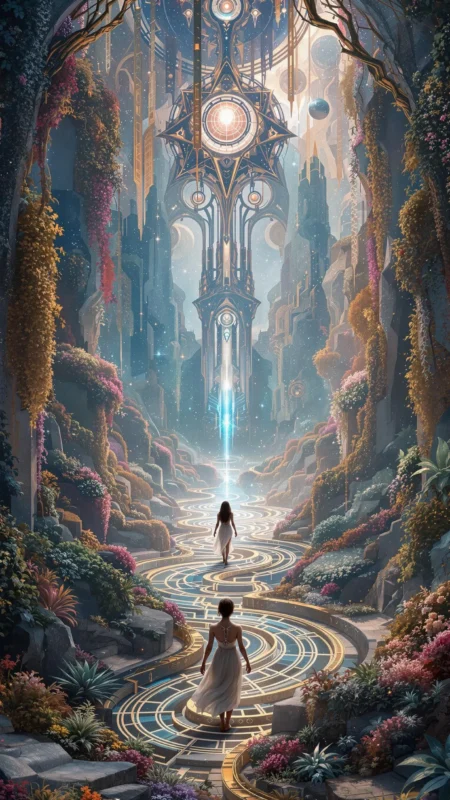
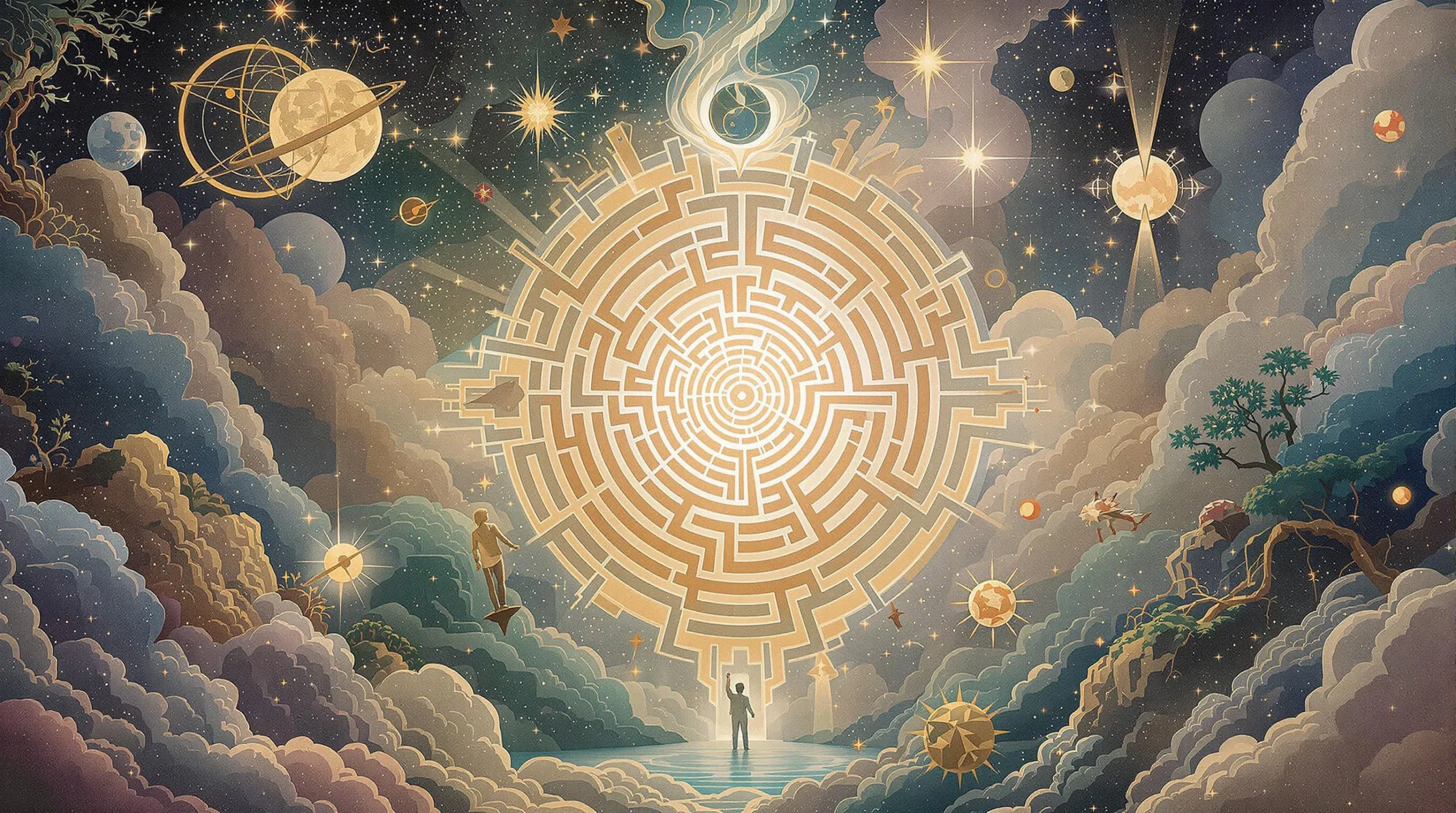
In modern mythology, the Shifting Labyrinth is the very architecture of our hyper-complex world. It is the tangled code of the internet, the labyrinthine bureaucracy of institutions, the fluctuating pathways of a global economy. To have this archetype in your personal story is to feel an odd sense of home in this complexity. It suggests a life that is less a linear narrative and more a series of recursive loops and sudden, paradigm-shifting revelations. It is not about being lost, but about possessing a unique form of literacy: the ability to read the language of systems, to find the hidden doors in impossible situations, and to understand that every dead end is simply a prompt to ask a better question.
The Labyrinth is, most profoundly, a map of one’s own psyche. Its corridors are your neural pathways, its chambers are your core memories, its shifting walls are your evolving beliefs. When this structure is central to your mythos, you may see your personal growth not as climbing a ladder but as exploring this inner landscape. Old traumas may be rooms you revisit, but with each visit, you notice a new detail, a new window, a subtle shift in the light. Your identity is not the Minotaur at the center, a beast to be slain, but the architect and the explorer, simultaneously building and discovering the very structure of your being.
Ultimately, the Shifting Labyrinth symbolizes the reconciliation of order and chaos. It posits that meaning is not a static truth to be discovered, but an emergent property of a dynamic system. Truth is not a point on a map but the dance of navigation itself. For the individual whose mythos contains the Labyrinth, there might be a deep, intuitive understanding that life’s most profound patterns are only visible through movement. They may find peace not in stability, but in the elegant, ever-changing geometry of their own journey, trusting that the path will always re-form itself beneath their feet.