Believe
 Fear
Fear Strength
 Weakness
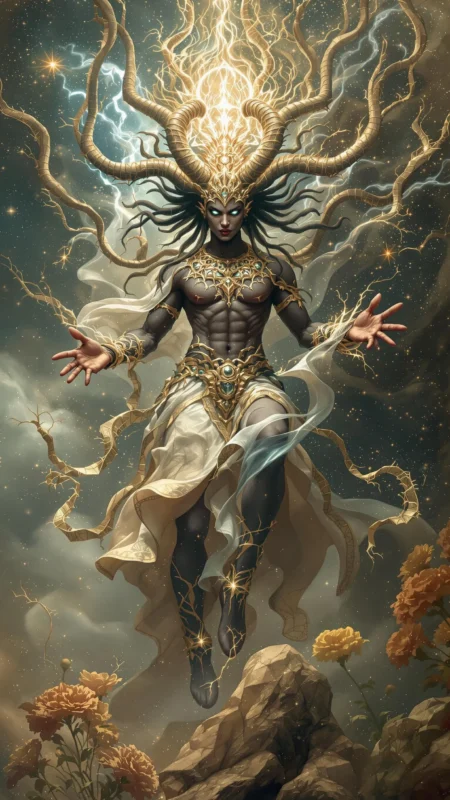
To carry the Shango archetype in one's personal mythology is to understand power as a kinetic force, a dance of fire and rhythm. This is not the static, hoarded power of a miser but the vibrant, expressive power of a storm. It symbolizes a kind of masculine energy that is inextricably linked with artistry: the warrior who is also a master drummer, the king who is also a magnificent dancer. Modern life often demands we compartmentalize these energies, but the Shango mythos insists they are one. The same fire that fuels righteous anger also fuels creative genius and romantic passion. The central question it poses is not whether you have power, but whether you have found the rhythm for its expression. Without the drumbeat of principle and the choreography of wisdom, the energy devolves into noise and flailing.
The double-headed axe, or Oshe, is perhaps the most profound symbol for a modern life. We are constantly faced with choices that have the power to build or to break. The Shango archetype suggests that these are not opposites but two faces of the same tool. A word of truth can shatter a fragile peace but create the space for a more honest one to grow. A career change can destroy a stable present but create a dynamic future. To walk with Shango is to accept the awesome responsibility of this duality, to wield your power with the knowledge that every swing cuts both ways, and to strive for the almost impossible balance of a king who can adjudicate with the sharp edge while still honoring the creative potential of the blunt one.
Ultimately, Shango represents the moment of impact. He is the flash of lightning, not the long, slow erosion of water. In a personal mythology, this translates to a life punctuated by moments of startling clarity and decisive action. It suggests a belief that truth is not something to be uncovered through gentle archaeology, but a reality that arrives in a thunderclap, instantly reordering the landscape of one's life. This archetype challenges the modern preference for nuance and protracted debate, suggesting that some truths are absolute and some moments demand not reflection, but a percussive, world-altering response. It is the patron of the turning point, the point of no return.