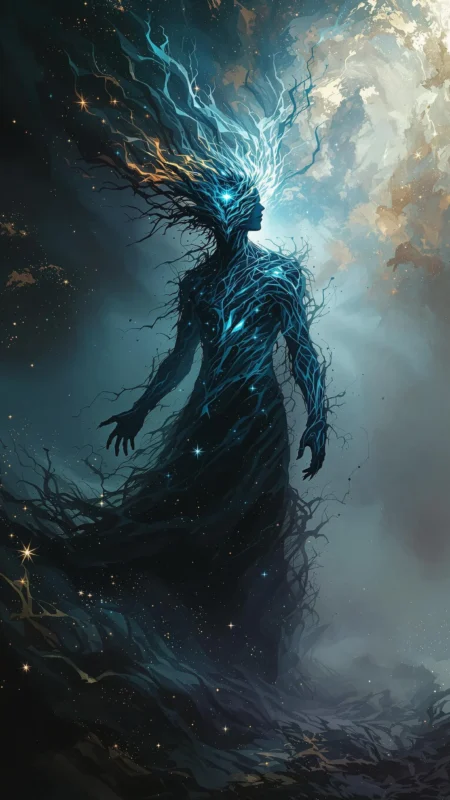


Shadow

Archetype Meaning & Symbolism

repressed, instinctual, creative, chaotic, shameful, powerful, authentic, feared, unknown, primal

  • I am the cellar of your cathedral, holding the foundation you refuse to acknowledge. Without me, your pretty stained glass shatters.

If Shadow is part of your personal mythology, you may…

Believe

  • You may believe that true wholeness requires embracing what is uncomfortable and hidden.
  • You may believe that everyone has a dark side, and judging others for theirs is a refusal to see one’s own.
  • You may believe that the greatest creativity and power lie just beyond the edge of shame.

Fear

  • You may fear that if you let your “dark” thoughts or desires out, they will consume you and destroy your life.
  • You may fear that you are secretly a bad, unworthy, or monstrous person.
  • You may fear that revealing your true self will result in total abandonment and isolation.

Strength

  • A profound capacity for authenticity and self-honesty.
  • Deep empathy and compassion, born from understanding the potential for darkness in all people.
  • Access to a wellspring of creativity, vitality, and instinctual wisdom.

Weakness

  • A tendency towards self-sabotage when unconscious Shadow aspects take control.
  • Projecting your own unacknowledged flaws onto others, leading to unfair judgments and conflicts.
  • Becoming paralyzed by shame or self-loathing if the Shadow remains unintegrated and feared.

The Symbolism & Meaning of Shadow

In the personal mythology of a modern life, the Shadow is not a devil on the shoulder but the vast, unexamined territory of the psyche itself. It is the repository for everything the ego has deemed inconvenient, shameful, or dangerous. It is the feral ambition you were taught to gentle, the searing rage you learned to swallow, the eccentric creativity you filed away for a more practical life. The Shadow is less an entity and more a psychic element, like earth or water: it is the fertile, dark soil from which unexpected life can spring, or the deep, cold ocean where treasures and monsters coexist. To engage with it is to acknowledge that your personal map has a terrain labeled “here be dragons,” and to suspect the dragons might be guarding your gold.

The meaning of the Shadow in one’s mythos is often tied to the concept of wholeness over perfection. In a culture that worships the light—the curated feeds, the polished résumés, the relentless positivity—the Shadow represents a radical act of self-acceptance. It suggests that authenticity is not found in sanitizing the self, but in having the courage to embrace its contradictions. The Shadow’s presence in your narrative may symbolize the end of innocence, the necessary fall from a simplistic Eden into a more complex, challenging, and ultimately more rewarding reality. It is the Grendel to your Beowulf, the Hyde to your Jekyll, reminding you that the monster is not an external invader, but an essential, powerful, and neglected citizen of your own inner country.

Ultimately, the Shadow stands for potential. It is psychic potential energy, the compressed carbon of your repressed experiences that, under the right pressure, can form diamonds. Every quality has a light and a shadow aspect: aggression can be cruelty or it can be the courage to defend a boundary. Laziness can be sloth or it can be the wisdom to rest. The Shadow holds the raw, undifferentiated energy before it has been shaped for good or ill. Its symbolism in your life is a call to become a more conscious creator, to descend into the mines of your own being and decide what you will forge from the potent darkness you find there.


Shadow Relationships With Other Archetypes

The Persona

The Persona is the Shadow’s photographic negative, its intimate opposite. Where the Persona is the curated mask shown to the world—the competent professional, the caring parent, the witty friend—the Shadow is everything that was edited out of that public-facing portrait. A rigid and perfected Persona often creates a correspondingly large and volatile Shadow. The more one insists “I am only light,” the more the darkness pools in the cellar of the psyche, banging on the pipes. Their relationship is a delicate, often fraught, dance of concealment and revelation, and the tension between them may be the central psychic drama of a person’s life.

The Hero

For the Hero archetype, the Shadow is often externalized as the dragon, the monster, or the dark wizard that must be confronted. The Hero’s journey frequently charts a path into the underworld, the dark forest, or the villain’s fortress: all symbolic landscapes of the unconscious. The quest to slay the monster may be a mythic representation of the need to confront one’s own disowned capacity for rage, greed, or destruction. In these myths, the Hero who fails to recognize the monster as a piece of himself is often doomed to become it, while the one who can integrate its power without being consumed by it achieves true mastery.

The Trickster

The Trickster is often the messenger of the Shadow, the figure who gleefully trips the Persona and exposes what lies beneath. Coyote, Loki, or even a disruptive inner impulse can serve this role. The Trickster operates at the boundaries, mocking sacred cows and revealing uncomfortable truths with chaotic humor. It may not be the Shadow itself, but it delights in opening the Shadow’s cage to see what happens. When the Trickster appears in one’s mythos, it could be a sign that the Shadow has grown too powerful and repressed, and the psyche is using subversive, unpredictable means to force a confrontation.

Using Shadow in Every Day Life

Navigating Creative Blocks

When the blank page feels like a blinding white wall, the Shadow may hold the necessary pigment. It is the repository of inconvenient emotions, taboo thoughts, and primal urges that polite consciousness smooths over. Accessing this reservoir might mean allowing yourself to write the “ugly” sentence, paint the dissonant color, or explore a theme that feels forbidden. The Shadow does not care for marketable aesthetics: it cares for the raw, untamed truth, which is often the very source of groundbreaking art.

Understanding Repetitive Conflicts

If you find yourself in the same argument with different people, the script may be written by your Shadow. We often project the traits we deny in ourselves onto others, turning them into screens for our own inner drama. The person you label as “lazy” or “controlling” or “needy” may be acting as an unwilling mirror for a part of yourself you have exiled. Turning inward to ask, “Where in my own life am I this thing?” could dismantle the conflict from the inside out, transforming a battlefield into a space for self-reclamation.

Reclaiming Career Ambition

A quiet desperation in a stable career could be the Shadow rattling its cage. Perhaps you have disowned your own ruthless ambition because it felt unseemly, or buried a desire for a wildly unconventional path out of fear of judgment. Your Shadow might hold a fierce entrepreneurial streak, a longing for solitude, or a craving for a stage you consciously deem too bright. Listening to its whispers could mean acknowledging that your professional stagnation is a choice to starve a vital part of your own hunger for a more authentic life.

Shadow is Known For

Projection

The Shadow is renowned for its role in projection

the unconscious act of attributing one’s own disowned qualities to another person or group. It is the psychic mechanism that allows us to see the mote in our brother’s eye while ignoring the beam in our own. Your most intense and irrational reactions to others may be signposts pointing back to the contents of your own unlit interior.

Repression

It is the psychic vault where all that is deemed unacceptable by the conscious mind and the surrounding culture is stored. Repression is the active, though unconscious, process of pushing away thoughts, memories, and desires. The Shadow is the sum total of this repressed material, a simmering, pressurized continent of the self that demands energy to keep submerged.

Integration

The Shadow is not an enemy to be vanquished but a part of the self to be integrated. This process, often called “shadow work,” is the conscious, courageous act of turning to face what has been disowned. It involves acknowledging, accepting, and finding a constructive place for these darker aspects within the whole personality, transforming them from saboteurs into allies.

How Shadow Might Affect Your Personal Mythology

How Shadow Might Affect Your Mythos

In your personal mythos, the Shadow often scripts the inciting incident. It is the catalyst, the sudden eruption of chaos that shatters a peaceful, perhaps naive, existence. This could be a sudden act of self-sabotage, an inexplicable fallout with a loved one, or a bout of depression that descends like a fog. This event forces the protagonist of the story—you—off the well-trod path and into the wilderness of self-inquiry. The early chapters of your mythos may be defined by running from this Shadow, fighting it, or denying its existence, while the later chapters could chart the slow, difficult journey of turning around to face it, learn its name, and understand its purpose in your story.

The Shadow also functions as the hidden treasure or the secret weapon within your life’s narrative. The very thing you are most ashamed of may, once integrated, become your greatest gift. The hypersensitivity you saw as a weakness could become the foundation for profound empathy and artistic creation. The ambition you feared was rapacious could, when consciously wielded, allow you to build something of lasting value. Your mythos then transforms from a simple tale of good versus evil into a complex alchemy of turning psychic lead into gold. The climax is not victory over the dark part, but its integration into a more powerful, complete version of the self.

How Shadow Might Affect Your Sense of Self

To perceive the Shadow within is to complicate the story you tell about yourself. It dismantles the simple, stable identity of the “good person” and replaces it with the far more dynamic and volatile identity of the “whole person.” This can be deeply unsettling. It may introduce a persistent feeling of being an impostor, as you become aware of the discrepancy between your public Persona and the darker currents within. You may look at your own acts of kindness and question their motives, seeing the hidden desire for approval, or feel a flicker of rage and fear that you are secretly a monster.

However, this fractured view of self is a necessary step toward a more robust and authentic identity. By holding the tension of these opposites—your capacity for generosity and selfishness, for love and for hate—you develop psychic resilience. Your self-worth becomes less dependent on being flawless and more grounded in being real. This journey can cultivate a quiet, unshakeable self-acceptance, one that does not require constant validation because it has made peace with the full, contradictory, and deeply human truth of who you are.

How Shadow Might Affect Your Beliefs About The World

An awareness of one’s own Shadow fundamentally alters one’s perception of the world. The simplistic lens of heroes and villains, right and wrong, dissolves into a more nuanced and compassionate perspective. When you have faced the potential for deceit, cruelty, and chaos within yourself, you may be less inclined to project absolute evil onto others. You might begin to see societal conflicts and political divides not as battles between the enlightened and the ignorant, but as mass projections of collective, unacknowledged Shadows.

This does not necessarily lead to moral relativism or passivity. Instead, it can foster a more effective form of engagement. You may understand that railing against the “other side” is often a way to avoid looking at the corresponding trait in oneself or one’s own group. Your worldview could become less ideological and more psychological. You might see the world as a vast, complex ecosystem of psyches, all struggling with their own light and dark. This perspective can replace self-righteous anger with a sadder, wiser, and more profound motivation to heal, starting with the only part of the world you can truly change: yourself.

How Shadow Might Affect Your Relationships

In relationships, an unacknowledged Shadow is a saboteur. It fuels projection, turning partners, friends, and family into unwilling carriers of our own disowned baggage. We may become inexplicably irritated by a friend’s success because it mirrors our own repressed ambition, or we might choose a chaotic partner to unconsciously act out the wildness we deny in ourselves. These relationships are often intense and unstable, built on the rickety foundation of mutual projections rather than genuine recognition of the other person.

Integrating the Shadow allows for a startling new form of intimacy. It creates the capacity to say, “The anger I feel toward you right now is mine, let me look at it.” It fosters the ability to love a whole person, not just the idealized image they present. When you have accepted your own flaws, you have more grace for the flaws of others. Relationships can then move from being arenas for unconscious psychic warfare to being sanctuaries for mutual growth, where two complex, imperfect individuals can feel safe enough to reveal their full selves, darkness and all.

How Shadow Might Affect Your Role in Life

The Shadow often dictates one’s unconscious choice of role in the grand play of life. If its contents are deeply repressed, you might find yourself perpetually cast as the Victim, the Scapegoat, or the Martyr, unconsciously maneuvering situations to punish yourself for the darkness you feel within. Or, conversely, you might be drawn to the role of the Judge or the Crusader, using a rigid moral code to police the world as a way of controlling the perceived chaos inside. These roles feel inevitable, as if assigned by fate, but are often prisons built by the unexamined self.

To consciously engage with the Shadow is to seize the power of casting. It allows you to step out of the reactive role and into a more deliberate one. You may find that your true role is not the one prescribed by your family or society, but one that has room for your contradictions: the compassionate leader who understands the lure of power, the disciplined artist fueled by chaotic visions, the Hermit who brings wisdom back from the dark woods of the soul. Embracing the Shadow allows you to author your own role, one that is more authentic, complex, and tailor-made for the whole of who you are.

Dream Interpretation of Shadow

In a positive dream context, the Shadow may appear not as a threat, but as a mysterious guide or dark benefactor. It could be a frightening figure who, upon being faced, offers a key, a map, or a piece of wisdom. It might be a creature from the depths of the ocean or the earth that you feel an uncanny kinship with. These dreams often signal a readiness for integration. They are an invitation from the unconscious to reclaim a lost part of your power, creativity, or instinct. The fear felt in the dream is the price of admission to a deeper, more complete version of yourself. The dream is suggesting that what you have been running from holds a gift.

In a negative context, the Shadow appears as a relentless pursuer, a terrifying monster, a murderer, or a doppelgänger engaged in shameful acts. You may dream you are being chased through a dark house that is your own, or that a shadowy figure is sabotaging your every effort. These dreams are urgent warnings. They suggest that a repressed part of the self has become toxic and is threatening to overwhelm the conscious ego. The intensity of the fear and horror in the dream is proportional to the psychic energy that has been expended in repression. It is a sign that the cellar door is breaking, and conscious, deliberate attention is required to avoid a catastrophic eruption into waking life.

How Shadow Archetype Might Affect Your Needs

How Shadow Might Affect Your Physiological Needs

From a mythological perspective, the Shadow is deeply connected to the body’s ancient, non-verbal intelligence. It is the realm of gut feelings, of the hair standing up on your neck, of the sudden knot in your stomach. These are the physiological whispers of the unconscious, the body’s way of communicating truths the conscious mind may be unwilling to hear. An unintegrated Shadow can manifest as a kind of war against the body. We may ignore its signals of exhaustion, over-caffeinate its pleas for rest, and numb its expressions of anxiety or rage.

This disregard can lead to a mythos where the body is the traitor, a source of mysterious ailments and betrayals. Chronic tension, unexplained fatigue, or other psychosomatic symptoms may be the physical expression of a repressed Shadow screaming for attention. Conversely, integrating the Shadow can feel like coming home to the body. It means learning to trust its primal wisdom, to listen to its subtle cues, and to honor its needs. The body ceases to be a machine to be controlled and becomes a sacred, intelligent animal, a wise counselor in the ongoing story of the self.

How Shadow Might Affect Your Ideas of Belonging

The fear of the Shadow is, at its core, the fear of not belonging. It is the primal terror that if people saw the “real” you—the envious, angry, fearful, strange you—they would cast you out. This fear can lead to a desperate performance of agreeableness and conformity. We may join groups and forge friendships based not on who we are, but on who our Persona pretends to be. This creates a fragile, conditional sense of belonging that is perpetually haunted by the terror of being discovered.

Paradoxically, integrating the Shadow is the only path to true belonging. It is the courageous act of risking exposure to find your real tribe. True connection is not forged in the light of shared perfections but in the quiet, shared understanding of mutual imperfection. When you can own your Shadow, you give others permission to own theirs. This creates relationships of profound depth and resilience, where you are loved not in spite of your darkness, but because your wholeness makes you trustworthy, real, and deeply human. You no longer need to belong everywhere once you have found the place where your entire self is welcome.

How Shadow Might Affect Your Feelings of Safety

The need for safety is often the primary reason we create and repress a Shadow in the first place. We push away our rage, our vulnerability, and our non-conformity because we believe that showing these parts of ourselves would lead to rejection, abandonment, or punishment, threatening our emotional and social survival. The conscious ego builds a fortress—the Persona—to keep the world out and the Shadow in. The mythos becomes one of vigilant defense, where safety is equated with control and the concealment of the true self.

True, profound safety, however, may only be found by turning toward the Shadow. The greatest danger is not the monster in the cellar, but the fact that you don’t know its nature, its triggers, or its strength. An unknown Shadow can hijack your life at any moment, sabotaging a relationship or career in a blind panic. To know your Shadow, to understand its wounds and its needs, is to bring it into the light. It is the difference between having a wild tiger loose in your house and having that same powerful animal tamed and by your side. Safety is not the absence of the tiger, but a conscious relationship with it.

How Shadow Might Affect Your Views of Esteem

Esteem built upon the Persona is a house of cards. It relies on external validation: praise for achievements, approval for being “nice,” admiration for being successful. This type of esteem is incredibly fragile, as it can be shattered by a single criticism, a failure, or the exposure of a flaw. Living this way requires constant vigilance and creates a deep, abiding anxiety. The mythos is one of a performer on a high wire, where one misstep means a fall from grace.

Integrating the Shadow rebuilds esteem on a foundation of solid rock: self-acceptance. It is a shift from needing to be worthy to recognizing inherent worthiness. When you have faced your own capacity for pettiness, envy, and failure and have not turned away, the judgments of others lose their sting. Esteem is no longer something you must earn from the outside, but something you cultivate on the inside. It is the quiet confidence that comes from knowing you are a complete human being, able to withstand the storms of life because you are no longer at war with half of yourself.

Shadow of Shadow

The shadow of the Shadow emerges in two primary forms: over-identification or total repression. In the first case, an individual may not just acknowledge their Shadow but become it. They might adopt a cynical, nihilistic persona, using “radical honesty” or “authenticity” as a cudgel to justify cruelty, recklessness, and a refusal to participate constructively in society. This isn’t integration; it’s a hostile takeover. The person becomes a caricature of the rebel, defined only by what they are against, their mythos a bleak tale of tearing down without ever building, mistaking their wounds for a personality.

On the other extreme, a dangerously repressed Shadow becomes a psychic pressure cooker. When the ego spends all its energy keeping the lid on, the contents don’t disappear, they become more volatile and primitive. This can lead to a catastrophic eruption: a sudden, inexplicable act of violence, a shocking betrayal of one’s own values, or a complete psychological breakdown. The personal mythos culminates in a tragic implosion, where the life so carefully constructed by the Persona is annihilated from within by the very forces it refused to acknowledge. It becomes a cautionary tale about the immense power of the unseen.

Pros & Cons of Shadow in Your Mythology

Pros

  • Leads to greater wholeness and self-acceptance, reducing inner conflict and the anxiety of being “found out.”
  • Unlocks repressed energy, which can be channeled into immense creativity, vitality, and personal power.
  • Fosters more authentic, compassionate, and resilient relationships, as it allows for genuine intimacy beyond idealized personas.

Cons

  • The process of confronting the Shadow can be painful, destabilizing, and emotionally turbulent, often requiring courage and support.
  • If the process is mismanaged, there is a risk of either acting out destructive impulses or becoming overly identified with negative traits.
  • Shadow work is not a one-time fix; it requires ongoing awareness and humility, as the ego will always be tempted to repress what is uncomfortable.