The Coral Reef
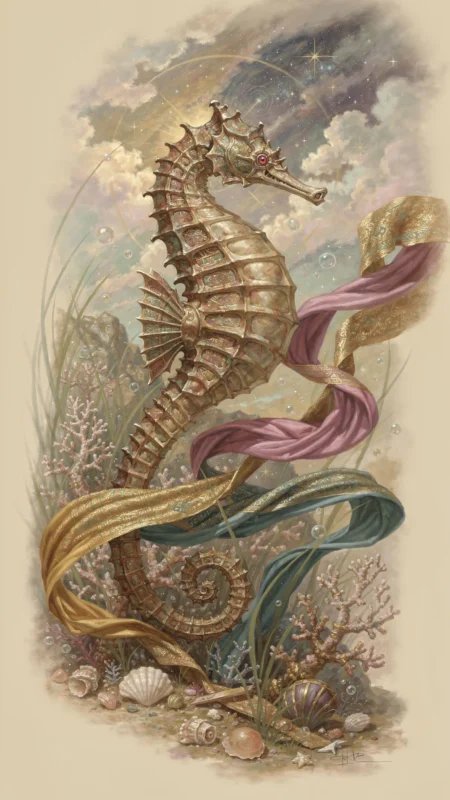
The relationship between the Seahorse and the Coral Reef may be one of the most profound collaborations of stillness and life. The reef is not merely a backdrop, but a living architecture, a cathedral of color and crevice into which the Seahorse disappears, not in an act of cowardice, but perhaps as a form of communion. In its intricate lattice, the Seahorse finds its mooring, a quiet participant in a city teeming with frantic motion. It could be said that the Seahorse, by clinging so patiently to a single frond or branching skeleton, becomes the reef's meditative thought, a living jewel whose value is in its subtle, almost imperceptible presence. It is a covenant of camouflage, where to be truly seen, one must first be willing to blend into the magnificent tapestry of the whole.
The Knight
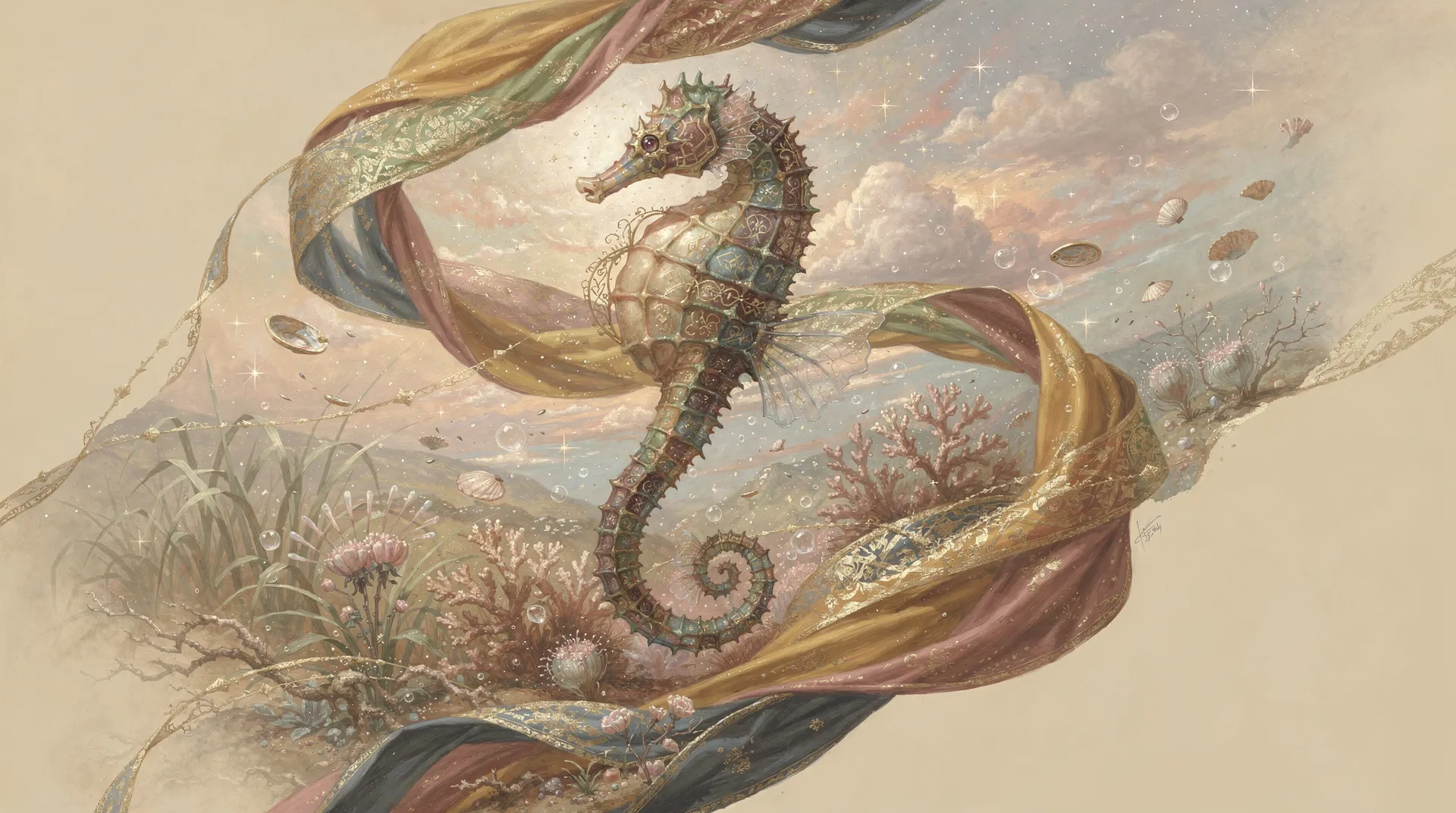
One might not immediately associate the gentle Seahorse with the clanging archetype of the Knight, yet the two could be seen as distant cousins in the art of defense. The Knight’s armor is for the joust, for the declared battle and the outward quest. The Seahorse, too, is armored, but its articulated, bone-plate mail is designed for a different kind of chivalry. This is not the armor of conquest, but of endurance; not for glory, but for the quiet protection of the impossibly vulnerable. While the Knight rides forth, the Seahorse holds its ground, its upright posture a subtle defiance, its patient vigil a testament to a strength measured in persistence rather than force. It is, perhaps, the patron of a different order of knighthood—one dedicated to the internal realm, the guardianship of the nursery, and the profound courage of gentleness.
The Anchor
In the Seahorse’s prehensile tail, one finds a living expression of the Anchor, yet it is an anchor transformed by consciousness and grace. Where the iron anchor is a dead weight, a brute tether against the indifferent tide, the Seahorse’s hold is a deliberate act of mooring, a conscious choice to remain steadfast amidst the currents of the world. This relationship might suggest a profound distinction between being held down and choosing to hold on. The Seahorse, coiled around a blade of seagrass, is not immobile but faithful. Its grip is not a surrender to stasis but an act of fidelity—to a place, a partner, or a purpose. It represents, perhaps, an anchor of the soul, a reminder that the greatest stability may not be found in inert mass, but in a gentle, persistent, and loving attachment to what one has chosen to cherish.

 Believe
 Fear
Fear Strength
 Weakness