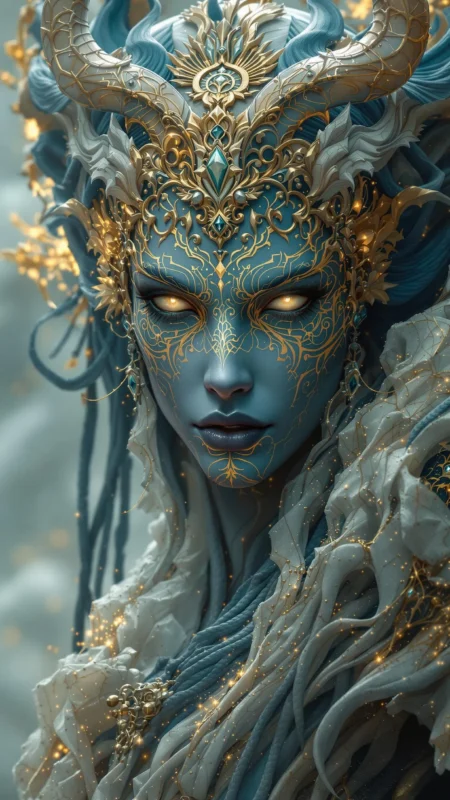
Scar

Archetype Meaning & Symbolism

Ambitious, intelligent, resentful, manipulative, charismatic, theatrical, bitter, strategic, isolated, entitled

  • Life's not fair, is it? You see, I... well, I shall never be king. And you... shall never see the light of another day.

If Scar is part of your personal mythology, you may...

Believe

  • That intelligence and strategic cunning are the only true measures of worth, far surpassing brute strength or the accident of birthright.
  • That the world is a fundamentally unjust stage, and one is therefore entitled to use any means necessary to seize the power and recognition that will never be given freely.
  • That it is far better to be feared and in control than to be loved and vulnerable.

Fear

  • A deep, gnawing fear of being permanently overlooked; of living and dying as a footnote in the story of someone you deem less worthy.
  • The terror of being outmaneuvered, of being exposed as less clever than you believe yourself to be, especially by someone you have dismissed as a fool.
  • A primal dread of simple, direct force—a power so artless and overwhelming that it renders all your intricate strategies and manipulations utterly meaningless.

Strength

  • A truly formidable strategic mind, with an almost preternatural ability to perceive hidden patterns, motivations, and pathways to power that are invisible to others.
  • A mastery of wit and persuasive rhetoric, capable of bending others to your will, disarming rivals with a phrase, and framing your ambitions in the most compelling light.
  • A resilient and patient ambition that can withstand long periods of obscurity and failure, simmering quietly until the precise moment of opportunity reveals itself.

Weakness

  • A corrosive envy that can taint every success and poison every relationship, preventing any genuine feeling of satisfaction or peace.
  • A blinding arrogance that causes you to chronically underestimate your rivals, particularly those who lack your sophisticated intellect but possess other forms of power, like loyalty or raw strength.
  • A self-imposed and profound isolation, born of the conviction that no one is your intellectual equal, which starves you of the feedback, support, and connection necessary for true, sustainable success.

The Symbolism & Meaning of Scar

Scar is the sovereign of the slighted. He is the patron saint of the second-born, the perpetual understudy, the mind deemed too sharp or too dark for the light. In personal mythology, he represents the part of us that knows, with a chilling certainty, that life is not fair. His physical scar is not just a mark of a past battle; it is the outward sign of an inner wound, a constant reminder of a perceived injustice that has come to define an entire identity. To have Scar in your mythos is to feel a kinship with the idea that you possess a superior intellect or a unique insight that the world, in its foolish adherence to simplistic virtues like strength and lineage, refuses to acknowledge. He is the allure of ambition when it sours into obsession, the seductive whisper that says your resentment is not only justified, but righteous.

His story is a meditation on the nature of power. Where Mufasa’s power is innate, resonant, and connected to the cyclical health of the kingdom—the circle of life—Scar’s is parasitic. He does not create, he consumes. He offers a compelling, if terrifying, model of leadership: control through fear, unity through a common enemy, and loyalty through transactional dependency. He is the shadow of every legitimate ruler, the embodiment of the question: what if the one who is best suited to rule is not the one who is good, but the one who is cleverest? He symbolizes the desolate kingdom we build for ourselves when our primary motivation is not to nurture our domain, but to prove our worth to those who doubted us.

Ultimately, Scar may symbolize a profound warning about the hollowness of a victory won through bitterness. His reign over the Pride Lands transforms a vibrant paradise into a desolate boneyard, a perfect metaphor for what happens to the human spirit when it is ruled by envy. The throne he so desperately craved brings him no joy, only paranoia and the constant, nagging reality of his own inadequacy. He is surrounded by followers, but utterly alone. For the individual, he may represent a critical choice point in their own narrative: to allow a past wound to define a future of cynical destruction, or to acknowledge the pain and choose a different, more generative path to power and self-worth.


Scar Relationships With Other Archetypes

The Healer

The Healer and The Scar may share a relationship not of erasure, but of quiet translation. The Healer, in this sense, is not a mender of skin, but a reader of its altered text, one who helps to re-narrate the jagged line from a story of violation into a testament of survival. This archetype may not offer a balm to make the mark vanish, but rather a new light in which to see it—transforming it from a landscape of ruin into a hard-won borderland, a place of profound and personal history. The Healer’s work, perhaps, is to sit with the wound’s legacy until its bearer can touch the raised tissue not with a flinch of memory, but with the neutral curiosity one affords a riverbed, dried and ancient, that tells the story of a force that once rushed through. It is a partnership in integrating the fissure into the whole, suggesting that true wholeness is not an absence of breaks, but the artful incorporation of them.

The Mirror

In the silvered, unblinking gaze of The Mirror, The Scar finds its most honest and perhaps most challenging interlocutor. The Mirror offers no comfort, no polite turning away; it simply presents what is. This relationship could be a crucible of self-perception, forcing a daily confrontation with the mark that separates the self of “before” from the self of “after.” In its reflection, the scar might loom large, a continental divide across the landscape of the face, or it may, with time and grace, shrink to a mere footnote. The Mirror is a silent teacher in the long lesson of acceptance, its impassive surface a canvas upon which one’s own feelings about the blemish are projected. It could be seen as an agent of torment, but it might also be the one thing that, through relentless exposure, finally robs the scar of its power, rendering it just another line in a beloved, familiar map.

The Ghost

The Scar maintains a chilling symbiosis with The Ghost, for one is the physical anchor of the other’s ethereal torment. A ghost is the echo of an event, the psychic ripple, while the scar is the high-water mark left on the shore, the irrefutable evidence that the tide of trauma did, in fact, arrive. They are two halves of a haunting. The Ghost may whisper the narrative of the blow, the fire, or the fall, but the scar is the period at the end of the sentence, written in flesh. To trace its path could be to touch the phantom limb of a past self, to feel the cold spot where a memory has settled into the body’s permanent architecture. The Scar, in this way, gives the Ghost a home, a specific geography to haunt, ensuring that the story—and the pain it represents—is never entirely unmoored from the world of the living.

Using Scar in Every Day Life

Navigating Unfair Hierarchies:

When confronted with a system that seems to reward birthright or brute force over merit, the Scar archetype can be a map. It may offer a lesson in strategic patience, in observing the dynamics of power from the periphery. It’s not about enacting a coup, but about understanding that influence can be cultivated in the shadows, that intellect can find fissures in the most monolithic structures, allowing you to create your own sphere of control where you were previously dismissed.

Processing Resentment:

Feelings of being chronically overlooked or second-best can curdle into a potent poison. The Scar mythos invites you to look at this bitterness not as a life sentence, but as a signal fire. It could be pointing toward a deeply held, perhaps legitimate, sense of your own worth. The archetype provides a cautionary tale: let this fire fuel a destructive obsession, and your kingdom becomes dust. Instead, perhaps its energy could be harnessed, redirected from destroying the perceived source of your pain toward constructing something entirely new, a domain where your unique talents are the ruling principle.

Owning Intellectual Power:

In a world that often celebrates the simple, the strong, or the conventionally charming, the Scar archetype is a patron saint of the slighted intellectual. If you’ve ever felt that your sharpest weapon is your mind, this archetype gives you permission to wield it. It is a reminder that wit can be a sword, that a well-laid plan can topple an empire, and that one’s value is not diminished by a lack of physical prowess. It is an embrace of the self as a master strategist, the one who sees the whole board while others see only their next move.

Scar is Known For

Fratricide and Usurpation

He is defined by the ultimate act of betrayal

murdering his own brother, Mufasa, and deceiving his nephew, Simba, in order to seize the throne of the Pride Lands. This act is the central pivot of his story, showcasing the depths of his ambition and resentment.

Alliance with the Hyenas

Recognizing his physical limitations, Scar forms a strategic, albeit unstable, alliance with the marginalized hyena clan. This demonstrates his core belief in using the overlooked and disenfranchised as tools for his own ascent to power, a classic manipulation of class resentment.

Intellectual Sophistry

Scar is known for his cunning, his theatrical monologues, and his persuasive, manipulative charm. He rules not through Mufasa’s noble strength but through fear, propaganda, and a superior intellect untethered by morality. His wit is as much a weapon as his claws.

How Scar Might Affect Your Personal Mythology

How Scar Might Affect Your Mythos

When Scar emerges as a key figure in your personal mythology, your life story may pivot from a simple hero’s journey to a more complex, Machiavelian drama. The narrative is no longer about overcoming external monsters, but about navigating the intricate chess board of human relationships and power structures. Your mythos could be one of the 'deposed monarch,' a tale where you believe you are the rightful heir to a certain destiny—be it professional, creative, or social—but were unjustly denied your place. Every setback is framed not as a failure, but as a temporary usurpation by a less-deserving, Mufasa-like figure. Your life story becomes a long, patient game of strategy, waiting for the perfect moment to claim what you believe is yours.

Alternatively, the Scar archetype might cast you as the 'necessary shadow.' Your personal myth could be that you are the one willing to see the uncomfortable truths and make the difficult, amoral decisions that others, in their naive optimism, shy away from. You are the realist in a world of dreamers, the pragmatist who understands that to get anything done, one must be willing to get their hands dirty. This narrative can be empowering, positioning you as the hidden architect of events, the power behind the throne. However, it also risks becoming a self-fulfilling prophecy of isolation, a story where you are so unique in your cynical wisdom that you can never truly be understood or joined by an equal.

How Scar Might Affect Your Sense of Self

To see oneself through the lens of the Scar archetype is to cultivate a self-image built on a foundation of intellectual superiority and profound grievance. You may perceive yourself as a brilliant strategist trapped in a world that rewards mediocrity. This can foster a kind of defiant pride, a satisfaction in your own cleverness, and a refusal to play by rules you deem arbitrary and designed for lesser minds. There could be a deep-seated belief that your internal world, with its intricate plans and sharp analyses, is far richer and more valid than the external world that has failed to properly recognize it. This is a self built in opposition to a perceived injustice.

However, this self-perception is inherently fragile, tethered to the very system it despises. Your sense of self-worth might be entirely dependent on proving the 'Mufasas' of your world wrong. This creates a state of perpetual, low-grade warfare, where every interaction is a potential battle of wits, and every relationship is assessed for its strategic value. It may lead to a secret, gnawing insecurity. If your identity is predicated on being the smartest person in the room, the presence of someone smarter, or someone who simply doesn't care about your intellectual games, can trigger a catastrophic collapse of self-esteem. You might become a king of a desolate internal kingdom, ruling over your own carefully curated thoughts but terrified of genuine challenge.

How Scar Might Affect Your Beliefs About The World

With Scar as your guide, the world may cease to be a place of possibility and become a stark, unforgiving chessboard. You might view life as a zero-sum game: for you to win, someone else must lose. Concepts like fairness, altruism, and the 'circle of life' could seem like naive platitudes designed by the powerful to keep the powerless in their place. Your worldview could become one of deep cynicism, where you are constantly deconstructing the hidden motives behind every action and institution. You see not communities, but hierarchies; not collaborations, but temporary, self-serving alliances. The world is a theater of fools and charlatans, and you are the only one in the audience who understands the script.

This perspective grants a certain clarity, a sharp-edged perception that cuts through sentimentality and pretense. You may be adept at predicting outcomes and identifying risks that others, blinded by optimism, might miss. However, this worldview is also a cage. By assuming the worst in people and systems, you may pre-emptively destroy any chance of experiencing the best. The landscape of your reality could become as barren as Scar's Pride Lands, leached of all color, joy, and spontaneity. It's a world where you are always prepared for betrayal, and in doing so, you may inadvertently invite it, creating a reality that proves your bleak philosophy correct.

How Scar Might Affect Your Relationships

In the realm of relationships, the Scar archetype is a solvent, capable of dissolving bonds of trust and affection. If this archetype holds sway, you may approach others not as people to be known, but as assets or obstacles to be managed. Relationships could become transactional, a constant calculation of 'what can this person do for me?' The hyenas in your life are the sycophants and subordinates you cultivate for your purposes, but you may hold them in contempt. The 'Mufasas' and 'Simbas' are rivals to be neutralized. True equals are the greatest threat of all, for they can challenge your intellectual supremacy.

This inevitably leads to a profound and self-inflicted loneliness. Vulnerability could be seen as a fatal strategic error, and intimacy as a liability. You might surround yourself with people, yet feel utterly isolated, the unrecognized king in a court of your own making. The tragedy of this relational style is that the deep-seated desire for recognition—which is at its core a desire for a form of love and belonging—is pursued through methods that make both impossible. You might push away anyone who could offer genuine connection, convinced they are either too foolish to understand you or clever enough to betray you.

How Scar Might Affect Your Role in Life

The role you inhabit in the world, when informed by the Scar archetype, is often that of the 'shadow advisor' or the 'disenfranchised genius.' You may feel that your rightful place is at the center of power, but due to circumstances you deem unfair, you are relegated to the margins. From this position, you might become a master manipulator, pulling strings from behind the scenes, your influence felt but your authority never officially recognized. You could be the brilliant second-in-command who secretly believes you should be running the show, the artist whose unpalatable truths keep you from mainstream success, the family member whose sharp insights are dismissed as mere cynicism.

This role is a double-edged sword. It can grant you a unique perspective and a certain freedom from the responsibilities of direct leadership. You are not accountable in the same way the 'king' is. However, it is also a role defined by what it is not. You are perpetually 'almost,' 'should-have-been,' or 'if-only.' This can lead to a life narrative of perpetual grievance, where your primary role becomes that of the critic. You may excel at deconstructing the failures of others but struggle to build anything lasting of your own, for to build is to expose oneself to the same critique you so expertly wield.

Dream Interpretation of Scar

In a positive context, dreaming of Scar may symbolize an invitation to integrate your own 'shadow' ambitions. His appearance could be a message from your unconscious to stop denying your own hunger for power and recognition. Perhaps you have been playing the part of the naive hero for too long, and your psyche is calling for a more strategic, cunning approach to a problem. Scar in a dream might not be a sign of impending villainy, but a call to embrace your intelligence as a potent tool, to acknowledge your resentments not as flaws but as data, and to formulate a plan to get what you want in a world that may not simply hand it to you.

In a negative light, dreaming of Scar is a potent warning. He may represent a part of you that is being consumed by envy, a bitterness so profound it threatens to poison your entire inner world. His presence could signal that your ambition has become untethered from your morality, and you are on a path to sacrificing important relationships or principles for a hollow victory. To dream of his desolate kingdom is to be shown the potential future of your own soul if you continue to let resentment and cynicism rule. He is a harbinger of self-sabotage, a symbol of a victory that costs you everything worth having.

How Scar Archetype Might Affect Your Needs

How Scar Might Affect Your Physiological Needs

The Scar archetype suggests a profound disconnect from the body, viewing physiological needs as irritating liabilities. Scar himself is emaciated, his form a testament to a mind that has prioritized scheming over sustenance. Within your own mythos, this could translate to a belief that the demands of the body—hunger, fatigue, illness—are weaknesses that hinder the superior pursuits of the intellect. You may push yourself to the point of burnout, subsisting on nervous energy and adrenaline, seeing rest as a concession and proper nourishment as a tedious chore. The body is not a temple; it is a recalcitrant vehicle for the will.

This disregard can become a form of self-punishment or a proof of superiority. To need less sleep, to eat less, to ignore physical pain—these may be worn as badges of honor, demonstrating your elevation above the common, creaturely concerns of others. It is a dangerous path, as this neglect inevitably corrodes the very instrument the mind relies upon. The kingdom of your body, like Scar's Pride Lands, may become barren and unsustainable, a physiological reflection of a psyche that consumes its own resources in a frantic bid for control.

How Scar Might Affect Your Ideas of Belonging

The need for belonging is warped into a need for subservience when viewed through the Scar archetype. The desire is not to be loved as an equal, but to be revered as a superior. Belonging is achieved not through mutual affection and vulnerability, but by creating a hierarchy with yourself at the apex. You might cultivate a circle of followers, sycophants, or dependents—people who need you and are therefore controllable—while holding them in silent contempt. This is a counterfeit community, a collection of subjects rather than a circle of friends.

This approach ensures a profound and inescapable loneliness. Genuine intimacy requires a degree of surrender, a trust that is anathema to the Scar ethos. To be truly known is to be exposed, and to be exposed is to be vulnerable to attack. Therefore, you may preemptively sabotage any relationship that approaches true closeness, preferring the safety of isolation to the perceived risk of connection. The deep-seated yearning to matter, which for others is fulfilled by love, is instead funneled into a desperate quest for obedience, leaving you the sole, lonely inhabitant of a throne you built to prove you were worthy of company.

How Scar Might Affect Your Feelings of Safety

For the Scar archetype, safety is not found in strength, community, or fortification, but in absolute control. Safety means knowing everything, anticipating every move, and neutralizing threats before they can fully form. This translates into a life of hyper-vigilance and paranoia. You may feel a constant need to monitor your environment and the people in it, seeking to uncover hidden motives and potential betrayals. True peace is impossible, because safety is an intellectual construct, a web of plans and contingencies that is always vulnerable to a single unforeseen event or a simple act of brute force.

The pursuit of this kind of safety is inherently self-defeating. To secure your position, you might form alliances with untrustworthy elements—the 'hyenas'—which only increases your paranoia. You may push away those who could offer genuine support because their loyalty cannot be controlled or predicted with absolute certainty. This creates a fortress of solitude where you are the sole guardian against a world you perceive as hostile. The tragic irony is that in the obsessive quest to prevent any harm from coming to you, you may create a life devoid of the warmth, trust, and connection that are the true foundations of feeling safe in the world.

How Scar Might Affect Your Views of Esteem

Esteem, in the Scar mythos, is a fragile, externalized commodity. It is not an inherent sense of self-worth, but a reflection seen in the eyes of others—specifically, in their fear, envy, or submission. Your esteem may be inversely proportional to the success and happiness of those you perceive as rivals. Their triumphs feel like your failures. As such, self-worth becomes a frantic, lifelong project of proving your superiority, of clawing your way to a position where your value cannot be questioned. It is a hunger that can never be sated.

Even when power is achieved, the esteem it grants is hollow. Like Scar on the throne, you may know, deep down, that your position is illegitimate or unearned in the eyes of those you secretly respect. The validation you receive is from those you deem inferior, and therefore, it is worthless. This creates a vicious cycle: you strive for a recognition that you can't respect, all to soothe a core of profound inadequacy. The grander the titles and the more elaborate the performance of power, the more they may betray the terrifying emptiness within.

Shadow of Scar

When the Scar archetype falls completely into shadow, intelligence curdles into a nihilistic acid that dissolves everything it touches. The goal is no longer to win the kingdom, but to burn it down simply to prove a point. The shadow Scar is so obsessed with the injustice of the game that they destroy the board itself. In this state, your wit becomes pure cruelty, your strategies exist only to create chaos, and your ambition is a black hole, consuming all light and warmth around you. You prove your superiority by demonstrating that everything others hold sacred—love, honor, community—is a fragile illusion, and in the process, you turn your own life into the primary evidence for your bleak thesis, a barren wasteland ruled by a king of ashes.

Another facet of the shadow is a retreat into complete victimhood and impotence. Instead of a grand, malevolent scheme, the shadow manifests as a life of quiet, simmering resentment. You may become the perpetual critic, the armchair strategist who brilliantly dissects the failures of others from the safety of the sidelines but never risks entering the arena. Your intelligence is spent not on achieving your own goals, but on crafting elaborate justifications for your own inaction. You become trapped in the narrative of being the misunderstood genius, a tragic figure whose potential was thwarted by a cruel, stupid world. This allows you to preserve your ego but condemns you to a life of bitter stagnation, ensuring that the fear of being overlooked becomes a self-fulfilled prophecy.

Pros & Cons of Scar in Your Mythology

Pros

  • You may possess a powerful, strategic intellect that allows you to navigate complex social and professional challenges with exceptional skill.
  • You are rarely naive, armed with a healthy skepticism that allows you to see through pretense and identify hidden motives, protecting you from manipulation.
  • This archetype can fuel a potent and resilient ambition, giving you the drive to overcome significant obstacles and achieve goals others might deem impossible.

Cons

  • A pervasive cynicism and paranoia can make genuine trust impossible, poisoning relationships and leading to a life of isolation.
  • You may be so consumed by envy and the perceived injustices of the world that you are unable to experience joy or satisfaction in your own accomplishments.
  • Your ambition, if not tempered by empathy, may lead you to manipulate or harm others, ultimately resulting in a hollow victory and a self-inflicted downfall.