

Savanna

Archetype Meaning & Symbolism

Expansive, exposed, resilient, communal, patient, watchful, enduring, cyclical, sparse, sudden

  • The horizon is not an end, but an invitation. Walk, but walk together, for the shade of a single tree is only found after a long journey under an open sky.

If Savanna is part of your personal mythology, you may...

Believe

  • Patience is the highest form of strategy.

    True safety is found not in hiding, but in seeing and being seen by the right people.

    Everything, good and bad, eventually comes out into the open.

Fear

  • Being isolated from the group and left to fend for yourself.

    A sudden, unpredictable disaster for which there is no time to prepare.

    The complete exhaustion of resources—emotional, spiritual, or material—with no relief in sight.

Strength

  • An almost superhuman capacity for patience and long-term thinking.

    An instinct for building deep, interdependent, and fiercely loyal communities.

    A constant, panoramic awareness of your environment, allowing you to notice subtle threats and opportunities others miss.

Weakness

  • A deep-seated resistance to rapid, disruptive change, as it upsets the slow, predictable rhythms you rely on.

    A tendency toward conformity and a fear of standing out, driven by the instinct that what is different gets targeted first.

    Difficulty navigating complex, opaque environments where clarity is absent and motives are hidden, like a dense jungle.

The Symbolism & Meaning of Savanna

The Savanna archetype may represent the internal landscape of the Long View. It is the part of the psyche that understands endurance, that is not swayed by fleeting urgencies but holds a perspective measured in seasons, not hours. Within your personal mythology, this is the realm where you cultivate patience as an active, watchful state. It is the wisdom of the lioness waiting in the tall grass, not bored, but in a state of profound, electric potentiality. To have the Savanna within is to possess a deep, instinctual trust in cycles, to know that drought is followed by rain, and that scarcity gives way to abundance, if one can just hold on, conserve energy, and watch the horizon.

This is also the archetype of radical exposure. Unlike the Forest, with its countless hiding places, the Savanna offers no quarter for secrets. To embody this landscape is perhaps to live a life of profound, sometimes uncomfortable, visibility. Your triumphs and your stumbles may play out on an open stage for all to see. In a personal mythos, this could translate into a narrative of authenticity, where the protagonist cannot or will not wear a mask. This vulnerability is a double-edged sword: it invites attack, but it also invites true, deep connection with those who can see you for what you are and choose to stand with you on the open plain.

Above all, the Savanna is a testament to the community imperative. No creature survives here for long on its own. The archetype speaks to the part of us that understands that safety is not a fortress but a network of watchful eyes and shared warmth. Your mythos may be one defined by your 'herd': the family, friends, or collaborators with whom you navigate the open spaces of your life. The central theme becomes interdependence, the constant, subtle negotiation of roles within the group, and the primal understanding that to be exiled from the collective is the true existential threat.


Savanna Relationships With Other Archetypes

The River

The River is the Savanna's mercurial savior and lifeblood. The Savanna endures long periods of the River's absence, its entire existence a patient prayer for its return. In a personal mythos, this relationship may symbolize the interplay between profound endurance and bursts of life-giving inspiration, love, or fortune. The Savanna self knows how to wait, how to live on reserves, but it is the arrival of the River—a new relationship, a creative breakthrough, a spiritual awakening—that brings forth its most vibrant life. The Savanna does not chase the River; it trusts in its cyclical return.

The Mountain

The Mountain stands as a silent, solitary observer to the Savanna's sprawling drama. It offers a vantage point, a place of perspective that is unavailable on the flat plain of daily existence. For a person whose inner world is the Savanna, the Mountain archetype may represent moments of necessary retreat, strategic thinking, or spiritual elevation. One leaves the complex social dynamics of the 'herd' to ascend the Mountain, not to escape, but to see the whole pattern: where the predators are hiding, where the greenest pastures lie. The Savanna is the life lived; the Mountain is the wisdom gained to live it better.

The Wildfire

Wildfire is the Savanna's terrifying agent of renewal. It consumes the old, dry grass with indiscriminate fury, a force of radical, painful purification. This relationship is not gentle; it is a violent confrontation between what is and what will be. In a personal narrative, the Wildfire may represent a catastrophic event—a job loss, a divorce, a devastating illness—that sweeps through the established landscape of one's life. The Savanna self does not welcome this, but its deep, ancient wisdom knows that after the flames, from the scorched earth, new life will eventually, impossibly, emerge, greener and more vital than before.

Using Savanna in Every Day Life

Navigating Career Uncertainty

When your professional life feels like a vast, featureless plain with no clear path, the Savanna archetype suggests a strategy of patient observation. Instead of frantic searching, you might adopt the long view, conserving your energy, watching for subtle shifts in the landscape: a new technology appearing like a distant herd, a company's values shifting like the wind. It is about enduring the 'dry season' of unemployment or dissatisfaction, trusting that your resilience will allow you to be ready for the sudden 'rain' of opportunity.

Cultivating Deep Community

If you feel isolated, the Savanna mythos calls for building a 'pride' or a 'herd'. This is not about casual networking; it is about forging interdependent alliances for mutual survival. It means choosing your circle with care, identifying who watches your back while you rest, who shares resources without question. In the open plain of modern life, where emotional and psychological threats can emerge unexpectedly, this archetype encourages you to create a small, fiercely loyal group where safety is a collective responsibility.

Embracing Vulnerability

The Savanna is a landscape of exposure; there are few places to hide. If this archetype is part of your mythos, you may feel perpetually seen, your flaws and insecurities laid bare. The wisdom of the Savanna is to turn this into a strength. It could mean practicing radical honesty, living a life so transparent that you have nothing to conceal. It is about finding a strange power in that vulnerability, realizing that when you stop trying to hide, you are free to move, to run, to exist authentically on the plain.

Savanna is Known For

The Great Migration

An epic, cyclical journey undertaken by vast herds, symbolizing the power of collective instinct, the relentless pursuit of resources, and the sacred rhythm of survival that transcends the individual.

The Acacia Tree

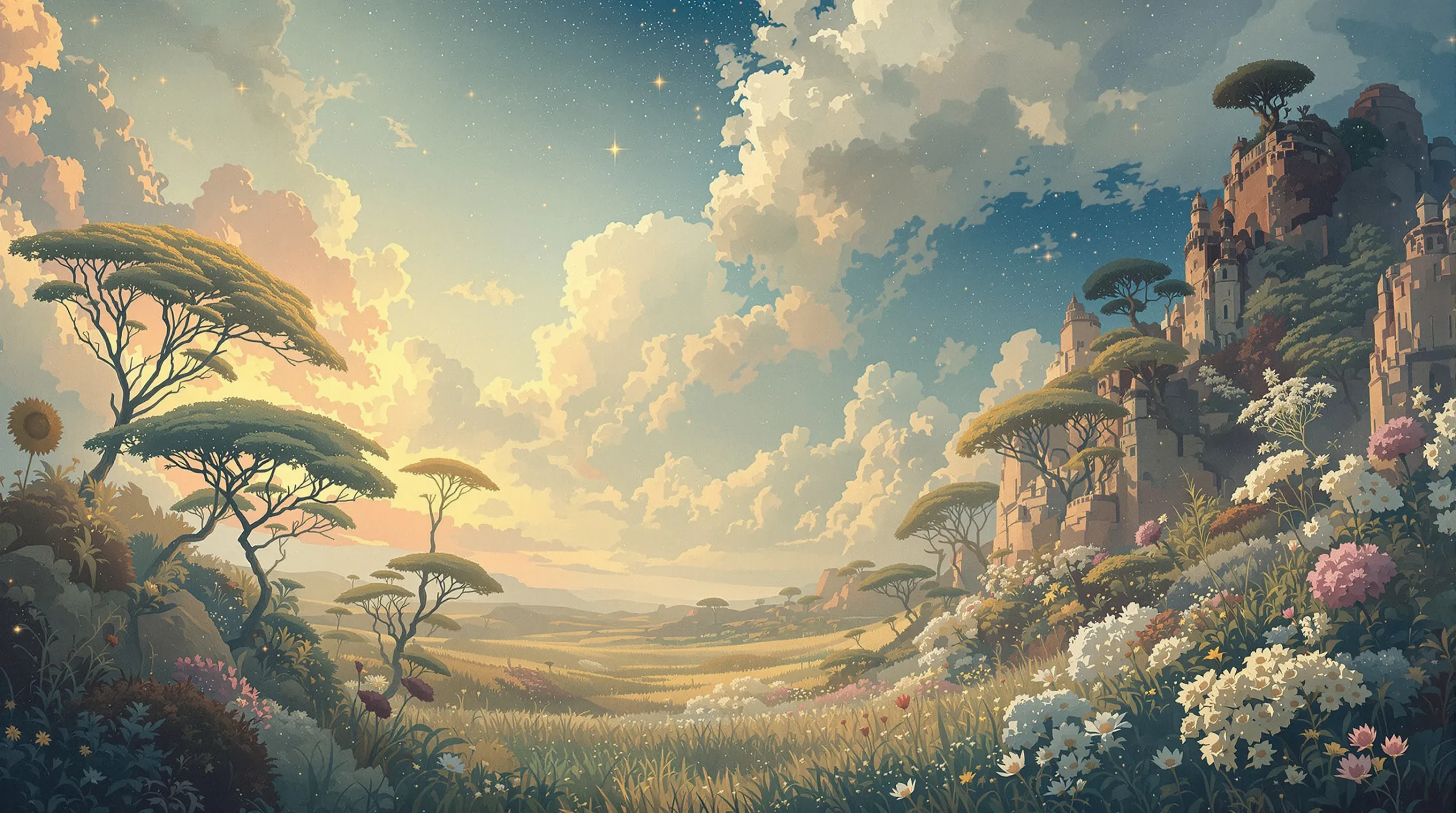
A solitary, iconic figure on the plains, its flat top and thorny branches represent resilience, the ability to find and provide sustenance in the harshest conditions, and a stubborn grip on life.

Predator-Prey Dynamics

The constant, visible dance of life and death. This is not a hidden struggle but an open drama of vigilance, strategy, and sudden violence, representing the raw, unsentimental nature of existence.

How Savanna Might Affect Your Personal Mythology

How Savanna Might Affect Your Mythos

When the Savanna is a core landscape of your personal mythos, your life story may not be one of sudden discoveries in dark caves but of long, arduous journeys across open, sun-baked plains. The narrative arc could be defined by endurance. Your central conflicts are likely visible, played out in the open rather than in secret chambers, involving social dynamics, communal survival, and the management of scarce resources. The key moments of your story may not be finding a hidden treasure, but surviving the dry season, successfully migrating to a new territory, or establishing your place within the intricate social structure of the herd.

Your personal mythos might also be cyclical, echoing the seasons of drought and rain. There may be long chapters of your life that feel static, a period of patient waiting and watching, where the primary activity is conservation of energy. These are followed by sudden, dramatic periods of intense activity: a hunt, a migration, a confrontation. The heroism in this mythos is not about slaying a singular dragon, but about the resilience to get up day after day, scan the same horizon, and continue the slow walk toward a promise of water, of safety, of belonging.

How Savanna Might Affect Your Sense of Self

You may perceive yourself as fundamentally resilient, a survivor whose primary strength is stamina. There could be a quiet pride in your ability to withstand what others cannot: long periods of uncertainty, emotional scarcity, or a lack of external validation. This self-concept is less about being brilliant or dazzling and more about being steadfast, reliable, and deeply rooted in a pragmatic reality. You might see yourself as a watcher, an observer who understands the subtle language of the environment and the people within it.

Conversely, this archetype could foster a persistent feeling of being exposed and judged. With no inner forest to retreat into, you might feel as though your every move is scrutinized. This could lead to a highly self-conscious state, a constant management of how you appear to the 'herd'. Self-worth may become inextricably linked to your utility and acceptance by the group, leading to a fear that if you cease to be useful or fit in, you will be left behind on the plain.

How Savanna Might Affect Your Beliefs About The World

Your worldview may be shaped by a sense of immense scale and deep time. You might see modern problems not as unprecedented crises but as new iterations of ancient cycles of scarcity and abundance, of community cohesion and collapse. This perspective could foster a profound patience, and perhaps a certain detachment from the daily hysteria of the news cycle. The world is not a place of quick fixes or easy answers, but a vast, interconnected system that demands observation and respect for its slow, powerful rhythms.

This might also lead to a worldview where transparency is the assumed state of being. You may believe that, ultimately, nothing can be hidden forever; the sun of the Savanna eventually illuminates everything. This could make you distrustful of secrets, complex schemes, and hidden agendas, preferring open plains of conversation and clear, unambiguous relationships. The world is a place where survival depends on seeing things as they are, not as one wishes them to be.

How Savanna Might Affect Your Relationships

In relationships, you may operate from a primal need for alliance. Connections are not for entertainment; they are for mutual survival. You likely invest deeply in a small, chosen 'herd', and for these individuals, your loyalty is absolute. The health of the relationship is measured in pragmatic terms: Do we protect each other? Do we share resources? Can I count on you to watch for danger? There may be little patience for superficiality or emotional drama that threatens the stability of the group.

This can also mean that you fear being alone more than anything. Solitude might not feel like peaceful self-reflection but like dangerous exposure. This could lead you to stay in relationships or groups that are no longer healthy, simply because the alternative—being a solitary figure on the vast plain—feels like a death sentence. The need for belonging can become so powerful that it overrides the need for personal happiness or individual expression.

How Savanna Might Affect Your Role in Life

You may naturally assume the role of the Sentinel or the Steward within any group. You are the one who watches the horizon, who thinks about long-term sustainability, who worries about the collective's resources. Your role is often not one of flashy, charismatic leadership but of quiet, steady oversight. You provide a grounding force, reminding others of the larger context and the need for patience and conservation of energy. Your value is in your foresight and your unwavering reliability.

This archetype could also cast you in the role of the Conformer, the one whose primary function is to maintain the cohesion of the herd. You may find yourself smoothing over conflicts, discouraging dissent, and prioritizing group harmony above all else. While this can be a valuable role, it carries the risk of sacrificing important truths or personal integrity for the sake of a fragile peace. Your perceived role may be to blend in, to not draw the attention of predators by being too different or causing disruption.

Dream Interpretation of Savanna

When the Savanna appears in your dreams as a lush, vibrant landscape teeming with life, it may symbolize a state of profound clarity and resourcefulness in your waking world. You might feel you have a clear view of your life's path, the 'horizon' of your goals. The presence of healthy herds could signify a strong sense of community and belonging; you feel safe and supported by your tribe. Such a dream is an affirmation of your own endurance and a sign that you are in a 'rainy season' of emotional, creative, or spiritual abundance.

Conversely, dreaming of a parched, cracked-earth Savanna under a blazing, merciless sun could point to feelings of extreme vulnerability, burnout, and exposure. You may feel that your emotional or spiritual resources are completely depleted, that the 'waterhole' has run dry. This dreamscape could reflect a fear of being abandoned by your community, or a situation in your life where you feel isolated and without protection, anxiously scanning the horizon for a threat you feel is imminent but cannot yet see.

How Savanna Archetype Might Affect Your Needs

How Savanna Might Affect Your Physiological Needs

The Savanna archetype, as part of your mythos, may manifest a physiological need for expanse and light. You might feel physically constrained or anxious in cluttered, enclosed spaces, craving rooms with large windows and open floor plans. Your body’s internal clock could be deeply synced to the rising and setting of the sun, and you may find your energy levels are profoundly affected by the seasons, feeling a need to conserve energy in the 'winter' and expend it during the 'summer'.

There could also be a tendency toward a 'conservation' metabolism. Your body may be adept at storing resources and using energy efficiently, built for endurance rather than explosive bursts. This might translate into a natural inclination for long-distance running or hiking over sprinting. Physiologically, you are built for the long journey, and you may feel a deep, bodily restlessness if you remain stationary for too long, a primal echo of the need to migrate toward better pastures.

How Savanna Might Affect Your Ideas of Belonging

The need for belongingness, when filtered through the Savanna archetype, is not a mere social preference; it is a core survival instinct. To be part of the herd is to be safe. To be cast out is to be vulnerable to predators. This may manifest as a powerful drive to maintain social harmony and a deep-seated fear of rejection or ostracism. You might go to great lengths to conform to group norms and demonstrate your loyalty and utility to the collective.

Love and intimacy may be viewed through a lens of pragmatic alliance and mutual care. A romantic partner is not just a companion, but a fellow sentinel, someone with whom you can share the watch. Expressions of love might be less about grand romantic gestures and more about consistent, reliable acts of support: sharing resources, providing comfort during 'droughts', and standing together against external threats. Belonging is feeling that someone else is watching your back while you sleep.

How Savanna Might Affect Your Feelings of Safety

Your sense of safety may be predicated on visibility and awareness. Security does not come from high walls or locked doors, but from being able to see what is coming from a great distance. This could translate into a need for order and clarity in your life; you feel safest when plans are clear, people's intentions are out in the open, and there are no secrets lurking in the shadows. The unknown is the primary source of anxiety, and your safety-seeking behaviors are all oriented toward turning the unknown into the known.

Furthermore, safety is profoundly communal. You may feel a deep, physical sense of unease when you are alone in unfamiliar environments. True security is the feeling of being surrounded by your trusted 'herd', where the burden of vigilance is shared. A threat to a member of your inner circle may feel like a direct threat to your own survival, activating a fierce, protective instinct. Safety is not a solitary state; it is a collective achievement.

How Savanna Might Affect Your Views of Esteem

Esteem needs may be met through demonstrations of resilience and utility. Your self-worth could be built on the quiet, internal acknowledgment of your own stamina: 'I survived that,' 'I outlasted the hardship,' 'I kept going when others gave up.' There is deep pride to be found in being the reliable one, the person who remains steady when the landscape becomes harsh and unforgiving. Your esteem is not derived from flashy wins but from the enduring fact of your own survival.

Recognition from the group is also a powerful driver of esteem. Being seen as a valuable member of the 'herd'—the one who finds the water, the one who spots the danger first, the one who calms the young—is a primary source of self-respect. This differs from a need for fame or applause; it is a need to be acknowledged as integral, a functional and indispensable part of the collective's machinery of survival. Your value is measured by your contribution to the whole.

Shadow of Savanna

The shadow of the Savanna emerges as either agonizing stasis or paranoid exposure. In its excess, the open plain becomes a form of agoraphobia, a terror of the vast emptiness with no place to hide. Life becomes a flat, featureless ordeal of waiting for an inevitable doom, a state of hyper-vigilance so exhausting it calcifies into paralysis. Every other person is a potential predator, every open space a killing field. The need for the herd becomes a desperate, cloying dependency, sacrificing all individuality for the illusion of safety within a group that might be just as lost.

When the Savanna energy is deficient or suppressed, it manifests as a desperate burrowing. This is the refusal to be seen, a retreat into denial and self-deception, pretending the open threats of one's life do not exist. It can also birth a cruel, social Darwinist mentality. The shadow applies the unsentimental laws of nature to human relationships: the weak are abandoned, the slow are sacrificed for the good of the herd, and compassion is a liability. The community becomes a tool not for mutual support but for ruthless self-preservation, where loyalty is conditional and exile is a weapon.

Pros & Cons of Savanna in Your Mythology

Pros

  • You cultivate a profound sense of perspective, understanding that most of today's urgencies are insignificant in the long run.

    You build incredibly resilient, trust-based relationships that can weather almost any hardship.

    Your heightened awareness makes you exceptionally perceptive and difficult to deceive.

Cons

  • You can be paralyzed by a feeling of constant vulnerability and a sense that you are always being watched.

    Your preference for slow, cyclical change may make you slow to react to sudden opportunities or crises.

    Your intense need for a 'herd' can lead to a fear of necessary solitude and a loss of individual identity.