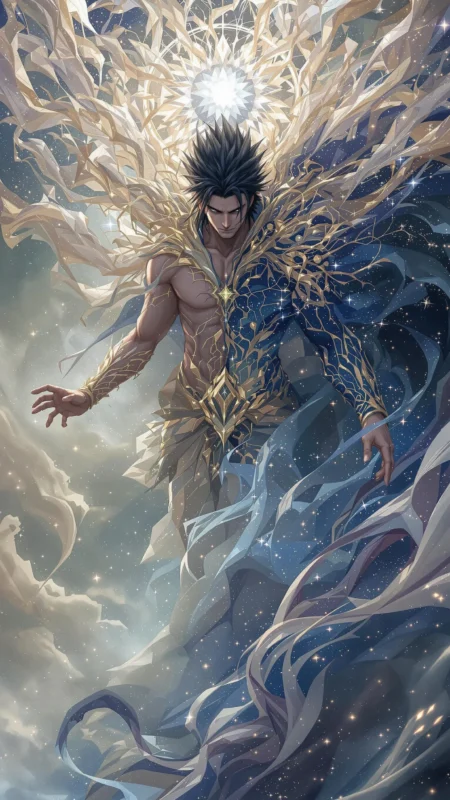
Sasuke Uchiha

Archetype Meaning & Symbolism

Vengeful, isolated, prodigious, tormented, ambitious, solitary, ruthless, redeemed, rival, wanderer

  • I have long since closed my eyes... My only goal is in the darkness.

If Sasuke Uchiha is part of your personal mythology, you may...

Believe

  • You may believe that pain is the most potent catalyst for growth and that true strength is forged in the crucible of solitude.
  • You may believe that bonds and allegiances are conditional, and that severing them is a necessary, if painful, act of personal evolution.
  • You may believe that established systems are inherently corrupt, and that a single individual with enough will has the right, and perhaps the duty, to challenge them.

Fear

  • You may fear powerlessness above all else, seeing weakness not as a human trait but as a moral failing.
  • You may fear that emotional connection is a vulnerability, a gateway through which you can be manipulated or betrayed.
  • You may hold a secret fear that you are irredeemable, that the darkness you have embraced in your quest for strength will ultimately consume any light within you.

Strength

  • Your determination is nearly unbreakable. Once you have set a goal, you will pursue it with a singular, relentless focus that others may find intimidating.
  • You possess a profound self-reliance, capable of not just surviving but thriving in isolation, using solitude as a tool for immense personal growth.
  • You have a sharp, analytical mind that cuts through sentimentality and emotional appeals to see the cold, hard mechanics of a situation.

Weakness

  • You have a tendency to burn bridges, alienating potential allies and loved ones in your pursuit of a goal, leaving you dangerously isolated.
  • Your own ambition and history of pain can be weaponized against you, making you vulnerable to manipulation by those who understand your triggers.
  • You may suffer from a form of emotional blindness, struggling to recognize, value, or process the more subtle emotions in yourself and in others, viewing them as illogical noise.

The Symbolism & Meaning of Sasuke Uchiha

The Sasuke archetype is a vessel for inherited trauma, the ghost in the machine of a family's history. He may represent the weight of sins or sorrows passed down through generations, a burden that one feels uniquely destined to carry and, perhaps, to rectify. In a personal mythos, he is the figure who cannot simply live; he must react to a foundational wound that predates his own conscious choices. This makes his quest for power not one of simple ambition, but of cosmic justice, an attempt to rebalance scales that were tipped long before his arrival. He is the chilling reminder that we are often born into the middle of a story, tasked with writing an ending for a conflict we did not begin.

His journey is also a profound meditation on the peril and power of self-imposed exile. Sasuke symbolizes the belief that certain truths or strengths can only be found in the wilderness, far from the comforting but ultimately compromising warmth of the community. To adopt this archetype is to sanctify the act of leaving, to see it not as abandonment but as a necessary pilgrimage. This solitary path, however, is fraught with danger: the risk of losing one's humanity in the pursuit of inhuman strength, of becoming so defined by the quest that one forgets the reason for starting it. He is the prodigy who walks alone, a silhouette against the horizon, forever caught between the home he left and a destination he may never reach.

Ultimately, the archetype speaks to the grueling, unglamorous process of redemption. Sasuke’s later life is not a simple return to the fold but a perpetual act of atonement. He embodies the idea that forgiveness, especially self-forgiveness, is not a single event but a continuous practice, often carried out in solitude. He suggests that one can serve the world they have wronged not by rejoining it, but by protecting it from the shadows, from a vantage point of unique understanding. His symbolism is that of the reformed destroyer, the one whose knowledge of darkness makes him its most effective guardian.


Sasuke Uchiha Relationships With Other Archetypes

The Sun-Kissed Rival

The relationship with the Rival may be the central gravitational force in the Sasuke archetype’s cold cosmos. They are, perhaps, not so much opposites as they are two halves of a fractured whole, a single soul cleaved in two and condemned to orbit each other. The Rival is a sun, impossibly bright, whose warmth is felt not as comfort but as a searing judgment, a constant, radiant reminder of a light the archetype has forsaken. This bond could be seen as a kind of agonizing magnetism, a pull toward a life of connection that he must perpetually sever, for to accept its grace would be to admit the fallacy of his own dark pilgrimage.

The Serpent's Promise

With the Corruptor, the archetype finds not a master, but a warped kind of sanctuary. This figure may represent the allure of the shortcut, the poisoned well that looks like an oasis in the desert of youthful impotence. The promise is not merely power, but a dark confirmation of one's own worldview—that strength is the only truth and sentiment is a fatal flaw. The Corruptor, then, could be a surgeon offering to excise the troublesome heart, a transaction that feels less like a seduction and more like a logical, necessary amputation in the pursuit of a singular, all-consuming goal.

The Ghost of the Brother

The Brother is perhaps less a character and more a landscape, the blighted homeland from which the archetype is a permanent exile. This figure is the genesis of the wound, a memory polished by hate into a perfect, obsidian shard. The relationship is a conversation with a ghost, where every action is a belated, furious reply. When the truth of the Brother’s sacrifice is revealed, it does not heal the wound but deepens it, transforming the clean fire of vengeance into the suffocating smoke of regret. The Brother, in the end, may be a compass that always pointed true north, but which the archetype chose to read as south.

Using Sasuke Uchiha in Every Day Life

Navigating Foundational Betrayal

When one’s trust in a foundational institution—be it family, government, or a belief system—is shattered, the Sasuke archetype offers a map. It suggests that the ensuing rage and disillusionment need not be a dead end. Instead, they could become the raw material for forging a new, fiercely independent self. This path involves metabolizing pain into power, using the memory of the wound not as a source of perpetual victimhood, but as the whetstone upon which one’s resolve and skills are sharpened to a razor's edge.

Forging an Independent Path

For the individual who feels suffocated by the expectations of their community or the prescribed narrative of their upbringing, Sasuke represents the perilous but necessary act of secession. It is the courage to be misunderstood, to be labeled a traitor or a fool, in the pursuit of a singular truth or a self-defined destiny. This archetype provides a model for the great departure, the moment one walks out of the village gates, leaving behind the warmth of belonging for the cold, clear air of personal sovereignty.

Integrating the Shadow Self

The archetype serves as a potent guide for confronting one's own darkness: the simmering envy, the cold ambition, the dormant capacity for ruthlessness. To embody Sasuke is not to suppress these aspects but to meet them in the field, to understand their power and purpose. It is a journey of learning to wield the lightning of one’s own rage without being consumed by the storm, mirroring his long, arduous path from a vessel of hate to a guardian who understands the necessity of shadow.

Sasuke Uchiha is Known For

The Pursuit of Vengeance

His story is initially defined by a singular, all-consuming quest to avenge the annihilation of his clan by his older brother, a mission that shapes his every action and isolates him from his peers.

The Rivalry with Naruto

A central, defining bond of brotherhood, conflict, and philosophical opposition. This relationship serves as the magnetic north for both characters, a constant pull between severing ties and an unbreakable connection.

The Journey of Redemption

His eventual, and perhaps ongoing, transformation from an antagonist seeking destruction to a solitary protector of the world he once sought to burn, atoning for his sins through quiet, lonely vigilance.

How Sasuke Uchiha Might Affect Your Personal Mythology

How Sasuke Uchiha Might Affect Your Mythos

When the Sasuke archetype integrates into a personal mythos, it often introduces a 'Fall from Grace' or a 'Great Betrayal' as the central, formative event of one's life story. A past hurt—a family schism, a deep personal failure, a societal injustice—is no longer just a painful memory. It becomes the inciting incident, the cataclysm that sets the hero on a singular, often lonely, path. The narrative of your life may shift from one of simple progression to one of questing: a search for the power, knowledge, or justice needed to address that original wound. Life is not about happiness, but about purpose, and purpose is forged in the fires of that initial loss.

Consequently, the mythos becomes a story of acquiring power. This is not the straightforward power of career advancement or social status, but a more esoteric, personal potency. It could be intellectual mastery, physical prowess, or emotional invulnerability. The narrative arc follows the lonely student mastering a difficult craft, the silent observer understanding the hidden mechanics of the world, the stoic soul learning to transmute pain into fuel. Your life story may be framed as a long, arduous training montage, punctuated by moments where you must sever ties or make difficult sacrifices to protect your mission. The ultimate goal is to become strong enough to face the ghost of that initial betrayal and either vanquish it, understand it, or, most complicatedly, forgive it.

How Sasuke Uchiha Might Affect Your Sense of Self

To see oneself through the lens of Sasuke is to cultivate a self-image of fierce, almost defiant, independence. You may come to view your reliance on others as a liability, and your own judgment, honed by painful experience, as the only trustworthy compass. This fosters a deep well of self-reliance, an ability to navigate hardship alone that can be both a formidable strength and a profound burden. Vulnerability might be reframed as a strategic error, and emotional expression a luxury one cannot afford. The self becomes a fortress, meticulously constructed and guarded, with a deep suspicion of anything that might breach its walls.

This fortress, however, can be a lonely place. A core component of this self-perception is a feeling of being fundamentally misunderstood, an outsider by necessity. You may feel that the depth of your pain, the weight of your purpose, or the complexity of your vision is simply beyond the grasp of others. This can lead to a kind of noble solitude, a feeling of being set apart, like a prodigy in a world of amateurs. While this can bolster the ego, it may also mask a deep-seated loneliness and a quiet yearning for a peer who can finally see you for all that you are, darkness included.

How Sasuke Uchiha Might Affect Your Beliefs About The World

Adopting the Sasuke archetype could tint one's worldview with a deep and abiding cynicism. You may begin to see the world's structures—governments, corporations, social conventions, even family units—as inherently flawed, built upon foundations of compromise, deceit, or forgotten violence. The world is not a garden to be tended, but a ruin to be explored or, in more extreme cases, a corrupt temple to be torn down. This perspective is not one of passive pessimism but of active critique. You may see it as your role to expose the hypocrisy, to speak the uncomfortable truth, to be the one who remembers the crimes everyone else has agreed to forget.

This cynical view is paired with a radical belief in individual agency. If the world's systems are broken, then salvation or change cannot come from them. It must come from the individual. This worldview champions the power of a single, determined person to bend the arc of history. It suggests that with enough will, enough power, and enough focus, one person can indeed defy empires, rewrite rules, and create a new reality. The world is a thing to be acted upon, a block of marble from which a determined sculptor can carve a new form, for better or for worse.

How Sasuke Uchiha Might Affect Your Relationships

In the realm of relationships, the Sasuke archetype may manifest as a pattern of preemptive separation. Bonds may be viewed as potential chains, and intimacy as a gateway for betrayal. You might test the loyalty of friends and loved ones, pushing them away to see if they will hold on, half-hoping they won’t, as it would confirm your solitary path. Relationships can become transactional, assessed by their utility to your central mission rather than for their intrinsic emotional value. The guiding principle could become: 'that which does not make me stronger makes me weaker,' leading to a curated and often sparse social circle.

Despite this, the archetype holds a space for a singular, world-defining bond. There may be one person in your life—a rival, a partner, a sibling—who represents your 'Naruto.' This connection is the exception to every rule. It is a bond that persists despite distance, conflict, and even betrayal. It may be a source of constant frustration, a mirror showing you the parts of yourself you'd rather ignore, but it is also your anchor to humanity. This one relationship becomes the locus of all your buried hopes for connection, a secret testament that even in the deepest darkness, you are not entirely alone.

How Sasuke Uchiha Might Affect Your Role in Life

If Sasuke is a part of your personal mythos, you may cast yourself in the role of the necessary outsider. You are the one who stands apart from the group, not out of petulance, but because your perspective, forged in a crucible the others did not experience, prevents you from accepting the comfortable consensus. Your role is that of the critic, the dissenter, the Cassandra who sees the flaws in the plan or the rot in the foundation. It is a lonely role, and often a thankless one, but you may see it as a vital one: without your skepticism, the group is blind to its own vulnerabilities.

This can evolve into the role of the dark protector or the redeemed wanderer. You may believe your purpose is to do the dirty work, to walk the morally gray paths that others cannot, all for a greater good. Your past mistakes or hardships grant you a unique qualification to handle the world's shadows. You don't seek a seat at the table; you seek to guard the room from the outside. Your role is not to be loved or even understood, but to be effective. It is the path of atonement through action, a silent, solitary vigil for a world you may never feel fully a part of.

Dream Interpretation of Sasuke Uchiha

In a positive context, dreaming of the Sasuke archetype may signal a profound internal shift toward personal empowerment. The dream could be your subconscious mind granting you permission to finally sever ties that have been holding you back, be it a toxic job, a draining relationship, or a limiting belief system. His appearance might represent the awakening of a long-dormant ambition and the courage to pursue a path of self-discovery, even if it promises hardship and misunderstanding. He is the herald of a necessary departure, a call to embrace a period of solitude to forge a stronger, more authentic self.

Conversely, a dream featuring Sasuke in a negative light could serve as a stark warning. It may indicate that you are becoming consumed by a grievance, allowing bitterness or a desire for revenge to poison your perspective. His presence could symbolize a dangerous slide into isolation, pushing away those who care for you under the guise of self-protection. This dream might be a caution from your deeper self that your pursuit of a goal—be it power, justice, or validation—is causing you to sacrifice essential parts of your humanity, leading you down a dark path toward a hollow victory.

How Sasuke Uchiha Archetype Might Affect Your Needs

How Sasuke Uchiha Might Affect Your Physiological Needs

When Sasuke informs one's mythos, the body may be viewed instrumentally: less a home to be nurtured and more a tool to be sharpened. Physiological needs like sleep, nutrition, and rest can become secondary, even tertiary, to the primary mission. One might push the body to its breaking point, believing that discipline is forged in the crucible of deprivation. This perspective treats pain as feedback and exhaustion as a sign of progress, a mindset that can yield incredible physical results but risks long-term burnout and a fundamental disconnection from the body's intrinsic wisdom.

However, this archetype could also manifest as a hyper-vigilant form of physical cultivation. The body becomes a sacred weapon, and its maintenance a critical ritual. Every calorie, every hour of sleep, every moment of training is meticulously calculated to optimize performance. This is not about health for health's sake, but about readiness. The physiological self is kept in a state of constant preparation for a coming trial, a devotion to physical excellence that borders on the ascetic, where the goal is to make the flesh an unerring servant of the will.

How Sasuke Uchiha Might Affect Your Ideas of Belonging

Belongingness, through the Sasuke lens, is often perceived as a cage, albeit a comfortable one. To be part of a group is to be diluted, to be bound by its rules and dulled by its consensus. The personal mythos may feature a pivotal 'village-leaving' moment: a conscious decision to sever ties with a community to pursue a higher, more personal calling. This act is framed not as a rejection of people, but as a rejection of compromise. The ache of loneliness is considered a fair price for the freedom to forge one's own path and define one's own values.

And yet, this fierce independence often masks a profound, subterranean yearning for a restored home. The archetype is not just about leaving; it's about the deeply held, perhaps unconscious, hope of one day returning to a 'clan' that is worthy. This isn't a desire to rejoin the flawed group that was left behind, but a desire to found or find a new one, a community built on a foundation of shared strength, earned trust, and unflinching truth. The ultimate quest may not just be for personal power, but for a place where one can finally, truly, belong without sacrificing the self.

How Sasuke Uchiha Might Affect Your Feelings of Safety

The Sasuke archetype may cultivate a paradoxical orientation toward safety. On one level, it can create a state of perpetual, low-grade hyper-vigilance. The world is perceived as a terrain of hidden threats and potential betrayals, leading to a profound mistrust of others and a constant scanning of the environment for danger. True safety is an illusion, and the only rational stance is one of guarded readiness. This can manifest as a need for control over one's environment and a deep-seated reluctance to be vulnerable in any capacity.

On another level, this archetype may compel an individual to actively court danger. The logic is that true security is not found in building higher walls, but in becoming more powerful than any potential threat. One might walk toward the fire, believing that confronting danger head-on is the only way to neutralize it. Safety, in this view, is a byproduct of competence and power. You don't hide from the storm; you learn to command the lightning, believing that the only person you can truly rely on to protect yourself is you.

How Sasuke Uchiha Might Affect Your Views of Esteem

For one who identifies with the Sasuke archetype, esteem is almost exclusively an internal affair, built upon the bedrock of tangible skill and personal power. External validation, praise, or social approval may be viewed with suspicion, or even contempt. Self-worth is not something granted by others; it is something seized, forged in the solitary hours of practice, study, and self-overcoming. The measure of the self is its capability. Esteem rises and falls not with public opinion, but with one's own harsh, internal assessment of one's progress toward a singular goal.

This method of building esteem, however, can create a deeply brittle sense of self. It may be a towering skyscraper built on a single pillar of competence. The fear of failure, of being powerless, becomes an existential threat. This can lead to a relentless, exhausting pursuit of 'more'—more power, more skill, more knowledge—in an effort to silence the inner voice that whispers of inadequacy. The esteem is never truly secure; it is always contingent on the next victory, forever haunted by the specter of the one opponent you may not be able to defeat: your own limitations.

Shadow of Sasuke Uchiha

The shadow of Sasuke emerges when the quest for justice sours into an insatiable thirst for destruction. It is the point where the mission to correct a past wrong becomes a justification for committing new ones. In this shadow state, every person becomes a tool or an obstacle, and empathy is discarded as a tactical flaw. The world is no longer seen as a place to be protected, but as a corrupt structure that must be razed to the ground. This shadow self is a chilling nihilist, convinced that the only way to create a pure world is to first burn the impure one, forgetting that he himself is part of it. It's a path that doesn't lead to peace, but to an empty throne in a kingdom of ash.

There is another, quieter shadow: the paralysis of the eternal wanderer. This is the Sasuke who completes his quest for revenge but finds no peace, who atones but finds no forgiveness, especially from himself. He becomes a ghost, forever defined by the trauma he endured and the sins he committed. He is unable to reconnect, unable to build anything new because his identity is inextricably linked to what was destroyed. This shadow isn't a force of active destruction, but of tragic stagnation, a man trapped in the amber of his own myth, endlessly walking a road that leads nowhere, unable to believe he is worthy of ever arriving home.

Pros & Cons of Sasuke Uchiha in Your Mythology

Pros

  • The archetype provides a powerful narrative for transmuting personal trauma into fuel for strength and purpose.
  • It fosters a radical sense of self-reliance and the cultivation of formidable, often singular, skills and talents.
  • It encourages a critical and uncompromising perspective on established power structures, fostering the courage to challenge the status quo.

Cons

  • Its solitary nature can lead to profound loneliness and an inability to form or maintain healthy, interdependent relationships.
  • It risks romanticizing vengeance and bitterness, framing them as noble paths rather than corrosive forces.
  • The intense focus on personal power and achievement can create a brittle ego and a life of constant, exhausting self-proving.