 Believe
 Fear
Fear Strength
 Weakness
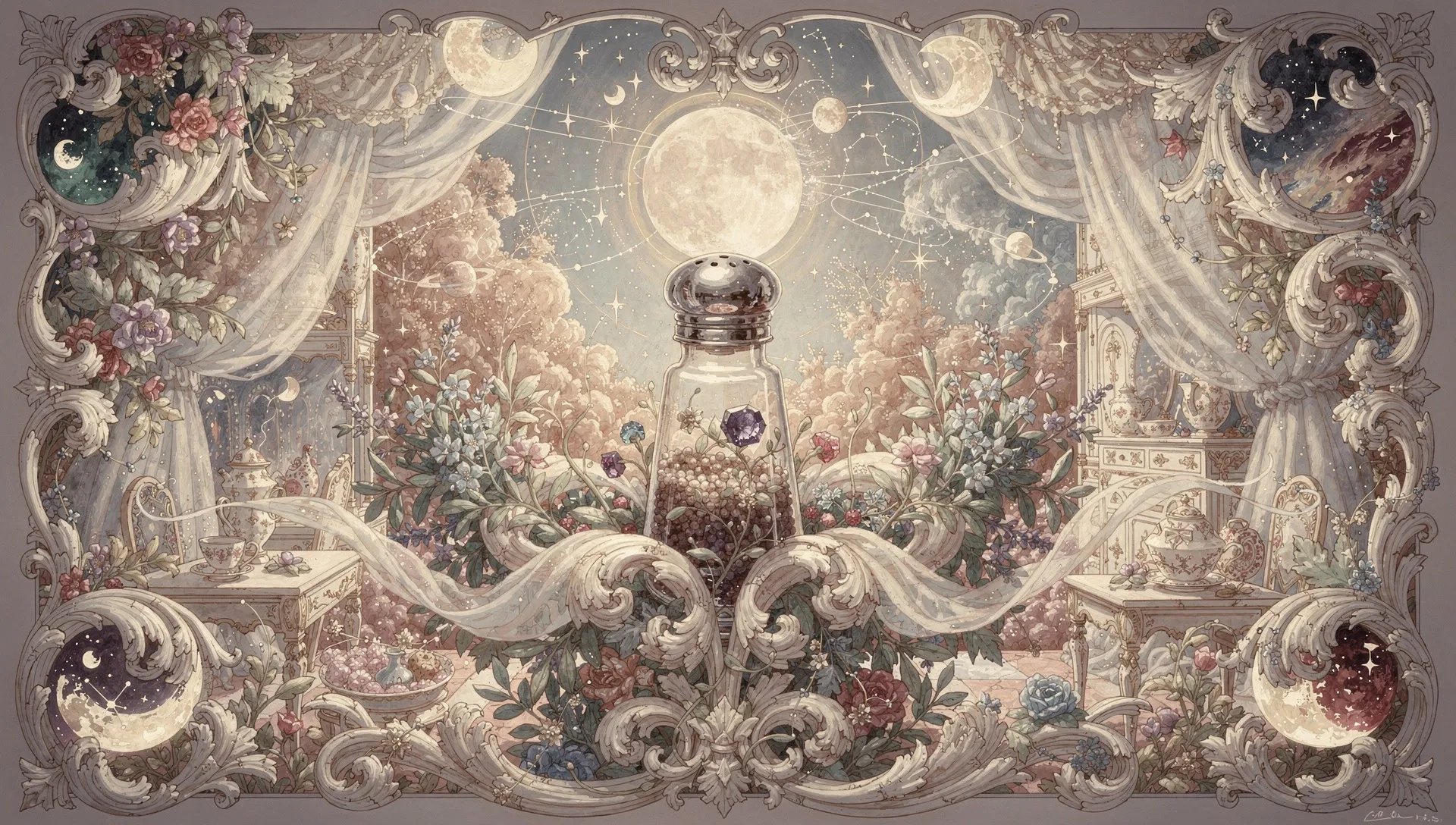
In the personal mythology of a modern life, the Salt & Pepper archetype speaks to the profound in the profane, the sacred in the mundane. To find this pair within your story is to recognize that meaning is not always a thunderous revelation but often a quiet, essential seasoning. It is the wisdom of the everyday, the magic hiding in plain sight on the kitchen table. This archetype suggests a life path not of transformation, but of enhancement. You may not be called to become a different person, but to more fully bring out the flavors of who you already are. It symbolizes a foundational balance, a belief that life's disparate elements—joy and sorrow, struggle and ease, the stark and the subtle—are not flaws in the design but the very ingredients that make it rich and palatable.
Furthermore, Salt & Pepper may represent the nature of essential relationships and necessary contrasts. Salt is the mineral of the earth, the taste of the ocean, a symbol of permanence, purity, and even tears. Pepper is the fruit of a flowering vine, a spark of heat and aromatic complexity, a traveler from a faraway land. Together, they form a partnership of the domestic and the exotic, the stolid and the spirited. In a personal narrative, this could signify an inner integration of one's own stable, grounded nature with one's capacity for sharp, fiery insight. It is an acknowledgment that both preservation and provocation are required for a life fully lived.
This archetype may also be a potent symbol for the power of small things. In a world that often celebrates the monumental, Salt & Pepper champions the incremental, the necessary touch. It reminds us that the most memorable experiences are often defined by the details. A conversation, a meal, a relationship—all can be ruined by too much or rendered forgettable by too little. To have Salt & Pepper in your mythos is to be a student of nuance, an artist of the appropriate measure. It is the understanding that one's influence need not be loud to be essential, and that the most vital contributions are sometimes the ones that blend in so perfectly they are only noticed in their absence.