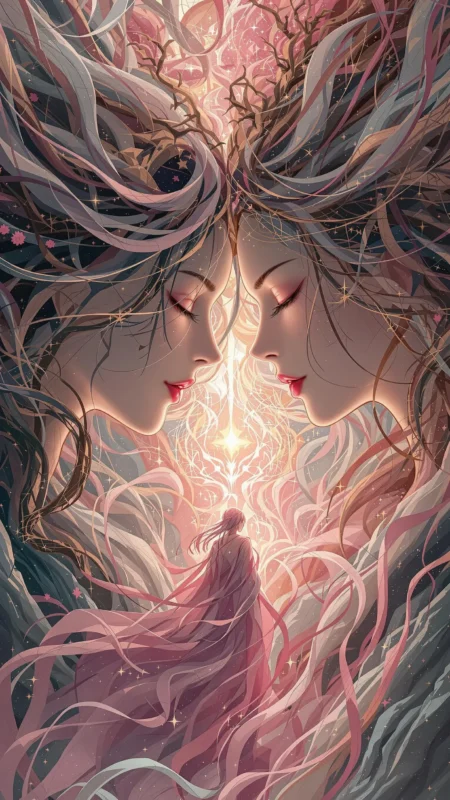
Sakura Haruno

Archetype Meaning & Symbolism

intelligent, resilient, studious, volatile, insecure, loyal, determined, healing, practical, underestimated

  • I've always considered myself to be a true ninja... but those were just empty words... because Sasuke and Naruto were always in the lead! But now it's my turn to take the lead! And all of you can watch me from the background!

If Sakura Haruno is part of your personal mythology, you may...

Believe

  • True strength isn't what you're born with, it's what you build from the ashes of your own perceived weakness.
  • My emotional depth is not a liability; it is the wellspring of both my empathy and my ferocity.
  • The most critical contributions are often the ones made away from the spotlight, through quiet study and unwavering support.

Fear

  • The terrifying thought that, despite all my work and all my effort, I will ultimately be found lacking and left behind.
  • That I am, at my core, a burden to the people I love most, unable to protect them when it truly matters.
  • My own anger and insecurity, a furious inner voice that, if unleashed, could destroy everything I care about.

Strength

  • An astounding level of resilience and the iron willpower to pursue difficult, long-term goals without the need for constant validation.
  • A sharp, analytical intellect that can dissect complex problems and devise practical, effective solutions.
  • A profound capacity for care and the ability to be a source of healing and stability for others.

Weakness

  • A propensity for placing certain individuals on an impossibly high pedestal, leading to the neglect of one's own needs and worth.
  • A harsh inner critic that breeds a persistent sense of insecurity and an over-reliance on external approval.
  • A struggle with emotional regulation that can lead to overwhelming despair or explosive outbursts of frustration.

The Symbolism & Meaning of Sakura Haruno

The Sakura Haruno archetype is the patron saint of the late bloomer. In a world that fetishizes the prodigy, she represents the defiant power of the slow-burn, the cherry blossom that withholds its beauty until it is ready to burst forth in an undeniable display. Her mythos speaks to those who were not born with a crown but must forge one from textbooks and tears. She is the quiet promise that what is earned is more indelible than what is given, a testament to the idea that greatness can be a decision, a vow made in the shadow of giants.

She is a symbol of manufactured power in the best sense: a strength not inherited from a divine bloodline or bestowed by a magical beast, but built methodically, piece by painful piece. This makes her deeply resonant in a contemporary mythology where personal agency is the ultimate grail. Her journey is a comfort, a map for anyone who has ever felt like the 'normal' one in a room of chosen ones. She embodies the radical notion that through sheer force of will and intellect, one can rewrite their own narrative from a supporting role to a lead.

The archetype also holds the profound duality of creation and destruction. The very hands that can meticulously knit flesh and bone back together are the same hands that can pulverize the earth. This is the integration of the healer and the warrior, a rejection of the idea that one must be either gentle or strong. She is both. This symbolism offers a potent model for a modern identity: one that embraces its capacity for profound nurturing alongside its capacity for righteous, terrifying anger.


Sakura Haruno Relationships With Other Archetypes

The Unmoved Mountain

In the shadow of The Unmoved Mountain—that archetype of geological indifference and singular, self-contained purpose—the Sakura may find her initial, defining trajectory. She is, perhaps, the tenacious vine attempting to grow upon its granite face. Her efforts are not an erosion, not a force meant to conquer, but rather a persistent, upward cartography of devotion. The mountain may remain impassive, its peak perpetually wreathed in a private mist, yet the vine’s existence becomes a testament to its own strength, its path dictated by the unyielding contours it seeks to embrace. This relationship could be a long, silent dialogue between relentless, living growth and profound stillness, where the vine learns that its own blossoming is a victory independent of whether the mountain ever acknowledges the life upon its surface.

The Raging Sun

Next to The Raging Sun—that figure of almost nuclear charisma and innate, blinding talent—the Sakura archetype might appear as The Patient Earth. The sun's power is a spectacular, often chaotic, generosity; it does not choose where its light and heat fall. The earth, in its quiet humility, does not compete with this radiance. Instead, it could be said to absorb it, to metabolize the unbridled energy through a slow and methodical alchemy. While the sun scorches and illuminates in great, dramatic arcs across the sky, the earth is engaged in the unseen, terrestrial work of turning that raw power into a single, rooted blossom. The relationship, then, may not be one of rivalry, but of a fundamental, cosmic collaboration where one provides the overwhelming force and the other gives it form, purpose, and a place to finally rest.

The Broken Vessel

With The Broken Vessel—the scarred mentor, the master whose own power is latticed with the beautiful cracks of past failures—the Sakura archetype may find her truest purpose as The Kintsugi Artist. The mentor is the exquisite ceramic, shattered by a history the student can only guess at. The Sakura, in her role as healer and successor, does not attempt to hide the damage. Instead, she may painstakingly gather the shards, learning the unique shape of each trauma, and mend them with seams of molten gold. In this delicate act of restoration, she is not merely fixing what is broken; she is honoring its history, transforming fractures into a map of resilience. It is possible that in tracing these gilded lines on another, she discovers the very anatomy of strength, finding that the gold she uses is a resource mined from the depths of her own, once-overlooked, heart.

Using Sakura Haruno in Every Day Life

Navigating Imposter Syndrome

When confronted with feelings of being out of your depth, surrounded by seeming prodigies, the Sakura mythos offers a blueprint. It suggests a retreat not into despair, but into study. It is the act of checking out the books, finding the mentor, and engaging in the unglamorous, repetitive work of practice. The path forward is not a stroke of genius, but the slow accumulation of knowledge until your own competence becomes undeniable, a quiet force that speaks for itself.

Healing Relational Rifts

This archetype provides a metaphor for emotional repair. To channel Sakura is to approach a conflict with the precision of a medical-nin: to first diagnose the actual wound beneath the anger and accusations. It demands a calm hand, an understanding of the delicate emotional tissues involved, and the application of empathy not as a vague sentiment, but as a focused tool used to mend what has been broken, stitch by stitch.

Integrating Your 'Inner Self'

For those who present a calm, capable exterior while an inner voice screams with frustration and insecurity, Sakura offers a path to integration. Her 'Inner Sakura' is not a flaw to be silenced but a vital, honest part of the whole. Acknowledging this inner turmoil is the first step. The next is to learn to use its energy: to let its cry for recognition fuel your ambition, and its rage be channeled into the disciplined force required to shatter your own limitations.

Sakura Haruno is Known For

Medical Ninjutsu

An unparalleled expertise in healing arts, born from intense study and precise chakra control, allowing her to mend fatal wounds and cure complex poisons.

Superhuman Strength

The ability to focus chakra into her fists, resulting in earth-shattering power. A strength that is not innate, but a masterfully learned technique, making her a physical powerhouse.

A Saga of Devotion

An enduring, and often painful, loyalty to her teammates, particularly her complex and consuming love for Sasuke Uchiha, which becomes a catalyst for much of her personal growth and suffering.

How Sakura Haruno Might Affect Your Personal Mythology

How Sakura Haruno Might Affect Your Mythos

To integrate the Sakura Haruno archetype is to fundamentally alter the script of one's personal mythos, shifting it from a story of destiny to a story of discipline. The central narrative is no longer about being 'chosen' or waiting for a fateful encounter, but about the arduous and often lonely process of apprenticeship. Life becomes a dojo, a library, a laboratory. You may find your myth re-centering around the figure of a mentor, a symbolic 'Tsunade,' who provides the knowledge, and a monumental task, which provides the crucible for your transformation. The climax of your story might not be a single heroic moment, but the quiet realization that you have, through your own efforts, become the person you once looked up to.

Furthermore, the mythos will likely feature a central, magnetic force—a person, a goal, an ideal—that acts as an initial catalyst. This is the 'Sasuke' of your narrative: an object of intense longing that at first seems to define you. The arc of the myth, however, is not in attaining this object, but in the journey of self-creation it inspires. The story's resolution is found when your identity is no longer reflected in the eyes of another, but is forged in the fire of your own ambition. The myth becomes about transcending the initial obsession and discovering that the chase was merely the training ground for your true power.

How Sakura Haruno Might Affect Your Sense of Self

When Sakura is a pillar of one's inner world, the self may be perceived as a constant work-in-progress, a project of relentless refinement. This can foster an intense work ethic and a belief in self-improvement, but it may also come with a loud inner critic. This 'Inner Sakura' is the voice of insecurity, constantly measuring, comparing, and pointing out flaws. The journey with this archetype is learning to transform that voice from a tormentor into a motivator, a raw energy source for ambition. The self is not a fixed state but a dynamic process of learning, failing, and applying effort again and again.

A relationship with this archetype could also lead to a radical acceptance of one's own emotional landscape. The surges of rage, the depths of despair, the fierce loyalty—these are not seen as shameful flaws to be suppressed. Instead, they are recognized as part of a powerful, if volatile, inner world. The self-concept becomes rooted in a profound resilience, the ability to be emotionally shattered by life or love and then, with clinical precision and sheer grit, to piece oneself back together, stronger and more knowledgeable than before.

How Sakura Haruno Might Affect Your Beliefs About The World

Adopting a Sakura-centric worldview may mean seeing the world not as a stage for singular heroes, but as a complex ecosystem of interlocking skills. One may develop a profound respect for the so-called 'support roles,' recognizing that the medic, the strategist, the analyst are as vital to success as the frontline star. The world's value system shifts from venerating innate talent to appreciating diligent contribution. It is a perspective that finds nobility in the necessary, often uncelebrated, work that allows for grand moments to happen.

This archetype could also instill a worldview grounded in a kind of pragmatic optimism. The world's problems, whether personal or political, may seem less like intractable fate and more like complex equations waiting to be solved. The solution is rarely a miracle. It is found in rigorous study, precise application of knowledge, and the unwavering belief that enough focused effort can mend any wound and break any obstacle. It's a view that replaces magical thinking with a faith in the tangible power of competence.

How Sakura Haruno Might Affect Your Relationships

In relationships, the Sakura mythos might manifest as a powerful, sometimes painful, loyalty. There may be an initial pattern of orbiting brilliant but difficult people, the 'Sasukes' of one's life, in a quest for validation. This can create a dynamic of unrequited effort, a feeling that one must constantly prove their worth to be loved. A person embodying this archetype might gravitate toward a 'healer' role, attempting to mend the broken parts of their partners, a noble but potentially draining impulse that blurs the line between caring and codependency.

As the archetype matures within one's personal mythology, a significant shift can occur. The primary drive in relationships may move from seeking love to offering strength. The central question evolves from 'Do they see my value?' to 'How can my cultivated abilities enrich this bond and support those I love?' This fosters a move toward genuine interdependence, where one's worth is self-evident and offered as a gift. Love is no longer about being 'enough' for someone, but about being a formidable, reliable pillar in a shared life.

How Sakura Haruno Might Affect Your Role in Life

One who embodies the Sakura archetype may feel a deep-seated drive to define their own role, rejecting any box society or circumstance tries to place them in. It's a quiet rebellion against being typecast as the sidekick, the love interest, or the damsel. You may perceive your role as the understudy who diligently practices in the wings, mastering not only the star's part but a dozen other skills no one thought to learn. Your role is defined by the moment you step onto the stage not as a replacement, but as something new and unexpected, revealing a power that was being cultivated in silence all along.

This role may not be one of overt leadership, but of the essential fulcrum. You are the one the team pivots around. You are not the charging vanguard or the charismatic leader, but the one who analyzes the battlefield, mends the wounded, and delivers the single, decisive blow when the moment is right. It is a role of immense, concentrated power that holds the entire structure together. Your contribution is not in the initial charge, but in ensuring there is a victory to be had, and a home to return to afterward.

Dream Interpretation of Sakura Haruno

In a positive context, to dream of Sakura Haruno or to find oneself embodying her skills suggests a profound alignment with your own journey of growth. It may be the subconscious affirming that your hard work, study, and dedication are beginning to bear fruit. To dream of her hands glowing with healing energy could symbolize a readiness to mend a part of yourself or a fractured relationship. It is a sign of newfound competence and the power that comes from diligent preparation, encouraging you to trust in the skills you have so painstakingly acquired.

Conversely, a negative dream featuring Sakura could tap into the archetype's core wounds. Dreaming of being left behind by peers, of failing to heal a critical wound, or of your strength being utterly ineffective signifies deep-seated fears of inadequacy. This dream may be a manifestation of imposter syndrome or a gnawing anxiety that your efforts will never be enough. It might also feature the 'Inner Sakura,' a raging, frustrated figure, representing the dreamer's own suppressed anger and bitter disappointment with their perceived place in the world.

How Sakura Haruno Archetype Might Affect Your Needs

How Sakura Haruno Might Affect Your Physiological Needs

The Sakura archetype might translate physiological needs into a mandate for discipline and maintenance. The body is not merely a vessel for the self; it is the fundamental tool upon which all skills are built. This could foster a meticulous approach to health: not diet and exercise for aesthetics, but for capability. Food is fuel for a sharp mind, rest is a strategic recovery period to replenish 'chakra,' and physical training is about honing a responsive, powerful instrument. The basic needs of life are elevated to the status of a sacred, necessary training regimen.

Her identity as a healer instills a deep, almost clinical, awareness of the body's mechanics, its fragility, and its resilience. One might develop a mythology where taking care of one's physical self is the primary act of power. It's an understanding that you cannot heal others or shatter obstacles if your own foundation is cracked. This can lead to a proactive, educated approach to health, viewing medicine, anatomy, and nutrition as texts to be studied and mastered for the sake of peak performance in the theater of life.

How Sakura Haruno Might Affect Your Ideas of Belonging

Belonging, in the early stages of this archetype's influence, may be a fraught and desperate pursuit. It might be sought through proximity to those one deems powerful or brilliant, a constant, anxious orbit around a chosen 'team' or person. This can create a sense of conditional acceptance, a persistent feeling that one's place is contingent on being useful. The core wound is the terror of being deemed unnecessary and left behind, so love and belonging feel like something that must be earned from a position of deficit.

The mature expression of this mythos transforms this dynamic entirely. True belonging is discovered not by clinging, but by carving out an indispensable niche. It is the quiet, earth-shaking realization that the skills you honed in your loneliness are precisely what make you essential to the group. Love and belonging are no longer begged for, but commanded through sheer competence. You belong not because they like you, but because, when the stakes are highest, they cannot win without you. It is the belongingness of the pillar, the cornerstone.

How Sakura Haruno Might Affect Your Feelings of Safety

Within the Sakura mythos, safety is not a passive state to be found, but an active condition to be built. Security comes directly from competence. The world may be a dangerous place filled with unpredictable threats, but fear is mitigated by the quiet confidence of knowing one has the skills to respond. Safety, therefore, is a project. It could be financial security built through a demanding career, physical security honed through martial arts or self-defense, and emotional security fortified by intellectual and psychological resilience. Safety is the house you build with your own two, capable hands.

The driving force behind this is often a deep fear of being helpless, of being a liability to oneself or others in a crisis. Therefore, a sense of safety is inextricably linked to one's utility. One feels safe not because the lock on the door is strong, but because one knows how to break down a door if necessary. True security is the internal knowledge that, when things fall apart, you possess the power to either mend the damage or shatter the threat. It is the peace that comes from relentless preparation.

How Sakura Haruno Might Affect Your Views of Esteem

Esteem, for one living a Sakura mythos, can be a volatile and mercurial thing. Initially, it may be entirely externally referenced, built on a shaky foundation of comparisons to others. Self-worth is measured against the innate genius of a 'Sasuke' or the boundless energy of a 'Naruto,' leading to a perpetual state of feeling 'less than.' The voice of the 'Inner Sakura' is the soundtrack to this low esteem, a constant chorus of self-criticism and doubt. Accomplishments bring only fleeting relief before the yardstick of comparison appears again.

A profound shift toward genuine self-esteem occurs when the locus of evaluation moves inward. The measure of worth ceases to be 'Am I as good as them?' and becomes 'Am I stronger and smarter than I was last year, last month, yesterday?' Esteem is then rebuilt on a solid foundation of personal progress, discipline, and the tangible results of one's own hard work. It is the quiet, unshakeable confidence that comes from knowing you built your power from the ground up. It is a strength no one can give you, and therefore, no one can take away.

Shadow of Sakura Haruno

The shadow of the Sakura archetype rises when determination sours into obsession. It is the part of the psyche that refuses to let go, pouring its formidable strength and intelligence into a goal that is no longer healthy or attainable. This shadow mistakes self-flagellation for loyalty, clinging to a person, job, or ideal that continually wounds them. Here, the healer becomes a willing patient in their own tragedy, using their strength not to build a future but to endlessly prop up a ruinous past. The willpower that could move mountains is spent trying to revive a dead flower.

In its other dark form, the shadow is the 'Inner Sakura' unleashed and untempered by wisdom. It is the rage of inadequacy turned outward. The precise hand that could heal now uses its knowledge to inflict the most painful wounds, targeting the exact insecurities of others. Intelligence becomes a tool for venomous critique, and strength is used not for protection but for petty, destructive displays of power. It's the desperate, furious scream of 'I am not weak!' that creates only wreckage in its wake, proving a strength that has lost all its purpose.

Pros & Cons of Sakura Haruno in Your Mythology

Pros

  • You may develop an incredible work ethic and the capacity to master complex skills through sheer dedication.
  • You are likely to be a deeply loyal and reliable presence in the lives of others, a true pillar of support.
  • You possess a practical, grounded intelligence that makes you an excellent problem-solver in moments of crisis.

Cons

  • You may be plagued by a persistent sense of inadequacy and a need for external approval to feel worthy.
  • You have a tendency to become entangled in one-sided or emotionally draining relationships, idealizing others to your own detriment.
  • You can struggle with intense emotional swings, making it difficult to maintain inner peace and stable relationships.