 Believe
 Fear
Fear Strength
 Weakness
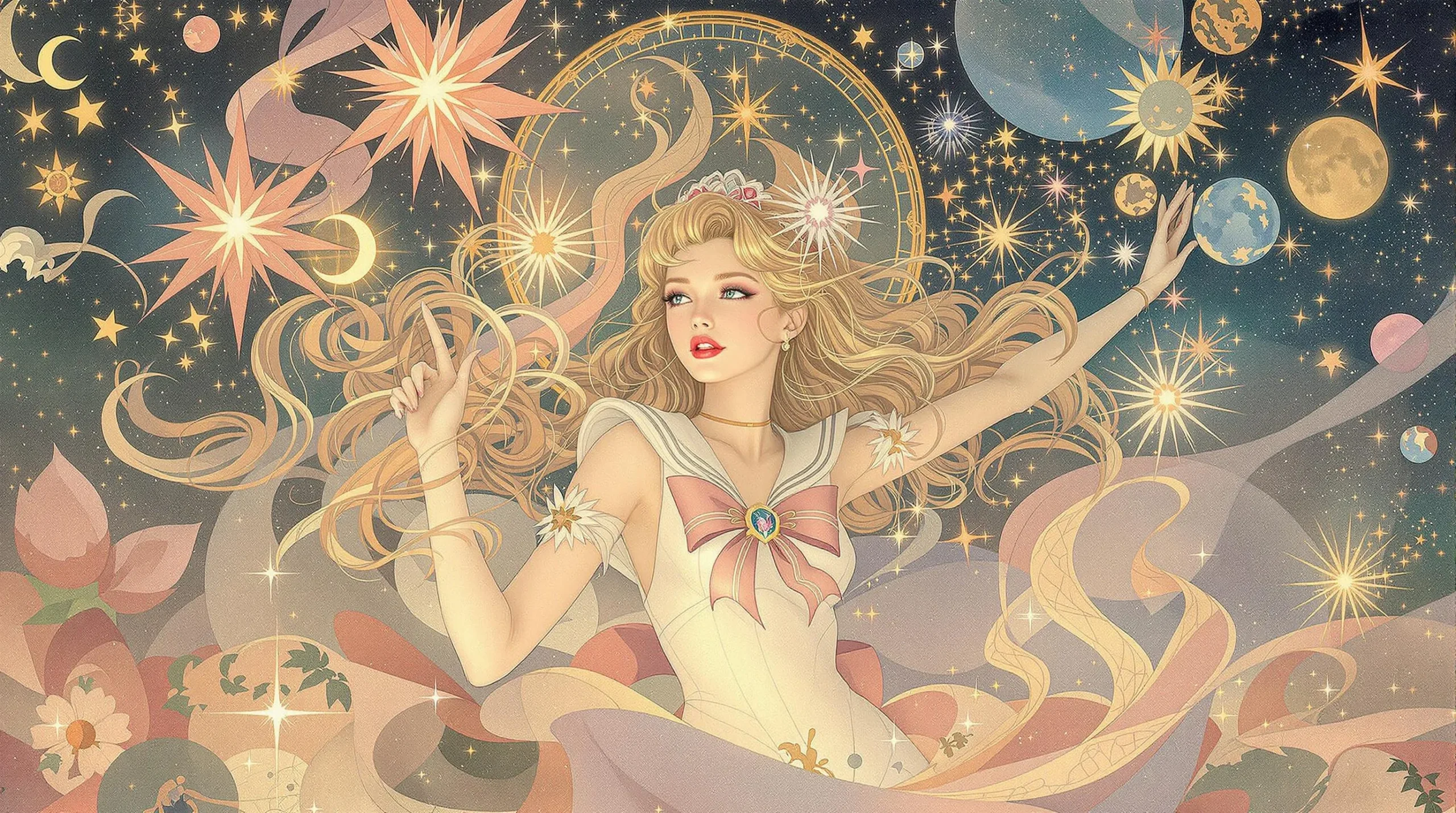
To have Sailor Venus as a figure in your personal mythos is to understand the profound duality of light. It is not just the gentle glow of beauty and affection, but also the blinding, searing flash of a strategic weapon. She represents the idea that the most effective armor is a dazzling performance, that a reputation for frivolity can be the most cunning camouflage. Her symbolism is woven with this tension: the idol and the warrior, the lover and the leader, the cheerful facade and the solitary heart. She is the patron saint of those who carry a great weight with a disarming smile, who know that joy can be a discipline, a shield, and a service.
The archetype speaks to the myth of the beautiful object that is also a deadly weapon. Her powers are of love, but also of metal, the element of her planet Venus. This is not a contradiction. It suggests that love is not soft, but possessed of an unbreakable core. It can be a chain to bind an enemy, a crescent beam to cut through deception. In a personal narrative, this may translate to an understanding that one's capacity for love and connection is also the source of one's greatest strength and fiercest protective instincts. Her presence suggests a life where aesthetics and action are intertwined, where beauty is not a passive quality but an active, tactical force.
Furthermore, Sailor Venus embodies the melancholy of the first-haver. The first to awaken, the first to fight alone, the first to understand the cost of the mission. For an individual, this may resonate with feelings of being slightly ahead of your peers, of having experiences that set you apart and create a quiet, invisible gulf. It is the myth of the person who has already seen the tragic ending of the opera but must still sing their part with gusto. This archetype grants permission for that secret sorrow to coexist with a genuine, brilliant love for the world, suggesting they are not mutually exclusive but two sides of the same golden coin.