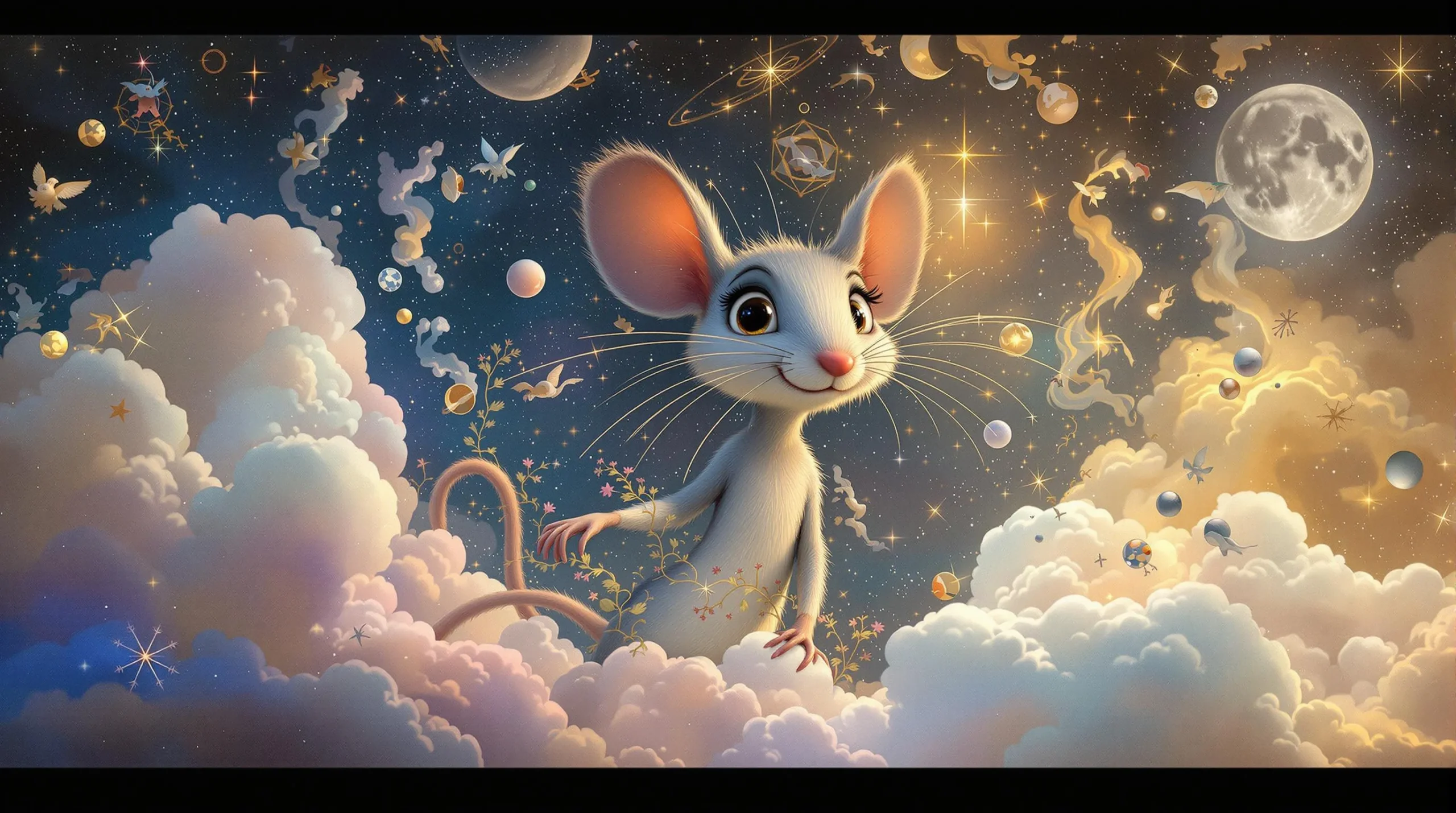


Remy (Ratatouille)

Archetype Meaning & Symbolism

Passionate, visionary, defiant, misunderstood, collaborative, resourceful, meticulous, sensitive, driven, outsider

  • If you are what you eat, then I only want to eat the good stuff.

If Remy (Ratatouille) is part of your personal mythology, you may...

Believe

  • You may believe that greatness can come from the most unexpected places, and that anyone who judges by appearance or origin is missing the point of existence entirely.

  • You may believe that a true calling is a sacred, non-negotiable force, a hunger that must be fed with the finest ingredients, even at the risk of safety and acceptance.

  • You may believe that the right combination—of flavors, of ideas, of people—can create a form of magic, a transcendent experience that can change the world, one skeptic at a time.

Fear

  • You may fear exposure: the terror that if people saw who you really are, where you come from, or how you truly operate, they would be repulsed and destroy you and everything you have built.

  • You may fear mediocrity: being forced to live on 'garbage,' to abandon your high standards and assimilate into a world that does not share your passion, thereby losing your gift and your soul.

  • You may fear being misunderstood: that your art, your love, your very essence will be misinterpreted, co-opted by a 'Linguini' who doesn't grasp its spirit, or dismissed as a fluke, leaving you voiceless and unseen.

Strength

  • You may possess a rare and potent creative vision, allowing you to perceive connections and possibilities that are invisible to almost everyone else.

  • You may have an extraordinary resourcefulness and resilience, honed by a life spent as an underdog, navigating a world not built for you.

  • You may have a genius for collaboration, an ability to identify and forge symbiotic partnerships that amplify your talents and overcome your limitations.

Weakness

  • You may have a tendency toward secrecy and isolation, making it difficult to form trusting, equitable relationships where you can be your whole self.

  • You may be vulnerable to a hidden arrogance, a belief that your unique talent makes you superior to the ordinary 'rats' and clumsy 'humans' around you.

  • You may develop a dependency on your proxies or partners, leaving you helpless and voiceless should those relationships dissolve, as you have not learned to operate in the world on your own behalf.

The Symbolism & Meaning of Remy (Ratatouille)

To have Remy scurry into your personal mythology is to welcome the patron saint of unrecognized genius. He is the artist in the attic, the poet in the boiler room, the visionary whom society has already categorized as vermin. Remy symbolizes the radical idea that the vessel is irrelevant: purity of talent can emerge from the most 'impure' of sources. His world is one of sensory alchemy, where a strawberry and a piece of cheese consumed together create not just a taste, but a symphony of color and sound. In your life, this may manifest as a deep, intuitive understanding of a craft, an ability to synthesize disparate ideas into a brilliant whole that others simply cannot see, let alone comprehend. This archetype champions the idea that passion is a form of intelligence, and that the most profound creations often come from those who operate on the margins.

The Remy archetype is also a potent symbol of creative hunger. It is not just a desire to make, but a metabolic need to consume and transform the very best. His rejection of chewed-over garbage in favor of saffron and chives is a metaphor for a soul that refuses to be nourished by mediocrity. This could translate into a discerning taste in art, relationships, and ideas: a refusal to settle for the intellectual equivalent of junk food. You may feel a compulsion to seek out the 'good stuff' in all areas of life, not as a matter of snobbery, but as a vital form of self-preservation. This archetype suggests that what you feed your soul directly impacts the quality of the magic you can produce.

Finally, Remy represents the delicate dance between instinct and aspiration. He is torn between the communal, survivalist world of his rat clan and the solitary, dangerous pursuit of his art. This is the central tension for anyone with the Remy mythos. It is the conflict between the safety of belonging and the risk of self-actualization. You may find yourself constantly navigating these two worlds: the one you were born into, with its own rules and loyalties, and the one your talent calls you to, with its entirely different set of values and perils. Remy's ultimate triumph is not in choosing one over the other, but in creating a new reality, a restaurant called 'La Ratatouille,' where both worlds can finally, impossibly, meet.


Remy (Ratatouille) Relationships With Other Archetypes

The Vessel

The relationship with the Vessel is perhaps a form of sacred haunting, a possession by mutual consent. The Remy archetype, a mind of pure, unchanneled impulse, requires a body that is not its own—a more socially acceptable apparatus through which to act upon the world. This symbiotic bond could be seen as the spirit’s quiet colonization of the flesh, a puppetry where the strings are not of control but of shared, desperate ambition. The Vessel, often gangly and graceless, becomes a conduit for a sublime dexterity it does not intrinsically possess. It is a partnership that may suggest the eternal struggle between the incandescent idea and the clumsy, corporeal form that must be taught, painstakingly, to house the flame without extinguishing it.

The Critic

With the Critic, the Remy archetype finds its ultimate test and, paradoxically, its potential for true grace. The Critic is a fortress of cultivated taste, a palate that has, perhaps, become a sophisticated instrument of dismissal. To this figure, the Remy offers not a challenge but a sacrament—a single, disarmingly simple truth meant to bypass the intellect and strike a long-dormant chord of memory. The interaction is not a battle but a moment of profound vulnerability; it is the outsider artist placing a fragile key, forged from authenticity, into the most formidable lock. A successful communion could suggest that the highest art is not that which impresses, but that which returns us, suddenly and irrevocably, to a state of unarmored wonder.

The Humble Ingredient

The Remy’s relationship with the Humble Ingredient is one of profound and patient translation. Where others see detritus or mere sustenance—a discarded crust of bread, a common garden vegetable—the Remy may perceive a silent alphabet of possibility. Each component, no matter how lowly, could be a word waiting to be placed in a line of poetry. This is a form of alchemy, not of turning lead to gold, but of revealing the latent divinity within the mundane. It is a partnership that suggests genius lies not in the procurement of the exotic, but in the radical re-imagining of the familiar, in listening to the secret story a thing has to tell and giving it, at last, a voice.

Using Remy (Ratatouille) in Every Day Life

Navigating Imposter Syndrome

When you feel like a fraud in a space where you excel, the Remy mythos offers a potent reframe. Your sense of not belonging may not be a sign of inadequacy but rather a testament to the rarity of your perspective. Like Remy in a pristine kitchen, your presence challenges the very definition of who is allowed to create. You may use this narrative to transform feelings of shame into a source of quiet strength, a secret knowledge that your contribution is valuable precisely because it comes from an unexpected place.

Forging Creative Collaborations

If your talents are profound but your ability to present them is hampered, whether by shyness, circumstance, or prejudice, the Remy archetype suggests seeking a “Linguini.” This is not about finding a host, but a symbiotic partner: someone who provides the vessel, the voice, or the access you lack, while you provide the unseen genius. This mythos encourages a search for relationships built on mutual trust and a shared goal, where ego is sublimated for the sake of the creation itself. It’s a dance of control and surrender, of two beings becoming more than the sum of their parts.

Reconciling Origin and Ambition

The Remy archetype speaks directly to the soul torn between the world you came from and the world you aspire to. Your family may be your clan of fellow rats, loving but uncomprehending of your passion for “garbage” they see as dangerous. This narrative within your personal mythos could guide you in navigating this divide: not by abandoning your roots, but by creating a new space where both parts of you can coexist. It may involve a painful process of educating your kin, showing them that your strange love is not a rejection of them, but an expression of your deepest self.

Remy (Ratatouille) is Known For

Culinary Genius

An innate, almost synesthetic ability to perceive and combine flavors, transforming simple ingredients into transcendent experiences.

The Unlikely Partnership

A symbiotic relationship with a human, Alfredo Linguini, where Remy acts as the hidden master controlling the clumsy apprentice from beneath his chef's hat.

Defying Origins

The audacious journey of a common rat, a creature associated with filth, aspiring to and ultimately succeeding in the world of Parisian haute cuisine.

How Remy (Ratatouille) Might Affect Your Personal Mythology

How Remy (Ratatouille) Might Affect Your Mythos

When Remy becomes a central figure in your personal mythos, your life story may be recast as a tale of the brilliant outsider. Your narrative is likely not one of heroic charges and public accolades, but of quiet, meticulous work done in secret, of masterpieces assembled when no one is looking. The central quest in your mythos could be the search for a 'kitchen': a safe, well-stocked sanctuary where your peculiar genius can flourish without fear of being misunderstood, judged, or literally stomped out. Your antagonists are not grand villains, but the more insidious forces of prejudice, low expectations, and the status quo, embodied by the health inspector or the skeptical head chef.

You may frame your personal history through the lens of unlikely partnerships. Key moments in your life might be defined by the 'Linguinis' you have found: the people who, for their own reasons, provided you a platform, believed in you when no one else did, and allowed you to channel your gifts through them. Your story becomes one of symbiosis, of finding the exact right person to complete your abilities. The climax of your personal mythos may not be when you finally step into the spotlight, but when your creation does, and you find peace in the anonymous satisfaction of a job perfectly done, recognized only by the few who truly know.

How Remy (Ratatouille) Might Affect Your Sense of Self

With Remy as an internal archetype, you may perceive yourself as a vessel of a rare and fragile gift. There could be a quiet, fierce pride in your unique abilities, a sense that you see the world in a spectrum of flavor and possibility that is invisible to others. This can foster a resilient sense of self that is not dependent on external validation, but it walks a fine line. It can also lead to a profound loneliness, a feeling of being fundamentally different, as if you speak a language no one else understands. You might see your body and mind as an instrument that must be protected and finely tuned, leading you to be highly selective about what and who you allow into your life.

This self-perception may also create a sharp internal division. There is the 'rat' self: the part of you that is tied to your origins, your insecurities, your perceived 'unworthiness.' Then there is the 'chef' self: the transcendent, creative spirit. Your internal life could be a constant negotiation between these two identities. You may fear the 'rat' will contaminate the 'chef,' that your base nature will ruin your highest aspirations. True self-acceptance, under this mythos, may not be about eradicating the rat, but about understanding that the chef could not exist without it: its agility, its unique perspective from below, its relentless hunger.

How Remy (Ratatouille) Might Affect Your Beliefs About The World

Your worldview, shaped by the Remy archetype, may be one of deep skepticism toward surfaces and categories. You might see the world as a place that tragically, almost comically, mistakes the container for the contents. Titles, appearances, and credentials may seem meaningless to you, even fraudulent. Instead, you could look for the hidden currents, the subtle flavors, the quality that lies beneath the obvious. You may believe that true genius is almost always found on the periphery, in the cracks of society, far from the celebrated centers of power. The world is a pantry of raw ingredients, most of which are misused or ignored by those in charge.

Yet, this is not a cynical worldview; it is one of radical possibility. If genius can exist in a rat, it can exist anywhere. This perspective could fill you with a unique kind of hope. You might look at a scrap heap and see a sculpture, listen to noise and hear a symphony, or meet a person dismissed by everyone and sense a kindred spirit. Your view of reality is that it is malleable, a dish waiting to be reinvented. The established rules of the world are merely a bad recipe, and you, with your unique senses, know just how to fix it, perhaps with a pinch of something unexpected, a dash of something forbidden.

How Remy (Ratatouille) Might Affect Your Relationships

In relationships, the Remy archetype might compel you to seek out a symbiosis. You are not looking for a partner who is just like you; you may, in fact, be drawn to those who are your opposite, who possess a public-facing competence or a physical presence that you lack. This is the search for your 'Linguini.' The ideal relationship is a collaboration where you are the hidden engine and your partner is the visible chassis. This can create incredibly deep, effective, and loyal bonds, built on a foundation of mutual need and profound trust. The language of your affection might be acts of service: preparing a perfect meal, solving a complex problem in secret, making your partner shine.

However, this dynamic is fraught with peril. It may foster a deep-seated fear of revealing your full self, of letting your partner see the 'rat' under the hat. You could feel that if your true nature and the full extent of your influence were known, you would be met with disgust and rejection. This can lead to a pattern of hiding, of manipulation—however well-intentioned—and a reluctance to engage as equals. The challenge in your relationships is to learn to trust that you are loved for all of who you are, not just for the secret magic you provide. It is the journey from being a puppeteer to being a partner.

How Remy (Ratatouille) Might Affect Your Role in Life

If Remy informs your sense of purpose, you may see your role in life as that of the 'éminence grise,' the ghost in the machine. You are the secret ingredient, the unseen force that elevates everything it touches. You may feel your purpose is not to seek the throne, but to be the kingmaker; not to write the bestseller, but to be the editor who transforms a mediocre manuscript into a masterpiece. This role offers a unique kind of power: influence without the burden of celebrity. Your satisfaction could come from the perfect execution of the task itself, from the private knowledge that you were the catalyst for greatness.

This perceived role carries an inherent sacrifice. It often means forgoing public credit and recognition. You may have to watch others receive applause for work that was fundamentally yours. This can cultivate humility and a focus on intrinsic rewards, but it can also curdle into resentment if that sacrifice feels unappreciated. Your life's work may be a quiet rebellion against the notion that value is measured by visibility. You are the artist whose signature is the quality of the work itself, a signature only a true connoisseur—like the critic Anton Ego—would be able to recognize.

Dream Interpretation of Remy (Ratatouille)

To dream of Remy in a positive context is to receive a potent message from the subconscious about your own latent talents. The dream may place you in a vast, intimidating kitchen, feeling small and out of place, only to discover you have an innate ability to create something beautiful. This dream is an affirmation. It could be telling you to trust your unorthodox methods and your unique sensory experience of the world. Seeing Remy successfully cook or guide you in a dream may be a sign to embrace a creative project you have deemed too audacious, or to trust an unlikely partnership that is forming in your waking life. It is the psyche’s way of saying: your strangeness is your strength.

Conversely, a nightmare featuring Remy could signal a deep-seated fear of exposure and rejection. You might dream of being chased through the kitchen, of poison traps appearing everywhere, or of a magnificent dish you have created being thrown out as filth. Such a dream may reflect anxieties that your true self or your secret work, if revealed, will lead to ruin. It could also symbolize a creative environment that has become toxic, where your gifts are being squandered or are in danger. A dream where you are Linguini, but Remy has fled, might suggest a terrifying creative block, a feeling of being a fraud who has lost his muse.

How Remy (Ratatouille) Archetype Might Affect Your Needs

How Remy (Ratatouille) Might Affect Your Physiological Needs

When the Remy mythos is woven into your being, your physiological needs may become expressions of a deeper philosophy. The need for food transcends mere sustenance; it becomes a quest for inspiration. You may believe, as he does, that 'if you are what you eat, then I only want to eat the good stuff.' This could manifest as a meticulous, almost ritualistic approach to meals, where flavor, texture, and quality are paramount because they are seen as the literal fuel for your creative spirit. Junk food might feel like a personal insult, a dulling of the very senses you rely on. Your body is not a machine to be fueled, but a sensitive instrument to be tuned.

Similarly, the need for shelter is not just about a roof over your head. It is about creating a 'kitchen,' a sanctuary. This space must be safe, orderly, and well-stocked with the raw materials of your craft, be they books, paints, or lines of code. The physical environment might be seen as a direct extension of your mind, and a cluttered or unsafe space could feel physically stifling, making creative work impossible. Your physiological well-being may be inextricably linked to having a controlled, private space where the fragile act of creation can happen, protected from the chaos of the outside world.

How Remy (Ratatouille) Might Affect Your Ideas of Belonging

The need for belonging, within the Remy mythos, is a profound and painful paradox. You are likely torn between two families, neither of which can fully contain you. First, there is your family of origin, your 'rat clan.' You may love them and feel a deep loyalty to their ways, yet you feel alienated by their inability to understand your aspirations. Their definition of a good life—scrounging, safety in numbers—may feel like a cage to you. To be with them requires hiding a fundamental part of yourself.

Second, there is the 'family' you aspire to join: the community of fellow 'chefs,' artists, and visionaries. You share their passion and speak their language, yet your origins make you an outsider. You may fear that if they knew where you came from, you would be cast out. This can lead to a feeling of being perpetually homeless, a resident of the lonely space between worlds. The ultimate quest for belonging, therefore, is not to choose one family over the other, but to perform the alchemical feat of creating a third space, a 'La Ratatouille,' where your clan can see the beauty of your cooking, and your cooks can see the humanity of your clan.

How Remy (Ratatouille) Might Affect Your Feelings of Safety

From the perspective of the Remy archetype, the world is inherently unsafe, a landscape of looming feet, snap traps, and poison. This translates the need for safety into a primary, driving motivation. Your first instinct in any new situation may be to map the exits, identify the dangers, and establish a secure base of operations. This is not paranoia; it is the practical wisdom of a small creature in a large, indifferent world. Safety means having hidden pathways, fallback plans, and a keen awareness of the power dynamics at play. You may feel a constant, low-level vigilance is necessary for survival.

This need for safety extends beyond the physical. Psychological safety is perhaps even more crucial. A safe space is one where your true nature will not be met with disgust, where your unconventional ideas will not be immediately dismissed. The greatest danger is not the trap, but the critic who declares you and your work to be 'vermin.' Therefore, you may be highly selective about whom you trust, revealing your true self only within a small, fortified circle. The ultimate sense of security comes not from eliminating all threats, but from having a sanctuary so perfect and a skill so profound that you can turn your greatest enemy into your most ardent advocate.

How Remy (Ratatouille) Might Affect Your Views of Esteem

With Remy as an internal guide, your esteem needs may be met in unconventional ways. Since the outside world is unlikely to offer consistent validation—it may praise the 'Linguini' while being oblivious to you—your self-worth must be forged internally. Esteem is not derived from applause, but from the quiet, private hum of a job well done. It is the feeling that arises after creating a perfect sauce, solving an elegant equation, or finding the perfect word. Your self-respect is built on a foundation of your own high standards; you are your own harshest critic and your own most important admirer.

This can create a resilient, if sometimes brittle, sense of esteem. It is strong because it is not dependent on the fickle whims of public opinion. However, it can be fragile because it relies so heavily on continuous creation and success. A creative block or a failed project can feel like a devastating blow to your core identity. The journey toward robust self-esteem in this mythos involves learning to value yourself not just for what you produce, but for the rare and courageous perspective you hold. It is the shift from seeing yourself as a successful chef to valuing the brave little rat who dared to dream of the kitchen in the first place.

Shadow of Remy (Ratatouille)

When the Remy archetype falls into shadow, the charming puppeteer becomes a sinister manipulator. The collaboration with Linguini, once symbiotic, sours into pure exploitation. This shadow Remy may view others not as partners but as crude tools, empty puppets to be animated for its own genius, devoid of their own feelings or ambitions. It hoards its talent, growing contemptuous of the very world it wishes to impress, seeing everyone as an idiot incapable of appreciating its greatness. This figure operates from a place of deep-seated bitterness, creating not out of love, but out of a spiteful need to prove its superiority, poisoning the kitchen with its own resentment.

Alternatively, the shadow can manifest as a complete surrender to the 'rat' identity. This is the Remy who gives up. He accepts the world's judgment and retreats to the sewers, convinced that his aspirations were a foolish mistake. This shadow aspect actively sabotages its own talent, choosing filth over flavor as a twisted act of self-loathing or misplaced loyalty to its origins. It may mock others who dare to dream, becoming a cynical poison-checker who insists that reaching for the stars will only get you killed. It is the tragic collapse of a great artist into a creature who believes it only deserves the world's garbage.

Pros & Cons of Remy (Ratatouille) in Your Mythology

Pros

  • Living with the Remy archetype grants you access to a deep well of unique creativity and an outsider's perspective that can lead to true innovation.

  • It provides a powerful personal narrative of overcoming prejudice and defying expectations, fueling a resilient and determined spirit.

  • It fosters a drive to seek and create profound, synergistic partnerships, leading to relationships of unusual depth and effectiveness.

Cons

  • It can engender a persistent feeling of loneliness and alienation, a sense that you are fundamentally an outsider who can never truly belong anywhere.

  • There is a constant risk of undervaluing yourself or allowing your talent to be exploited, as you may believe you don't deserve to be in the 'kitchen' in the first place.

  • It can create a difficulty in acting directly on your own behalf or taking public credit, leading to a life of hidden influence but little personal recognition.