Believe
 Fear
Fear Strength
 Weakness
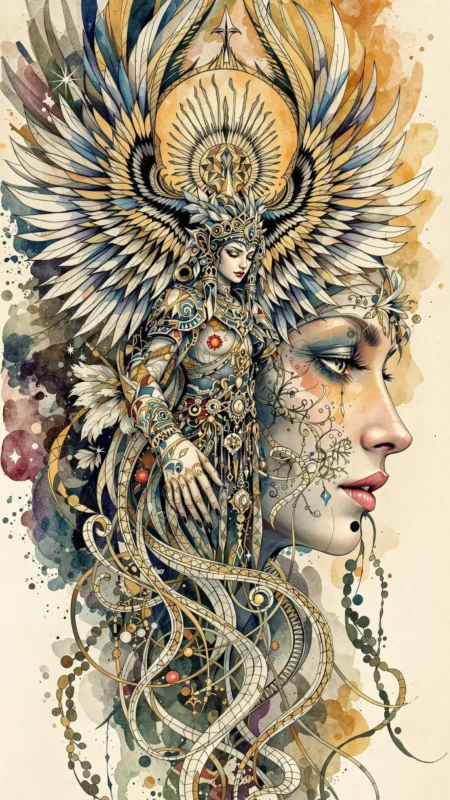
The Quetzalcoatl archetype is, at its core, a meditation on the generative power of paradox. It is the feathered serpent, a creature that should not exist, and in that impossibility, it holds a profound truth about the human psyche. To have this figure in your personal mythology is to be on intimate terms with the union of opposites. You may find yourself forever straddling the line between the earth and the sky: your mind soaring with abstract philosophies while your hands are deep in the soil of practical creation. This is not a peaceful balance but a dynamic, sometimes strenuous, flight. The symbolism speaks to a life dedicated to synthesizing the primal, instinctual self (the serpent) with the enlightened, intellectual self (the bird), believing that true wisdom is not found in choosing one over the other, but in becoming the shimmering, composite creature that embodies both.
This archetype is also the patron of the artisan, the scholar, the keeper of time. Its presence could suggest a deep-seated need to find or create order in the universe. This is the part of you that is drawn to elegant systems, whether in a line of code, a verse of poetry, or a philosophical treatise. The calendar, one of Quetzalcoatl’s gifts, is a key metaphor: it is the imposition of a sacred, cyclical pattern upon the formless chaos of time. In your own life, this may translate to a talent for seeing the overarching rhythm in disparate events, for turning the raw data of experience into a structured narrative, a personal calendar of meaning. You may be the person who builds the beautiful, logical structures that others inhabit.
The narrative of Quetzalcoatl’s fall and exile adds a layer of poignant humanity to this divine figure. Tricked by his rival Tezcatlipoca, he breaks his ascetic vows and flees in shame, promising to return. For the individual, this may resonate as a story of the noble spirit temporarily felled by its own shadow or by the world's deceptions. It is the myth of the visionary who is ahead of their time, the creator whose gifts are misunderstood, the leader who must retreat to preserve their integrity. It embeds within the personal mythos a powerful theme of resilience: the belief in a future return, a vindication, a time when the world will finally be ready for the wisdom you have cultivated in your period of exile.