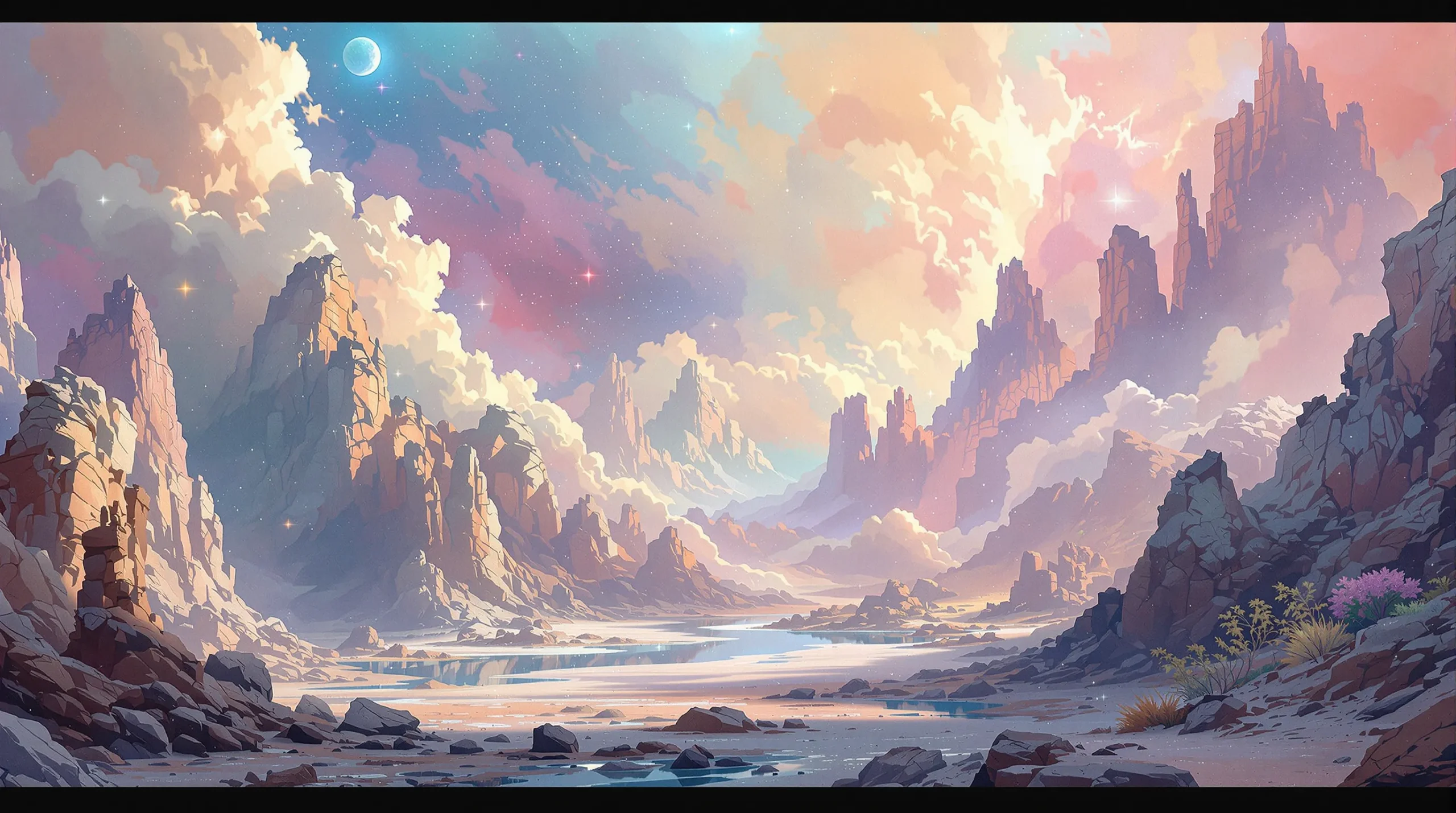


Quarry

Archetype Meaning & Symbolism

sought, deep, layered, foundational, excavated, resource, passive, immense, scarred, potential

  • Do not mourn what has been taken. The void it leaves is the only space where something entirely new can begin.

If Quarry is part of your personal mythology, you may...

Believe

  • That the most profound beauty is often found in places of scarring and ruin.
  • That one's true self is not a static object but a deep and layered geography to be explored.
  • That what has been hollowed out in you is precisely what makes space for the sacred to enter.

Fear

  • That you will be entirely hollowed out, your best parts taken and used by others until nothing remains.
  • That you are fundamentally unstable and that, under pressure, your entire sense of self will collapse.
  • That you will only ever be valued for what you can provide, never for the silent, empty beauty of who you are.

Strength

  • An immense inner depth and a rich, complex interior world.
  • A profound resilience and the alchemical ability to transform sites of loss into sources of wisdom and life.
  • Serving as a source of foundational strength and stability for others, allowing them to build great things.

Weakness

  • A tendency toward passivity, waiting for an external force to recognize and actualize your potential.
  • Permeable boundaries, making it difficult to prevent others from taking too much and leaving you depleted.
  • A subtle inclination to view relationships transactionally, as an exchange of personal resources.

The Symbolism & Meaning of Quarry

In the personal mythos, the Quarry symbolizes the vast, untapped potential within the self. It is the recognition that your most valuable qualities are not displayed on the surface but lie deep within, hidden under layers of personality, experience, and defense mechanisms. To know yourself as a Quarry is to understand that self-discovery is a form of geological exploration: a patient, and sometimes explosive, process of excavation. It requires digging past the soft earth of the persona to find the bedrock of character, the veins of rare talent, and the fossilized remains of past lives. This archetype suggests that your true substance is something to be discovered, not invented, and that a lifetime may be spent mapping the full extent of your own inner resources.

Furthermore, the Quarry is a potent metaphor for the landscape of personal history and trauma. The sheer, stratified walls are the visible layers of your past, each one a different era, a different pressure. The excavation itself represents those life events that strip parts of you away: heartbreak, loss, crisis. These are the moments that hollow you out, yet they are also the moments that reveal your composition and depth. To inhabit the Quarry archetype is to see your wounds not as mere damage, but as the very process that gives you dimension. You are not defined by the wound itself, but by the immense and intricate space it creates within you.

The archetype also forces a confrontation with the nature of value. A quarry is valuable for what can be taken from it. This may manifest in a personal narrative where your worth feels conditional, tied to your utility to others—your ability to provide stability, creativity, or support. The central journey of the Quarry mythos is often to move beyond this transactional definition of self. It is the process of learning that the space itself holds its own worth. The hollowed-out canyon, the deep water that fills it, the ecosystem that grows around it: these are the things of beauty that can only exist after the extraction is over. It is about discovering the profound value of the space you hold, not just the material you give away.


Quarry Relationships With Other Archetypes

The Miner

The Miner is the active, searching counterpart to the Quarry's passive potential. Where the Quarry is the silent repository of value, the Miner is the focused will that seeks to extract it. In a personal mythology, this pairing could represent the relationship between the deep subconscious (Quarry) and the conscious, striving ego (Miner). The Miner is the part of you that actively pursues self-knowledge, that asks the hard questions, that does the work of therapy or spiritual practice. However, the relationship is fraught with tension: the Miner's work can feel violent and disruptive to the Quarry's peace, yet without it, the Quarry's treasures might remain forever buried and unknown.

The Architect

If the Quarry provides the raw material, the Architect is the visionary who dreams it into form. The Architect sees not just a block of granite, but the foundation of a cathedral; not just a slab of marble, but the curve of a statue. This archetype represents the imaginative, structuring faculty of the mind. In your mythos, the Architect is the part of you that takes the raw material of your experiences, your talents, your very being—all sourced from your inner Quarry—and builds a coherent life, a meaningful identity, a legacy. The Quarry is pure potentiality; the Architect gives that potential a purpose and a place in the world.

The Wild Seed

After the excavation ceases and the machinery falls silent, the Wild Seed is the archetype of reclamation. It is the tiny, persistent agent of life that finds a foothold in a crack in the stone, the force that begins the slow, inexorable process of turning a barren industrial scar back into a living landscape. In a personal narrative, the Wild Seed represents the resilient, regenerative power of the psyche. It is the spark of new interest after a period of burnout, the first tendril of trust after a betrayal, the slow greening of the soul's desolate places. The Quarry provides the space for new life, but it is the Wild Seed that makes it happen.

Using Quarry in Every Day Life

Navigating a Creative Block

When a creative project feels stalled, the Quarry archetype suggests the issue may be one of depth. You may be scraping the surface, working with topsoil and loose rock. The Quarry invites you to go deeper, to bring in the heavy machinery of focused effort and break through the initial layers of resistance. The most valuable material—the core idea, the authentic voice—is never on the surface. It must be excavated, sometimes violently, from the bedrock of your subconscious.

Healing from Personal Loss

A significant loss can feel like a part of you has been carved out, leaving an immense, echoing void. The Quarry reframes this. It does not deny the scar, but honors it as evidence of depth. It suggests that this new inner space, painful as its creation was, can be tended. Over time, it may slowly fill with the clear water of reflection and peace, transforming a site of extraction into a serene reservoir of wisdom, a place of unexpected beauty defined by its history.

Understanding Your Role in a Family

If you feel your role is to be a constant source of support for your family, the Quarry provides a complex metaphor. You are the source of foundational stone from which others build their lives. This is a role of immense importance and strength. However, the Quarry also cautions awareness of depletion. It poses the question: is the excavation sustainable? Are you being honored as the source, or are you simply being mined until you are exhausted, your own landscape forever altered for the sake of others' structures?

Quarry is Known For

Source of Foundational Materials

Quarries are the origin point for the raw stuff of civilization

the marble for statues, the granite for monuments, the limestone for structures. They are the silent, immense source behind human creation.

Landscapes of Subtraction

A quarry is uniquely defined not by what is there, but by what has been removed. It is a landscape of subtraction, a man-made canyon whose very existence is a testament to need, industry, and the hollowing out of the earth for a specific purpose.

Reclamation and Transformation

After their industrial purpose is served, many quarries undergo a stunning transformation. Abandoned and left to the elements, they often fill with groundwater, becoming serene, deep-blue lakes—oases of unexpected beauty and biodiversity, turning a scar into a sanctuary.

How Quarry Might Affect Your Personal Mythology

How Quarry Might Affect Your Mythos

When the Quarry shapes your personal mythos, your life story ceases to be a linear journey and becomes a vertical descent. The narrative is not about how far you have traveled, but how deep you have gone. Major life events are re-contextualized as excavations: a challenging career becomes the blasting that revealed a vein of resilience; a period of intense study is the careful chiseling that uncovered a hidden intellect; a devastating heartbreak is the great dig that carved out a new capacity for empathy. Your personal history is a geological map, and you understand yourself by studying its strata.

The central plot of your myth may revolve around a single, massive excavation—a 'Great Wound' or a 'Core Discovery' that fundamentally shaped your inner landscape. The rest of the story is then about the consequences of that void. Do you spend your life trying to fill it, or do you learn to live in its echo? Does it become a source of shame, a dangerous and unstable cliff, or does it, over time, transform into a secret lake, a hidden sanctuary of wisdom that you can retreat to? Your myth is the story of this transformation, the alchemy of turning a hole in the ground into a sacred space.

How Quarry Might Affect Your Sense of Self

Your view of self may be one of layered complexity. You might not see a singular 'you,' but rather a geological formation of selves, built up over time by pressure and experience. There is the surface self, weathered and visible to all, and beneath that, countless other layers: the bedrock of your core values, the compressed shale of your family history, the glittering, unexpected geodes of secret joy. This perspective can grant a deep sense of self-possession and inner richness, a feeling that there is always more to discover within.

However, this can also foster a feeling of being a resource rather than a person. You may perceive that people are drawn not to the whole of your landscape but to a specific 'vein' of value you possess—your kindness, your talent, your stability. This can lead to a fragmented sense of self, where you feel your identity is something to be mined by others. It may create a deep-seated fear of being 'mined out,' of having all your valuable parts extracted until you are nothing but an empty, echoing pit, your purpose fulfilled and your presence no longer required.

How Quarry Might Affect Your Beliefs About The World

Your worldview might be predicated on the belief that everything has a hidden depth. You may approach society, relationships, and ideas with the eye of a geologist, always looking for the underlying structures, the historical pressures, and the raw materials that constitute the visible world. Surfaces are deceptive, and the real story is always buried. This can make you a perceptive and insightful observer, one who is difficult to fool with superficialities, as you are always mentally excavating for the truth.

This perspective could also lead to a somewhat stark and materialist worldview. The world is a place of extraction, and progress is often a function of what can be taken, consumed, and repurposed. You might see the great projects of civilization—cities, economies, empires—as massive quarrying operations, hollowing out one thing to build another. There could be a certain comfort in this clear-eyed view, an appreciation for the raw, unsentimental mechanics of how the world works, and a corresponding suspicion of ideologies that ignore the material cost of their ideals.

How Quarry Might Affect Your Relationships

In relationships, you may seek a profound level of mutual excavation. For you, intimacy is not found in shared hobbies or pleasant conversations, but in the willingness to explore another's inner landscape and to allow them access to yours. A true partner is a trusted archaeologist, someone who handles your fragile, fossilized parts with care and marvels at the strange beauty of your geological makeup. You crave connections that go to the bedrock, and you may have little patience for relationships that remain on the surface.

This desire for depth, however, can be shadowed by a transactional undercurrent. You might, perhaps unconsciously, assess potential partners for their 'resources'—their emotional stability, their intellectual richness, their capacity for support. This can create a dynamic where you feel you are either quarrying or being quarried, turning the relationship into an exchange of valuable materials rather than a communion of souls. There may be a persistent fear that if your 'vein' of desirable qualities runs dry, the relationship will be abandoned like a depleted mine.

How Quarry Might Affect Your Role in Life

You may perceive your role in life as that of the silent, foundational source. In your family, community, or workplace, you are the bedrock. Others may not always notice you, but they build their lives, projects, and ambitions upon the solid ground you provide. You are the source of stability, the raw material of possibility for others. This role carries a quiet dignity and immense importance, the feeling of being essential, even if you are not the finished structure that everyone admires.

Alternatively, this archetype can foster a sense of passive destiny, a feeling that your role is to wait to be discovered. You may believe your potential is vast but requires an external force—a mentor, a partner, a 'big break'—to recognize and excavate it. This can lead to a life spent waiting for the 'miner' who will see your value and put you to use. The danger is a perpetual state of unfulfilled potential, of remaining a landscape rich with ore that is never brought into the light and shaped into something new.

Dream Interpretation of Quarry

In a positive context, to dream of a quarry is to dream of the deep self. If the quarry is beautiful, perhaps filled with impossibly clear, still water and surrounded by lush greenery, it may signify a profound integration of your past. It suggests that you have successfully navigated a period of deep self-exploration or healed from a significant wound. The scar of excavation has been transformed into a place of life and serenity. This dream is an affirmation of your resilience and the wisdom you have gained from your deepest experiences.

In a negative context, a dream of a quarry can be terrifying. You might find yourself at the bottom of a vast, shadowy pit with crumbling, unstable walls. The air could be filled with the dust and noise of machinery, a feeling of being in a place of relentless, violent destruction. This may symbolize a feeling of being exploited or depleted in your waking life. It could point to a job, a relationship, or a situation that is stripping you of your resources, identity, and sense of safety, leaving you feeling hollowed out, trapped, and in danger of imminent collapse.

How Quarry Archetype Might Affect Your Needs

How Quarry Might Affect Your Physiological Needs

When the Quarry informs your personal mythology, your physiological needs might feel profoundly connected to the earth itself. The act of eating and drinking is not merely fuel, but a conscious act of taking in the planet’s raw materials—the minerals, the water, the substance of the ground—to build and maintain your own physical structure. You may feel a deep, almost geological sense of your own body, understanding it as a temporary consolidation of the earth’s elements. This can foster a respectful, grounded relationship with your physical needs, seeing them as a sacred exchange with the world’s body.

Conversely, the Quarry archetype might create a stark dualism between the 'self' and the body. The body may be perceived as the 'overburden'—the layers of dirt and soft rock that must be stripped away to get to the 'valuable stone' of the mind, soul, or spirit. In this narrative, physical needs are an inconvenience, a distraction from the real work of inner excavation. This can lead to a pattern of neglect, where sleep, nutrition, and rest are sacrificed for intellectual or spiritual pursuits, treating the body less like a home and more like a worksite.

How Quarry Might Affect Your Ideas of Belonging

A feeling of true belongingness arises when you find others who are not afraid of your depths. You feel most loved and accepted by those who see the whole landscape of you—not just the pleasant meadows on the surface, but the jagged cliffs, the dark caves, and the deep scars of your history. Belonging is a small group of people who bring their own lights and are willing to explore your inner caverns with you, not to take anything, but simply to witness and appreciate what is there. This creates an incredibly powerful and rare form of intimacy.

This can also lead to a profound and painful sense of alienation. You may often feel like a place rather than a person: a resource to be tapped, a landscape to be visited, a landmark in someone else’s journey. People may come to you for your strength or wisdom, but then they leave, carrying a piece of you with them. This can foster a deep loneliness, a feeling that no one ever stays to appreciate the quarry for its own sake, leading to the belief that you are fundamentally a solitary geography, destined to be observed from a distance but never truly inhabited.

How Quarry Might Affect Your Feelings of Safety

A sense of safety may be deeply rooted in stability and substance. For you, security is not about agility or escape; it is about being unshakeable. You may feel safest when you are grounded in your core principles, your personal bedrock that no external chaos can disturb. Financial and emotional security are measured in terms of solidity and permanence: tangible assets, deep and abiding relationships, a strong sense of place. Safety is the feeling of having foundations so deep they are impervious to the storms that rage on the surface.

However, the very nature of a quarry is controlled destruction, which can manifest as a persistent, underlying anxiety about collapse. You might live with a fear of sudden, catastrophic failure—that the walls you’ve built around your heart will give way, that your financial foundation will crack, that a sudden shock will cause a landslide in your life. Safety feels conditional, maintained only by constant vigilance against the inherent instability of your own excavated nature. Any crack in the facade can feel like a prelude to a total cave-in.

How Quarry Might Affect Your Views of Esteem

Self-esteem, when viewed through the Quarry archetype, is derived from your inner substance. It is a quiet, solid confidence that is not dependent on external polish or adornment. You know the quality of the 'stone' you are made of. This creates a powerful, grounded sense of self-worth that is resistant to superficial judgment. Your value is not in your appearance or your immediate utility, but in the inherent quality and depth of your character, a knowledge that you are, at your core, made of strong and valuable stuff.

On the other hand, esteem can become perilously tied to your perceived usefulness. A quarry's worth is often determined by the market demand for its resources. Similarly, you may find your self-worth fluctuating based on how much others seem to need or want what you have to offer. A period of being 'fallow'—of not being sought after for your advice, your talent, or your support—can trigger a crisis of esteem. You may begin to fear that your inner resources are worthless, that you are just a hole in the ground, a depleted mine with nothing left of value to give.

Shadow of Quarry

In its shadow aspect, the Quarry becomes a ravenous void. Instead of a source that gives, it becomes a pit that takes. The person embodying this shadow feels an intense inner emptiness and seeks to fill it by excavating others. They become a user, a strip-miner of souls, identifying the valuable 'ore' in people—their energy, creativity, kindness, or status—and extracting it for themselves until their partner or friend is left depleted and hollowed out. They see relationships as mining claims, and people as resources to be exploited to fill the ever-expanding emptiness within.

Another manifestation of the shadow is a complete and utter inaccessibility. Fearing further depletion and wounding, the Quarry seals itself off. It becomes a fortress of stone, impenetrable and sterile. No one is allowed in, and nothing is offered out. This is not the quiet peace of a reclaimed quarry lake, but the dead silence of an abandoned, fenced-off industrial site. The person becomes a monument to their own pain, refusing all vulnerability and connection, and in so doing, ensures that their vast inner potential remains forever buried and their desolate landscape can never be seeded with new life.

Pros & Cons of Quarry in Your Mythology

Pros

  • You possess a rare depth of character and a wellspring of inner resources that you can draw upon.
  • You provide a profound sense of stability and strength to those around you, making you a cornerstone of your community or family.
  • You have an incredible capacity for transformation, with the potential to turn your greatest wounds into your most beautiful features.

Cons

  • You are at high risk for burnout and feeling depleted, as others may consistently draw on your strength without replenishing it.
  • You may struggle to initiate action in your own life, waiting for external validation or discovery to define your path.
  • There is a persistent danger of feeling lonely or objectified, as if people are drawn to a quality you possess rather than the entirety of who you are.