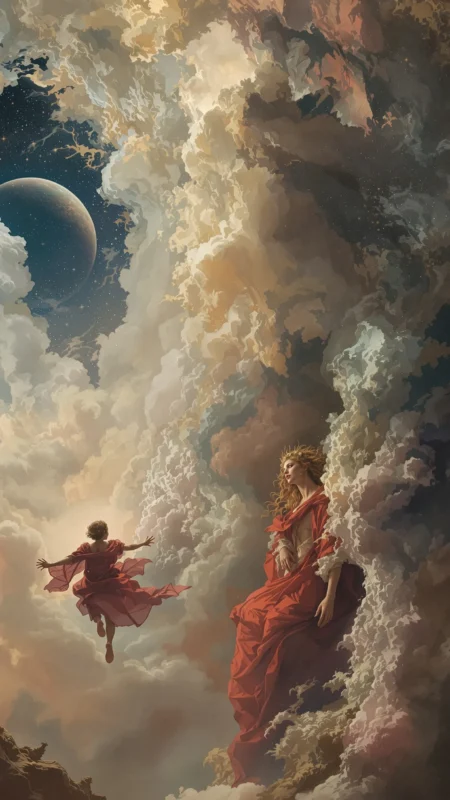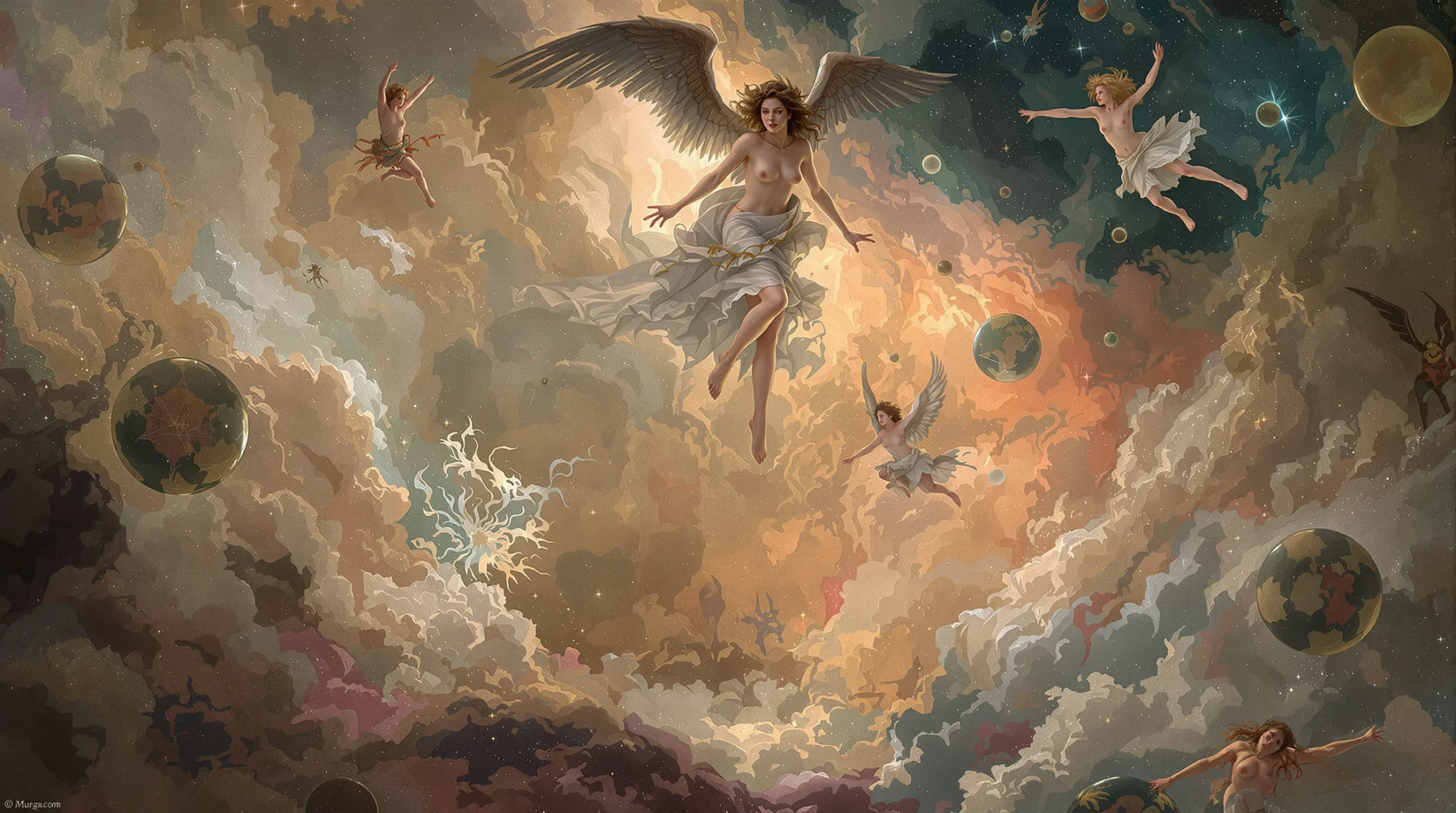


Purgatory

Archetype Meaning & Symbolism

Liminal, transitional, waiting, refining, neutral, patient, indefinite, contemplative, purifying, suspended, necessary

  • You are not here for judgment, but for measure. Not for punishment, but for purification. The waiting is the work.

If Purgatory is part of your personal mythology, you may...

Believe

  • You may believe that true growth only happens in the quiet, uncomfortable spaces between major life events.

    You may believe that a person's character is revealed not by their triumphs, but by how they handle the long periods of waiting.

    You may believe that purpose is not a destination to be found, but a process of purification to be endured.

Fear

  • You may fear that the waiting will never end and that you will be stuck in this transitional state forever.

    You may fear that after all the purification, you will discover that there is nothing worthwhile left of you.

    You may fear making a definitive choice, as it would mean the death of all other possibilities and the end of the sacred 'in-between'.

Strength

  • You possess an extraordinary capacity for patience and resilience in the face of uncertainty.

    You have a profound ability to see nuance and complexity, refusing to settle for simple, binary answers.

    You are able to facilitate deep, authentic transformation in yourself and others by holding space for the difficult process of becoming.

Weakness

  • You may suffer from chronic indecisiveness, a 'paralysis by analysis' that keeps you in a state of suspended animation.

    You might have a tendency to avoid commitment, whether in relationships, careers, or beliefs, fearing that it will trap your fluid identity.

    You may struggle with a persistent feeling of inadequacy, forever feeling like you are 'not quite there yet'.

The Symbolism & Meaning of Purgatory

In personal mythology, Purgatory is the long, hushed hallway between two loud rooms. It symbolizes the necessary, often uncomfortable, transitional phases of life that are not destinations in themselves but are crucial for reaching the next stage of being. It is the time after the diagnosis but before the recovery, the period after the creative idea strikes but before the work takes form. To have Purgatory as a recurring landscape in your mythos suggests a life story marked by profound, deliberate transformations rather than a steady, linear progression. It speaks to a belief that growth does not happen in a flash of insight but in the patient, often monotonous, work of waiting, reflecting, and becoming.

This archetype reframes waiting as an active, sacred process. It is not the passive, frustrating delay of a traffic jam but the intentional, pregnant pause of a composer holding a fermata. Inhabiting this space means accepting that some aspects of the self must be gently, painstakingly dissolved before new structures can be built. It is an internal alchemy, a slow cooking of the soul. Purgatory, in this modern context, is the personal chrysalis: a self-imposed period of dissolution and reformation, undertaken with the quiet faith that a different form will eventually emerge, ready for a different world.

Furthermore, Purgatory may represent a profound relationship with nuance and a rejection of binary thinking. It is the ultimate gray area, a realm that insists that life is lived most authentically in the spaces between clear-cut definitions. It is the archetype of the question mark, the ellipsis, the unresolved chord. It challenges the cultural obsession with immediate results and clear outcomes, suggesting instead that the most meaningful journeys happen in the fog, where the only guide is a subtle, internal sense of purification and readiness.


Purgatory Relationships With Other Archetypes

The Crossroads:

If The Crossroads is the moment of decision, a sharp, singular point of choice, Purgatory is the long, winding road one travels *after* a choice has been made but before its consequences are fully realized. The Crossroads presents the 'what if'; Purgatory deals with the 'now what'. One cannot exist in Purgatory without first having passed through a Crossroads, but while the Crossroads is about potential energy and outward direction, Purgatory is about kinetic work and inward purification. They are the inhale and the long, slow exhale of transformation.

The Phoenix:

The Phoenix is the glorious, fiery promise that lies at the end of Purgatory’s gray landscape. Purgatory is the painstaking process of gathering the spiritual kindling and sitting with the ashes of the former self; The Phoenix is the sudden, beautiful conflagration and rebirth. The relationship is sequential and causal. Without the patient, often unglamorous work done in the suspended time of Purgatory, the Phoenix's fire could be merely destructive. Purgatory tempers the soul, ensuring that what rises from the ashes is not just new, but purified.

The Judge:

The Judge archetype often acts as the gatekeeper to Purgatory. It is the internal voice or external force that declares a part of the self 'unready' or 'incomplete,' thus sentencing it to a period of refinement. Purgatory, however, is not a prison cell where one passively serves time. It is a workshop. It accepts the verdict of The Judge not as a final condemnation but as a diagnostic report, a set of instructions for the work that must be done. The relationship is one of call and response: The Judge identifies the impurity, and Purgatory provides the space and time to cleanse it.

Using Purgatory in Every Day Life

Navigating a Career Change:

When the old job is a ghost in the rearview mirror but the new path remains shrouded in mist, you are in Purgatory. Instead of rushing to fill the void, this archetype invites you to inhabit the uncertainty. It's a time for shedding the professional identity that no longer fits, for auditing skills not as assets for a resume but as artifacts of a former self. This is the waiting room where you interview yourself, asking not 'what's next?' but 'who am I now?'

Healing from a Relationship's End:

After the dramatic conclusion, there is the long, quiet echo. Purgatory is the landscape of a heart after the departure, a space no longer defined by 'us' but not yet comfortable with 'me'. It is the realm of sorting through memories, not for nostalgia, but to cleanse them of their charge. This archetype teaches that healing is not a destination to be reached but a process of purification, of patiently sitting with the grayness until color, unbidden, begins to seep back into the world.

Confronting a Crisis of Faith:

When the old certainties crumble and the new beliefs have not yet crystallized, one enters the Purgatory of the soul. This is the space between dogmas, the quiet wilderness where you are left with only the raw material of your spirit. The archetype suggests this is not a failure of faith but a necessary stage of it. It is a period of subtraction, of letting go of spiritual scaffolding to see what, if anything, stands on its own. The work here is not to find answers, but to become comfortable in the vastness of the question.

Purgatory is Known For

The Great Pause

Purgatory is fundamentally known as a state of suspension. It is the cosmic pause button pressed between two significant life movements, a place where the forward momentum of a narrative is intentionally halted for reflection and refinement.

Purification:

It is a realm of cleansing. Not through fire and brimstone, but through a slow, methodical sloughing off of what is no longer essential. It is the act of becoming lighter, of unburdening the soul from past identities, mistakes, and attachments before it can proceed.

Ambiguity:

Purgatory is defined by its lack of definition. It is neither hell nor heaven, neither past nor future, neither sickness nor health. It is the ultimate 'in-between,' and its power lies in this very ambiguity, forcing a confrontation with the discomfort of not knowing.

How Purgatory Might Affect Your Personal Mythology

How Purgatory Might Affect Your Mythos

When Purgatory is a central feature of your personal mythos, your life story may not be a series of heroic conquests but a sequence of profound transformations. The major plot points are not the battles won, but the quiet, liminal spaces in between. Your narrative might value the journey over the destination to an extreme degree, seeing the 'getting there' as the entire point. You may frame your history as 'the person I was before the great pause' and 'the person I became after,' with the pause itself being the most significant chapter. This creates a mythos of becoming, where the self is always in a state of sacred, deliberate flux, never arriving but always, and meaningfully, en route.

This archetypal landscape may also lend your mythos a quality of patience and deep time. Your story isn't rushed; it unfolds with the slowness of geological change. Setbacks are not failures but necessary detours into a purifying landscape. Your personal epic may be less like the Odyssey, with its clear goal of home, and more like a pilgrimage, where every step in the ambiguous middle is a prayer. The central conflict in your story might be internal: the struggle to endure the waiting, to trust the process, and to resist the temptation of a premature conclusion.

How Purgatory Might Affect Your Sense of Self

Your sense of self may be remarkably fluid, perhaps even elusive. You might not identify strongly with achievements, roles, or even personality traits, seeing them all as temporary states you are passing through. Self-definition could feel like a betrayal of the process of becoming. This can lead to a profound humility and an openness to change, a genuine belief that you are always a work in progress. You may see your identity not as a statue to be carved, but as a river that is constantly flowing, its shape determined by the landscape it is currently traversing.

On the other hand, this could manifest as a chronic sense of inadequacy or incompleteness. The feeling of 'not being there yet' might become a permanent state of being, making it difficult to celebrate milestones or feel a sense of accomplishment. You may perceive yourself as perpetually unfinished, always preparing for a life that hasn't quite begun. This can create a quiet anxiety, a fear that the waiting room is, in fact, the final destination, and that you are forever on the cusp of a selfhood that will never fully materialize.

How Purgatory Might Affect Your Beliefs About The World

Your worldview might be deeply skeptical of simple answers, grand pronouncements, and all forms of black-and-white thinking. You may see the world as an infinitely complex tapestry of transitions, where everything is in a state of becoming something else. This perspective could foster immense empathy for others, recognizing that everyone is likely in the middle of their own unseen, transformative process. You may view history, society, and even nature not as a series of events and conclusions, but as a vast, interconnected Purgatory, a slow, often painful, purification of consciousness.

This outlook could also lead to a kind of political or social paralysis. If everything is an endless, gray transition, the urgency to act or the conviction to choose a side may be diminished. You might perceive decisive action as naive, a failure to appreciate the profound ambiguity of the situation. This could result in a worldview that is wise and contemplative but potentially passive, one that observes the slow unfolding of things with a sense of cosmic patience that can look, from the outside, like disengagement.

How Purgatory Might Affect Your Relationships

In relationships, you may be drawn to the 'in-between' stages: the slow burn of early courtship, the ambiguous 'what are we?' phase, or the process of healing with a partner after a conflict. You might have a high tolerance for uncertainty in your connections with others, valuing the process of getting to know someone over the security of a defined label. You could be an incredibly patient and forgiving partner, friend, or parent, understanding that people need time and space to work through their own internal processes. You may see relationships not as static entities but as shared, dynamic landscapes of mutual refinement.

However, this comfort with ambiguity could be challenging for partners who crave clarity and security. Your tendency to inhabit the 'almost' might be perceived as a fear of commitment or an unwillingness to fully invest. You might struggle to end relationships that are clearly not working, preferring the familiar discomfort of a transitional state to the sharp finality of a conclusion. There's a risk of keeping others in a relational Purgatory with you, a state of suspended animation where the connection is neither fully alive nor officially over.

How Purgatory Might Affect Your Role in Life

You may see your role in life not as a specific title—a doctor, an artist, a parent—but as a facilitator of transitions, a guide through liminal spaces. You might be the person others seek out when they are in their own Purgatory, offering not answers, but a patient presence that honors the sacredness of their waiting. Your purpose may feel less about doing and more about being: being with uncertainty, being with the process, being a calm anchor in the fog. You might feel your function is to hold space for potential, to be the guardian of the chrysalis.

This can also lead to a diffusion of purpose, a sense of never fully stepping into a defined role. While others build their monuments, you may feel you are eternally mixing the mortar. You might resist taking on leadership positions or claiming expertise, always feeling like you are still in preparation. This could create a life of profound service but little recognition, where your contribution is essential but invisible, like the quiet, thankless work of roots growing deep in the dark earth before any visible growth occurs.

Dream Interpretation of Purgatory

In a positive context, dreaming of a Purgatorial landscape—a misty waiting room, an endless gray beach, a silent, featureless plain—may be your subconscious acknowledging and honoring a necessary period of transition you are currently experiencing. It is an affirmation that the feeling of being stuck or in limbo is not a sign of failure but a crucial part of a larger process. The dream may be an invitation to embrace the waiting, to cease struggling for a premature outcome, and to trust that a deep, internal work of purification is underway. Seeing a faint light in the distance or feeling a gentle breeze in this dream landscape could signal that the end of the transition is approaching.

In a negative context, this dreamscape could symbolize a fear of stagnation or a descent into the shadow aspect of Purgatory. It might represent a feeling of being hopelessly lost, with no beginning and no end in sight. The grayness could feel oppressive, the silence deafening, and the waiting an unbearable punishment. This dream might be a warning that your period of transition has soured into chronic indecision or that you have become too comfortable in the ambiguity, using it as a way to avoid the responsibilities of the next stage of life. It could be a powerful call to find a way forward, to make a choice, any choice, to break the spell of endless waiting.

How Purgatory Archetype Might Affect Your Needs

How Purgatory Might Affect Your Physiological Needs

When Purgatory informs your mythos, your basic physiological needs may be viewed through a lens of 'just enough.' You might subsist on simple foods, unconcerned with culinary artistry, seeing eating as a means to endure rather than a source of pleasure. The body is a vessel to be maintained through the waiting period, not a temple to be adorned or celebrated. Sleep may be functional, a necessary recharge, but perhaps not deeply restorative, reflecting a state of low-grade, constant vigilance. There could be a detachment from physical sensations, a sense that the body's needs are a distraction from the more important, internal work being done.

This can lead to a state of minimalist health, a functional baseline that is sustained but rarely thrives. The danger is a subtle neglect, where the body's signals are ignored because they belong to the temporary self, the one that is being shed. This might manifest as a failure to address minor aches or a disregard for physical fitness, always with the assumption that 'I'll focus on my body once this period is over.' It's a physiological holding pattern, which, if maintained for too long, can lead to a chronic depletion of vitality, leaving you with a purified spirit but an exhausted physical form.

How Purgatory Might Affect Your Ideas of Belonging

Your need for belonging may be satisfied by connections with fellow travelers, other souls who are also in a state of transition. You might find your tribe in support groups, artistic collectives, or philosophical circles where the journey is honored more than the destination. Love and intimacy may be understood as the act of witnessing another's becoming, without needing them to be a finished product. You might create deep bonds based on shared vulnerability and the mutual recognition of being a 'work in progress,' finding a profound sense of belonging in the company of the unsettled.

This can also create a pattern of temporary, transient relationships. You may struggle to connect with people who seem to have 'arrived' or who are firmly planted in their lives, finding them static or uninteresting. This could lead to a subtle isolation, a feeling that you can only truly relate to those who are as unmoored as you are. Lasting, committed love might feel like a threat to your fluid sense of self, causing you to subtly sabotage relationships as they begin to solidify, perpetually choosing the ambiguity of Purgatory over the settled landscape of true belonging.

How Purgatory Might Affect Your Feelings of Safety

Your sense of safety may be paradoxically found within uncertainty itself. The known can feel like a trap, while the undefined feels like a space of pure potential. You might feel most secure when you are not tied down by a mortgage, a long-term contract, or a permanent address. Safety, for you, is not a solid fortress but a state of readiness, the ability to remain fluid and unattached. Financial security might be less about accumulation and more about having just enough to navigate the current transitional phase without being beholden to a system or a structure that would impede your internal journey.

However, this can also cultivate a life of perpetual instability. By constantly avoiding the concrete anchors that provide conventional safety, you may expose yourself to unnecessary precarity. The shadow side of this is a deep-seated fear of permanence, which can prevent you from building a stable foundation for your life. This could lead to a constant state of low-level anxiety, a feeling of being unmoored in the world. True safety requires both flexibility and structure, and an over-identification with Purgatory may cause you to neglect the latter, leaving you vulnerable to the whims of fortune.

How Purgatory Might Affect Your Views of Esteem

Your self-esteem may be derived not from what you have achieved, but from your resilience and your capacity to endure uncertainty. You might take quiet pride in your patience, your ability to sit with discomfort, and your commitment to the slow, often painful, process of self-refinement. Esteem is not tied to external validation or success, but to the internal integrity of your journey. You respect yourself for not taking the easy way out, for choosing the difficult path of authentic transformation over the performance of a static identity.

Conversely, esteem can become a moving target that is perpetually out of reach. If your worth is tied to the process of becoming, you may never feel you are 'good enough' as you are right now. The inner critic, disguised as The Judge, may constantly remind you of your impurities and the work still to be done. This can create a fragile sense of self-worth that is entirely dependent on a future, purified version of yourself, a version that may never arrive. You might feel a deep-seated shame about your current, 'unfinished' state, unable to grant yourself the grace of being human.

Shadow of Purgatory

The shadow of Purgatory is stagnation disguised as patience. It is when the transitional space ceases to be a means to an end and becomes the destination itself. A person living in this shadow may romanticize their struggle, becoming addicted to the process of 'working on themselves' without ever allowing themselves to be healed or whole. They may use the excuse of being 'in transition' to avoid making difficult choices, taking responsibility, or committing to a path. The sacred pause becomes a permanent paralysis, and the landscape of refinement becomes a comfortable prison of perpetual potential. Here, the work of purification sours into a form of self-flagellation, a constant picking at wounds to ensure they never fully close.

This shadow can also manifest as a subtle form of superiority. The individual may look down on those who live in the worlds of 'black and white,' who have clear convictions and settled lives, seeing them as simplistic or unenlightened. They may cultivate an identity as the 'perpetual seeker,' which allows them to remain aloof and uncommitted, judging the world from a place of lofty ambiguity. The refining fire is no longer used for self-purification, but as a smoke screen to obscure a deep-seated fear of living a real, messy, and decisive life.

Pros & Cons of Purgatory in Your Mythology

Pros

  • It grants you the profound gift of patience, allowing you to weather storms and uncertainties that would break others.

    It fosters a deep humility and an openness to change, making you a lifelong learner who is never trapped by dogma.

    It allows you to develop a rich, complex inner life, as you become intimately familiar with the subtle mechanics of your own psyche.

Cons

  • It can lead to a life of indecision and passivity, where you observe life more than you participate in it.

    It may foster a chronic sense of being 'unfinished' or 'not good enough,' undermining your self-esteem and ability to celebrate your present self.

    It can make it difficult to form stable, long-term commitments, as you may instinctively shy away from anything that feels too permanent or defined.