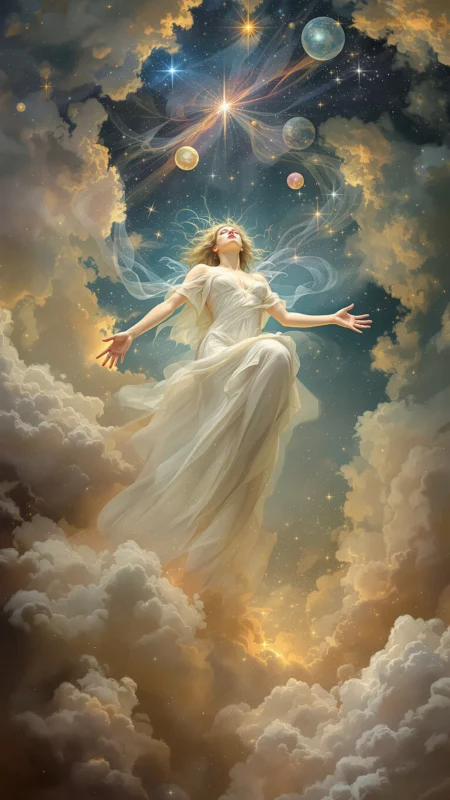


Prophecy

Archetype Meaning & Symbolism

prescient, cryptic, fateful, unbidden, intuitive, burdensome, illuminating, inevitable, unsettling, guiding

  • The future is not a distant shore you sail to; it is the current that has carried you all along.

If Prophecy is part of your personal mythology, you may...

Believe

  • Every coincidence is a form of communication from the universe.

    My life has a specific, pre-ordained narrative arc and purpose.

    My intuition is the most reliable source of truth I possess.

Fear

  • That I am powerless to change the future I foresee.

    That my insights will isolate me from others forever.

    That I am misinterpreting the signs and leading myself and others astray.

Strength

  • A profound ability to see the 'big picture' and understand long-term consequences.

    A deep, unshakeable trust in your own inner guidance system.

    The capacity to find meaning and purpose even in difficult or tragic events.

Weakness

  • A tendency towards fatalism and passivity.

    Difficulty staying present and enjoying the moment as it is.

    A potential for arrogance or a messiah complex based on perceived insights.

The Symbolism & Meaning of Prophecy

In the theater of personal mythology, Prophecy is not the crystal ball or the tea leaves in the bottom of a cup. It is the sudden, chilling recognition of a deep, underlying pattern, the moment the universe seems to rhyme. It’s the uncanny feeling of déjà vu that is not about the past, but a subtle confirmation that you are on the right track, that you have, in a sense, been here before in the script of your own life. This archetype could manifest as a quiet, internal knowing, a persistent intuition that guides decisions against all logic. It is the part of you that senses the storm long before the clouds gather, that knows a relationship’s end at its very beginning, or that feels the pull of a future success so strongly it becomes a memory of something that has not yet happened.

Prophecy symbolizes the belief in a coherent narrative for one's life. It is the weaver's glimpse of the finished tapestry, the understanding that stray threads and chaotic knots may yet resolve into a meaningful image. For an individual, this means reframing life's seemingly random events as foreshadowing, character development, or plot twists within a larger, purposeful story. A chance encounter is not an accident but a prophesied meeting. A failure is not an end but a necessary crucible. This archetype suggests that your life is not a series of disconnected moments but a text, rich with symbolism, and that you have the capacity to read it, to understand its deeper themes and inevitable conclusions.

Yet, this archetype carries a profound duality. The clarity it offers can be a gift, providing an unshakeable sense of purpose and direction. But it can also be a cage, creating a fatalistic sense that free will is an illusion. The mythic challenge presented by Prophecy is not simply to hear its message but to learn how to live with it. It asks: can you act with courage even when you feel you know the outcome? Can you love with an open heart even if you sense its end? Prophecy demands a sophisticated dance between accepting what may be inevitable and exercising the freedom that exists within each given moment.


Prophecy Relationships With Other Archetypes

The Crossroads

The Crossroads is the stage where Prophecy performs its most dramatic act. It is a place of pure potential, where any path is possible, yet it is here that the Prophecy archetype whispers most loudly, tinting one direction with a golden light and another with a sense of dread. Prophecy does not make the choice, but it imbues the choice with immense, cosmic weight. It transforms a simple decision into a pivotal moment of destiny, suggesting that while several paths may be open, only one is written into the fabric of your true story.

The Wound

A deep, unhealed Wound often becomes an unwilling oracle. The constant ache of a past trauma or a persistent insecurity can become a lens through which all future possibilities are viewed. In this relationship, the Wound prophesies, often projecting its own history onto the future, foretelling abandonment, betrayal, or failure. It’s a dark mirror to the intuitive glimpse of destiny; yet, contained within its painful pronouncements is also the prophecy of what must be healed. The Wound foretells the very work that must be done to create a different future than the one it fears.

The Trickster

The Trickster is Prophecy's chaotic, unpredictable sibling. Where Prophecy reveals the underlying order, the Trickster arrives to shatter it with absurdity and paradox. It delights in subverting expectations and making a mockery of fate. A prophesied success might be delivered in a humiliating or ridiculous fashion, or a dire prediction might be averted by a cosmic joke. The Trickster’s relationship with Prophecy suggests that the path to a foretold destination is never a straight line and that sometimes, the only way to fulfill a serious destiny is to not take it too seriously.

Using Prophecy in Every Day Life

Navigating Career Transitions

When faced with a professional crossroads, the Prophecy archetype may not offer a five-year plan but rather an unshakeable feeling about a particular path. It’s the inexplicable pull towards a city you’ve never visited or the sudden internal certainty that a seemingly stable job is a dead end. To use this is to trust that a resonant feeling is a form of data, a glimpse of a future self who is either thriving or suffocating, and to navigate by that internal compass rather than by external validation.

Understanding Repetitive Life Patterns

The Prophecy archetype allows one to see recurring challenges—the same relationship dynamic, the same professional setback—not as a loop of failure but as a recurring verse in a personal epic. Each recurrence is not just a repeat but a new chance to understand the original prophecy of the pattern. It is the recognition that the pattern itself is the message, foretelling a core lesson your soul is trying to learn, and that breaking the cycle requires understanding the story it’s trying to tell.

Creative Inspiration

For an artist, writer, or creator, this archetype is the trust in the unbidden image or the line of melody that arrives fully formed. It’s the process of working on a project without knowing the ending, guided by a faith that the story knows its own destination. This is the act of treating creativity as a form of channeling, allowing the prophesied work to reveal itself through you, rather than attempting to construct it solely from conscious will.

Prophecy is Known For

Foretelling the Inevitable

Prophecy is known not for predicting a multiplicity of futures, but for revealing the singular, weighted path that is already in motion. It speaks of the result that is already coiled within the cause, the destination implicit in the journey's first step.

Delivering Cryptic Messages

The archetype rarely speaks plainly. Its wisdom arrives in symbols, in recurring dreams, in synchronistic encounters, and in gut feelings that defy logic. It requires the recipient to become an interpreter, to engage with the mystery rather than receive a simple answer.

Imposing a Heavy Burden

To see or feel what is to come is to carry a weight. This knowledge can isolate the bearer, creating a gulf between them and those who live happily in the present. It is the burden of knowing the story's end while the other characters are still discovering the plot.

How Prophecy Might Affect Your Personal Mythology

How Prophecy Might Affect Your Mythos

When Prophecy is a cornerstone of your personal mythos, your life story ceases to be a biography and becomes an epic. Events are no longer random; they are portents and fulfillments. A childhood dream of a house by the sea is not a fantasy but a premonition, and finding it thirty years later feels like a homecoming to a place you’ve always known. Your narrative is structured around these key moments of foresight and their eventual realization. The central tension of your myth might be the struggle between what you have foreseen and your attempts to either embrace or escape it, casting you in the role of an Oedipus, a Cassandra, or a hero finally accepting their destiny.

This archetype imbues your personal mythos with a profound sense of fatalism or, more positively, of destiny. You may see yourself as a character playing a vital part in a story whose conclusion is, on some level, already written. This can make your struggles feel more meaningful, as they are necessary steps on a preordained path. It recasts suffering as a crucible and joy as a rightful reward. The downside is that it can strip the narrative of suspense and personal agency, making you feel more like a passenger than the author of your own story.

How Prophecy Might Affect Your Sense of Self

Your sense of self may become that of a conduit, a vessel through which a larger story is being told. The ego, with its immediate desires and fears, could feel secondary to the unfolding pattern you perceive. This might foster a kind of serene detachment, an ability to observe your own life’s dramas with the calm wisdom of one who has already read the final chapter. You might identify less with your fleeting emotions and more with the timeless, observing consciousness that recognizes the grander narrative at play.

This can also cultivate a deep, almost radical self-trust. Your intuition is no longer a whimsical impulse but your most reliable source of information, a direct line to the truth of your own mythos. You may learn to honor the quiet 'yes' or the resounding 'no' in your gut above all external advice and logical reasoning. This creates a powerful inner sovereignty, a confidence that is not built on achievements or accolades, but on the unshakable foundation of knowing your own path because you have, in a sense, already glimpsed its contours.

How Prophecy Might Affect Your Beliefs About The World

The world may cease to appear as a chaotic, meaningless churn of events. Instead, you might perceive it as a vast, interconnected web of intention. Synchronicities become the universe's way of winking at you, confirming you're in the right place at the right time. Political shifts, cultural trends, and even natural disasters could be seen as chapters in a much larger, unfolding prophecy. This imbues the world with a layer of magic and meaning, suggesting that nothing is truly an accident and that everything serves a purpose within the grand narrative.

This perspective can also foster a profound, almost geological patience. You may view the frantic anxieties of the modern world with a sense of cosmic calm, believing that current events are simply the turbulent but necessary unfolding of a long-foretold age. This can be a source of immense peace, a release from the exhausting need to control and fix everything. However, it also holds the danger of passivity, a resignation to negative events based on the belief that they are inevitable and that human intervention is ultimately futile against the tide of destiny.

How Prophecy Might Affect Your Relationships

Relationships could be seen through a powerful lens of fate and destiny. When you meet a significant person, it may not feel like a new introduction but a recognition, as if you are encountering a character who was prophesied to enter your story at this exact moment. This can infuse your connections with an incredible depth and sense of meaning from the very beginning. You might love people not just for who they are, but for the essential role you feel they are meant to play in your mythos, creating bonds that feel unbreakable and cosmically ordained.

However, this same lens can create a subtle but persistent distance. You may feel that you perceive a person's potential, their trajectory, or the inevitable end of your time together, and this foreknowledge can prevent you from simply being present with them. They might feel that they are being viewed as a symbol or a plot device rather than as a person in their own right. This can lead to a unique form of loneliness: being surrounded by people yet feeling isolated by a vision of the story that only you can see.

How Prophecy Might Affect Your Role in Life

You might unconsciously adopt the role of the Oracle or the Seer within your family, friend group, or workplace. People may be drawn to your knack for seeing the long-term consequences of actions, for sensing the hidden dynamics in a room. You may feel a subtle responsibility to speak the truths you perceive, to offer the cryptic but wise counsel that helps others navigate their own paths. It is a role that can command respect, but it also risks being misunderstood or resented when the visions you share are uncomfortable or unwelcome.

Alternatively, your role may be that of the Cassandra: the one who is cursed to see the future but never to be believed. You may find yourself constantly warning friends about a bad relationship or advising your company against a disastrous merger, only to be ignored. Your life story then becomes a tragic one, defined by the frustration and isolation of holding a truth that no one else is ready to hear. Your role is not just to see, but to bear the lonely burden of your sight, watching events unfold exactly as you knew they would.

Dream Interpretation of Prophecy

In a positive context, dreaming of a prophecy—receiving a clear message, reading a fated text, or seeing a future event unfold with serene certainty—may symbolize a profound alignment between your conscious self and your unconscious wisdom. The dream is an affirmation from your deepest self that you are on the correct path, that your intuitions are sound, and that you can trust the unfolding of your life's story. It is a message of encouragement, suggesting that a benevolent force, whether internal or external, is guiding you toward your destined purpose.

In a negative context, a dream of a terrifying or unavoidable prophecy can represent a deep-seated anxiety about powerlessness. It may reflect a fear that you are trapped by your circumstances, your family history, or your own worst habits. The prophecy in the dream is a manifestation of your belief in a negative fate from which you cannot escape. It speaks to a feeling that your future is sealed by past mistakes or inherent flaws, and that your free will is an illusion in the face of an inevitable, dreaded outcome.

How Prophecy Archetype Might Affect Your Needs

How Prophecy Might Affect Your Physiological Needs

Your basic physiological needs may become intertwined with omens and signs. The choice of what to eat might be guided by a sudden, intuitive craving, which you interpret as the body's own prophecy of what it requires for wellness. The search for shelter might end not with the most practical house, but the one that feels 'fated', the place that appeared in a dream or sits on a street with a meaningful name. Survival itself becomes an act of listening, of aligning your physical existence with the subtle currents of the narrative you perceive, trusting that the story will provide for its protagonist.

Conversely, the focus on a grand, unfolding destiny can lead to a profound neglect of the body. The physical self may be seen as a mere vehicle for the visionary mind, a temporary vessel whose mundane needs are an inconvenient distraction from the more important work of interpreting the great pattern. Sleep, proper nutrition, and even hygiene might fall by the wayside in the grip of a powerful insight or a period of intense creative flow. The body's simple, present-moment reality is sacrificed for the sake of a future vision.

How Prophecy Might Affect Your Ideas of Belonging

The search for belonging may be directed not toward your immediate community, but toward a tribe that exists across time. You might feel a deeper kinship with the mystics, poets, and prophets of history than with your neighbors. Love and intimacy are defined by a shared 'sight'—a connection with someone who understands the world as a text, who speaks the language of synchronicity and intuition. Belonging is not about shared geography or hobbies, but about finding another soul who is also listening to the story beneath the story.

More commonly, this archetype can be a profound source of alienation. The very insights that give your life meaning can create a chasm between you and others. How can you have a simple, present-moment conversation with someone when you feel a strong premonition about their future? Intimacy can be fraught with the burden of what you perceive, making true connection feel impossible. You may feel you belong more to the pattern than to the people, a lonely observer in the web of relationships you can see so clearly.

How Prophecy Might Affect Your Feelings of Safety

A sense of safety may be built not on locks and bank accounts, but on a foundation of precognition. You might navigate the world by listening to 'bad feelings,' avoiding a certain street, canceling a trip at the last minute, or distrusting a person for reasons you cannot logically explain. This can create a life that feels magically guided, as if an invisible hand is constantly steering you away from unseen dangers. Security becomes less about material preparation and more about maintaining a clear channel to the intuitive voice that prophesies harm and helps you avoid it.

However, the Prophecy archetype can also dismantle the need for safety altogether through a powerful sense of fatalism. If your time of death or a great calamity is already written in the stars, what is the point of mundane precautions? This belief can lead to a kind of reckless courage or a dangerous passivity, an acceptance of risks that others would find foolish. The core belief is that if you are meant to survive, you will, making safety a matter of destiny rather than personal responsibility.

How Prophecy Might Affect Your Views of Esteem

Your self-esteem could be deeply rooted in the accuracy of your insights. Every correct intuition, every fulfilled premonition, serves as a powerful validation of your core self. This is not about the egoic satisfaction of being 'right,' but a deeper feeling of being in tune with the fundamental nature of reality. Your worth is derived from your reliability as a channel, your ability to perceive the truth of the pattern. This fosters a quiet, resilient self-respect that is independent of external approval or success.

On the other hand, esteem becomes incredibly precarious, as it is tied to an ability that is mysterious and beyond conscious control. A misinterpreted sign or a failed prophecy can trigger a devastating identity crisis. If your value is based on 'seeing,' then what are you when you are blind? This can lead to a cycle of hubris and despair, your self-worth fluctuating with the clarity of your visions, making you profoundly vulnerable to periods of intuitive silence or confusion.

Shadow of Prophecy

The deep shadow of Prophecy is the creation of self-fulfilling prophecies born of fear. This is the act of not just seeing the future, but actively, if unconsciously, creating a dreaded outcome in an attempt to avoid it. It is the person who, convinced they will be abandoned, acts so suspiciously and needily that they drive their partner away, thus 'proving' their initial prophecy was correct. In this shadow aspect, insight curdles into paranoia. The gift of sight becomes a weapon turned against the self, using the language of destiny to justify a cycle of self-sabotage. The seer becomes the architect of their own doom.

Another shadow emerges in the abdication of all moral responsibility. 'It was fated to happen' becomes the ultimate excuse for inaction, cruelty, or betrayal. This person may stand by and watch a friend make a terrible mistake, comforting themselves that it was 'their path to learn'. They may justify their own harmful actions as a necessary part of someone else's story. This turns the cosmic perspective of Prophecy into a cold, sociopathic detachment, using the grand narrative to erase personal accountability and the simple, human imperative to be kind.

Pros & Cons of Prophecy in Your Mythology

Pros

  • Provides a powerful sense of meaning, purpose, and direction in life.

    Fosters a deep trust in oneself and the universe, reducing anxiety about the unknown.

    Allows for the recognition of deep patterns, leading to wiser long-term decisions.

Cons

  • Can lead to a sense of powerlessness and fatalism.

    May create social isolation due to a perspective others don't share.

    Carries the heavy burden of foreknowledge, which can diminish the joy of surprise and discovery.