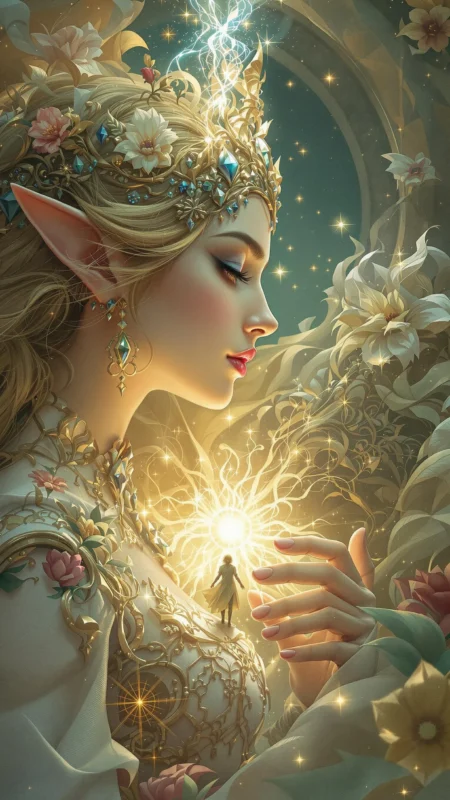
Princess Zelda

Archetype Meaning & Symbolism

Wise, regal, burdened, patient, scholarly, divine, resourceful, self-sacrificing, constrained, hopeful

  • Everything I've done up until now... it was all for nothing.

If Princess Zelda is part of your personal mythology, you may...

Believe

  • You may believe that true power is quiet, and that wisdom is a more formidable weapon than any sword.
  • You may believe that your life is part of a larger, cyclical story, and that your struggles are echoes of ancient conflicts.
  • You may believe that patience is not passivity, but a form of strategic action, and that waiting is a sacred act of preparation.

Fear

  • You may fear that you will fail to live up to the immense responsibilities placed upon you, letting down everyone who depends on you.
  • You may fear that your true power will awaken too late to avert disaster, rendering all your sacrifice and waiting meaningless.
  • You may fear that you will only ever be seen as a symbol, a role, or a title, and that no one will ever know or love the person underneath.

Strength

  • You possess a profound well of patience, capable of enduring long periods of uncertainty with grace and a belief in a future outcome.
  • You have access to a deep intuition and wisdom, allowing you to see the larger patterns at play and make decisions with unusual foresight.
  • You are capable of immense self-sacrifice for a cause greater than yourself, inspiring hope and loyalty in others.

Weakness

  • You may tend towards passivity, waiting for an external catalyst or a 'hero' to solve problems instead of taking direct action yourself.
  • You can be plagued by a crippling impostor syndrome, where a deep-seated belief in your own inadequacy prevents you from embracing your power.
  • You may hold others at a distance, isolated by the weight of your burdens and your unique perspective, making true intimacy a challenge.

The Symbolism & Meaning of Princess Zelda

Princess Zelda, in the personal mythology of the modern individual, may represent the wisdom that is held in trust. She is not merely knowledge, but the burden of it: the foresight that reveals a coming darkness, the sacred duty that isolates one from a simpler life. To find Zelda in your own story is perhaps to recognize a part of you that knows more than it lets on, a quiet warden of a deep, inner sanctum. This archetype speaks to the power that doesn't roar but rather illuminates, the strength found not on the battlefield but in the library, the prayer chamber, the silent vigil of a hundred-year slumber. She is the part of the self that understands the long, cyclical nature of struggle and holds faith in the eventual return of light, even when entombed in shadow.

The princess is also a potent symbol of latent potential, the terrifying and exhilarating possibility that you are more than you currently appear. Her journey is often one of desperation, a frantic search for a power she is told she possesses but cannot feel. This resonates with a deeply contemporary anxiety: the fear of inadequacy in the face of overwhelming expectation. In your mythos, Zelda could be the narrative of your own sealed abilities. She suggests your moments of perceived failure and weakness may not be deficits, but rather the necessary incubation period for a power so profound it requires a lifetime of preparation to wield without being consumed by it. She is the promise that the true self is not yet fully revealed.

Finally, Zelda symbolizes the tension between role and identity. She is a princess, a title that is both a source of authority and a gilded cage. Her story often involves either subverting that role or accepting its terrible weight. As a figure in your personal mythos, she may highlight the points of friction between your prescribed duties: parent, employee, citizen, and your soul's private desire for agency or a different form of expression. She asks a difficult question: is the crown you wear a tool for the greater good or a mask that suffocates the real you? Her symbolism is a meditation on navigating this conflict, finding power not just in the role itself, but in the wisdom to know when to embody it and when to set it aside.


Princess Zelda Relationships With Other Archetypes

The Hero of Courage

The Hero may be seen not as a savior in the thundering, declarative sense, but as the silent, kinetic answer to a question the Princess has been holding in her heart. He is, perhaps, the body to her soul, the world of action made manifest by her world of prayer and premonition. Where she is the keeper of the map, a vessel of history and divine right, he is the traveler who walks its faded lines. Their connection could be viewed as a form of sacred geometry, two points defining a destiny, less a romance of courtly love and more a resonance of cosmic necessity. He is the hand that draws the fated sword, but she is the mind that knows where it lies buried, the whispered incantation that sanctifies its steel. He is the storm of righteous fury, but she, it seems, is the atmospheric pressure, the quiet, immense force that calls the storm into being.

The Hallowed Ground

The kingdom itself—be it a shining Hyrule or some other land touched by grace—is not merely a stage for the Princess’s plight, but her very reflection in stone and soil. One might suggest her fate is so deeply woven into the land’s that the health of the fields, the clarity of the springs, is but a mirror to the state of her spirit. She is the living memory of the kingdom, a walking archive of its songs and sorrows. When she is captive, the land itself may appear to hold its breath, the colors leaching from the landscape as if in sympathetic mourning. The castle, the temple, the sacred grove—these are not just places she must protect, but extensions of her own being. The kingdom could be understood as a great, ancient instrument, and the Princess is the melody that, even when faint, proves it has not been entirely broken.

The Shadow of Ambition

The Tyrant, the figure of immense power and malevolent will, is perhaps the necessary shadow that gives the Princess’s light its form and definition. He is the embodiment of power as a thing to be seized, a worldly conquest, while she represents power as a thing to be channeled, a sacred trust. Their conflict might be seen as the eternal argument between the fist and the open hand. He is a volcanic force, seeking to remake the world in the molten image of his own desire. She, in contrast, is the deep, tectonic patience of the earth, a strength that does not erupt but endures, absorbing shocks and preserving the seeds of what will grow again. He is a scream of ego against the universe; she is the silence that follows, a quiet authority that reveals the scream to be, in the end, just noise.

Using Princess Zelda in Every Day Life

Navigating Impostor Syndrome

When confronted with a role that feels too large, a responsibility that seems to eclipse your perceived skill, the Zelda archetype offers a map. It suggests this chasm between duty and ability is not a sign of your failure, but the very crucible in which your true power is forged. It encourages a turn inward: not to despair, but to study, to listen, to wait for the sacred knowledge within to finally bloom. Your feeling of inadequacy may not be a weakness, but a prerequisite for humility and true wisdom.

Cultivating Strategic Patience

In a world that demands immediate results, the Zelda mythos champions the long game. When facing a seemingly insurmountable problem, whether a corporate behemoth or a deep-seated personal flaw, this archetype advises against a frontal assault. Instead, it suggests a strategic retreat, a period of sealing power away, of gathering knowledge, of waiting for the precise moment to act. It reframes waiting not as passivity, but as an active, potent strategy where time itself becomes your ally.

Balancing The Public and Private Self

For those who feel defined by their job title, their family role, or their public persona, Zelda offers the wisdom of the alter ego. She suggests that there are times when your designated role is a constraint, and you must adopt a different mask: Sheik the warrior, Tetra the pirate. This is a call to integrate the hidden, perhaps more authentic, parts of yourself. It permits you to act in ways your primary role would forbid, granting a vital flexibility and a way to preserve your core identity from the crushing weight of expectation.

Princess Zelda is Known For

The Burden of Destiny

Princess Zelda is often defined not by choice but by a preordained fate tied to her royal bloodline and the divine Triforce of Wisdom. Her story is one of accepting, and often struggling with, a destiny that demands immense sacrifice.

Latent Divine Power

Across many tellings, Zelda's primary struggle involves awakening a sacred power sealed within her. She represents the idea that one's greatest strength may lie dormant, requiring specific, often harrowing, conditions to be unlocked.

Alter Egos and Disguise

Known for her guises as the nimble warrior Sheik or the bold pirate captain Tetra, Zelda embodies the theme of hidden identity. Her ability to shed her royal persona for a more active or pragmatic role is a key element of her resourcefulness.

How Princess Zelda Might Affect Your Personal Mythology

How Princess Zelda Might Affect Your Mythos

When Princess Zelda enters one's personal mythos, the narrative of a life story may shift from one of heroic action to one of sacred endurance. Your personal history might be re-contextualized not as a series of active choices and conquests, but as a long, patient vigil. Periods of quiet, of seeming inactivity or failure, are no longer empty spaces but charged moments of waiting, of gathering strength, of holding a fragile hope in a world gone dark. Your life story becomes less about a sword and more about a seal: the containment of chaos, the preservation of wisdom, the steadfast belief in a future restoration that you may be preparing for in ways even you do not fully understand. It is the myth of the keeper, the seer, the anchor point around which the more chaotic elements of your life revolve.

Furthermore, this archetype introduces the theme of cyclical fate and inherited burdens into your life story. You may begin to see your personal struggles not as isolated incidents but as echoes of ancestral patterns, a role you were born into fulfilling. This could manifest as a sense of responsibility for healing familial wounds or for carrying a torch of knowledge or hope passed down through generations. Your mythos becomes one of legacy. The central conflict is no longer just your own, but a chapter in a much larger epic. This perspective can be both empowering and daunting, framing your choices with a sense of cosmic significance while also suggesting that some parts of your path are tragically, or beautifully, predetermined.

How Princess Zelda Might Affect Your Sense of Self

To integrate the Zelda archetype is to foster a complex and often bifurcated sense of self. On one hand, it may cultivate a deep, quiet confidence in a hidden wellspring of inner strength. You may see your surface-level identity as a necessary disguise or a temporary state, while your 'true' self is something far more powerful and ancient, waiting for the right moment to emerge. This can be a profound source of resilience, a secret knowledge that you are more than your current circumstances. You are not just the person in the office; you are the vessel of a sacred light, the keeper of an unshakeable wisdom.

On the other hand, this archetype can sow seeds of profound self-doubt and a gnawing sense of inadequacy. The core of Zelda's struggle, particularly in her later incarnations, is the feeling of being a failure, of being unworthy of the power she is meant to wield. If this resonates, your view of self may be colored by a persistent fear that you will not be able to rise to the occasion when it matters most. Your potential feels less like a promise and more like a terrifying standard against which you constantly fall short. The self becomes a project always on the verge of failure, a divinity that stubbornly refuses to awaken, leading to a state of perpetual, anxious striving.

How Princess Zelda Might Affect Your Beliefs About The World

A worldview colored by the Zelda archetype may be one that sees time not as a linear progression, but as a repeating, grand cycle. History is not a dead thing but a living force that presses in on the present, with ancient evils and long-forgotten magics liable to re-emerge at any moment. The world is a place of deep, sleeping secrets. This perspective fosters a certain kind of watchfulness, a belief that the peace of the present is always precarious. It is a worldview that values lore, prophecy, and the wisdom of elders, seeing them not as quaint relics but as essential strategic intelligence for navigating a world where the past is never truly past.

This archetype may also instill a belief in a kind of cosmic balance, a dualism of light and darkness as fundamental forces. The existence of a great, encroaching evil (Ganon) implies and necessitates the existence of an equal and opposite sacred power (Zelda's sealing magic). From this perspective, hardship and despair are not random tragedies but the necessary catalysts for awakening goodness, courage, and wisdom. It's a worldview that can offer profound hope in the bleakest of times, a faith that the deeper the shadow, the brighter the eventual light it is destined to call forth. The world is not chaotic, but a stage for a timeless, meaningful struggle.

How Princess Zelda Might Affect Your Relationships

In relationships, the Zelda archetype might foster a dynamic of quiet, profound, and often unspoken connection. Bonds are formed not through casual chatter or overt displays of affection, but through shared purpose and a mutual understanding of each other's destined roles. You may find yourself drawn to partners or friends who feel like fellow actors in a grand narrative: the stoic knight, the wise mentor, the fated hero. Love and friendship may feel like a sacred pact, a duty to support and protect one another on a journey far larger than your individual lives. Communication might be subtle, telepathic even, a meeting of souls who recognize their shared place in the story.

However, this can also create a sense of profound isolation within relationships. The burden of wisdom or destiny is a lonely one. Like Zelda, you may feel that no one can truly understand the weight you carry or the future you foresee. This can create a gulf between you and loved ones, a pane of glass through which you can see and cherish them but never feel fully connected. There is a risk of seeing others merely as their roles in your mythos rather than as complex individuals, leading to a dynamic where you wait to be rescued or guide from an untouchable pedestal, making true, vulnerable intimacy a constant challenge.

How Princess Zelda Might Affect Your Role in Life

Adopting the Zelda archetype profoundly shapes one's perceived role in life, casting it as a mantle of sacred duty rather than a job or a set of social functions. Your role, whether as a parent, an artist, or a leader, is imbued with the weight of protecting a 'kingdom,' be it your family, your community, or a realm of ideas. This fosters a powerful sense of responsibility and purpose, a belief that your actions are critical for preserving something precious and good in the world. You may feel less like an individual making choices and more like a conduit for a historical or divine purpose, a steward for a legacy that began long before you and will continue long after.

The potential pitfall of this perspective is that the role can become a prison. The sense of inescapable destiny can suffocate personal desire and spontaneous joy. You may feel that your life is not your own, that your choices are circumscribed by the needs of your 'kingdom.' There is a danger of martyrdom, of sacrificing your personal happiness so completely to the role that the individual self withers away. The challenge inherent in the Zelda archetype is to inhabit your great role with grace and wisdom without allowing it to erase the person who must bear it, to find freedom within the confines of fated responsibility.

Dream Interpretation of Princess Zelda

To dream of Princess Zelda in a positive context is often to receive a message from the deep, intuitive parts of your own psyche. Her appearance may signal an awakening of your own inner wisdom, a readiness to access knowledge or abilities that have lain dormant. She could represent grace under pressure, urging you to respond to a waking-life crisis not with panic, but with quiet contemplation and strategic patience. If she offers you an item, like the Light Arrows or the Ocarina of Time, it may symbolize a new tool or perspective becoming available to you. Her presence is an assurance: you have the inner resources to face the darkness, you simply need to unlock them.

In a negative light, dreaming of Zelda could symbolize a feeling of being trapped, powerless, and defined by others' expectations. She might appear locked in a crystal prison or a besieged castle, representing your own feelings of being stuck in a situation, waiting for an external force to rescue you. This dream is a warning against passivity and a call to action. It may highlight a fear that your potential will go unrealized, or that you have abdicated your own agency to a 'hero' in your life. Seeing a weeping or despairing Zelda could be a reflection of your own deep-seated impostor syndrome, a sign that you must confront your fears of inadequacy to avoid becoming a prisoner of your own destiny.

How Princess Zelda Archetype Might Affect Your Needs

How Princess Zelda Might Affect Your Physiological Needs

When the Zelda archetype informs your mythos, your basic physiological needs become imbued with a sense of sacred maintenance. The body is not merely a body: it is a vessel, a temple holding a sealed power or a divine light. Therefore, the acts of eating, drinking, and sleeping are not just for survival, but are rituals of preservation. To neglect them is not just to feel tired or hungry, but to risk dimming the inner flame, to fail the future self who will need this strength for a great trial. Food might be seen as sustenance for the long vigil, and sleep as the chamber where wisdom gestates.

This perspective could lead to a highly disciplined approach to health, a kind of asceticism geared toward readiness. Your body is the one thing you have while you wait for destiny to unfold. However, it can also create anxiety around physical vulnerability. Illness or injury may be interpreted not as a simple biological event, but as a spiritual failure, a crack in the vessel that might allow the sacred energy to leak away. The body becomes another source of pressure, a kingdom whose borders must be vigilantly defended against the chaos of frailty and decay, for it is the last bastion of a future hope.

How Princess Zelda Might Affect Your Ideas of Belonging

With Zelda as a guide, the need for love and belonging is filtered through the lens of destiny and sacred duty. You may seek belonging not in casual social groups, but in organizations or relationships dedicated to a higher purpose. Kinship is found with those who share your burden, who understand the weight of your role without it needing to be explained. Love may not be a fiery, passionate affair, but a deep, quiet, and often melancholy bond with a fated partner, a 'hero' to your 'princess.' Belonging is being a part of the tapestry of destiny, a connection that transcends mere personal affection and touches the mythic.

This can lead to a profound sense of loneliness. While you may belong to a kingdom or a cause, you might feel that you do not belong to anyone personally. The responsibilities of your role can create a barrier to simple, vulnerable connection. You might feel that people love the symbol you represent, not the person you are. This can create a longing for a connection free from the weight of destiny, a desire to be seen as Tetra the pirate rather than Zelda the princess. The search for belonging becomes a quiet ache for a love that is chosen, not preordained.

How Princess Zelda Might Affect Your Feelings of Safety

The Zelda archetype reframes the need for safety from a desire for comfort into a strategic necessity. Safety is not a cozy home; it is a fortified position, a hidden sanctuary from which one prepares for an inevitable conflict. If this is your mythos, you may find yourself creating 'safe houses' in your life, whether a physical space filled with books and knowledge, or a mental state of disciplined calm. This is not about hiding from the world out of fear, but about recognizing a tangible darkness in the world and understanding that preservation is a key strategy. Safety is the sealed temple where power can be gathered before it is unleashed.

This can also foster a state of hyper-vigilance, a sense that your 'kingdom' is perpetually under siege. You may find it difficult to ever truly relax, as the world feels filled with threats to your physical, emotional, or spiritual security. Safety becomes less about a feeling of peace and more about the strength of your defenses. You might seek security in knowledge, believing that if you can just foresee the threat, you can counter it. The ultimate fear is not of the attack itself, but of being caught unprepared, of having your sanctuary breached before your power has had a chance to awaken, rendering all your patient waiting for naught.

How Princess Zelda Might Affect Your Views of Esteem

The Zelda archetype places the need for esteem at the very center of the personal mythos. Esteem is not about social status or external accolades: it is a desperate, internal battle for worthiness. If this is your story, your self-worth may be intrinsically tied to your ability to fulfill a monumental, perhaps impossible, role. You may feel that you are nothing until you have unlocked your sealed potential, leading to a constant and exhausting striving for self-improvement and spiritual awakening. Esteem is not something you have, but something you must earn through trial and sacrifice.

Consequently, your sense of self-worth is incredibly fragile, perpetually haunted by the specter of inadequacy. Every setback, every failure to live up to the ideal, can trigger a crisis of esteem, a descent into the feeling that it was 'all for nothing.' Validation cannot come from others, as they cannot see the internal struggle. True esteem, in the Zelda mythos, is only achieved at the climax of the story: the moment you finally accept and successfully wield your own power. It is the profound, internal recognition that you are, and always were, worthy of the title you bear.

Shadow of Princess Zelda

The shadow of the Zelda archetype emerges in two devastating forms. The first is the tyranny of passivity, where the virtue of patience curdles into a complete abdication of agency. In this shadow, you become the perpetual victim, the eternal damsel whose powerlessness is a self-fulfilling prophecy. You may romanticize your own suffering, seeing it as a noble vigil, while in truth, your inaction enables the very darkness you claim to oppose. You wait for a hero who never comes, or who comes too late, because you were meant to be a critical actor, not a spectator. This shadow self uses 'destiny' as an excuse to never risk failure, becoming a beautiful, tragic, and ultimately useless monument to lost potential.

The other, more terrifying shadow is the tyranny of wisdom. When the archetype is inflated, the belief in your sacred duty and superior foresight becomes a justification for control. You become the benevolent dictator, the leader who imprisons their people 'for their own safety.' You believe your wisdom gives you the right to make choices for others, to subvert their free will because you, and only you, can see the grand design. This shadow is a gilded cage you build for everyone else. It is the cold, calculating use of light to enforce stasis, a holy oppression that sacrifices freedom and joy for a sterile, predictable peace. It is the shadow of a queen who loves her kingdom so much she smothers it.

Pros & Cons of Princess Zelda in Your Mythology

Pros

  • You possess a quiet resilience that allows you to endure immense pressure and hardship with grace and hope.
  • You inspire deep loyalty and serve as a beacon of wisdom for others, guiding them through complex situations.
  • Your ability to see the bigger picture and play the long game makes you a master strategist in life's most difficult conflicts.

Cons

  • You often feel profoundly isolated, burdened by knowledge and responsibility that you cannot share with others.
  • A persistent fear of inadequacy can paralyze you, preventing you from taking decisive action when it is most needed.
  • You may be inclined to sacrifice your own personal happiness and desires in service of a duty that feels both inescapable and all-consuming.