 Believe
 Fear
Fear Strength
 Weakness
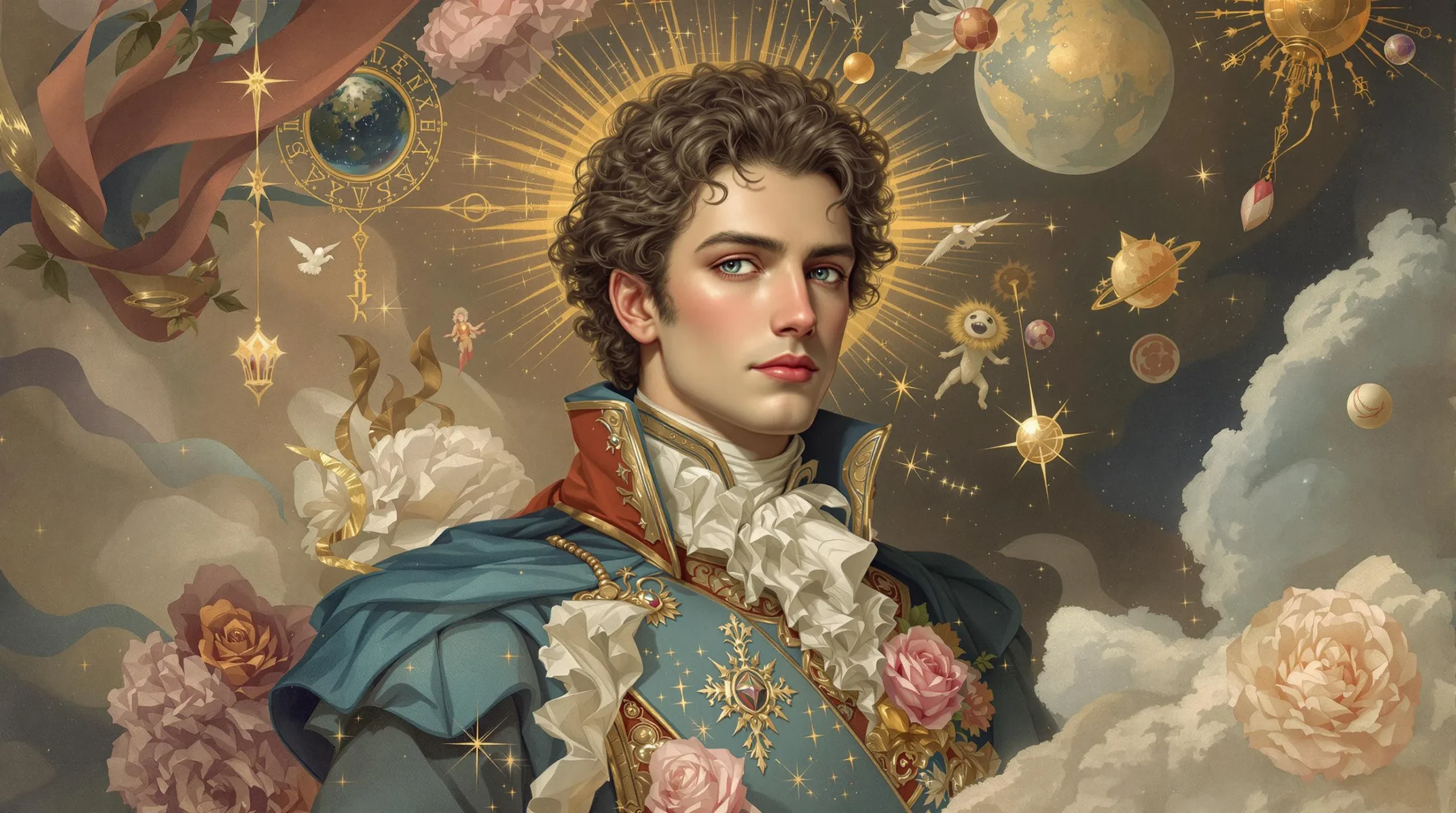
Prince Ferdinand in the personal mythos is the embodiment of untainted potential, the noble self before it has been marked by the world’s cynicism. He is the pristine canvas upon which a grand story of love and trial is to be painted. To have Ferdinand as a guide is to hold a deep-seated belief in one's own inherent worth, a worth that exists prior to any accomplishment, like royalty by birthright. This archetype is not about power or conquest, but about worthiness. It posits that the universe, through figures like Prospero, may test you, may strip you of your finery and force you to carry logs, but these trials are not punishments. They are validations, opportunities to prove that the inner nobility is genuine and can withstand hardship.
The archetype speaks to a profound romanticism, a faith that love is not merely an emotion but a transformative power. Like Ferdinand, one may feel shipwrecked and alone in the world, only to discover a 'deserted island' that holds the key to one's entire purpose. This island is often a person, a 'Miranda,' who makes all suffering meaningful. Ferdinand's journey suggests that true love is not found through ease, but earned through a demonstration of virtue. He represents the soul’s willingness to be humbled, to perform 'mean tasks,' because the object of its devotion 'quickens what’s dead and makes my labours pleasures.'
Furthermore, Ferdinand symbolizes a bridge between worlds: the old world of courtly intrigue and betrayal he leaves behind, and the new world of wonder and sincerity he discovers. He is a figure of transition and hope. In a personal narrative, he may appear when one is meant to break from a corrupt or inherited past and forge a new legacy built on purer principles. He is the part of the self that, despite being born of a flawed system, retains the capacity for awe and the courage to build something better. He is the quiet promise that after the storm, a new and harmonious kingdom can be built.