 Believe
 Fear
Fear Strength
 Weakness
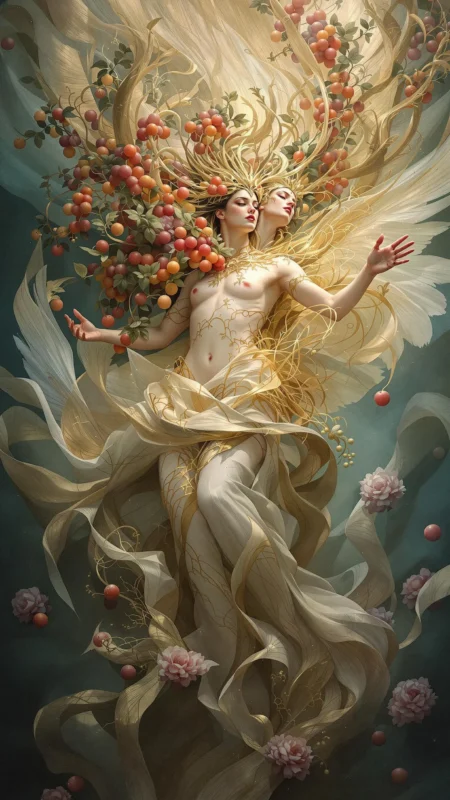
In the personal mythology of a modern life, Pomona represents the sanctity of deep work. She is the patron saint of the specialist, the artisan, the writer in their study, the coder in a flow state, the parent focused on the singular world of a child. She champions the profound truth that to create something of value, one must often shut the door to the thousand other things one *could* be doing. Her pruning knife is a potent symbol for the editor, the curator, the life-choosing individual who understands that growth requires cutting back: removing the extraneous projects, the draining relationships, the distracting ambitions, to channel all life-force into what truly matters.
The walled garden is Pomona’s most resonant symbol, a map for the inner life. For those who feel the Pomona archetype within, creating such a sanctuary is a primary life task. This is not about building walls of fear, but walls of focus. It is the artist’s studio, the scholar’s library, the quiet sanctuary of the home. It is a psychic space where the soul is safe from the chaotic winds of public opinion and the endless demands of a hyper-connected world. Inside this space, one can cultivate a unique perspective, a specific skill, or a deep relationship, allowing it to grow strong and healthy before it is, perhaps, shared with the world.
Her eventual union with Vertumnus, the god of seasons and change, provides the crucial final act to her symbolism. The myth suggests that even the most perfect, self-contained world cannot remain static forever. Life, in the form of love, change, or a new calling, will eventually knock at the gate. Vertumnus’s success comes not through force but through wisdom and empathy. This represents the necessity of opening oneself to influence, to collaboration, and to the turning of life’s seasons. The fruit of the garden is meaningless if it is never shared or if it is not allowed to be part of a larger cycle of renewal and change.