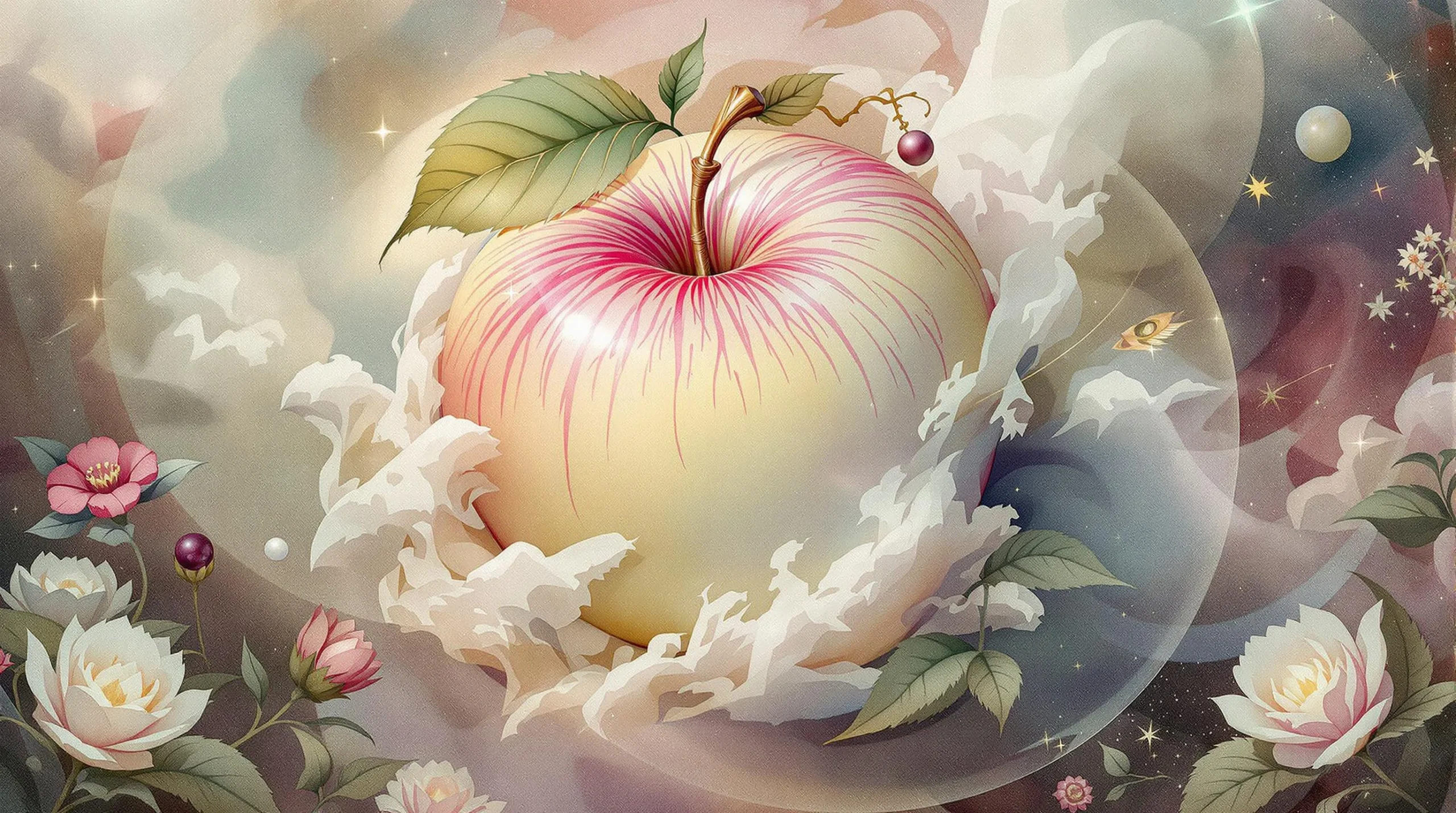


Poisoned Apple

Archetype Meaning & Symbolism

Alluring, deceptive, fateful, transformative, subversive, hidden, consequential, polished, irreversible, tempting

  • The sweetest skin may hide the bitterest truth. The choice is not the bite, but the wisdom to refuse the hunger.

If Poisoned Apple is part of your personal mythology, you may...

Believe

  • That beauty is often a form of armor, or a weapon.
  • That the most important truths are found in what is omitted, not what is said.
  • That genuine kindness has no agenda and is therefore the rarest thing in the world.

Fear

  • Being made a fool of by your own desires.
  • That your innate suspicion will prevent you from ever experiencing simple, uncomplicated joy.
  • That there is a hidden, terrible cost to everything that seems good and easy.

Strength

  • An almost preternatural ability to sense dissonance, to feel when words and intentions do not align.
  • A profound capacity for loyalty once trust is earned, as it is never given lightly.
  • A patient, observant nature that allows you to see the whole chessboard before making a move.

Weakness

  • A tendency towards paranoia, seeing poison in things that are genuinely wholesome.
  • An inclination to hold others to impossible standards of authenticity, leading to isolation.
  • Difficulty accepting help or gifts, assuming they always come with strings attached.

The Symbolism & Meaning of Poisoned Apple

The Poisoned Apple, in our modern lexicon, is the venture capital deal with predatory terms, the flawless social media life that masks a quiet desperation, the political promise that glitters with ruin. It is the archetype of the beautiful, fatal shortcut. Its presence in one's personal mythology suggests a life story not about avoiding temptation, but about learning to recognize its many modern costumes. It symbolizes the critical juncture where intuition must override desire, where the soul’s quiet warning must shout down the ego’s clamoring want. The Apple represents a sophisticated danger: not a roaring monster, but a silent, smiling assassin.

Its meaning has deepened beyond simple malice. The apple may not be offered by an evil queen, but by a culture that prizes appearance over substance, by systems that offer comfort in exchange for complicity, or even by our own unexamined ambition. To contend with this archetype is to become a student of subtleties. It teaches that the most significant threats often arrive as gifts, and that wisdom is not the acquisition of knowledge, but the development of an instinct for what is holistically nourishing versus what is merely, beautifully, toxic.

Ultimately, the Poisoned Apple is a symbol of discernment. It asks: what do you truly hunger for? Is it the fleeting sweetness of validation, the easy comfort of illusion? Or is it the harder-won nourishment of truth? The apple on the branch is just fruit. It becomes the Poisoned Apple only when it is imbued with an agenda. Recognizing that agenda, whether it comes from the world or from within, is the central spiritual task presented by this potent, polished symbol.


Poisoned Apple Relationships With Other Archetypes

The Innocent:

The Poisoned Apple is perhaps the single greatest threat and teacher to The Innocent archetype. It is the beautiful, terrible lesson that the world is not always what it seems. Where The Innocent sees a simple gift of nourishment, the Apple presents a complex test of perception and trust. Their relationship is the archetypal story of the loss of naivete, the fall from a garden of blissful ignorance into a world of complex motives. The Apple does not necessarily seek to destroy The Innocent, but its very presence forces an evolution: a painful but necessary awakening into a more discerning, savvy, and complete version of the self.

The Trickster:

While a villain offers the apple with malicious intent, The Trickster may offer it as a catalyst for chaos and, through that chaos, enlightenment. The Trickster doesn't care about good or evil; it cares about disrupting stagnant patterns. It might present the alluring, poisoned choice to force a hero to confront their own gullibility or a hidden desire. For The Trickster, the apple is a perfect tool: a beautiful object that creates an internal crisis, revealing the recipient's true character and forcing them to see the shadows they have ignored. The relationship is not one of animosity, but of cosmic provocation.

The Alchemist:

The Alchemist sees the Poisoned Apple not as an end, but as a beginning. The poison, to The Alchemist, is merely an ingredient. This archetype is concerned with transformation, with turning lead into gold and poison into medicine. When confronted with the apple, The Alchemist's challenge is to metabolize the experience: to take the 'bite,' survive the poison of betrayal or disillusionment, and integrate its lesson into a more potent form of wisdom. The Alchemist might say the poison reveals the location of the wound, and in doing so, provides the map to the cure. Their relationship is one of radical transmutation.

Using Poisoned Apple in Every Day Life

Navigating Career Opportunities

When a job offer appears flawless, a gilded cage of salary and title that feels strangely hollow, the Poisoned Apple archetype serves as your internal counsel. It prompts you to look past the gleaming surface and question the unspoken culture, the rumored burnout, the truth behind the high turnover rate. It is the wisdom that inspects the gift for the giver's intent, not just its outward appeal.

Evaluating New Relationships

In the dizzying early days of a romance where a partner seems too perfect, too accommodating, the Apple is a quiet whisper of caution. It represents the need to slow down, to allow time for the unvarnished self to emerge from behind the polished performance of courtship. It asks: is this wholesome nourishment, or is it a beautiful confection designed to obscure a fundamental incompatibility, a hidden hunger?

Confronting Self-Sabotage

Sometimes, the hand that offers the apple is your own. A comfortable habit that stifles growth, an indulgence that masquerades as self-care, a cherished excuse that keeps you from your own becoming: these are all Poisoned Apples. To recognize them is to see the beautiful, easy thing for what it is: a tempting slumber that prevents you from reaching the truer, more difficult awakening your life demands.

Poisoned Apple is Known For

Temptation

The magnetic pull of a seemingly perfect object or opportunity, an offer that speaks directly to a deep-seated desire or vulnerability.

Deception:

The core nature of the archetype, where a beautiful, wholesome exterior conceals a dangerous or corrupting interior.

Transformation:

The irreversible change that occurs after the 'bite' is taken, symbolizing a point of no return, a loss of innocence, or a fateful, life-altering decision.

How Poisoned Apple Might Affect Your Personal Mythology

How Poisoned Apple Might Affect Your Mythos

When the Poisoned Apple is a core object in your personal mythos, your life story may be structured as a series of critical discernment tests. The major turning points of your narrative are perhaps not grand battles, but quiet moments of choice: accepting the job that felt too good to be true, entering the relationship that seemed flawless, believing the easy compliment. Your myth becomes a chronicle of learning to trust an inner sense over an outer spectacle. The central arc is a movement away from naivete, not towards cynicism, but towards a state of clear-eyed wisdom where you can appreciate beauty without being ensnared by it.

Your personal legend might be defined by the one time you *did* take the bite, and the long, arduous journey back from that metaphorical slumber. This event becomes your origin story, the wound that imparts a strange gift: the ability to see the hidden flaw in every perfect facade. You become the hero who descended into the underworld of deception and returned with the treasure of unshakeable intuition. Your story is not about avoiding danger, but about having been poisoned and, through that experience, developing a permanent immunity.

How Poisoned Apple Might Affect Your Sense of Self

Your sense of self may be forged in the crucible of suspicion. Self-trust could be your most prized, and most hard-won, possession. You may not see yourself as naturally gifted or lucky, but as a survivor, a strategist who navigates a world of beautiful traps. This can lead to a quiet confidence, an esteem built not on external validation, which you inherently distrust, but on the strength of your own perception. You know your own worth because you know how easily others can be fooled, and you, for the most part, are not.

However, this may also manifest as a persistent self-doubt regarding your own desires. You might question any strong pull you feel towards something, wondering if your want is a vulnerability being exploited. The self can feel divided: the hungry, desiring self and the watchful, skeptical self are in constant dialogue. Learning to integrate these two, to trust that some apples are just apples, becomes a central challenge for personal integration and peace.

How Poisoned Apple Might Affect Your Beliefs About The World

The world, through the lens of this archetype, may appear as a magnificent and treacherous masquerade. It is a place where surfaces are performances and true intentions are hidden deep beneath. This doesn't necessarily create a bleak or cynical worldview, but rather a highly analytical one. You may see the hidden mechanisms of power, marketing, and seduction where others see only benign reality. A beautiful advertisement, a charming politician, a corporate wellness program: all are examined for the subtle poison of their hidden agenda.

This perspective fosters an appreciation for the raw, the unpolished, the authentic. You might find more truth and beauty in a crack in the pavement than in a marble statue. Your worldview values what is real over what is pleasant. It is a philosophy that expects the shadow to coexist with the light and finds a strange comfort in this knowledge, for to see the potential for poison is to be prepared for it, and thus, to be truly free from its power.

How Poisoned Apple Might Affect Your Relationships

In relationships, the Poisoned Apple archetype can manifest as a profound cautiousness. You may approach connection like a bomb disposal expert, carefully examining every wire. Compliments may be deflected, gifts scrutinized, and declarations of affection met with a quiet, waiting watchfulness. You are not looking for flaws in the other person so much as you are scanning for the presence of an angle, a hidden agenda that makes their kindness conditional. This can make the early stages of any relationship, romantic or platonic, a slow and deliberate process.

Once trust is established, however, it may be absolute. For someone to pass your rigorous, unspoken tests is to prove their authenticity in a way that feels unshakable. You may cultivate a small number of deeply loyal, intensely honest relationships, prizing the friend who will tell you a harsh truth over the one who offers a sweet lie. You may struggle with casual acquaintances, as the superficial pleasantries feel like a thin veneer over the unknown, but the bonds you do form are fortified by a shared reality, free from the poison of pretense.

How Poisoned Apple Might Affect Your Role in Life

Your perceived role in life, in your family, or in your community may be that of the Watcher, the Seer, or the Designated Skeptic. You are the one who is constitutionally incapable of getting swept up in mass enthusiasm. When a group is celebrating a new, exciting venture, you may be the one to quietly ask, 'But what is the cost?' This is not born from a desire to be difficult, but from an instinctual drive to protect the collective from its own wishful thinking. You hold the space for doubt, ensuring that the beautiful idea is also a sound one.

This can be a lonely role. You may be accused of being negative or paranoid, a wet blanket on the warm fire of optimism. Yet, when the seemingly perfect plan collapses, revealing the poison you sensed all along, people may turn to you for the clarity they initially rejected. Your role is not to lead the charge, but to survey the path ahead, pointing out both the treasures and the traps, ensuring the journey is not derailed by a beautiful, costly mistake.

Dream Interpretation of Poisoned Apple

In a dream, to be offered a perfect, gleaming apple in a positive context may symbolize an invitation to a new level of awareness. If you inspect the apple and recognize its danger, or if you refuse it, the dream could be affirming your growing intuition and self-protective wisdom. It may suggest you have recently passed a real-life test of discernment. Seeing someone else eat the apple and fall into a slumber might represent your awareness of the delusions that trap others, reinforcing your own path of clear-sightedness.

Conversely, dreaming of eating the apple and feeling its poison spread through you is often a direct metaphor for a current waking-life situation. It may indicate a feeling of having been deceived, of making a choice you now deeply regret, or of 'swallowing' a lie that is now making you sick. The dream could be a psychic signal that you have ignored your intuition and fallen for a beautiful illusion, whether in a relationship, a job, or a belief system. The setting and the identity of the person offering the apple are critical clues to the source of this perceived betrayal or mistake.

How Poisoned Apple Archetype Might Affect Your Needs

How Poisoned Apple Might Affect Your Physiological Needs

The need for nourishment, a basic physiological drive, may become complicated by the symbolism of the Poisoned Apple. You might find yourself deeply suspicious of things that are meant to sustain the body. This could manifest as a meticulous concern with the purity of food and water, a fear of unseen contaminants, additives, or toxins. The act of eating itself might carry a subtle psychic weight: is this truly nourishing me, or is it introducing a hidden harm? There may be a belief that the body is a fortress that must be vigilantly guarded against invisible threats that come disguised as sustenance.

This can extend beyond food to include anything the body takes in: the air, medicines, even sensory information. A deep distrust of pharmaceuticals, for example, could stem from this archetypal pattern, viewing the pill as a modern, clinical version of the apple—a promise of healing with a host of hidden, poisonous side effects. The core physiological need is not just for sustenance, but for 'clean' sustenance, for a purity that feels increasingly elusive in a complex world.

How Poisoned Apple Might Affect Your Ideas of Belonging

The need for love and belonging may be perpetually at odds with an innate suspicion of acceptance. When a group or an individual offers you welcome, a part of you might immediately question the motive. Is this genuine affection, or is it a lure? Am I being loved for who I am, or am I being fattened up for some later purpose? This can create a painful push-pull dynamic, a deep yearning for connection that is thwarted by an equally deep fear of being entrapped.

You may test the bonds of love and friendship, not out of cruelty, but out of a desperate need for certainty. You might push people away just to see if they will fight to stay, their persistence being the only believable proof of their sincerity. Belonging, for you, cannot be a passive state of acceptance. It must be an actively proven, rigorously tested reality. You can only feel you belong in a place where the ugliest truths can be spoken and held without the relationship shattering.

How Poisoned Apple Might Affect Your Feelings of Safety

For you, safety is not a physical state but a perceptual one. It is not found in locked doors or a large bank account, but in the ability to see things as they truly are. True security lies in the power of discernment. You may feel deeply unsafe in environments that others find comforting: overly polished corporate offices, relentlessly positive social gatherings, or communities that demand conformity of thought. These places feel dangerous because their smooth surfaces could hide anything. The lack of texture, of honest imperfection, is itself a warning sign.

Conversely, you might feel paradoxically safe in situations that others find intimidating. A gritty, honest conversation, a place that wears its flaws on its sleeve, a person of brutal integrity—these may feel like havens. Safety is authenticity. The greatest danger is the beautiful lie, because it attacks your primary defense mechanism: your perception. Therefore, you labor to keep your perception sharp, clear, and unclouded by desire or fear, as it is the only true armor you possess.

How Poisoned Apple Might Affect Your Views of Esteem

Your self-esteem may be inextricably linked to your powers of perception. You feel good about yourself not when you are praised—praise is suspect, after all—but when your intuition is validated. Correctly identifying a bad actor, foreseeing the negative outcome of a 'perfect' plan, or navigating a complex social situation without being manipulated: these are the things that build your sense of worth. Your esteem is based on being the one who sees, the one who is not easily fooled.

This creates a precarious foundation for self-worth. When you *are* deceived, the blow is not just to your circumstances but to your very identity. Being tricked can trigger a catastrophic crisis of esteem, making you question your most fundamental skill. It feels like a core failure. Therefore, you may invest enormous energy into honing your discernment, as maintaining your status as a clear-eyed observer is essential to your ability to respect yourself.

Shadow of Poisoned Apple

When the Poisoned Apple archetype falls into shadow, wisdom curdles into paranoia. The discerning eye becomes a malevolent gaze, seeing threats and deceptions in every corner. Every act of kindness is interpreted as manipulation, every compliment as a veiled insult, every opportunity as a trap. This shadow expression isolates the individual in a fortress of suspicion, unable to receive love, help, or simple goodness from the world. Life becomes a grim, exhausting process of threat detection, where the potential for poison in one apple renders the entire orchard toxic.

More insidiously, the shadow self may become the giver of the poisoned apple. Having been metaphorically poisoned, one may learn to wield the same weapon. This can manifest as subtle sabotage, the spreading of rumors, or the giving of backhanded compliments and 'helpful' advice designed to plant seeds of doubt and insecurity in others. The shadow self, fearing deception, masters it. It preemptively poisons the well of relationships and opportunities for others, ensuring its own bleak worldview becomes a self-fulfilling prophecy.

Pros & Cons of Poisoned Apple in Your Mythology

Pros

  • You possess a powerful and reliable intuition, a finely tuned instrument for navigating the complexities of human interaction.
  • You are immune to superficial charms and hype, allowing you to identify true value and substance.
  • You cultivate relationships of profound depth and honesty, built on a foundation of tested, unshakable trust.

Cons

  • You may be perceived by others as cynical, negative, or perpetually guarded, making connection difficult.
  • Your constant vigilance can be mentally and emotionally draining, preventing you from relaxing and enjoying the present moment.
  • You risk missing out on genuine opportunities and joyful experiences by over-analyzing them for hidden threats.