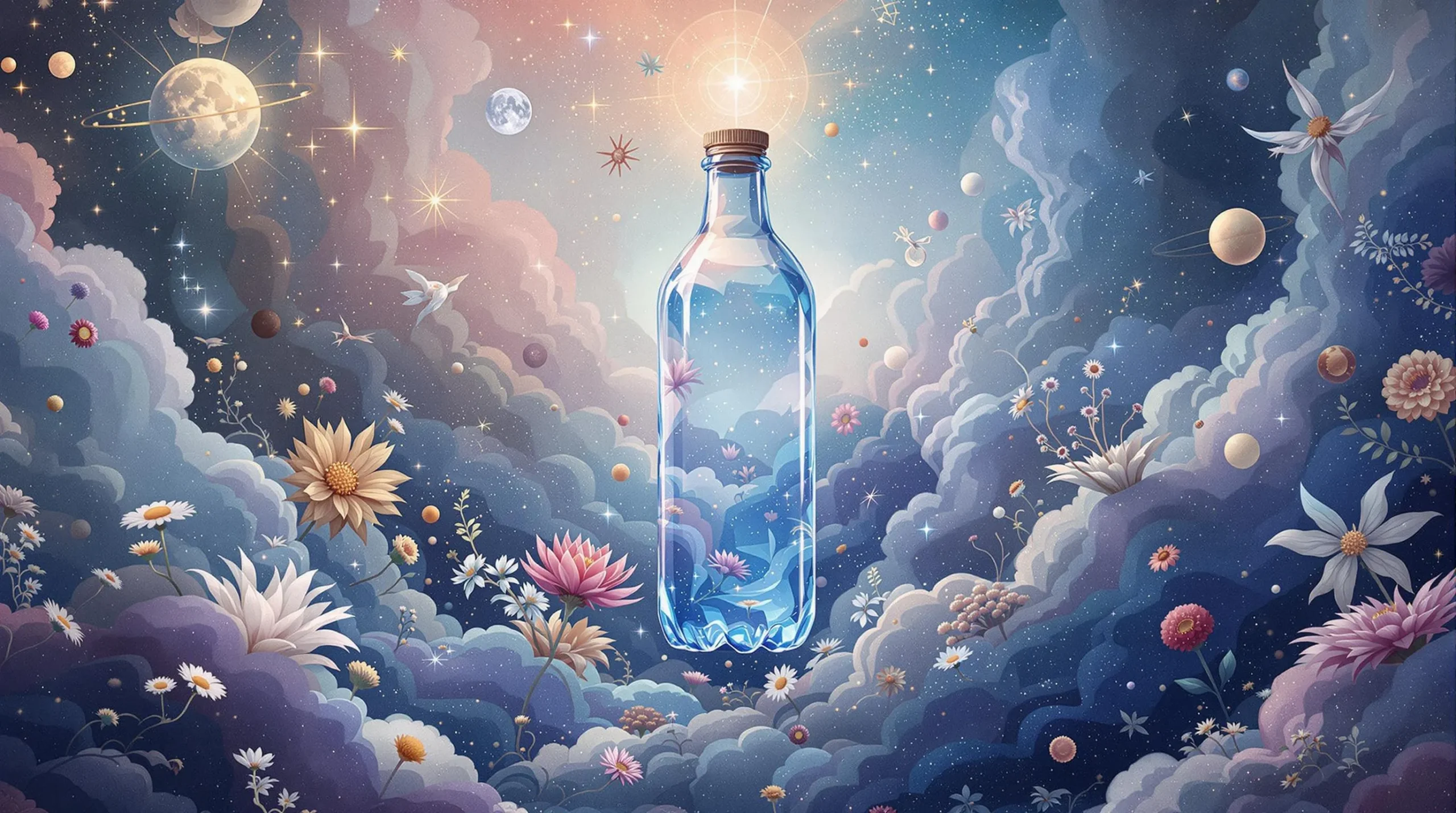


Plastic Bottle

Archetype Meaning & Symbolism

Disposable, resilient, convenient, ubiquitous, synthetic, polluting, adaptable, transparent, utilitarian, empty

  • Hold what you must, for as long as you must, and know that your form may outlast your function.

If Plastic Bottle is part of your personal mythology, you may...

Believe

  • True strength lies in adaptability, not in rigid, unchangeable form.
  • My value is directly proportional to my usefulness to others.
  • What is easily acquired is easily forgotten.

Fear

  • A deep fear of being emptied and then forgotten, of your purpose being finite.
  • A terror of becoming refuse, a permanent problem for others to deal with.
  • A fear that your transparency reveals not honesty, but a fundamental, uninteresting emptiness.

Strength

  • An incredible capacity to adapt to new shapes and purposes, to be metaphorically melted down and reformed.
  • The ability to reliably hold and compartmentalize difficult tasks or emotions for yourself and for others.
  • A surprising resilience; you can be dented and crushed but are incredibly difficult to destroy completely.

Weakness

  • A tendency to be defined by your contents rather than your own inherent form and worth.
  • A vulnerability to external pressures, allowing yourself to be easily molded by the expectations of others.
  • A persistent feeling of being common or interchangeable, leading to a crisis of individual significance.

The Symbolism & Meaning of Plastic Bottle

The Plastic Bottle in one’s personal mythos could be the central symbol of modern paradox. It is convenience and crisis held in a single, transparent form. To see yourself in its reflection is to acknowledge a life of profound utility, a capacity to be exactly what is needed in a given moment: a vessel for sustenance, ideas, or emotions. You may be the person who holds the water for the marathon runner, the one who contains the volatile elements of a project, the quiet facilitator. This archetype speaks to an identity built on function, on being smoothly and efficiently integrated into the machinery of life. Its transparency is key: it does not hide what it holds, suggesting an honest, what-you-see-is-what-you-get nature, yet this clarity can also be mistaken for a lack of depth or inner world of its own.

Yet, this utility is haunted by the specter of disposability. The very convenience that makes the bottle desirable is also what makes it discardable. A personal mythology shaped by this archetype might grapple with a persistent feeling of being temporary, of being valued only for a fleeting purpose. Once emptied, what is your worth? This question echoes in the quiet crinkle of a crushed bottle. The story then becomes one of navigating this paradox, of finding inherent value beyond momentary usefulness. It is the search for a purpose that transcends the single-use cycle, a quest for a form of recycling on a spiritual level, to avoid becoming permanent, beautiful, tragic trash on the shores of one's own life.

Furthermore, the Plastic Bottle archetype embodies a strange and passive form of endurance. It does not biodegrade; it simply breaks down into smaller, persistent versions of itself. This may manifest as a personal myth where your past mistakes or former identities don't fade away but haunt your present in microscopic ways. It suggests a life story where nothing is ever truly gone, where every past role, every empty relationship, remains part of your personal ecosystem. The challenge of this mythology is to see this not as a form of pollution, but as a testament to your own resilience. You persist. You may be changed, broken down, and scattered, but the fundamental material of you remains, waiting for a new form.


Plastic Bottle Relationships With Other Archetypes

The Ocean

The relationship with the Ocean archetype is one of tragic, encompassing embrace. The Plastic Bottle, born of land and industry, inevitably finds its way to the vast, timeless Ocean, where it is both lost and rendered eternal. For the individual, this may represent a deep, perhaps unconscious, pull toward something immense and chaotic that threatens to consume their carefully constructed identity. It is the fear of losing oneself in the collective, of becoming a piece of undifferentiated debris in the great unconscious. The Ocean holds the Bottle, carries it, and breaks it down, but never truly absorbs it. This dynamic could mirror a relationship with a force—be it a social movement, a corporate culture, or even a powerful family—that one is part of, but can never be fully integrated into, floating on its surface forever.

The Recycler

The Recycler is the agent of redemption for the Plastic Bottle. This archetype represents the conscious force of transformation, the alchemical power that can take what is discarded and grant it a new life. In a personal mythos, the Recycler could be a therapist, a mentor, a creative practice, or an internal capacity for radical self-reinvention. It is the belief that one’s purpose is not finite. The relationship is one of hope and potential. When the Plastic Bottle feels it has served its function and is now just waste, the Recycler appears, seeing not trash, but raw material. It is a promise that being emptied is not an end, but an opportunity for a profound and purposeful reshaping.

The Consumer

The relationship with the Consumer archetype is one of fraught codependence: need and subsequent disregard. The Consumer creates the need for the Plastic Bottle, values it intensely for its convenience, and then discards it without a second thought. For a person with the Bottle in their mythos, this may define their most painful relational patterns. They might find themselves drawn to people who desire their utility—their ability to hold, to serve, to facilitate—but who do not value the vessel itself. This relationship highlights a core wound: the fear that love and appreciation are conditional, lasting only as long as one is full and useful. The mythic journey is to learn to exist without the Consumer's validation, to find a self-worth that is not dependent on being picked up off the shelf.

Using Plastic Bottle in Every Day Life

Navigating Career Transitions

When faced with a sudden career change or the obsolescence of a skillset, the Plastic Bottle archetype offers a map. It suggests that your essential form—your core character and abilities—is not destroyed but is merely awaiting a new substance. You may feel emptied of your old professional identity, but this emptiness is also a prerequisite for being refilled. This mythos encourages you to see yourself not as the job title you held, but as the resilient, adaptable vessel capable of holding a new purpose entirely, perhaps one you never anticipated.

Processing Emotional Content

In moments of emotional overwhelm, for yourself or others, embodying the Plastic Bottle archetype can be a strategy for containment. You may become a temporary vessel for grief, anger, or joy, holding the emotion without letting it stain your fundamental nature. It teaches a kind of emotional service: you can contain the turbulent feelings of a friend, offering them a safe space, knowing that you can be ’emptied’ later through self-care, returning to your transparent state. It is the art of being present for an experience without becoming the experience itself.

Understanding Social Malleability

If you feel pressure to conform in different social or familial settings, the Plastic Bottle speaks to the experience of being molded. It understands that heat and pressure—the expectations of a group—can reshape you. This archetype invites you to question which molds are beneficial and which are deforming. It asks: Are you being shaped into a more useful, functional version of yourself, or are you being squeezed into a form that restricts your true capacity? It provides a language for navigating the demands of belonging while trying to retain your essential integrity.

Plastic Bottle is Known For

Containment

Its primary identity is rooted in its ability to hold, to be a vessel for life-sustaining liquid. This speaks to a purpose defined by utility, of serving a need greater than its own existence, carrying something precious from one place to another.

Malleability

Formed by intense heat and pressure, it is a symbol of profound transformation. It is born of a process that could be seen as violent, yet results in a useful, specific shape, suggesting that identity can be forged in the crucible of external forces.

Endurance

Its near-immortality in a landfill is its modern tragedy and its defining characteristic. It is known for an unnerving permanence, a physical presence that far outlasts its intended use, a quiet testament to unintended consequences.

How Plastic Bottle Might Affect Your Personal Mythology

How Plastic Bottle Might Affect Your Mythos

When the Plastic Bottle is a cornerstone of your personal mythos, your life story may be a narrative of utility and adaptation. You may see your biography not as a heroic epic, but as a series of functions performed, containers filled, and needs met. The major chapters of your life might be titled by the roles you served: The Holder of Family Secrets, The Vessel for a Startup's Ambition, The Container of a Partner's Grief. Your story finds its meaning in its service to other, larger narratives. There is a quiet nobility in this, a sense of being an essential, if uncelebrated, part of the machinery of the world. Your myth is not about the quest, but about being the waterskin that makes the quest possible for someone else.

Alternatively, your mythos may become a story of post-disposability survival. It is the tale of what happens after you have been emptied and cast aside. This is not a story of failure, but one of startling resilience. Your life narrative could be about floating in the vast ocean of experience, bobbing on the waves of change, and discovering an unexpected permanence. It's a myth of reinvention, where you are picked up from the shore by a beachcomber who sees you not as trash, but as a beautiful, sea-worn object, or where you are melted down and reformed into something entirely new. Your story’s power lies in its second, third, and fourth acts, demonstrating that your most interesting chapter begins after your initial purpose is complete.

How Plastic Bottle Might Affect Your Sense of Self

Your sense of self may be inextricably linked to your function. You might gauge your self-worth by how useful you are to others. This can lead to a highly adaptable and capable persona, one who can seamlessly fit into various contexts and meet diverse needs. You might see yourself as clear, transparent, and easy to understand. There are no hidden agendas; what you hold is plain to see. This can foster a sense of integrity and reliability. You are the dependable one, the person who can be counted on to hold things together. The self is defined by its capacity and its clean, efficient design.

However, this may also cultivate a fragile sense of self, one that fears emptiness. If your identity is based on what you contain, a period of purposelessness can feel like a complete erasure of self. You might look at yourself and see only a hollow form, a void. This could lead to a frantic search for something or someone to 'fill' you up, to give you meaning. The shadow of this self-perception is the belief that you are interchangeable, that any other bottle would do just as well. It's a fear that your individual shape and qualities are insignificant compared to the function you are meant to serve.

How Plastic Bottle Might Affect Your Beliefs About The World

A worldview colored by the Plastic Bottle archetype may be one of pragmatism and utility. The world might appear as a grand system of inputs and outputs, of needs and solutions. You may see structures, supply chains, and functions where others see chaos. This is a perspective that values efficiency, convenience, and elegant design. It's a modern view, one that understands that complex desires can be met with simple, mass-produced solutions. There could be an appreciation for the intricate systems that allow a person to have safe drinking water, or any resource, readily available in a sealed, predictable format. The world is a place of problems to be solved and containers to be filled.

This pragmatic worldview could also be tinged with a deep-seated cynicism or ecological grief. You may be acutely aware of the hidden costs of convenience. The world, from this vantage point, is filling up with its own refuse. Every solution seems to create a new, more permanent problem. You might see the landscape not just for its beauty, but for the unseen microplastics contaminating it. This fosters a worldview where nothing is ever truly gone, where the consequences of our actions linger indefinitely. It is a perspective that understands the tragic disconnect between an object's brief, intended use and its near-eternal afterlife as waste.

How Plastic Bottle Might Affect Your Relationships

In relationships, you may unconsciously adopt the role of the container. You are the partner who holds the emotional space, the friend who absorbs the anxieties of your circle, the family member who contains the chaos. People may feel safe confiding in you because of your perceived transparency and stability. You offer a sealed, safe environment for their most volatile feelings. This can create relationships of immense depth and trust, where you are seen as the reliable, essential element that allows others to be vulnerable and process their own experiences. Your role is one of quiet, sturdy support.

Conversely, this can lead to relationships that feel fundamentally unbalanced. You may feel that you are always the vessel and never the substance. There could be a recurring pattern of entering relationships where your own needs are secondary, where you exist to facilitate the life of another. You might fear that if you were to express your own needs, your own messy contents, the other person would discard you, finding you suddenly inconvenient. This can create a profound loneliness, the isolation of being constantly useful but rarely seen for your own intrinsic qualities. The central challenge becomes learning to be both the container and the contained, to be in relationships where the holding is mutual.

How Plastic Bottle Might Affect Your Role in Life

Your perceived role in life, through the lens of the Plastic Bottle, is likely that of a facilitator. You may not see yourself as the hero of the story, but as the essential equipment for the hero's journey. Your purpose is to enable, to transport, to contain, and to make things possible. In a professional setting, you might be the project manager who holds all the moving parts together, the assistant who makes the executive's vision a reality, or the technician who maintains the critical infrastructure. This role is defined by its service and its necessity. You are the unsung infrastructure of success, the invisible architecture that allows things to happen.

This perception of your role can also be limiting. It may create a belief that you are destined to be a supporting character in your own life. You might feel that your highest purpose is to be a conduit for someone else's passion or a container for someone else's dream. This can lead to a suppression of your own ambitions, a feeling that your own 'contents' are less important than those you are asked to carry. The mythic task then becomes a radical re-evaluation of your role: a realization that the container is not less valuable than its contents, and that you have the right to decide what you wish to hold for yourself.

Dream Interpretation of Plastic Bottle

In a positive context, dreaming of a Plastic Bottle may symbolize readiness and potential. A dream of a clean, empty bottle, perhaps catching the light, could suggest that you have cleared out old emotional baggage and are now ready for a new experience, a new relationship, or a new purpose. You are a vessel prepared to be filled. If the bottle in the dream is full of clear, pure water, it may represent nourishment, clarity of purpose, and the healthy containment of your own life force and emotions. Seeing a bottle being recycled could symbolize a successful personal transformation, the beginning of a positive new chapter built from the lessons of the past.

In a negative context, the Plastic Bottle often appears in dreams as a symbol of worthlessness, waste, and environmental anxiety. Dreaming of being surrounded by thousands of empty, discarded bottles could reflect a feeling of being anonymous, used up, and disposable in your waking life. A dream where you are drinking from a dirty or contaminated bottle might suggest that you are taking in toxic influences or that your sources of emotional 'nourishment' are unhealthy. To dream of a crushed bottle, or one floating in a polluted ocean, could be a powerful metaphor from your subconscious about a crushed spirit, a sense of hopelessness, or a feeling that you are a small part of a vast, overwhelming problem.

How Plastic Bottle Archetype Might Affect Your Needs

How Plastic Bottle Might Affect Your Physiological Needs

The Plastic Bottle archetype has a direct and potent connection to your physiological narrative. It is, at its core, a symbol of sustenance and hydration, the most basic of human needs. Your personal mythos may be organized around securing these fundamentals, not just for yourself but for others. You might be the person who always has snacks, water, and a first-aid kit, ensuring the physical well-being of your group. There may be a profound comfort for you in the act of providing, in seeing your purpose fulfilled through the simple, tangible act of quenching thirst. Your body's needs and the needs of others become a central organizing principle of your life story.

This focus on the physiological can also manifest as a deep-seated anxiety. The fear of being empty could translate into a fear of not having enough resources, of being unable to provide. You may be prone to hoarding, not just things, but energy and resources, driven by a primal fear of depletion. The synthetic nature of the bottle might also create a mythic tension between natural and artificial sustenance. You might grapple with questions of purity and contamination in what you consume, a constant vigilance about whether what you are taking in to survive is ultimately helping or harming you, a metaphor that extends from food to information and relationships.

How Plastic Bottle Might Affect Your Ideas of Belonging

To feel a sense of belonging, the Plastic Bottle archetype might lead you to find comfort in ubiquity. You are one of millions, and in this sameness, there is a kind of community. You fit in easily. You are a recognizable, standard form, and this allows you to be integrated into almost any social setting without friction. Belonging, in this mythos, comes from being of a type, from sharing a common function and design with those around you. You belong because you are useful, you follow the expected shape, and you don't cause trouble. It is a belonging based on conformity and shared purpose.

This search for belonging through sameness can also generate a profound sense of alienation. If you are just one among millions, how can you be special? How can you be truly seen and loved for your unique qualities? The fear is that you are interchangeable in your relationships and communities. If you were to disappear, you could be easily replaced by another bottle of the same shape and size. This can create a longing for a deeper kind of connection that values your specific history, the unique scratches and dents on your surface, rather than just your generic, functional form. It is the quest to belong not because you are the same, but because you are irreplaceable.

How Plastic Bottle Might Affect Your Feelings of Safety

On the level of safety needs, the Plastic Bottle can be a powerful symbol of security and trust. A sealed bottle represents a promise of purity. It is a controlled environment, a guarantee against contamination from the outside world. If this is part of your mythos, you may strive to create similar 'sealed' systems in your life to feel safe. This could manifest as a need for tightly controlled schedules, predictable relationships, and clear boundaries. You find security in things being contained, known, and reliable. You may be the person who brings order to chaos, who seals the leaks in a project or a family crisis, making the world feel safer and more predictable.

However, the archetype also carries a hidden threat to safety. The very material that provides the seal, the plastic itself, is known to leach chemicals. This may create a personal mythos where danger is perceived as coming from the very things meant to protect you. It fosters a worldview of inherent mistrust, where even the most secure-seeming situations may contain a slow, invisible poison. This could lead to hyper-vigilance, a fear of betrayal, and a belief that true safety is an illusion. You may feel that the structures you build for your own security are themselves fragile or subtly toxic, leading to a persistent, low-level anxiety that is difficult to name.

How Plastic Bottle Might Affect Your Views of Esteem

Esteem, within the Plastic Bottle mythology, is often derived externally and is based on performance. You may feel good about yourself when you are full, when you are actively serving your purpose, when you are being useful. Your self-worth is measured by your utility to others. A successfully completed project, a comforted friend, a smoothly-run household—these are the accomplishments that build your esteem. You feel valued when you are chosen from the shelf, when your reliability and effectiveness are acknowledged. It is an esteem built on the solid foundation of competence and dependability.

This external source of esteem is, however, inherently fragile. When your function is complete, or if you are not 'chosen' for a task, your self-worth may plummet. The archetype can create a core belief that you have no intrinsic value; your value is purely instrumental. This leads to a constant need for validation through acts of service, a hamster wheel of doing in order to feel worthy. The deeper mythic journey for someone with this archetype is to cultivate a sense of self-esteem that exists independently of function, to believe that the vessel itself is valuable, whether it is full or empty, on the shelf or on the shore.

Shadow of Plastic Bottle

The shadow of the Plastic Bottle archetype emerges when its traits are taken to a toxic extreme. The adaptability becomes a complete lack of identity, a person so eager to be filled by any purpose that they become a vessel for negativity, manipulation, or harmful ideologies. They do not question the substance they are asked to carry. The transparency becomes a horrifying void, an emptiness that is not one of potential but of profound apathy. This shadow self does not just feel disposable; it acts disposable, engaging in self-destructive behaviors that confirm its own worthlessness. It is the person who allows themselves to be used and discarded in relationships, not out of service, but out of a conviction that this is all they are good for.

The most potent shadow, however, is that of pollution. When the Bottle's endurance is not channeled into resilience, it becomes a curse. The individual becomes a source of emotional or psychic pollution in their environment. Their unresolved issues, their past mistakes, do not biodegrade. Instead, they break down into smaller, persistent grievances that contaminate their relationships and communities. They become the 'permanent problem,' clinging to past roles and hurts long after they've served their purpose. This is the Great Pacific Garbage Patch of the soul, a vast, swirling gyre of everything that was used once and never properly processed, a monument to a life of convenience over consciousness.

Pros & Cons of Plastic Bottle in Your Mythology

Pros

  • You are exceptionally adaptable and can find a functional role for yourself in almost any situation or environment.
  • You are seen as reliable and transparent, able to be counted on to hold what is given to you without complication.
  • You possess a surprising durability and resilience, able to withstand immense pressure and persist long after more brittle forms would have shattered.

Cons

  • You may often feel that your existence is one of convenience for others, leading to a sense of being used or taken for granted.
  • There is a significant risk of feeling anonymous and interchangeable, a face in the crowd that struggles to feel uniquely valued.
  • Your enduring nature can become a burden, as past mistakes or former identities can feel like they linger forever, never truly going away.